You can’t fully eliminate wig flyaways, but you can control them with the right approach. Static electricity, low humidity, and fiber damage are the main culprits. Combat them by applying leave-in conditioner sprays, using a boar bristle brush, and gliding a dryer sheet over the wig to neutralize static. Heat tools with protectant sprays smooth stubborn strands effectively. The right daily habits and product choices make all the difference, and there’s more to uncover ahead.
Key Takeaways
- Apply a lightweight leave-in conditioner or hydrating mist daily to neutralize static and keep wig fibers moisturized.
- Use heat tools on low settings with a heat protectant to smooth flyaways without damaging fibers.
- Glide a dryer sheet over the wig to quickly eliminate static cling without any heat tools.
- Brush regularly with a boar bristle brush to evenly distribute moisture and smooth the hair cuticles.
- Store wigs on proper stands and minimize friction against rough surfaces to prevent flyaways from forming.
What Causes Wig Flyaways
Wig flyaways occur when individual strands lift away from the main body of the hair, creating a frizzy, unkempt appearance. Several factors contribute to this phenomenon, and understanding them helps you address the root cause effectively.
Static electricity is a primary culprit, particularly in synthetic wig material, where fibers accumulate electrical charges through friction and environmental exposure. Low humidity environments accelerate this process by stripping moisture balance from the strands, leaving them prone to lifting and separation.
Human hair wigs aren’t immune either. Overwashing, heat damage, and incompatible styling products disrupt the hair’s natural moisture balance, weakening the cuticle layer.
Additionally, improper storage and friction against clothing or pillowcases can roughen fiber surfaces, intensifying static buildup regardless of wig material type.
Tame Wig Flyaways With Heat Tools the Right Way
When used correctly, heat tools are among the most effective methods for taming wig flyaways. Before applying any heat, you’ll want to apply heat protectants directly to the wig’s surface, ensuring even coverage across problem areas. This step shields synthetic or human hair fibers from thermal damage while simultaneously smoothing cuticle layers that contribute to flyaways.
Temperature control is equally critical. You should select low-heat settings initially, gradually increasing only if necessary. High-temperature tools can melt synthetic fibers or strip moisture from human hair, worsening flyaways long-term.
Use your dryer’s cool-shot feature to lock styles in place once you’ve smoothed each section. This rapid cooling method seals the hair shaft, maintaining sleekness and minimizing static-driven flyaways that re-emerge after styling.
Quick No-Heat Fixes for Wig Flyaways
Heat tools aren’t always practical or available, but you can still control wig flyaways effectively without them.
Start with the hot hands method: rub your palms together to generate warmth, then smooth them over flyaway strands to flatten them naturally.
For static-related flyaways, glide a dryer sheet across the wig’s surface to neutralize electrical charge and reduce static cling instantly.
Apply a light mist of leave-in conditioner to support moisture adduction and minimize static buildup without weighing the fibers down.
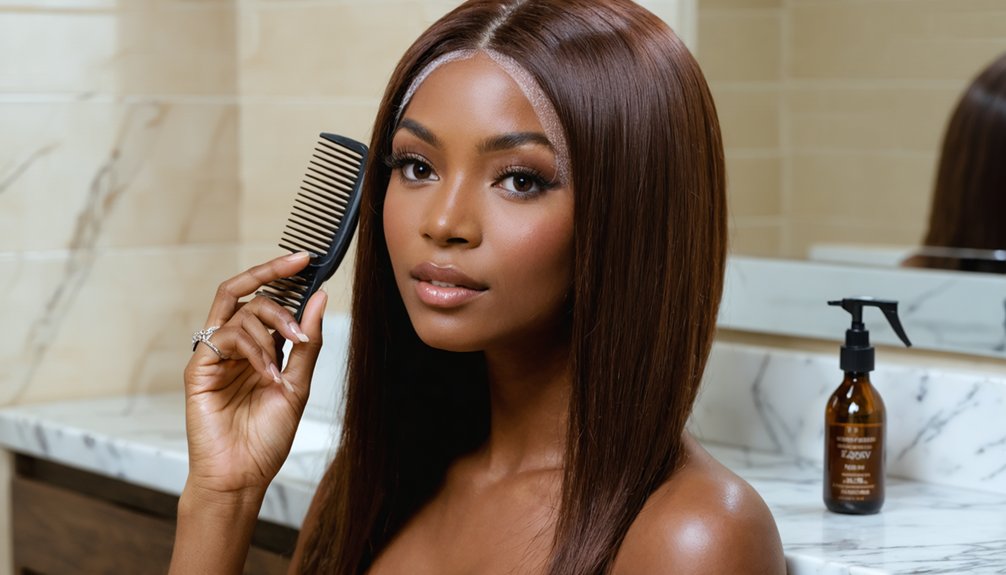
Follow up with a boar bristle brush to evenly distribute the product and keep flyaways in place.
These no-heat wig care strategies deliver precise results through smart product application, making them ideal for quick touch-ups between more intensive styling sessions.
Best Leave-In Products to Smooth Wig Flyaways
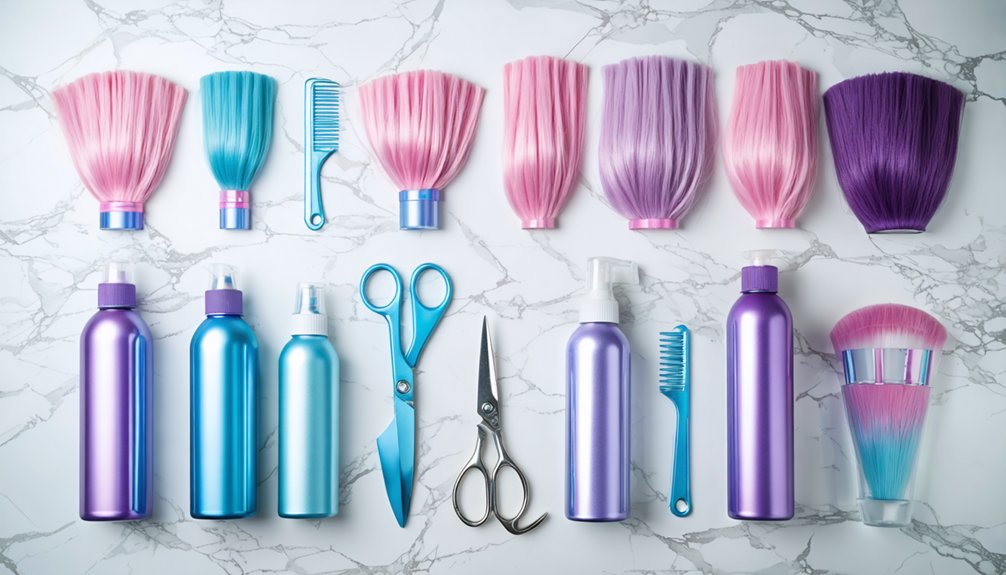
A few targeted leave-in products can dramatically reduce wig flyaways while preserving fiber integrity. Leave-in sprays deliver lightweight moisture without weighing fibers down, while hydrating mists provide controlled humidity that neutralizes static charge.
Targeted leave-in sprays and hydrating mists reduce flyaways while keeping synthetic fibers lightweight and static-free.
When selecting cream formulas, you’ll want to prioritize water-based compositions that won’t accelerate synthetic fiber degradation. Serum options containing silicone derivatives create a protective coating, smoothing the cuticle layer and locking stray strands in place.
Your application techniques matter as much as product selection. Distribute leave-in sprays from mid-shaft to ends, avoiding the root area to prevent limpness.
Examine product ingredients carefully — avoid heavy alcohols, sulfates, and petroleum-based compounds that compromise wig longevity. Instead, prioritize glycerin, panthenol, and lightweight polymers that deliver lasting hydration without compromising fiber structure or overall style definition.
Simple Daily Habits That Stop Wig Flyaways for Good
Beyond product selection, your daily handling habits determine whether flyaways become a persistent problem or a manageable nuisance.
Prioritizing daily hydration keeps synthetic and human hair fibers moisturized, reducing static-prone brittleness before it starts. Apply a lightweight leave-in mist each morning rather than waiting for flyaways to emerge.
Regular brushing with a boar bristle brush distributes existing product evenly while smoothing cuticle-level irregularities that cause strands to lift. Always brush in controlled, downward strokes to maintain fiber alignment.
Store your wig on a proper stand overnight to prevent compression-related distortion that triggers morning flyaways.
Additionally, minimize friction from cotton pillowcases or rough surfaces during storage.
These incremental daily adjustments compound over time, delivering consistently smooth results without requiring intensive corrective intervention.
Frequently Asked Questions
Can Wig Flyaways Be Controlled During Outdoor Windy Conditions?
Yes, you can control wig flyaways in windy conditions by applying leave-in conditioner, using boar bristle brushing, and deploying the hot hands method. These outdoor tips’ll keep your wig sleek and flyaway-free effectively.
Does Wig Fiber Type Affect How Flyaways Respond to Treatments?
Like Goldilocks seeking perfection, you’ll find fiber care isn’t one-size-fits-all. Synthetic fibers resist moisture-based treatment techniques, while human hair wigs readily absorb leave-in conditioners, making your flyaway control more responsive and precise.
Are There Specific Wig Storage Methods That Prevent Flyaway Formation?
You’ll prevent flyaway formation through strategic wig care and storage techniques: mount wigs on dedicated stands, enclose them in silk bags, and maintain consistent humidity levels to minimize static buildup and fiber disruption during periods of non-use.
Can Swimming or Water Exposure Worsen Wig Flyaway Problems?
Yes, swimming worsens wig flyaways considerably. Chlorine effects strip moisture, causing fiber damage, while humidity impact swells strands, creating frizz. You’ll want to apply leave-in conditioner and use sulfate-free shampoo post-exposure to restore hydration.
Do Colored or Highlighted Wigs Experience More Flyaways Than Natural Ones?
Colored, chemically compromised fibers certainly create more flyaways. Wig dyeing effects weaken hair’s cuticle structure, increasing static. You’ll find highlight maintenance requires extra moisture application and boar bristle brushing to redistribute protective serums, effectively controlling unruly strands.
References
- https://www.wigs.com/blogs/news/tips-tricks-how-to-tame-wig-flyaways
- https://www.simplywigs.co.uk/blog/how-to-tame-flyaway-wig-hair/
- https://www.oreateai.com/blog/taming-flyaways-your-guide-to-smooth-sleek-hair/df7eaba01889910b8acaeeca19d82ccf
- https://www.juliahair.com/blog/how-to-tame-flyways-hair/
- https://www.lorealparisusa.com/beauty-magazine/hair-care/frizzy-hair/tips-to-tame-flyaways
- https://www.instagram.com/reel/DDaK6UCvx9k/?hl=en
- https://mamabella.uk/flyaways-hair-stop-tame-get-rid-products-sticks/
- https://blog.danielalain.com/articles/quickest-way-tame-flyaways
- https://www.vogue.com/article/how-to-treat-flyaway-hair
- https://nymag.com/strategist/article/how-i-smooth-out-my-flyaways.html