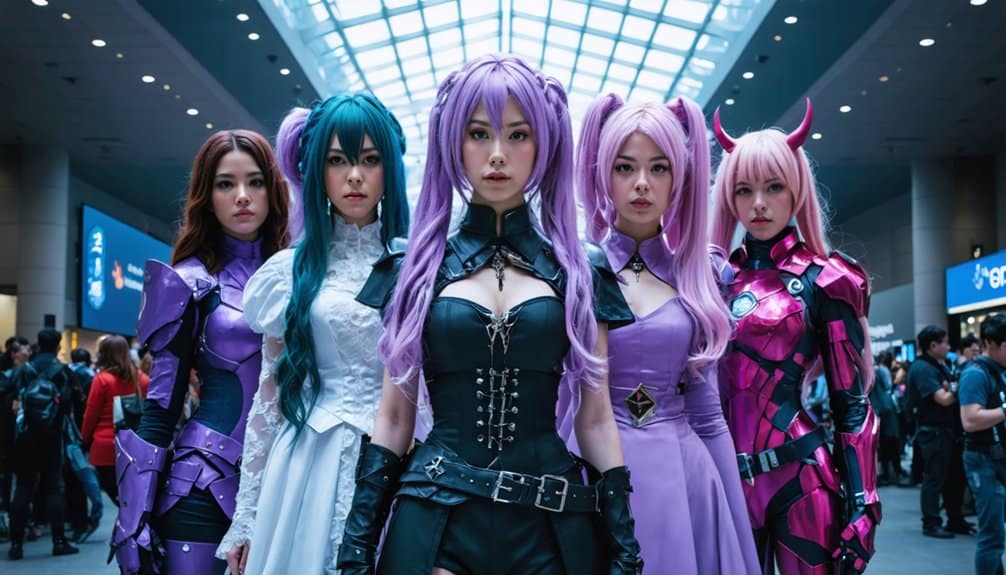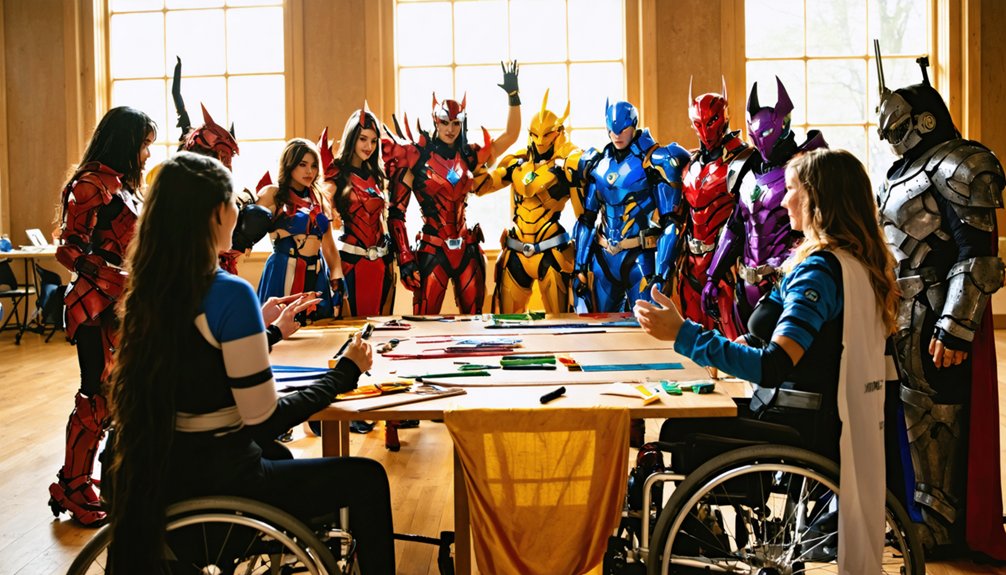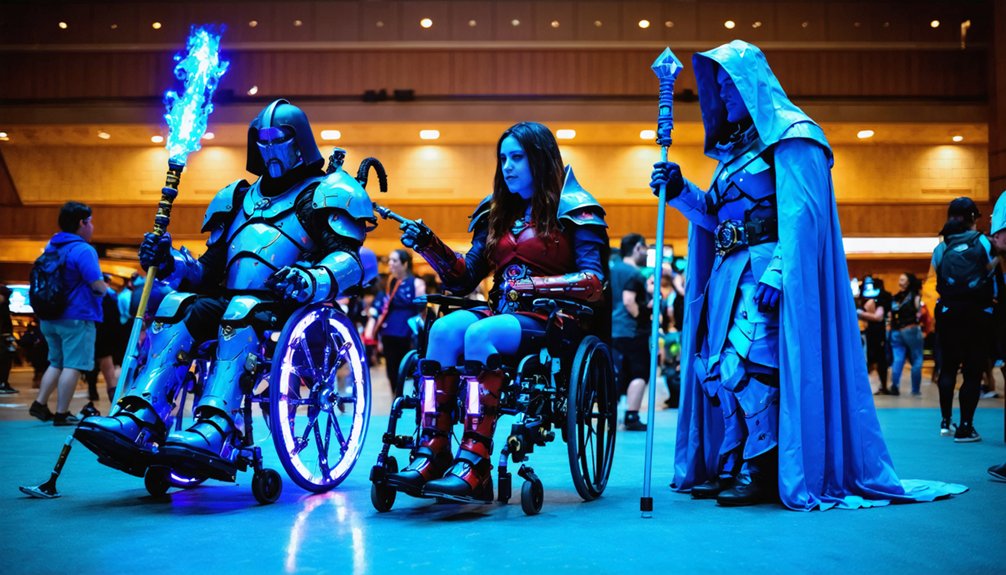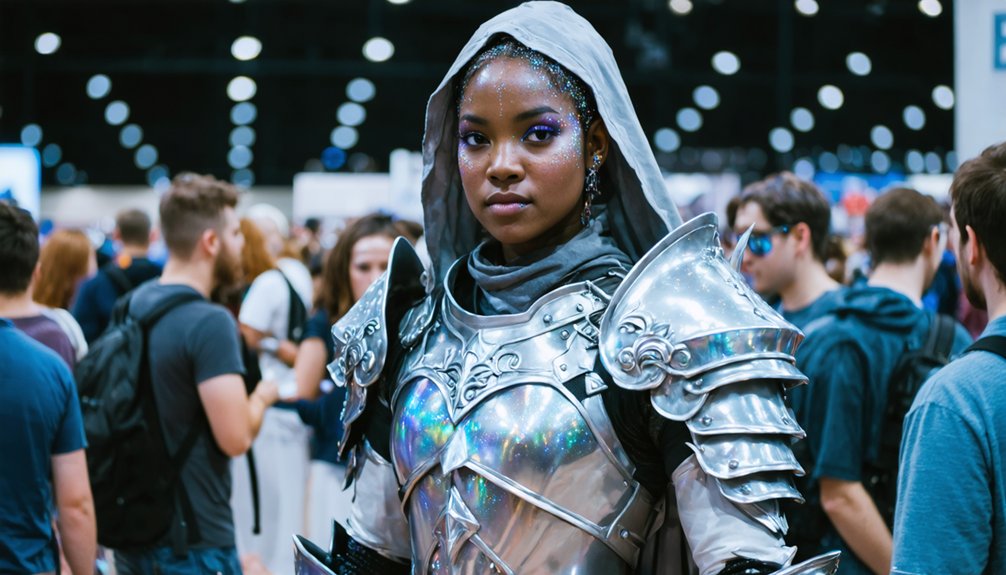
Non-binary cosplay representation matters because it transforms costume culture into a space where you can explore gender beyond rigid binaries. It challenges historical exclusion by creating visibility for identities that mainstream media has long ignored. You’ll find that convention spaces offer low-risk environments for authentic self-expression, building body confidence and community belonging. It also reshapes cultural assumptions far beyond fandom. There’s much more to uncover about how this movement is changing everything.
Key Takeaways
- Non-binary cosplay challenges rigid gender categories, expanding cultural understanding and visibility for identities that fall outside traditional binary frameworks.
- Convention spaces provide safe, low-stakes environments where individuals can explore and experiment with gender expression without social consequence.
- Androgynous anime characters have historically created visibility for non-binary identities, inspiring cosplayers to embrace fluid gender aesthetics.
- Community support networks build body confidence by normalizing gender-nonconforming presentations and validating diverse forms of physical identity expression.
- Non-binary cosplay visibility drives shifts in mainstream media representation, encouraging broader cultural acceptance of gender-fluid storytelling and characters.
What Non-Binary Cosplay Representation Actually Means
Non-binary cosplay representation means more than simply dressing as a character — it’s the active, embodied practice of using costume and performance to challenge, expand, and redefine what gender looks like in fan spaces.
Through character embodiment, you’re engaging in deliberate gender performance that disrupts binary expectations and advances cosplay evolution. Non-binary styles blend, subvert, and reimagine gendered aesthetics, making gender fluidity visually tangible within community dynamics.
Cosplay becomes a living canvas where gender fluidity transcends costume, reshaping community aesthetics through bold, embodied expression.
Cultural representation shifts when fandom identity includes those who’ve historically been erased from mainstream media. Your visibility impact extends beyond yourself — it signals to others that identity expression has no fixed boundaries.
This isn’t cosplay as escapism; it’s cosplay as intervention, reshaping how communities understand, celebrate, and engage with gender itself.
Why Non-Binary Cosplayers Have Historically Been Excluded
Despite cosplay’s reputation as an accepting space, systemic exclusion has shaped how non-binary cosplayers experience fandom. Historical exclusion stems from deeply rooted gender stereotypes and societal norms that dominated community dynamics for decades.
Cultural misconceptions about what cosplay “should look like” created representation gaps, pushing non-binary identities to the margins. Media portrayal reinforced narrative biases by centering binary-coded characters, leaving few authentic models for non-binary fans to embody.
These visibility issues compounded identity challenges, making it harder for you to see yourself reflected meaningfully in fandom spaces. Representation gaps didn’t emerge accidentally—they resulted from intentional or passive gatekeeping that prioritized conventional gender expressions.
Recognizing these structural patterns helps you understand why deliberate, inclusive change within cosplay communities isn’t optional; it’s essential.
How Androgynous Anime Characters Made Space for Non-Binary Cosplay
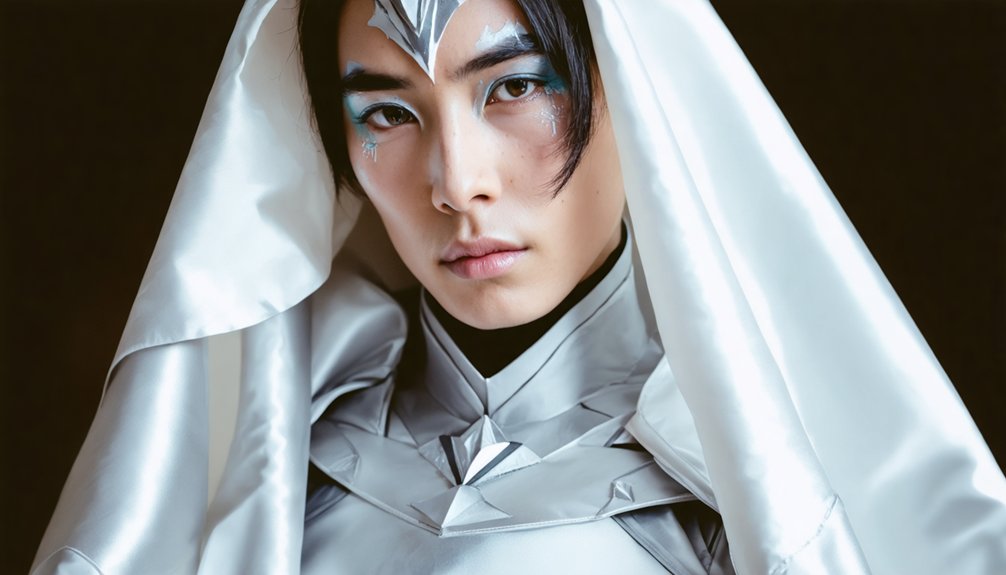
Amid the exclusion that shaped early cosplay spaces, one cultural force quietly disrupted binary norms from the outside: Japanese animation.
Anime introduced androgynous aesthetics that Western media rarely offered, presenting characters whose gender expression resisted easy categorization. This character fluidity shifted cultural perceptions, giving you permission to engage with visual representation that reflected something closer to your own identity.
Anime offered what Western media withheld — characters whose gender lived beyond the binary, reflecting something truer back at you.
Shows like *Sailor Moon* and *Utena* embedded narrative inclusivity into their storytelling, making androgyny feel natural rather than transgressive.
These texts reshaped fandom dynamics by inviting creative interpretations that moved beyond rigid binaries. You weren’t just cosplaying a character — you were claiming a framework that validated gender ambiguity.
Anime didn’t solve exclusion, but it cracked open the space non-binary cosplayers needed to exist visibly.
How Non-Binary Cosplay Fuels Identity and Self-Discovery
When you step into a costume, you’re not just playing a character—you’re actively exploring facets of your own gender identity in ways that everyday life rarely permits.
Convention spaces function as low-stakes environments where you can experiment with presentation, gather language for your experiences, and build confidence in your bodily expression.
The community surrounding non-binary cosplay reinforces this process, offering a network of trans and queer peers who validate your discoveries and strengthen your sense of self.
Exploring Gender Through Cosplay
Cosplay creates a uniquely liberating space where non-binary individuals can physically experiment with gender expression in ways that everyday life rarely permits.
Through character embodiment, you can explore identity performance beyond binary constraints, discovering authentic self-expression through visual storytelling.
Convention spaces offer emotional safety for this narrative exploration, where community dynamics actively support gender fluidity.
Here’s how cosplay enables this journey:
- Character selection — Choose characters whose gender ambiguity reflects your creative expression
- Physical transformation — Use costumes, wigs, and makeup to explore diverse presentations
- Community validation — Connect with others who affirm your representation impact
- Cultural significance — Contribute to shifting norms around gender visibility
You’re not just wearing a costume—you’re actively reshaping how identity gets understood and celebrated.
Safe Spaces Enable Self-Discovery
Convention halls function as transformative containers where you’re free to experiment with gender expression outside the pressures of everyday social environments.
Through costume embodiment and deliberate character interpretation, you’ll discover dimensions of your identity that everyday life suppresses. Safe experimentation becomes possible when supportive environments actively minimize judgment, allowing genuine role exploration without social consequence.
Non binary visibility within these spaces normalizes identity fluidity, making your gender performance feel legitimate rather than deviant. You’re not just wearing a costume—you’re practicing expression liberation in real time, testing presentations that resonate authentically with who you are.
Community belonging accelerates this self-discovery process. Surrounding yourself with others who understand gender as expansive rather than fixed gives you permission to explore, iterate, and ultimately understand yourself more completely.
Community Builds Identity Confidence
Surrounding yourself with a trans and queer network doesn’t just make you feel accepted—it actively reshapes how you understand your own identity. Community expression carries real cultural significance, reinforcing identity validation through shared character embodiment.
Here’s how community builds your confidence:
- Emotional safety lets you practice gender fluidity without fear of judgment.
- Inclusive narratives normalize identity exploration beyond binary expectations.
- Creative freedom encourages you to experiment with representation impact through diverse looks.
- Shared character embodiment connects you to others traversing similar identity journeys.
When you see someone confidently cosplaying outside heteronormative boundaries, it signals that your expression matters too. The community doesn’t just celebrate diversity—it actively dismantles the barriers that once made authentic self-presentation feel impossible.
Why Convention Spaces Enable Safer Gender Exploration
For many non-binary individuals, stepping into a convention space feels markedly different from traversing everyday life. Convention dynamics create a liminal environment where gender performance isn’t scrutinized the same way it’s outside those walls.
You’re surrounded by people actively challenging normative expectations, which dramatically lowers the social risk of experimenting with your presentation.
That collective openness matters. When you wear a costume that doesn’t align with conventional gender expectations, you’re not an anomaly—you’re part of a broader, celebrated tradition.
The community actively minimizes microaggressions that androgynous individuals frequently encounter elsewhere.
This safety isn’t accidental; it’s built through shared values of creativity and acceptance.
Conventions fundamentally give you permission to explore identities you might otherwise suppress, making them genuinely transformative spaces for gender discovery.
How Non-Binary Cosplay Dismantles the Gender Binary
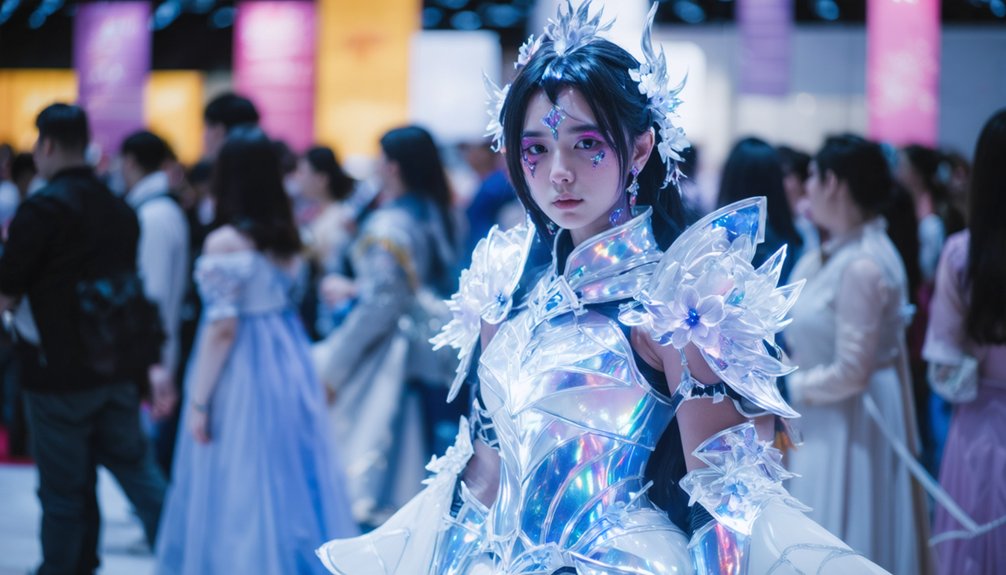
When you embody a character whose gender resists easy categorization, you’re doing more than wearing a costume—you’re actively destabilizing the binary framework that sorts people into rigid, mutually exclusive categories.
Through costume experimentation and gender performance, you challenge deeply ingrained norms. Non-binary cosplay dismantles the binary by:
- Expanding identity expression through character embodiment that honors intersectional identities
- Advancing cultural representation via visual storytelling that normalizes gender fluidity
- Building community engagement that accelerates social acceptance of diverse presentations
- Rejecting hyper-gendered aesthetics in favor of nuanced, character-driven portrayals
Each choice you make—mixing silhouettes, subverting expectations, queering familiar characters—becomes a deliberate act.
You’re not just playing dress-up; you’re reshaping how gender gets read, performed, and ultimately understood culturally.
How Non-Binary Cosplay Builds Body Confidence
When you step into a non-binary cosplay community, you’ll find that the collective support of trans and queer peers directly boosts your body confidence.
Experimenting with physically-embodied identity through costumes, wigs, and makeup lets you discover new ways of presenting yourself that feel authentic.
These queer networks don’t just celebrate your choices—they actively empower you to own your body on your own terms.
Community Support Boosts Confidence
The non-binary cosplay community actively builds body confidence in ways that extend well beyond costume choice. When you step into this space, you’ll find structured support that reshapes how you see yourself physically.
Community validation here operates through four key mechanisms:
- Peer affirmation normalizes diverse body presentations without judgment.
- Trans and queer networks provide emotionally safe spaces for experimenting with gender expression.
- Inclusive storytelling through character embodiment lets you authentically inhabit identities beyond binary constraints.
- Shared gender exploration creates meaningful connections that reinforce bodily self-acceptance.
These mechanisms work collectively, not independently. You’re not just wearing a costume—you’re accessing a system that actively dismantles internalized shame.
The community’s affirming culture transforms physical experimentation into genuine empowerment, making body confidence an achievable, community-driven outcome rather than an individual struggle.
Experimenting With Physical Identity
Experimenting with physical identity through cosplay gives you direct, tangible tools for reshaping how you experience your own body. Through identity experimentation, you’re actively testing silhouettes, accessories, wigs, and makeup that align with your authentic self rather than societal expectations. Each choice becomes deliberate and informative.
Character embodiment deepens this process. When you inhabit a character whose gender expression mirrors or challenges your own, you’re not simply wearing a costume—you’re gathering real data about what feels right in your body. That information carries weight beyond the convention floor.
Non-binary cosplay uniquely supports this exploration because it normalizes fluidity as a creative and personal standard. You discover what empowers you physically, building confidence that’s grounded in lived, embodied experience rather than abstract ideals.
Queer Networks Empower Bodies
Body confidence doesn’t grow in isolation—it’s cultivated through community. Queer representation within cosplay creates supportive networks that actively reinforce identity affirmation and body positivity. When you’re surrounded by people who celebrate gender fluidity, your confidence expands naturally.
Non-binary cosplay communities empower you through:
- Role models who demonstrate authentic creative expression across diverse body types
- Supportive networks that normalize gender-nonconforming presentations without judgment
- Community empowerment through shared experiences that validate your physical identity
- Collective affirmation that transforms how you perceive and inhabit your own body
These dynamics aren’t accidental—they’re structural. Trans and queer cosplayers actively build environments where your bodily presentation becomes a source of strength rather than anxiety. You don’t just wear a costume; you reclaim your body through it.
Which Characters Are Driving Non-Binary Cosplay Forward
Their visibility impact extends beyond screens, directly shaping fandom dynamics and community engagement.
You’ll notice that character diversity in anime particularly drives artistic expression, as androgynous designs invite you to embody identities authentically rather than performatively.
Character inspiration drawn from these figures strengthens media representation by demonstrating that gender ambiguity enriches storytelling.
Character inspiration from gender-ambiguous figures proves that diverse representation doesn’t dilute storytelling—it deepens it.
When you cosplay these characters, you’re actively advancing a cultural conversation that challenges binary frameworks and celebrates identity’s beautiful complexity.
How Non-Binary Cosplay Visibility Is Reshaping Mainstream Culture
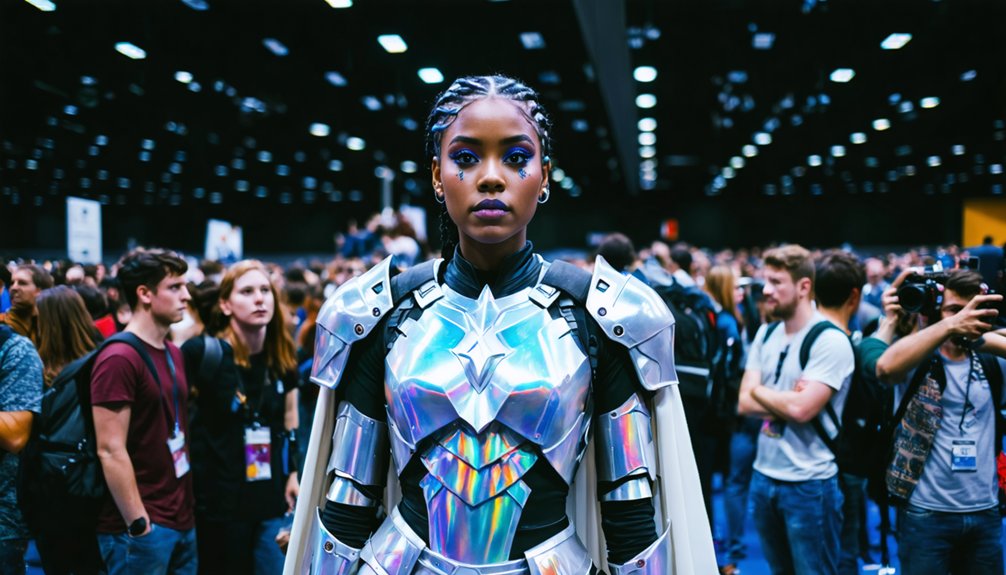
As non-binary cosplay gains mainstream visibility, it’s actively dismantling long-standing cultural assumptions about gender performance and representation.
You’re witnessing real cultural shifts driven by fan dynamics and identity politics that push media representation beyond binary constraints.
Non-binary narratives are reshaping how audiences interpret ambiguous characters, creating broader social acceptance across communities.
Here’s how this transformation unfolds:
- Expression Freedom expands as cosplayers embody characters through fluid character interpretation.
- Gender Fluidity normalizes diverse presentations within mainstream pop culture spaces.
- Media Representation evolves when fans challenge studios to develop non-binary narratives authentically.
- Social Acceptance grows as ambiguous characters become culturally celebrated rather than marginalized.
You’re participating in a movement where cosplay isn’t merely costume—it’s rewriting cultural frameworks around identity, visibility, and belonging.
Frequently Asked Questions
How Can Parents Support Non-Binary Children Interested in Cosplay?
Like a compass guiding new terrain, you can support your child’s identity exploration by embracing their creative expression, attending conventions together, celebrating character choices, and fostering open dialogue that affirms their unique, evolving sense of self.
Are There Specific Conventions Known for Strong Non-Binary Inclusivity?
You’ll find inclusive spaces at conventions like DashCon, Anime Midwest, and Rose City Comic Con, where representation matters. These community events prioritize cosplay identity, amplify gender expression, and serve as visibility platforms celebrating non-binary voices authentically.
What Costs Are Typically Involved in Creating a Non-Binary Cosplay?
When creating your non-binary cosplay, you’ll navigate budget considerations around fabric choices, accessories, and makeup. Smart character selection minimizes expenses, while community resources like material swaps and tutorials help you craft authentic, affirming representations affordably.
How Do Non-Binary Cosplayers Handle Online Harassment About Their Costumes?
When hateful comments flood your screen like storm clouds, you don’t face them alone. You lean on community support networks and fellow cosplayers who affirm your identity expression, transforming negativity into collective resilience and creative strength.
Can Non-Binary Cosplay Have Therapeutic Benefits for Mental Health?
Yes, non-binary cosplay can therapeutically benefit your mental health. You’ll find that identity exploration, creative expression, and community building foster self-acceptance, helping you navigate gender identity safely while building confidence and emotional resilience through supportive connections.
References
- https://pridesource.com/article/trans-cosplay
- https://xtramagazine.com/culture/cosplay-trans-non-binary-queer-liberation-175208
- https://link.springer.com/chapter/10.1007/978-3-031-12942-1_8
- https://journalofchinesesociology.springeropen.com/articles/10.1186/s40711-022-00168-z
- https://link.springer.com/chapter/10.1007/978-3-031-12942-1_9
- https://folklife.si.edu/magazine/cosplay-community
- https://www.reddit.com/r/NonBinary/comments/1kume7j/cosplay_as_a_form_of_gender_exploration/
- https://ufdcimages.uflib.ufl.edu/AA/00/08/84/81/00001/Olmstead_Ripley_Honors_Thesis.pdf
- https://www.youtube.com/watch?v=J8qraSYe-u4
- https://starstruckpanda.com/non-binary-representation-in-anime-cosplay/