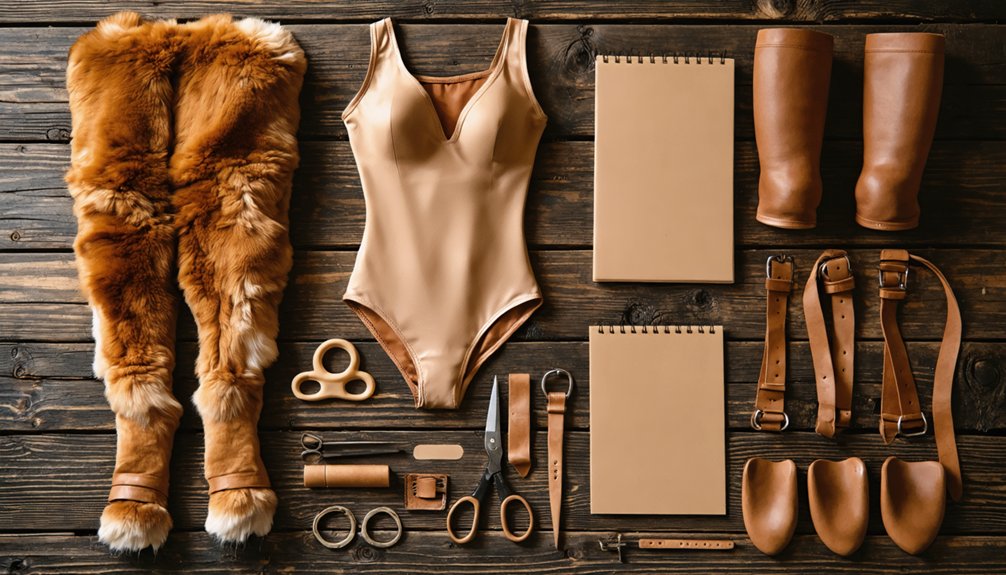
To build a centaur costume, you’ll need PVC or CPVC piping for the internal skeleton, along with tees, elbows, and connectors. Use spray-on insulation foam and sculpted upholstery foam to shape the horse half’s bulk and muscle detail. Cover everything with faux fur, spandex, and faux leather accents. Backpack-strap webbing and parachute buckles form your wearable harness. Finish with rubber chair tips, synthetic hair extensions, and bundled faux fur for hooves, mane, and tail—and there’s much more to unpack about each component.
Key Takeaways
- PVC or CPVC piping, connectors, and zip ties form the internal skeleton frame supporting the costume’s structure.
- Spray insulation foam and sculpted upholstery foam shape the horse body’s bulk and muscle detail.
- Faux fur matching your desired coat pattern covers the horse half, secured with spray adhesive or hot glue.
- Backpack-strap webbing, parachute buckles, and Velcro create a wearable harness system for the rider.
- Black faux leather, rubber chair tips, synthetic hair extensions, and faux fur strips complete hooves, mane, and tail.
Centaur Costume Frame and Skeleton Materials
Building a centaur costume starts with a solid internal skeleton, and PVC or CPVC piping is your best bet for the horse-body frame. Cut your pipe sections using a pipe cutter or hacksaw, then connect them with tees, elbows, bushings, and end caps to engineer a rigid, lightweight structure.
Start with PVC or CPVC piping to build a rigid, lightweight skeleton that anchors your entire centaur costume.
If you’re pushing innovation further, swap PVC for aluminum tubing or bent metal strips for superior strength-to-weight ratios.
Secure every joint with nuts, bolts, zip ties, or screws to eliminate wobble during movement. You’ll also want to plan conduit pathways within the frame for lighting effects wiring or sound integration components early—retrofitting later is unnecessarily difficult.
A well-engineered skeleton determines how cleanly every layer above it sits, so prioritize precision here before advancing to body shaping.
Horse-Half Shaping Materials for a Realistic Build
Once your skeleton’s locked in place, shaping the horse body into something convincingly muscular and organic is where the real craft begins. Layer spray-on insulation foam over your wire framework to build lightweight bulk quickly, then refine muscle definition using sculpted upholstery foam or foam board.
Stuffing and crumpled newspaper pack interior voids efficiently, while masking tape holds rough shapes before permanent materials go on. Quilt batting wraps everything in a final smoothing layer, eliminating lumpy gradations between muscle groups.
For serious mythical creature design, the layering sequence matters enormously — each material serves a structural role, not just a cosmetic one. These choices also factor into costume maintenance tips; denser foam resists compression over time, keeping your horse-half’s silhouette sharp through repeated wear.
Faux Fur, Spandex, and Faux Leather for the Exterior
The exterior layer transforms your shaped horse-half from foam-and-wire armature into a living, breathing creature, and your material choices here define the entire costume’s believability. Select faux fur that matches your chosen coat pattern — dappled, solid, or pinto — prioritizing pile direction and density for realistic movement.
Stretch the fur over curved sections using spray adhesive, then secure edges with hot glue or hand-stitching. For your human torso, spandex or polyester blends conform to your body while maintaining color coordination between both halves.
Seam the transition zone carefully so the join reads as organic. Add faux leather accents at the hooves and leg joints to introduce textural contrast and reinforce high-stress contact points, directly improving costume durability through repeated wear.
Centaur Costume Harness Straps and Base Garments
Securing your centaur’s horse-half to your body requires a harness system that distributes weight evenly while keeping the entire structure stable during movement. Backpack-strap webbing delivers the structural backbone you need, while parachute buckles and strap adjusters create precise, releasable fit points.
Build your base layer strategically using these core components:
- Body harness straps with velcro anchor the horse-half frame directly to your torso
- Skin-tone muscle shirts and tight pants unify your human half seamlessly with costume accessories and decorative embellishments
- Chair tips and belt reinforcements prevent pressure points during extended wear
This integrated system lets you move confidently without constant readjustment. Prioritize adjustability so you can fine-tune weight distribution as you add heavier structural elements throughout the build process.
Hooves, Mane, and Tail Materials for the Finishing Details
With your harness system locked in and your human half unified, you can shift focus to the details that sell the illusion—hooves, mane, and tail.
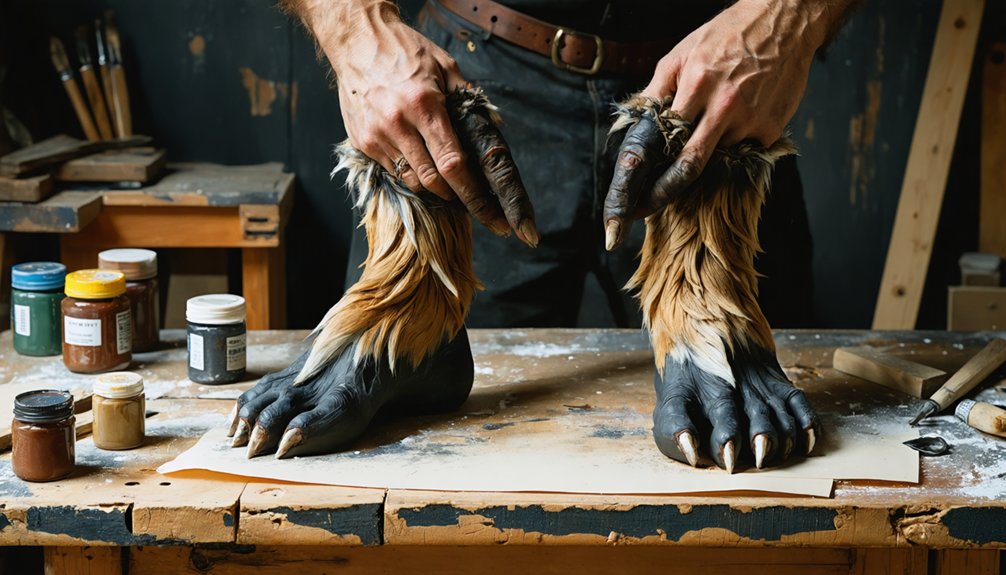
Channel historical horse armor aesthetics by crafting hooves from black faux leather stretched over foam cores, then capping each leg with rubber chair tips for ground contact and durability. These mythical creature accessories demand intentional material choices: dense faux leather holds shape under movement while remaining lightweight.
For the mane, layer synthetic ponytail extensions or faux fur strips along the neck seam, securing them with spray adhesive and reinforcing with hot glue.
Build the tail using bundled hair extensions or a sewn faux fur tube, attached directly to your frame’s rear anchor point for natural swing and movement.
Frequently Asked Questions
How Long Does It Typically Take to Build a Centaur Costume?
Over 80% of builders report 40–120 hours total. Your DIY crafting journey spans weeks, with costume fitting sessions refining each structural layer—you’ll sculpt, wire, and upholster iteratively until movement, balance, and wearability converge perfectly.
How Much Does a Complete Centaur Costume Usually Cost to Make?
You’ll typically spend $100–$500 depending on fabric choices and costume durability goals. Budget builds use foam and basic textiles, while premium faux fur, PVC framing, and harness hardware push costs toward professional-grade, innovation-driven craftsmanship.
Can a Centaur Costume Be Worn by Children Safely?
Yes, children can safely wear a centaur costume with proper safety precautions and costume adjustments. You’ll want to lighten the frame, secure all harness straps snugly, and guarantee smooth, rounded edges throughout.
How Do You Transport a Large Centaur Costume to an Event?
Disassemble your costume into modular sections for efficient costume storage. You’ll want to use padded duffel bags or custom crates as transportation methods, securing foam pieces, PVC frames, and fur panels separately to prevent damage during transit.
How Do You Use the Bathroom While Wearing a Centaur Costume?
Ever wondered how to handle nature’s call mid-convention? You’ll want to design your centaur costume with bathroom accessibility in mind — build a detachable horse-body harness using parachute buckles, ensuring costume comfort without full removal.
References
- https://www.youtube.com/watch?v=z9bUUg89-Kc
- https://mywriteofpassageblog.wordpress.com/tag/walking-centaur-costume/
- https://www.alibaba.com/product-insights/centaur-costume.html
- https://www.instructables.com/Centaur-Costume-With-Walking-Legs-and-Cooler-From-/
- https://www.instructables.com/Baby-Centaur-Costume/
- https://www.etsy.com/market/centaur_costume
- https://www.youtube.com/watch?v=iWz2uFocLJc
- https://www.modestystudio.com/2021/08/other-horse-parts-for-centaurs.html
- https://www.youtube.com/watch?v=l5Mm4zyCpPY
- https://community.narniaweb.com/index.php/community/costumes/costume-prop-resources-and-tutorials/