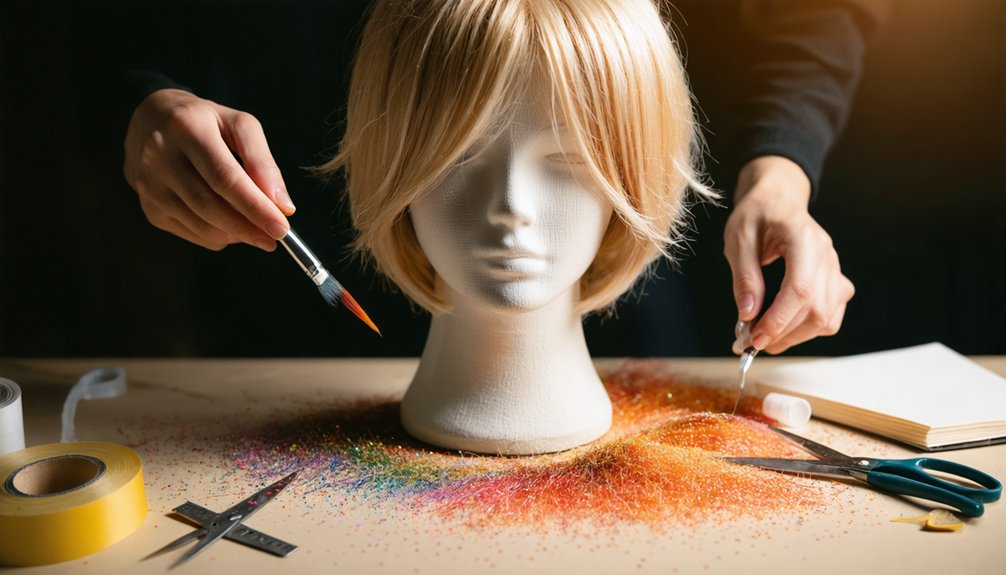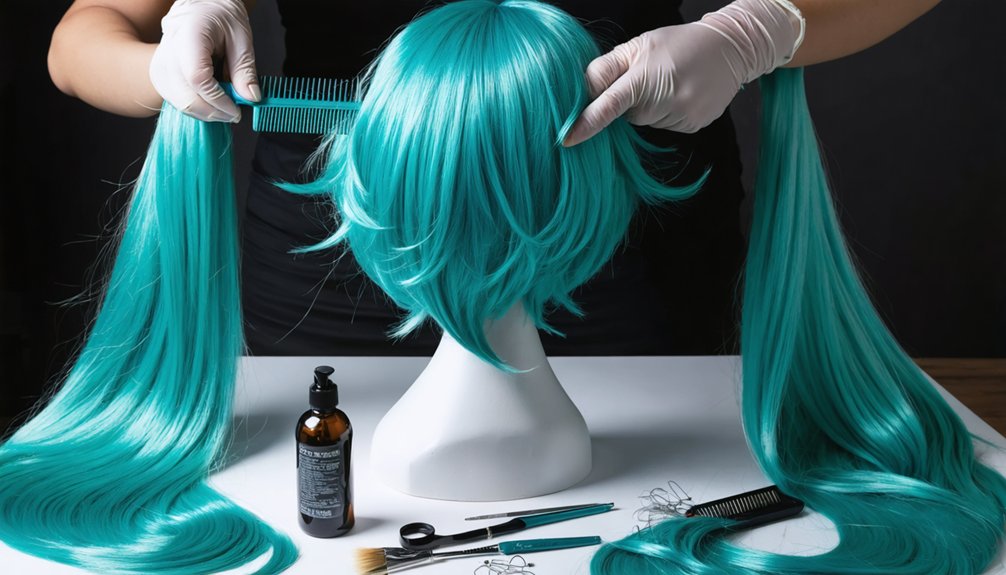
You’ll maximize wig volume through five essential techniques: backcomb at the root sections with concentrated downward strokes to create lift, hand-stitch additional wefts halfway between existing tracks for density, apply hairspray in light misting passes after each teased section, use crimpers in horizontal and diagonal patterns for textural foundation, and integrate wire supports through teased bases for structural spikes. Each method builds upon the others to create character-accurate transformations that maintain stability throughout convention wear.
Key Takeaways
- Backcomb hair at the roots using concentrated downward strokes to create friction networks that provide sculptural volume and lift.
- Add extra wefts between existing layers through hand-stitching, then blend fibers to increase overall density and fullness.
- Apply hairspray in light misting layers immediately after teasing each section to lock volume without causing stiffness.
- Use crimping tools in horizontal and diagonal patterns, then brush through to create fluffy, textured volume instantly.
- Insert wire supports through backcombed bases and layer additional wefts for extreme styles like structural spikes.
Backcombing and Teasing for Maximum Lift
Backcombing transforms flat synthetic fibers into sculptural volume by creating controlled friction networks at the wig’s foundation. You’ll achieve drag queen-level lift from a single hairpiece by concentrating your downward strokes at the root section, where density matters most. Start with inner layers, progressively working outward while maintaining proper tension on each suspended section. This cushion-building approach supports hair self-elevation without constant repositioning.
Your sectioned teasing approach guarantees consistent volume distribution rather than isolated pockets. Embrace the initial dishevelment—that messy appearance indicates proper execution. Once you’ve established your internal structure, smooth only the outer layers with minimal brushing to preserve your foundation work. Combine backcombing with creping techniques for enhanced hold duration, particularly critical for extended convention wear.
Adding Wefts to Increase Hair Density
When standard backcombing reaches its structural limits, you’ll need to build up your wig’s foundation by transplanting wefts from a secondary hairpiece into your base unit. This combining wig materials approach requires purchasing identical units for seamless fiber integration. Carefully unpick wefts from your donor wig, working bottom-to-top while preserving stitch integrity.
Strategic weft positioning strategies for maximum density:
- Position new wefts halfway between existing layers rather than stacking directly on top to eliminate visible gaps
- Part and pin sections before hand-stitching each weft to prevent shifting during attachment
- Comb added fibers into the main body after securing each section for uniform blending
You can also construct custom wefts using glue-fabric sandwich methods, applying adhesive lines to fabric strips with fanned fiber placement. Allow complete overnight curing before installation.
Securing Volume With Hairspray Application
Your meticulously constructed volume foundation requires immediate chemical reinforcement to maintain its structure. Apply hairspray directly after completing each backcomb section—this precise application timing locks texture while fibers remain ideally positioned. Hold the canister 8-10 inches from your wig, delivering light misting passes rather than concentrated streams that create stiffness or clumping.
Implement targeted spray coverage by approaching each teased section from multiple angles, ensuring complete fiber saturation throughout the lifted structure. You’ll achieve superior hold through layered applications: spray, allow 30-second drying intervals, then repeat. This method builds progressive binding strength without product accumulation.
Select formulations engineered for synthetic or human hair compatibility, matching hold intensity to your character’s movement requirements. Strategic product distribution transforms temporary backcomb texture into durable, performance-ready volume that withstands extended wear conditions.
Creating Texture Through Crimping Methods
Beyond traditional teasing methods, crimping introduces mechanical wave patterns that generate immediate fiber density and dimensional texture throughout your wig construction. You’ll section heat-resistant fibers into 5-6 cm segments, applying your crimper tool for 3-4 seconds per clamp. Strategic crimping patterns begin at the roots with lighter pressure, establishing volumetric foundation through horizontal passes followed by diagonal X-shape applications that eliminate harsh linear marks.
Crimping delivers instant volumetric transformation through mechanical wave patterns, creating dimensional density that traditional teasing methods simply cannot achieve in synthetic fibers.
- Apply horizontal crimps first, then overlay diagonal patterns to soften visible lines and create seamless wave integration
- Implement combining crimp directions across multiple angles for natural texture variation that prevents structured, artificial appearance
- Brush through set crimps with bristle tools using light tugging motions to generate fluffy density
Finish by steaming tail portions to lock wave patterns permanently into synthetic fibers, ensuring lasting volume throughout extended cosplay wear.
Building Structural Spikes and Extreme Styles
Extreme cosplay styles demand exponential volume increases that standard wig construction can’t deliver—structural spikes reaching 15-30 cm heights require double or triple the fiber density of base wigs.
You’ll achieve maximum spike stability by integrating wire supports through teased fiber bases, creating internal skeletons that maintain vertical positioning during movement.
De-weft additional wigs and layer these supplementary wefts directly onto your base wig’s construction, then backcomb sections three or more times to generate the density needed for spike formation.
Manipulating fiber direction through strategic teasing creates directional flow while hairspray applications lock backcombed foundations in place.
For characters like Super Saiyan Goku or Yugi Muto, purchase matching wefts from Epic Cosplay or Arta Wigs to maintain color consistency throughout your volume-multiplied construction.
Frequently Asked Questions
What Type of Wig Cap Works Best Under High-Volume Styled Wigs?
You’ll want monofilament or hand-tied wig cap materials for high-volume styles, as they support multidirectional parting and movement. Guarantee proper wig cap fit adjustments through elastic bands and combs—they’ll secure heavy styling without restricting your voluminous arrangements.
How Should I Prepare My Natural Hair Before Wearing a Cosplay Wig?
Wash your hair with volumizing shampoo and conditioner to create a smooth foundation. Allow hair to fully dry before wig application, then secure it flat against your scalp using braids or pins for ideal wig placement.
Where Can I Purchase Matching Wefts for My Wig Color?
You’ll find perfect matches through online wig accessory shops like Arda Wigs and Epic Cosplay, which offer specialized wig color matching services with exact shade codes. Their pre-packaged wefts eliminate guesswork, delivering precise color continuity for volume-building modifications.
How Many Teasing Passes Are Needed for Large Structural Spikes?
You’ll need 5-8 teasing passes through individual sections to build sufficient density variations for large structural spikes. These concentrated teasing techniques create the cushioned foundation necessary to support tall formations without collapse, especially in synthetic fibers.
Can I Combine Crimping With Backcombing for Maximum Volume Effects?
Like stacking building blocks, you’ll achieve explosive dimension by layering crimping over strategic backcombing. First tease sections three times, spray to lock placement, then crimp those textured fibers. This combination approach delivers unmatched structural volume for dramatic cosplay impact.