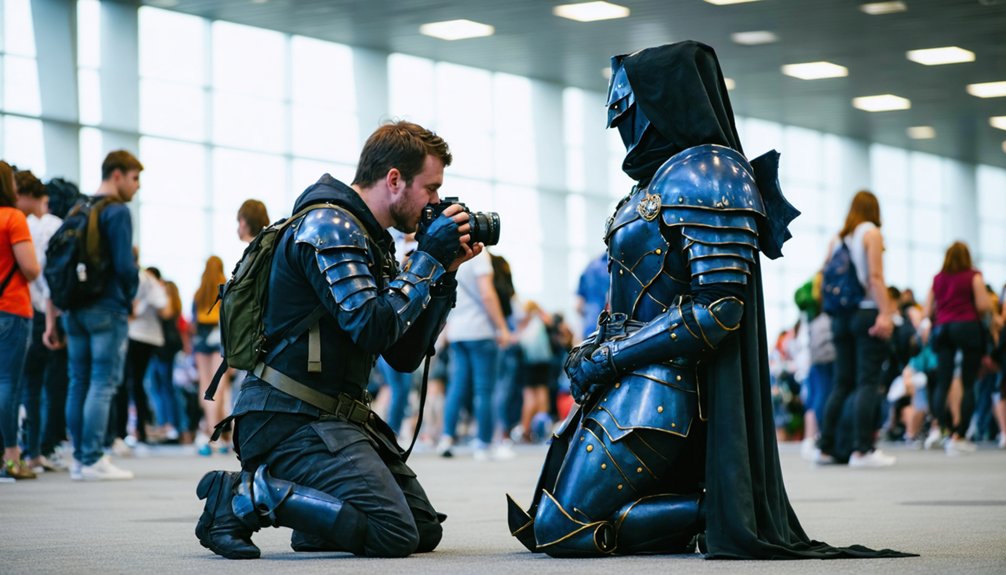
Boundaries in cosplay partnerships protect your creative work, physical space, and emotional well-being from the moment you start collaborating. They prevent misunderstandings around poses, physical contact, and social media sharing before conflicts arise. Without them, trust erodes, burnout increases, and partnerships fall apart. Clear boundaries also help dispel the harmful myth that costumes imply consent. Setting them early keeps collaborations respectful, sustainable, and safe — and there’s much more to uncover about making them work for you.
Key Takeaways
- Boundaries build trust between cosplay partners, creating a foundation for productive, respectful, and safer collaborations during photoshoots, conventions, and creative projects.
- Clear boundaries prevent misunderstandings around physical contact, acceptable poses, and social media sharing before issues arise.
- Wearing a costume does not imply consent; explicit communication ensures every cosplayer retains full autonomy over their body.
- Ignoring boundaries erodes trust, negatively impacts mental health, and can cause cosplayers to withdraw from the community entirely.
- Establishing and modeling healthy boundaries normalizes consent-based interactions, reducing harassment and shaping a more inclusive cosplay culture.
What Do Boundaries Actually Mean in Cosplay Partnerships?
Boundaries in cosplay partnerships are the personal limits you set around your time, body, creative work, and emotional energy. They define what you’re comfortable with during photoshoots, collaborations, conventions, and online interactions.
Strong cosplay etiquette starts with recognizing that these limits aren’t obstacles — they’re foundations for healthier, more productive partnerships.
Boundary awareness means you understand your own needs and communicate them clearly before issues arise. Whether you’re working with a photographer, co-cosplayer, or fan, your limits deserve respect without negotiation or pressure.
Boundaries cover physical contact, content creation expectations, scheduling, and emotional involvement.
When both parties practice boundary awareness, collaboration becomes more innovative and sustainable. You protect your creativity, prevent burnout, and build partnerships rooted in mutual respect rather than uncomfortable obligation.
Why Cosplay Doesn’t Equal Consent
When you put on a costume, you’re expressing creativity and passion — not issuing an open invitation for physical contact, unsolicited photography, or inappropriate comments.
No matter how revealing or recognizable a character’s design is, wearing it doesn’t transfer any rights to others. You remain a real person with full authority over your body and interactions, regardless of who you’re portraying.
Costumes Don’t Imply Permission
Wearing a revealing or character-specific costume doesn’t give anyone permission to touch, photograph, or make inappropriate comments toward a cosplayer. Costume consent isn’t implied by what someone wears—it’s earned through direct, explicit communication.
When you attend conventions or collaborate on shoots, you’re responsible for asking before acting, regardless of how someone’s dressed.
Boundary breaches often happen when people misread a costume as an open invitation. They’re not. A character’s fictional persona doesn’t transfer real-world permissions to the person portraying them.
You need to treat every cosplayer as an individual with full autonomy over their body, space, and image.
Respecting this principle isn’t just courteous—it’s foundational to building a safer, more trustworthy cosplay community where everyone can participate without fear.
Respect Overrides Character Portrayal
Even when a costume invites recognition, it doesn’t invite liberties. When you portray a character, you’re expressing creativity, not surrendering your social boundaries. The role ends where your personal comfort begins.
Strong cosplay etiquette means understanding that character portrayal never overrides the real person wearing the costume. You’re not obligated to act out scenes, accept physical contact, or engage in roleplay simply because someone recognizes your character.
The fiction belongs to the story—not to you.
When collaborating with photographers, partners, or fans, remind yourself that respect operates independently of any costume. Your boundaries remain valid regardless of how iconic or revealing the character is.
A community that genuinely values innovation honors the person first, the character second—always.
How Clear Communication Prevents Conflict Before It Starts
When you set expectations before a shoot or meetup, you remove the guesswork that leads to friction later.
Talking openly about what you’re comfortable with helps both parties stay on the same page and prevents misunderstandings from snowballing into real conflict.
If tension does surface, addressing it directly and early keeps the partnership intact and the experience positive for everyone involved.
Setting Expectations Early
Before a single costume piece is sewn or a shoot location is scouted, clear communication can prevent most conflicts that arise in cosplay partnerships. Setting expectations early means discussing cosplay etiquette, creative roles, and costume permissions before collaboration begins.
You should outline who owns the final images, what poses are acceptable, and how decisions get made when disagreements surface. These conversations aren’t obstacles to creativity — they’re the foundation that makes creative risk-taking safer.
When both partners know exactly what’s expected, there’s less room for assumption and more space for innovation. Starting with honesty signals mutual respect and signals that neither person’s comfort will be negotiated under pressure.
Early clarity doesn’t limit your partnership; it strengthens it.
Preventing Misunderstandings Together
Clear communication doesn’t just smooth over conflict — it stops most of it from starting. When you’re co-creating with another cosplayer, misunderstandings often stem from assumed expectations, not bad intentions.
Practicing solid cosplay etiquette means naming your limits before problems arise.
Use these three steps to prevent misunderstandings early:
- Discuss boundaries before the shoot — clarify physical contact, costume choices, and content use upfront.
- Establish social media boundaries — agree on what gets posted, tagged, or shared before anything goes live.
- Check in regularly — comfort levels shift, so revisit agreements throughout your collaboration.
You don’t have to wait for tension to speak up. Proactive communication builds the trust that makes creative partnerships stronger, safer, and more rewarding for everyone involved.
Addressing Conflict Before Escalation
Most conflicts in cosplay partnerships don’t explode without warning — they build quietly from unspoken expectations. When you practice strong cosplay etiquette, you catch tension early rather than letting it harden into resentment.
Address discomfort directly and promptly. If a collaborator’s behavior feels off during fan interactions or a photoshoot, name it immediately. Waiting gives the problem room to grow.
Use clear, specific language. Instead of hinting, say exactly what’s bothering you and what you need changed. This approach keeps both sides informed and accountable.
You don’t have to wait for a major violation to speak up. Small corrections made early prevent larger confrontations later.
When you both commit to open, honest communication, you protect the partnership and keep the creative work moving forward together.
What Happens When Cosplay Boundaries Get Ignored?

When cosplay boundaries get ignored, the consequences can ripple far beyond a single uncomfortable moment. Consent misconceptions often fuel violations—someone assumes a costume signals openness to contact or roleplay. That assumption causes real harm.
Boundary enforcement becomes necessary when respect fails. Here’s what typically follows ignored boundaries:
- Trust erodes between cosplayers, photographers, and collaborators, damaging partnerships that took time to build.
- Mental health suffers—repeated violations contribute to burnout, anxiety, and withdrawal from the community.
- Conflict escalates, sometimes requiring documentation and formal reporting to event organizers or authorities.
You have every right to enforce your limits firmly and without apology. A community that respects boundaries doesn’t just protect individuals—it builds a stronger, more sustainable cosplay culture for everyone involved.
How to Set Boundaries Before a Shoot or Collaboration
Setting boundaries before a shoot or collaboration is one of the most effective ways to protect your comfort and keep the partnership productive.
Before any session begins, clearly define what poses, physical contact, and costume safety considerations you’re comfortable with. Don’t wait until you’re on set to address these details.
Discuss event etiquette expectations early, especially if you’re working in a public space where attendees may interact with you. Outline what’s acceptable regarding photography access, touch, and roleplay requests from bystanders.
Put your limits in writing when possible. A simple pre-shoot agreement removes ambiguity and gives both parties a clear reference point.
Regular check-ins during the collaboration reinforce those boundaries and signal that your comfort remains a priority throughout the process.
How to Say No to Cosplay Requests Without Guilt
Saying no to a cosplay request isn’t a betrayal of your community—it’s an act of self-respect. Cosplay etiquette supports your right to decline without justification. Protecting your time, energy, and costume safety isn’t selfish—it’s sustainable.
Use these guilt-free strategies when declining requests:
- Be direct and brief. A simple “I’m not available for that” is complete. You don’t owe an explanation.
- Acknowledge without committing. You can appreciate someone’s interest while still declining their request entirely.
- Hold your boundary firmly. If someone pushes back, repeating your “no” calmly reinforces it without escalation.
No one in the cosplay community owns your time or participation. Saying no protects your well-being and models the respectful culture everyone deserves to experience.
How Boundaries Protect Your Mental Health and Creative Energy
Boundaries don’t just protect you from others—they protect you from yourself. Without clear creative boundaries, you’ll say yes to every collab request, every shoot, every commission—until cosplay stops feeling like passion and starts feeling like obligation. That’s how burnout happens.
When you define what you’re willing to give, you preserve the emotional resilience needed to keep creating. You protect your time, your finances, and your creative energy for projects that genuinely excite you.
Saying no isn’t selfish—it’s strategic.
Think of your creative energy as a limited resource. Boundaries determine where it flows. When you stop overcommitting, you show up more present, more inspired, and more collaborative in the partnerships you do choose.
That’s how cosplay stays sustainable long-term.
How to Find Cosplay Partners Who Actually Respect Your Limits

Finding the right cosplay partner starts long before you agree to collaborate. Observe how someone treats others at events—their cosplay etiquette reveals their values. Do they ask before touching? Do they respect interaction boundaries without being prompted?
When vetting potential partners, prioritize these actions:
- Have a direct boundary conversation early—gauge whether they listen without pushing back or minimizing your limits.
- Watch their behavior in community spaces—how they treat strangers reflects how they’ll treat collaborators.
- Start small—propose a low-stakes project first to test communication and mutual respect before committing to larger work.
You deserve partners who don’t need convincing to respect you. The right collaborator will welcome boundary discussions rather than avoid them, making the creative process safer and more rewarding for everyone involved.
Why Your Boundary Habits Shape the Cosplay Community Around You
Once you’ve found partners who respect your limits, how you practice boundaries doesn’t stay contained to those individual relationships—it ripples outward. Every time you model clear cosplay etiquette—asking before photographing, honoring a declined hug, checking in during collaborations—you signal what healthy interaction looks like to everyone watching.
Your habits normalize consent-based behavior across fan interactions, making it easier for others to set their own limits without feeling like outliers. When you consistently respect a “no,” you’re not just protecting one person; you’re reinforcing a community standard that reduces harassment and builds inclusion.
Conventions reflect the collective behavior of their attendees. The boundaries you practice and defend today actively shape the culture others experience tomorrow. That’s real, measurable influence.
Frequently Asked Questions
Can Cosplay Boundaries Apply to Online Interactions and Digital Collaborations?
Yes, boundaries absolutely explode beyond physical spaces! You’ll find virtual etiquette and digital consent are just as essential online. Respect others’ content, seek permission before sharing collaborations, and you’re actively building a thriving, innovative cosplay community.
Do Minors in Cosplay Require Different Boundary Standards Than Adults?
Yes, minors require stricter age-appropriate boundaries and heightened consent standards. You must involve parents or guardians in all approvals, guarantee content remains appropriate, and apply extra protective measures that prioritize their safety above creative or collaborative goals.
Are Written Boundary Agreements Ever Used in Professional Cosplay Partnerships?
“An ounce of prevention is worth a pound of cure” — yes, written consent agreements are used in professional cosplay partnerships. They clarify privacy considerations, protect both parties, and you’ll find they strengthen collaborative trust while preventing misunderstandings before they arise.
How Do Cultural Differences Affect Boundary Expectations at International Conventions?
Cultural sensitivity shapes how you’ll navigate boundary negotiation at international conventions. You can’t assume shared norms—so actively communicate expectations early, embrace diverse perspectives, and collaborate respectfully to build a mutually inclusive environment everyone’s comfortable participating in.
Can Boundaries in Cosplay Partnerships Change Over Time Between Established Collaborators?
Yes, boundaries can shift a million times as personal growth reshapes you and your collaborator. Even with role consistency, you’ve got to keep checking in, communicating openly, and actively honoring each other’s evolving comfort levels.
References
- https://www.havecamerawillcosplay.com/blog/cosplayisnotconsent/
- https://www.youtube.com/watch?v=A5EIUw-6BHI
- https://colinmagazine.com/blogs/news/setting-boundaries-as-a-cosplayer-and-photographer
- https://dc.etsu.edu/cgi/viewcontent.cgi?article=5189&context=etd
- https://starstruckpanda.com/creating-safe-spaces-in-cosplay-conventions/
- https://www.catleencosplay.com/2024/11/22/setting-boundaries-in-the-cosplay-community/