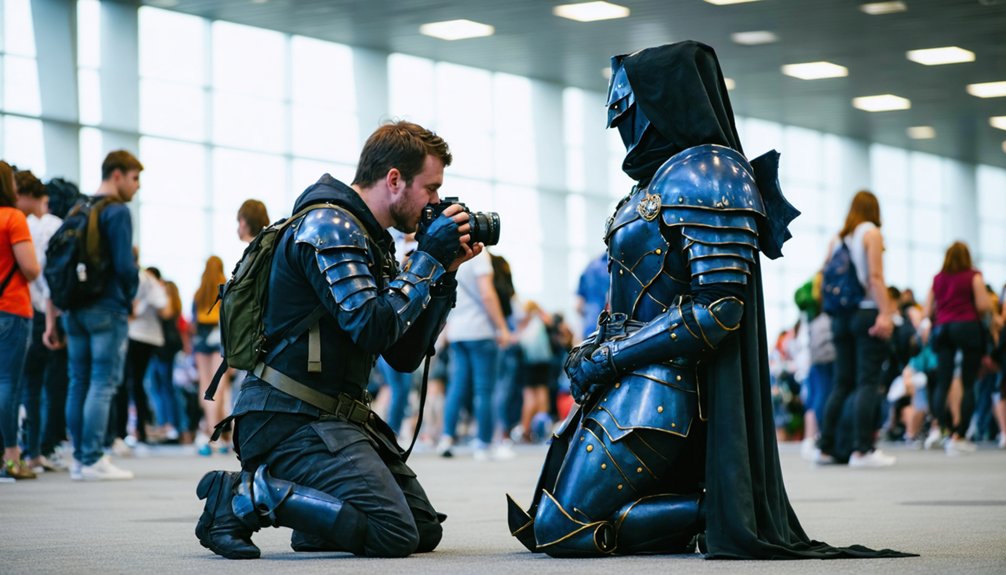
Setting personal boundaries in cosplay groups starts with identifying your limits before events begin. You should communicate them clearly and directly, using explicit language like “I don’t accept hugs.” Always ask before touching or photographing anyone, and look for enthusiastic consent rather than hesitation. Recognize escalation signs early, document violations promptly, and report them through official channels. Communities that normalize these practices report fewer incidents—and there’s much more to unpack about making consent the default.
Key Takeaways
- Set boundaries early by identifying personal limits around physical contact, photography, and conversation before engaging in cosplay events or group interactions.
- Always ask for explicit, enthusiastic consent before touching or photographing a cosplayer, never assuming costume choice implies permission.
- Use clear, direct language to communicate boundaries, such as “I don’t accept hugs,” leaving no room for misinterpretation.
- Recognize escalation signs like persistent contact after rejection or retaliatory responses, and document incidents with dates, locations, and witnesses.
- Foster collective responsibility by normalizing consent education during onboarding and group events, shifting communities from reactive to proactive safety cultures.
Ask Before You Touch or Photograph a Cosplayer
Whether you’re a first-time attendee or a seasoned cosplay veteran, asking before you touch or photograph a cosplayer isn’t just courteous—it’s a foundational boundary that protects everyone’s physical autonomy and dignity.
Costume safety depends on it—elaborate builds can break under unexpected handling, and prop handling without permission risks damaging hours of skilled craftsmanship.
Research on convention culture consistently shows that explicit consent reduces harassment incidents and builds stronger community trust.
Before you snap a photo, get a clear, enthusiastic “yes.” Before adjusting someone’s costume or prop, ask directly. Don’t interpret a striking outfit as an open invitation.
You set a higher community standard when you model this behavior publicly. Consent isn’t a barrier to connection—it’s the framework that makes genuine, respectful interaction possible for everyone.
How to Set Your Own Boundaries at Cosplay Events
Asking for consent protects others, but knowing how to assert your own boundaries is equally important. You define what interactions feel safe and respectful for you, and cosplay etiquette supports your right to do exactly that.
Start by identifying your limits before the event begins. Decide what physical contact, photography, and conversation you’re comfortable with. Then communicate those boundaries clearly and early using direct language. Saying “I don’t accept hugs” removes ambiguity immediately.
Know your limits before you arrive. Communicate them early and directly — clear language leaves no room for misunderstanding.
Protect your personal space by positioning yourself deliberately in crowded areas and recognizing when proximity feels uncomfortable. You don’t owe anyone an explanation when you decline an interaction.
Practice stating your limits confidently until it feels natural. Communities that value innovation in safety culture recognize that self-advocacy strengthens everyone’s experience at cosplay events.
What Enthusiastic Consent Actually Looks Like
Enthusiastic consent sounds like a clear, unprompted “yes” rather than a hesitant pause or vague non-answer, and you should treat anything less as a firm no.
You can’t rely on a single agreement at the start of an event to cover every photo request, hug, or interaction that follows, since consent must be confirmed fresh each time.
Research on harassment prevention consistently shows that checking in repeatedly—rather than assuming ongoing permission—reduces boundary violations and builds trust within cosplay communities.
Recognizing Clear Verbal Agreement
Recognizing what enthusiastic consent looks like in practice helps you engage more confidently and respectfully within cosplay groups. Clear verbal agreement means hearing an explicit, unprompted “yes” rather than interpreting silence or hesitation as permission. Phrases like “absolutely,” “I’d love that,” or “go ahead” signal genuine willingness.
However, you shouldn’t rely solely on non-verbal cues, since body language varies markedly across cultural differences. What reads as openness in one cultural context may indicate discomfort in another. Verbal confirmation removes that ambiguity entirely.
You should also confirm consent for each new interaction rather than assuming previous agreement carries forward. Enthusiastic consent stays dynamic, meaning it can shift at any moment.
Prioritizing clear verbal agreement protects everyone involved and strengthens the collective trust within your community.
Confirming Consent Each Interaction
Consent isn’t a one-time checkbox you mark at the start of an interaction and carry forward indefinitely. Every new request—a photo, a touch, a closer look at costume etiquette details—requires its own fresh confirmation.
Enthusiastic consent looks like an immediate, clear “yes,” not silence, hesitation, or reluctant compliance.
You should actively re-confirm before shifting from conversation to photography, or from photography to physical proximity. Personal space isn’t automatically negotiable just because someone consented earlier.
Context changes, energy shifts, and comfort levels fluctuate throughout an event.
Watch for enthusiastic body language alongside verbal agreement—both signals matter. If someone’s response feels uncertain, treat it as a no.
Precision here isn’t overcaution; it’s the foundation of a genuinely respectful cosplay community.
Signs That Cosplay Harassment Is Escalating
When cosplay harassment escalates, it rarely happens all at once — it follows a pattern of boundary-testing behaviors that intensify over time. Recognizing these patterns early disrupts the power imbalance before repeated boundary crossing causes lasting harm:
- Persistent contact attempts after you’ve already declined interaction
- Uninvited touching that’s dismissed as accidental or playful
- Escalating personal questions that shift from costume craft to private life
- Monitoring your location throughout the event without invitation
- Retaliatory responses when you enforce your boundaries, including public shaming
You’re not overreacting when something feels wrong — your instincts are data. Document each incident immediately, noting timestamps and witnesses. Early reporting protects you and creates accountability systems that safeguard your entire community going forward.
How to Report Boundary Violations at a Convention
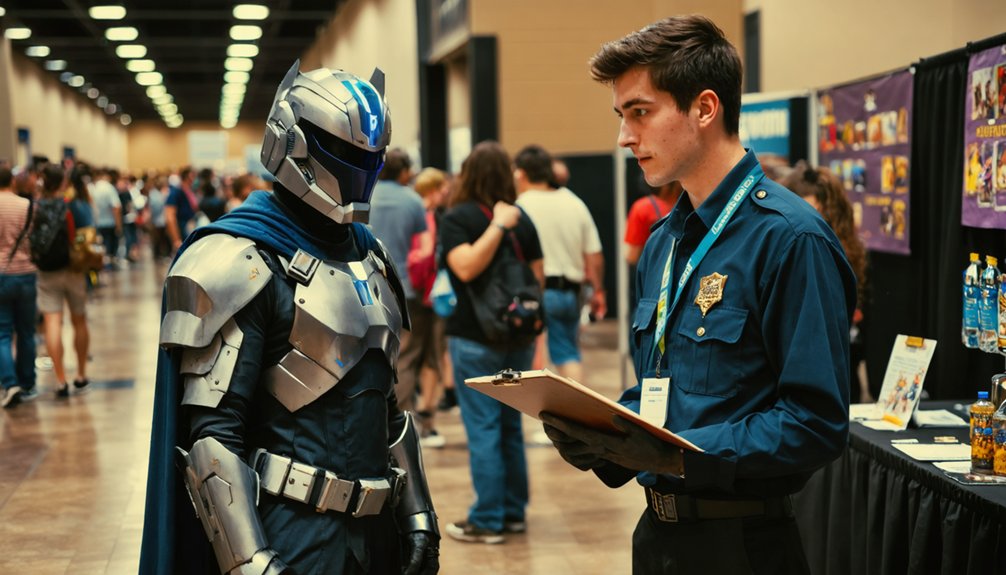
Once you’ve identified escalating harassment, acting on that recognition by reporting it is what converts awareness into protection. Boundary escalation rarely resolves without intervention, so you’ll need a systematic approach.
Start with incident documentation: record the date, time, location, specific behaviors, and any witness names immediately after the event occurs. Precise details strengthen your report considerably.
Document everything immediately: date, time, location, behaviors, and witnesses. Precise details make your report far stronger.
Next, bring your documentation directly to convention staff, security personnel, or designated safety officers. Many events now use digital reporting tools or dedicated harassment response teams—use them.
If the violation involves physical assault or credible threats, contact local authorities without delay.
Finally, share verified reports with community organizers to create protective patterns across future events. Your action doesn’t just protect you—it protects every cosplayer who follows.
Cosplayers Deserve Respect Outside the Convention Too
The convention floor isn’t the boundary of a cosplayer’s right to privacy and respect. Cosplayer privacy extends into every digital and offline space you occupy together. Respectful communication means you don’t pursue contact beyond mutually agreed platforms or times.
Apply these standards consistently:
- Never post photos without explicit online consent from the cosplayer
- Don’t share private details about cosplayers on social media
- Avoid contacting them outside agreed-upon event times or channels
- Accept their decision to decline interaction without demanding explanations
- Keep clear boundaries between public event behavior and personal relationships
These aren’t suggestions — they’re ethical baselines. Cosplayers aren’t characters who exist solely for your engagement.
When you extend respect beyond the convention, you actively contribute to a safer, more innovative community for everyone.
How Your Cosplay Community Can Make Consent the Default
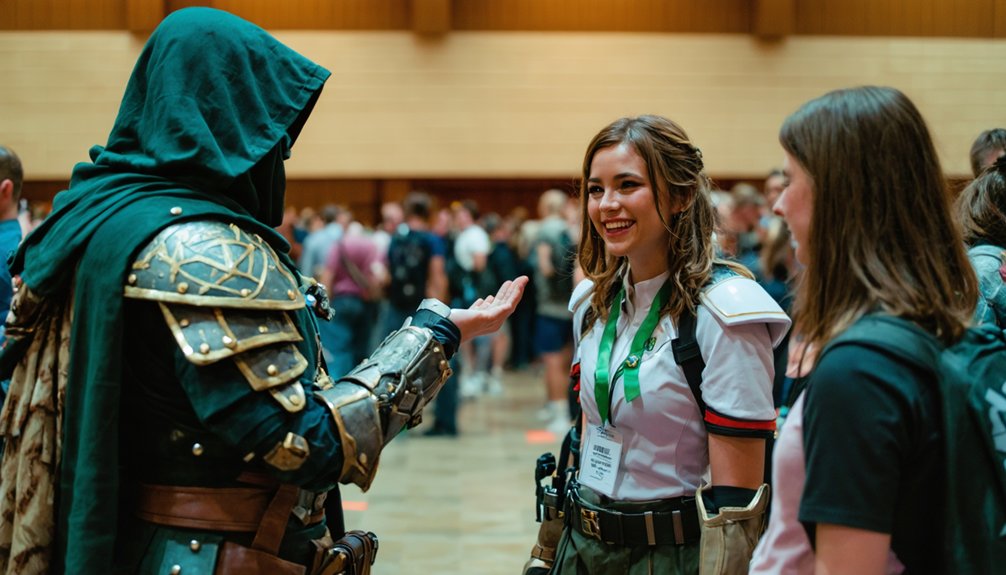
Building a culture where consent is the default requires deliberate, community-wide action — not just individual good intentions. When you normalize cosplay etiquette from the start — during onboarding, group chats, and event planning — consent stops feeling like an obstacle and starts functioning as infrastructure.
Community accountability means you don’t wait for violations to educate. You model clear, enthusiastic consent in every interaction and correct others respectfully when they miss the mark. Share consent guidelines in your group’s digital spaces. Brief new members before events. Recognize and celebrate those who uphold boundaries publicly.
Research consistently shows that communities with explicit behavioral norms report fewer incidents. You have the power to make consent feel instinctive — because when it’s built into your culture, it becomes everyone’s responsibility, not just a rule someone broke.
Frequently Asked Questions
Can Cosplay Minors Have Different Boundary Rules Than Adult Cosplayers?
Yes, minors require stricter boundaries. You must apply age restrictions diligently, securing parental consent before any interaction, photography, or contact. They’re afforded enhanced protections, demanding heightened vigilance from communities, event organizers, and fellow cosplayers to ensure their absolute safety.
How Do Language Barriers Affect Consent Communication Between International Convention Attendees?
Like steering uncharted waters, you must prioritize language clarity across cultural differences. Use universal visual consent cards, simple gesture systems, and translation apps to bridge communication gaps, ensuring every international attendee’s boundaries receive equal respect and understanding.
Should Cosplay Groups Have Written Boundary Policies Before Organizing Group Events?
You should establish written boundary policies before organizing group events. They strengthen group cohesion, standardize communication protocols, and give every member clear, evidence-based guidelines that actively protect safety, normalize consent, and foster innovative, inclusive participation for all attendees.
Are Boundary Expectations Different in Private Cosplay Photoshoots Versus Public Conventions?
Yes, boundary expectations differ. In private photoshoots, you’ll find more intimate consent communication is required, making personal comfort a priority throughout. At public conventions, you’re steering through broader, faster-paced interactions demanding equally clear but more immediate boundary-setting approaches.
How Do Online Cosplay Communities Handle Boundary Violations Within Digital Group Spaces?
Document violations, report offenders, protect members—you’ll find online cosplay communities enforce digital etiquette through moderator oversight, clear community guidelines, and ban protocols. Respectful communication’s prioritized by actively removing harmful content and educating members on boundary compliance.
References
- https://www.catleencosplay.com/2024/11/22/setting-boundaries-in-the-cosplay-community/
- https://starstruckpanda.com/creating-safe-spaces-in-cosplay-conventions/
- https://www.nerdcaliber.com/cosplayers-guide-to-etiquette/
- https://www.havecamerawillcosplay.com/blog/cosplayisnotconsent/
- https://fastercapital.com/topics/handling-personal-space-and-boundaries.html
- https://www.youtube.com/watch?v=cpFwzYZsIR0
- https://www.archaia.com/cosplay-etiquette-understanding-the-dos-and-donts-at-events/
- https://www.reddit.com/r/cosplayers/comments/1kld6mh/con_safety/
- https://www.queencosplay.com/blog/cosplay-is-not-consent
- https://www.facebook.com/groups/BaguioCosplayCommunity/posts/5822046207819225/