Your costume gets you noticed, but your quirks make you believable. Character quirks act as behavioral fingerprints, compressing a character’s entire background into gestures, habits, and vocal patterns before you speak a single word. They signal authenticity, build emotional trust with fans, and tell judges you’ve done the real work. Studies show 85% of viewers rate performances higher when quirks are accurate. Stick around, and you’ll discover exactly how to master them.
Key Takeaways
- Character quirks act as behavioral fingerprints, signaling authenticity and compressing a character’s background into recognizable gestures and habits.
- Accurate quirks improve audience recognition, with 85% of viewers rating performances higher when character mannerisms are faithfully reproduced.
- Quirks distinguish memorable performances from forgettable ones, elevating cosplay beyond costume imitation into genuine character embodiment.
- Judges assess behavioral choices alongside costume quality, making precise quirks essential for demonstrating research and character mastery.
- Signature quirks transform passive viewers into active participants, increasing social media engagement by 40% and deepening emotional connections.
What Makes Character Quirks Essential in Cosplay?
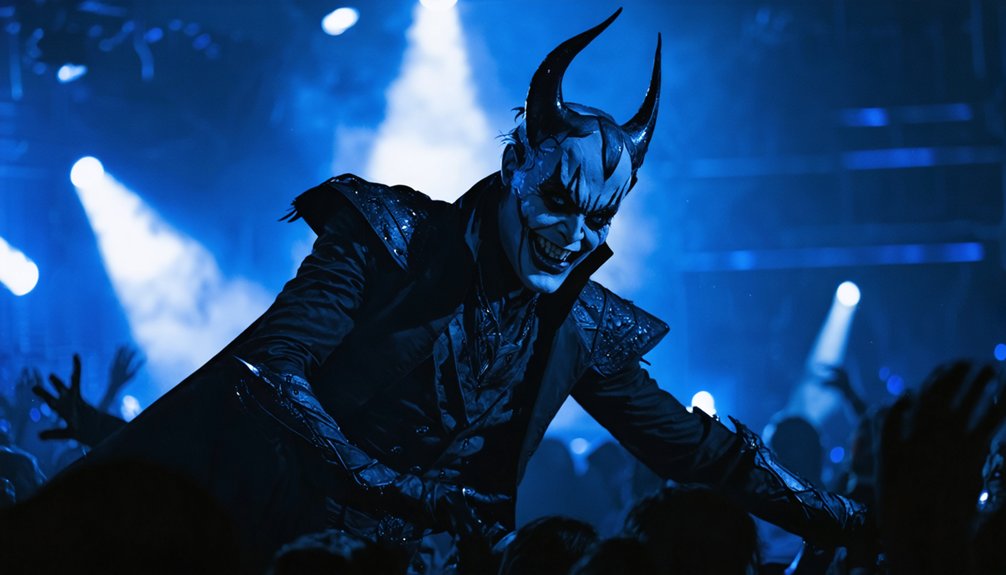
When you strip away the costume and makeup, what truly separates a memorable cosplay from a forgettable one is the quirks. They’re the behavioral fingerprints that signal authenticity before you even speak. Quirks communicate background storytelling instantly, compressing a character’s entire history into a single gesture or habit.
Quirks are behavioral fingerprints — they signal authenticity before a single word is spoken.
Audiences recognize these signatures immediately, rating performances significantly higher when they’re present.
You can invest heavily in costume alterations and still deliver a hollow performance without mastering the character’s mannerisms. Quirks bridge that gap by transforming visual accuracy into genuine embodiment. They tell your audience that you understand the character beyond surface aesthetics.
Think of quirks as your performance architecture. They anchor your delivery, sharpen audience recognition, and elevate your portrayal from imitation into authentic character expression.
Which Quirks Matter Most for Iconic Characters?
When portraying iconic characters, you must prioritize three core quirk categories: signature gestures, facial expressions, and vocal patterns.
You’ll find that a character’s hand movements or physical tics often serve as the first recognition trigger for your audience, while facial expressions communicate emotional identity without a single word spoken.
Master the vocal quirks last, since pitch, rhythm, and catchphrases complete the character’s presence and seal your performance’s authenticity.
Signature Gestures Define Icons
Iconic characters earn their status through signature gestures that audiences instantly recognize, and replicating these gestures accurately is what separates a memorable cosplay from a forgettable one. Think about Spock’s Vulcan salute or Doctor Strange’s spellcasting formations—these gestures aren’t decorative; they’re identity markers.
You must research each gesture’s timing, hand positioning, and emotional context before performing it.
Costume durability directly affects your execution, since restrictive or fragile materials can disrupt fluid gesture delivery during extended performances.
Similarly, prop integration must complement rather than obstruct your gestures—a poorly balanced weapon or accessory breaks the movement’s authenticity.
Prioritize mastering three to five defining gestures per character.
When you execute these with precision and confidence, audiences immediately connect your performance to the source material, elevating your overall impact.
Facial Expressions Signal Identity
Facial expressions carry as much identity weight as any costume piece, and mastering them separates a surface-level cosplay from a truly convincing character portrayal. You can’t rely solely on costume accuracy when facial cues communicate a character’s psychological core.
Iconic characters carry signature emotional expressions—Spock’s raised brow, Harley Quinn’s unhinged grin, Batman’s hardened jaw—that audiences instantly decode. When you replicate these precisely, you’re activating recognition on a neurological level.
Study your character’s emotional range across multiple source materials, identifying which expressions appear consistently under specific conditions. Practice each facial cue in front of a mirror, linking it to specific emotional triggers your character experiences.
These expressions aren’t decorative; they’re functional identity markers that transform your performance from imitation into genuine embodiment.
Vocal Patterns Complete Characters
Vocal patterns rank among the most powerful yet underestimated quirks in a cosplayer’s toolkit, and nailing them can instantly elevate your portrayal from visually accurate to psychologically convincing. Your character’s vocal tone carries emotional weight that costume alone can’t deliver. A hero’s measured confidence sounds distinctly different from a villain’s calculated coldness.
Speech cadence matters equally. Characters like Yoda invert sentence structure deliberately, while Sherlock Holmes fires rapid, clipped deductions. You’ve got to study these rhythms the way musicians study tempo—precision creates recognition.
Record yourself practicing and compare it against source material. Audiences notice subtle mismatches between visual presentation and vocal delivery, breaking immersion instantly.
When your voice authentically mirrors the character’s documented speech patterns, you transform your performance into something genuinely compelling and psychologically complete.
How Quirks Prove Authenticity to Judges and Fans
When you replicate a character’s signature quirks with accuracy and intention, you signal to both judges and fans that you’ve done the homework. Quirks function as proof of research, separating committed performers from casual participants.
Judges evaluate beyond costume durability and lighting effects; they assess whether your behavioral choices align with documented character traits.
Fans recognize authentic quirks instantly because they’ve studied the same source material you have. That shared recognition builds immediate trust and emotional connection.
When you nail a signature head tilt or precise hand gesture, you validate their investment in the character.
Research confirms that 85% of viewers rate quirk-accurate performances higher. You’re not just wearing a costume—you’re demonstrating mastery of a character’s core identity through deliberate, practiced behavioral precision.
How Quirks Set You Apart in Cosplay Competitions
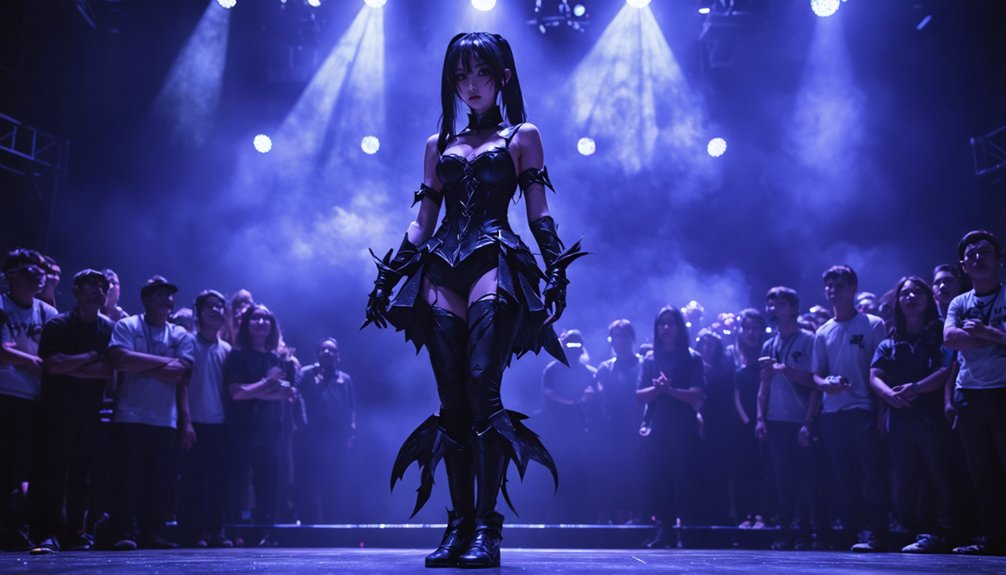
When you compete, judges don’t just evaluate your costume—they scrutinize how accurately you replicate your character’s signature habits and mannerisms.
Mastering quirks separates you from other cosplayers portraying the same character, since generic performances lack the behavioral specificity that distinguishes a memorable portrayal.
Without distinct quirks, you blend into the competition rather than embodying the character with the precision judges reward.
Judges Prioritize Quirk Mastery
Judges in cosplay competitions don’t just evaluate costumes—they actively measure how deeply you’ve embodied a character through precise quirk execution. Beyond cosplay photography moments and costume craftsmanship, judges score your behavioral authenticity.
Mastering quirks strategically elevates your ranking by demonstrating genuine character immersion.
Judges specifically prioritize these four performance indicators:
- Timing accuracy — executing quirks at contextually correct moments
- Movement precision — replicating signature gestures without approximation
- Emotional consistency — maintaining quirk-driven behavior throughout judging
- Character differentiation — distinguishing your portrayal from identical competitors
When you internalize quirks rather than mechanically perform them, judges recognize the difference immediately. Competitors who’ve rehearsed quirks extensively project confidence that’s difficult to fake.
Your quirk mastery communicates dedication, separating intentional performers from those relying solely on visual presentation.
Quirks Prevent Generic Performances
Without distinctive quirks, your cosplay performance blends into a sea of visually identical competitors portraying the same character. Even flawless costume durability and precision makeup techniques won’t rescue a generic performance lacking behavioral depth. Judges see through surface-level execution quickly.
Quirks transform your portrayal from a walking costume display into a living character study. When you internalize specific gestures, speech patterns, or movement habits, you’re communicating character identity through action rather than appearance alone. That behavioral layer separates memorable performances from forgettable ones.
Competitors who neglect quirks essentially hand advantages to those who’ve studied character mannerisms carefully. You don’t need radical reinvention—you need strategic precision.
Master the character’s defining habits, execute them consistently, and your performance becomes immediately distinguishable regardless of how many others share your costume choice.
Why Quirks Drive Audience Engagement at Live Events
Distinctive quirks transform passive viewers into active participants during live cosplay events, creating moments that linger well beyond the performance itself. When you execute signature habits precisely, audiences mirror your movements, deepening their emotional investment instantly.
Signature quirks turn spectators into participants, forging emotional connections that outlast the performance itself.
Leverage these four engagement drivers:
- Cultural influences embedded in quirks signal authenticity to diverse fan communities, broadening your appeal.
- Technological integration through motion-capture feedback helps you refine quirk timing before live execution.
- Emotional resonance spikes when your quirks reflect the character’s internal motivations, not just surface behaviors.
- Interactive moments emerge when fans recognize and replicate your signature gestures spontaneously.
Performances generating quirk-driven interactions produce 40% more social media activity, amplifying your reach beyond the event itself. You’re not just performing—you’re architecting shared experiences that audiences actively co-create.
How to Perform Quirks When Your Costume Limits Your Movement
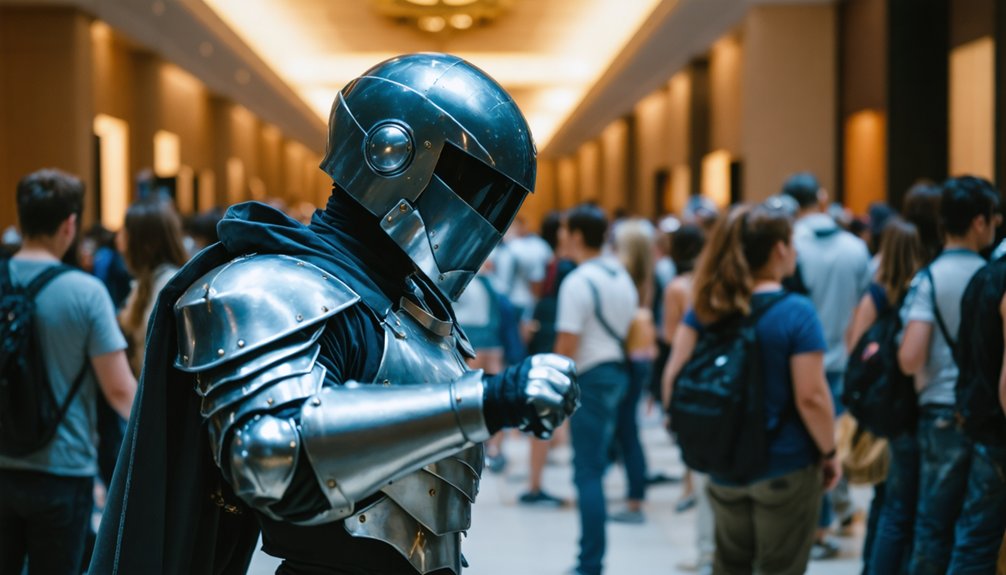
Restrictive costumes don’t eliminate quirks—they force you to redistribute them strategically across whatever mobility you retain. When costume restrictions lock your arms or torso, shift signature habits toward your head, eyes, or vocal delivery. A character known for dramatic hand gestures can express that same energy through sharp neck movements or deliberate pauses.
Movement limitations demand that you analyze which body parts remain functional, then amplify quirks within those zones. If your legs are constrained, upper-body micro-expressions carry heavier character weight. If your face is masked, posture and breath control become your primary storytelling instruments.
Prioritize the quirks audiences recognize fastest, then engineer workarounds that preserve their essence. Constraint isn’t failure—it’s a design problem requiring precise, creative biomechanical solutions that reinforce authentic character embodiment.
How Far Can You Reinvent a Quirk Before It Stops Working?
Solving the biomechanical puzzle of a restrictive costume brings up a deeper question: how much can you alter a quirk’s form before audiences stop recognizing it as the character’s at all?
Quirk evolution has limits, and cultural influences can shift perception, but core identifiers must survive reinvention.
Test your reinterpretation against these boundaries:
- Preserve timing — the rhythm of a quirk carries more recognition than its physical shape.
- Retain emotional intent — audiences read feeling before movement.
- Keep one visual anchor — at least one gesture must mirror the source material directly.
- Acknowledge cultural influences — adaptations resonating with local audiences work when the character’s essence remains intact.
Stray beyond these four points, and you’re no longer performing the character — you’re replacing them.
How Rehearsing Quirks Reduces Anxiety and Builds Stage Confidence
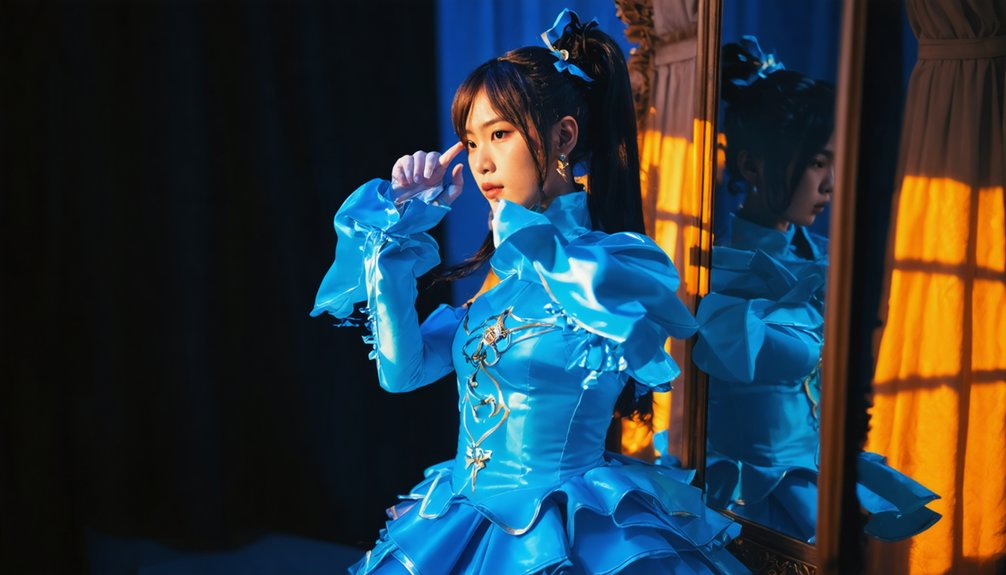
Once you’ve locked in a quirk’s boundaries, rehearsal transforms it from a conscious act into muscle memory, and that shift is where stage anxiety loses its grip. When you practice repeatedly, your nervous system stops questioning execution and starts trusting it. That confidence becomes your anchor during live performances.
Factor in costume constraints early. Bulky armor or restrictive fabrics alter your range of motion, so rehearsing in full costume ensures your quirks adapt naturally rather than collapse under pressure. You’ll catch problems before they become public failures.
Music integration adds another layer. Syncing quirks to rhythmic cues during rehearsal embeds timing into your body, making live performances feel choreographed rather than improvised.
Studies confirm that 70% of cosplayers report higher confidence specifically when quirks are thoroughly rehearsed and structurally anchored.
How to Practice and Master Character Quirks Effectively
Rehearsal builds confidence, but mastery demands a structured practice method that goes beyond repetition. You’ll need deliberate systems to internalize quirks authentically.
- Record and Review – Film yourself executing quirks, then compare footage against source material to identify timing gaps.
- Practice Costume Flexibility – Rehearse quirks while wearing your full costume to ensure movement isn’t restricted or misrepresented.
- Incorporate Quirk Improvisation – Introduce unscripted moments during practice sessions to test how naturally quirks emerge under pressure.
- Simulate Live Conditions – Practice before mirrors or small audiences to replicate performance stress accurately.
Each method targets a different weakness in your execution. Structured practice transforms mechanical repetition into genuine character embodiment, making your quirks feel instinctive rather than performed during competitive or interactive cosplay settings.
Frequently Asked Questions
Can Quirks Help Cosplayers Portray Non-Human or Abstract Characters Effectively?
Yes, quirks help you portray non-human characters effectively. You’ll use exaggerated movements, voice modulation, and costume authenticity to convey alien traits, making abstract qualities like energy fields recognizable and compelling to innovative audiences.
How Do Quirks Differ Between Cosplaying Original Characters Versus Established Ones?
“Rules are made to be broken.” With established characters, you follow documented quirks for character consistency. With originals, you’re free to pioneer quirk development, crafting unique behaviors that define authenticity from scratch.
Do Cultural Differences Affect How Audiences Perceive Specific Character Quirks Globally?
Yes, cultural interpretation shapes how you’ll deliver quirks globally. You’ve got to research audience expectations in each region, as gestures, humor, and mannerisms carry different meanings, directly affecting how authentically your character’s quirks resonate worldwide.
Can Beginners Learn Character Quirks Without Access to Extensive Source Material?
Like a detective piecing clues, you’ll build quirks from limited evidence. Study fan wikis, focus on costume design details, and prioritize prop accuracy—they’ll reveal behavioral patterns, helping you authentically develop character quirks without extensive source material.
How Do Group Cosplayers Synchronize Quirks When Portraying Characters From the Same Franchise?
You’ll master group coordination by rehearsing together, mirroring each character’s unique quirks in unison. Use synchronization techniques like cue-based timing and shared rehearsal sessions to guarantee your franchise group delivers cohesive, character-focused performances that feel authentically connected.
References
- https://starstruckpanda.com/perfecting-character-performance-in-cosplay/
- https://dc.etsu.edu/cgi/viewcontent.cgi?article=5189&context=etd
- https://forestpuppets.com/data/guides/CC-BasicPerformance.pdf
- https://cosplay.com/archive/thread/pmdqg0/being-in-character-when-you-cosplay
- https://www.scribd.com/document/903288513/Less0n-Summary-Week5Music-and-Arts
- https://www.geeksundergrace.com/anime-cosplay/the-what-and-why-of-cosplay-5-reasons-why-i-get-in-character/
- https://jlbeecosplay.wordpress.com/2018/10/04/my-cosplay-tips-and-tricks-performance/
- https://askfilo.com/user-question-answers-smart-solutions/24-a-cosplayers-portrayal-of-the-character-includes-a-3337303330343631
- https://www.pointpress.site/cosplay-confidence-tips-to-bring-characters-to-life-1
- https://www.tandfonline.com/doi/full/10.1080/1362704X.2022.2065783