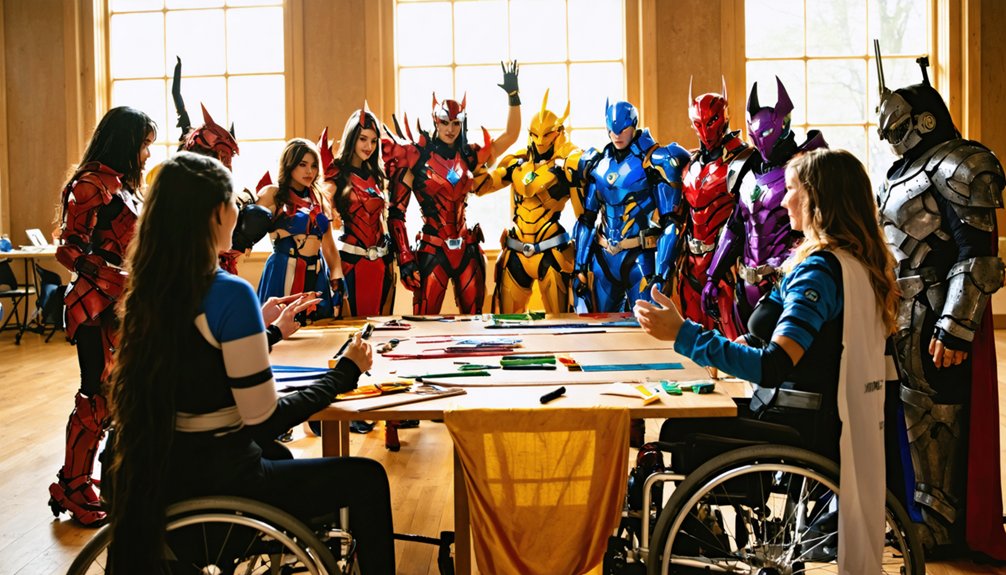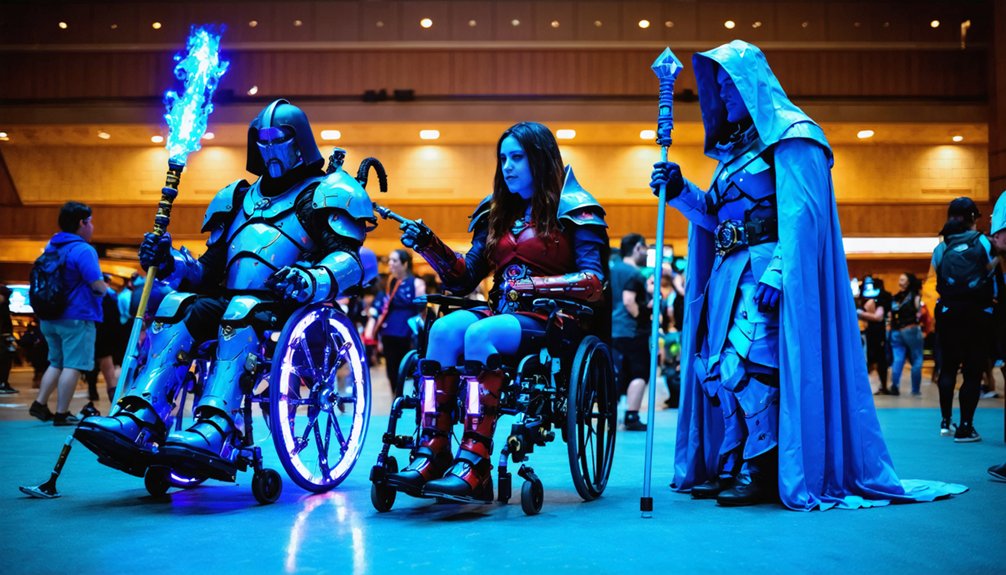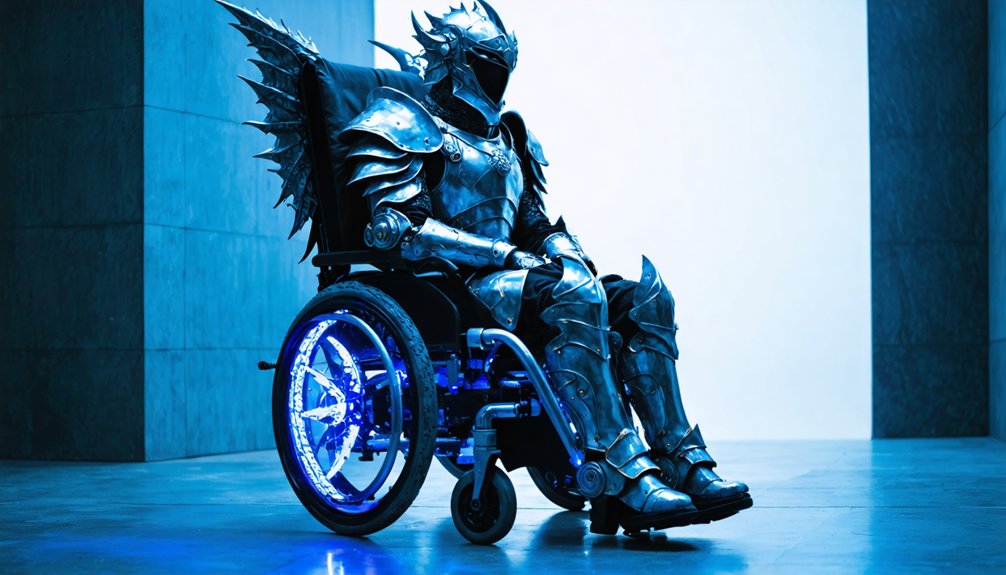
Your wheelchair isn’t a limitation—it’s your most powerful costume element. Choose characters like Professor X or Daenerys Targaryen whose seated presence commands attention. Use four-way stretch fabrics for comfort, magnetic fasteners for one-handed dressing, and sensory-friendly materials to prevent irritation. Transform your chair into a spaceship, throne, or pirate ship with decorative attachments. Test everything while seated before your event. Stick around, and you’ll discover exactly how to pull it all together.
Key Takeaways
- Choose characters like Professor X or Daenerys Targaryen whose seated positions naturally integrate a wheelchair into the costume design.
- Use four-way matte stretch fabric and soft breathable knits to ensure comfort, flexibility, and sensory sensitivity during wear.
- Incorporate magnetic fasteners, Velcro strips, and hidden side zippers for easy, one-handed dressing while seated.
- Transform the wheelchair into a themed centerpiece, such as a spaceship or pirate ship, ensuring controls remain accessible.
- Scout venues in advance to confirm accessibility, clear pathways, and minimal sensory triggers like strobe lights or fog machines.
Pick the Right Character for Your Wheelchair Setup
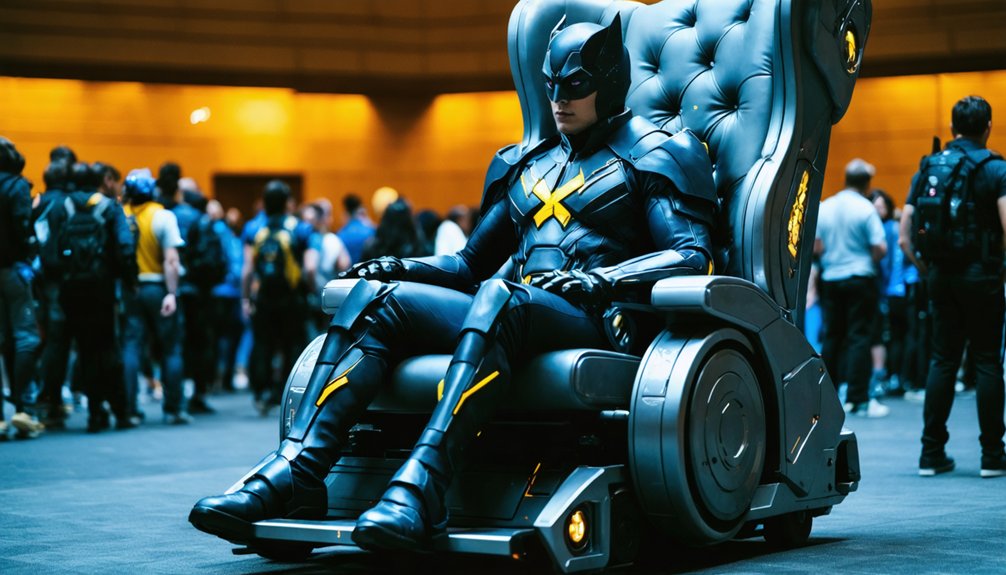
Choosing the right character can make or break your wheelchair cosplay experience. Start by evaluating character compatibility — consider characters who naturally use thrones, vehicles, cockpits, or power-based seats.
Daenerys Targaryen, Professor X, or a sea queen instantly align with wheelchair aesthetics, transforming your mobility aid into a deliberate design element rather than an afterthought.
Characters like Professor X or a sea queen don’t adapt to wheelchairs — they make them iconic.
Think beyond traditional standing characters. Your wheelchair can become a pirate ship, spaceship cockpit, or seashell throne with the right concept.
Characters commanding powerful seats carry natural authority, making your cosplay visually compelling and narratively authentic.
Prioritize characters whose costumes allow seated proportions, accessible closures, and comfortable extended wear.
When character compatibility and wheelchair aesthetics work together, you’re not adapting a costume — you’re owning it completely.
Best Fabrics for Seated Wear and Sensory Sensitivity
When building your cosplay, fabric choice directly impacts both your comfort and your ability to stay in character for hours.
You’ll want to prioritize four-way matte stretch fabric, since it moves with your body, resists bunching under you, and won’t irritate sensitive skin during long convention days.
Skip stiff or scratchy materials entirely, and use heat-resistant no-sew tape to seal raw edges without adding texture that could cause discomfort against your skin.
Sensory-Friendly Fabric Choices
Everything about your cosplay experience shifts when you prioritize sensory-friendly fabrics, especially for extended seated wear. Choosing the right sensory fabric blends prevents irritation, overheating, and restricted movement during long convention hours.
Consider these three fabric priorities:
- Four-way matte stretch fabric — It moves with your body, reduces pressure points, and avoids harsh tactile fabric textures against sensitive skin.
- Soft, breathable knits — They regulate temperature effectively and eliminate the stiffness that limits mobility for users with limited limb function.
- Heat-resistant no-sew tape edges — They seal raw seams without creating scratchy stitching lines that trigger sensory discomfort.
You don’t need to sacrifice character accuracy for comfort. Smart fabric selection lets you wear your costume confidently, longer, and without compromise.
Comfort for Extended Wear
Fabric choice directly shapes how your body feels after hour three of a convention, especially when you’re seated for most of it. Prioritize four-way matte stretch fabric for its flexibility and breathability — it moves with you rather than against you during long wear duration.
For costume comfort, avoid stiff materials that bunch under your thighs or restrict limited limb movement. Instead, build base layers specifically engineered for extended seated positions, where pressure points concentrate differently than standing wear.
Use heat-resistant no-sew tape to seal raw edges without creating scratchy seam ridges against your skin. Even small irritants compound considerably across hours.
Design your costume from the seated silhouette outward, ensuring every panel, hem, and closure prioritizes your body’s actual experience — not just its standing appearance.
Closures and Fasteners That Actually Work One-Handed
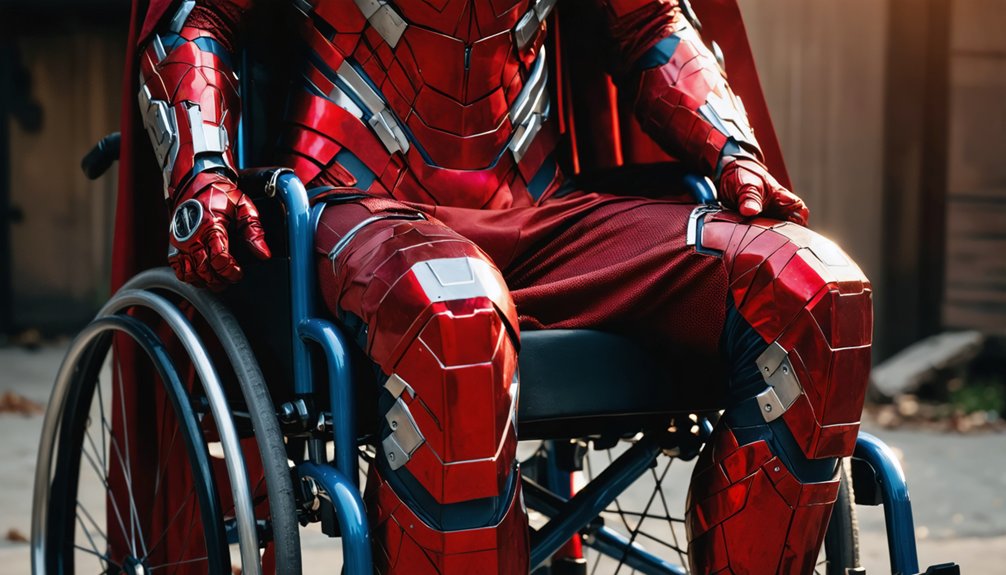
Here are three fastening solutions worth building into your costume:
- Magnetic fasteners — snap together instantly with minimal grip strength, perfect for chest pieces or capes.
- Velcro strips — position them at natural reach points while seated, not where the costume character dictates.
- Hidden side zippers — placed at the armpit area, they eliminate shoulder strain and reduce dressing time considerably.
Test each closure before the event.
Test every clasp, zip, and snap before event day — because a costume that fails publicly is a costume that fails completely.
What works standing often fails seated, so always prototype from your actual position.
Turn Your Wheelchair Into Part of the Costume
Your wheelchair doesn’t have to be an afterthought — it can become the most impressive part of your entire costume. Transform your chair into a pirate ship, spaceship cockpit, or seashell throne by attaching themed structural elements to the frame, backrest, and armrests.
When you design your costume around your mobility aid rather than despite it, you create a cohesive character transformation that’s both visually striking and entirely your own.
Wheelchair Costume Theme Integration
When you integrate your wheelchair into your costume’s theme, you stop hiding it and start showcasing it as a centerpiece.
Theme consistency transforms your mobility aid into a deliberate character design element rather than an afterthought.
Try these creative integrations:
- Pirate ship or spaceship cockpit — Build lightweight cardboard structures around your wheelchair frame, making it your vessel’s command center.
- Mermaid seashell throne — Attach decorative seashells directly to your backrest, reinforcing your character design authentically.
- Villain’s mechanical throne — Use metallic fabric and pipe cleaners to create an imposing, futuristic seat structure.
Measure your wheelchair’s diameter, height, and width before building attachments.
This guarantees every structural element maintains theme consistency while keeping pathways clear and transfers unobstructed.
Mobility Aid Character Transformation
Transforming your mobility aid into a core costume element lets you build characters that couldn’t exist without it. Your wheelchair design becomes the costume’s foundation rather than an afterthought.
Convert your chair into a pirate ship hull, a spaceship cockpit, or a seashell throne for a mermaid character adaptation. Attach cardboard and lightweight pipe cleaner frames to extend your chair’s silhouette dramatically.
You can also reimagine walkers and canes as wizard staffs or Neptune’s trident, making every mobility tool narratively intentional. Don’t overlook your service animal—coordinated costumes create a unified, powerful visual.
Measure your chair’s dimensions precisely before building any structural additions, ensuring nothing blocks transport or bathroom access. When your mobility aid drives the concept, you’re not adapting a costume—you’re creating something entirely original.
Build Wings, Frames, and Props That Attach to Your Wheelchair
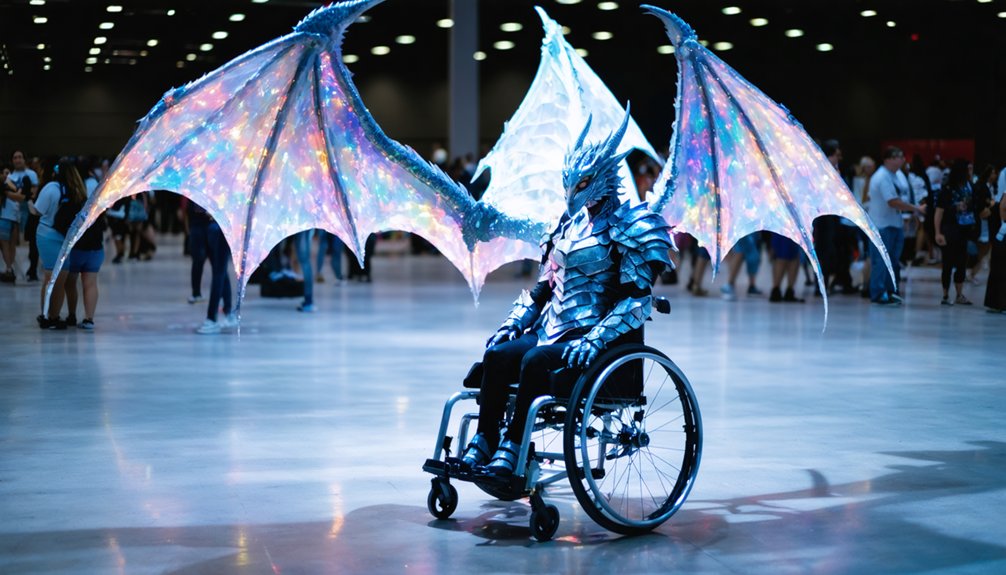
Building wings, frames, and props directly onto your wheelchair opens up a world of character possibilities that go far beyond a basic costume.
Smart wing attachment and frame construction transform your chair into the costume itself.
Here’s how to get started:
- Secure wings using 1.5-inch elastic bands around your wheelchair frame, reinforced with wire U-shapes inserted into harness elastic to keep them upright.
- Build lightweight frames using cardboard and pipe cleaners, measuring your chair’s diameter, height, and width precisely before cutting along designated lines with a utility knife.
- Create detachable props like cloud elements using copper wire and polyfill, or attach seashell thrones to your backrest for character-specific flair.
Your wheelchair isn’t a limitation—it’s your greatest creative asset.
Make Your Costume Sensory-Friendly and Event-Safe
Comfort and safety matter just as much as creativity when you’re designing a costume you’ll wear for hours. Choose soft, four-way matte stretch fabrics that won’t irritate your skin or restrict movement.
Use heat-resistant no-sew tape to eliminate scratchy raw edges without stitching. Avoid stiff materials that trigger sensory triggers like pressure or chafing during extended wear.
For event accessibility, scout venues ahead of time and confirm they’ll disable strobe lights, fog machines, and overwhelming sensory décor. Keep your pathways clear and well-lit.
If large crowds feel too intense, trunk-or-treat events offer a calmer alternative. Always make sure your costume modifications don’t block wheelchair controls, footrests, or bathroom access.
Smart planning lets you stay comfortable, safe, and fully present throughout the entire event.
Frequently Asked Questions
Can Wheelchair Costume Modifications Be Covered by Disability Assistance Funding?
You’ll want to research disability funding programs and costume grants in your area, as some organizations do cover adaptive modifications. Check local nonprofits, arts councils, and disability advocacy groups for innovative funding opportunities tailored to your needs.
How Do You Store Bulky Wheelchair Costume Attachments After the Event?
70% of cosplayers reuse costumes annually! For costume storage solutions, you’ll want to disassemble attachments carefully. Label each piece with attachment organization tips like numbered bags, flat storage bins, and padded compartments to protect your innovative wheelchair accessories.
Are There Communities or Groups That Share Adaptive Cosplay Patterns Freely?
Yes, you’ll find thriving online communities sharing free adaptive design patterns! Facebook groups, Reddit’s r/cosplay, and sites like Instructables offer costume swaps and downloadable templates specifically crafted for wheelchair users seeking innovative, accessible modifications.
How Do You Photograph Wheelchair Costumes to Best Showcase the Full Design?
Shoot from multiple angle variations at eye level with your subject to honor their perspective. You’ll capture the full design using natural lighting techniques that highlight mobility aid integrations, ensuring every creative detail you’ve crafted shines authentically.
Can Adaptive Costume Techniques Work for Renaissance Fairs or Non-Halloween Events?
You can absolutely apply adaptive design techniques to renaissance fairs, conventions, or parades. Transform your wheelchair into a royal throne or ship, prioritizing event accessibility with magnetic closures, sensory-friendly fabrics, and mobility aid integration year-round.
References
- https://www.youtube.com/watch?v=Uh3rc_YglOM
- http://abilitytools.org/blog/adaptive-costume-hacks/
- https://www.freewheelchairmission.org/blog-post/14-adaptive-wheelchair-costume-ideas-for-kids-on-halloween/
- https://www.reddit.com/r/comiccon/comments/18jncix/im_a_wheelchair_user_and_dont_know_to_cosplay/
- https://www.youtube.com/watch?v=-M9l_nuPapk
- https://starstruckpanda.com/best-disability-inclusive-cosplay-costume-tips/
- https://www.refinery29.com/en-ca/2019/10/8636811/25-incredible-costume-ideas-for-people-with-disabilities
- https://www.reddit.com/r/CosplayHelp/comments/1mug118/im_in_a_wheelchair_and_im_trying_to_do_this/
- https://www.goodhousekeeping.com/holidays/halloween-ideas/g33632924/adaptive-wheelchair-halloween-costumes/
- https://en.beitissie.org.il/lp/purim22/