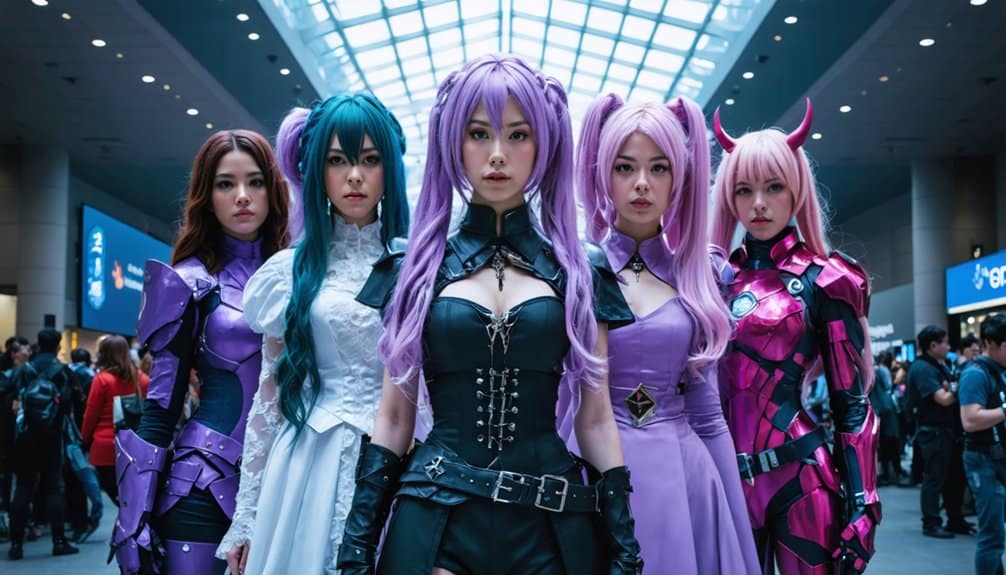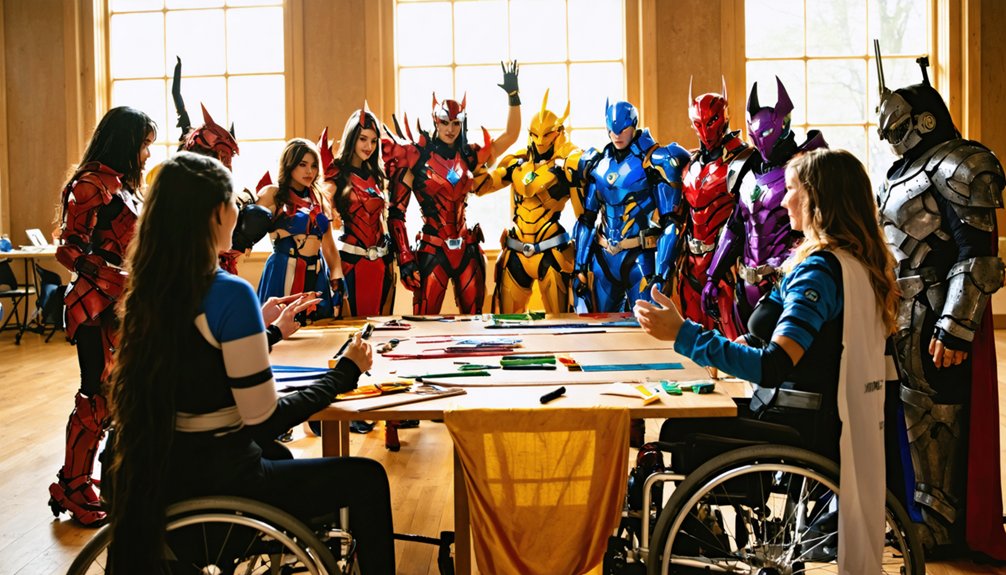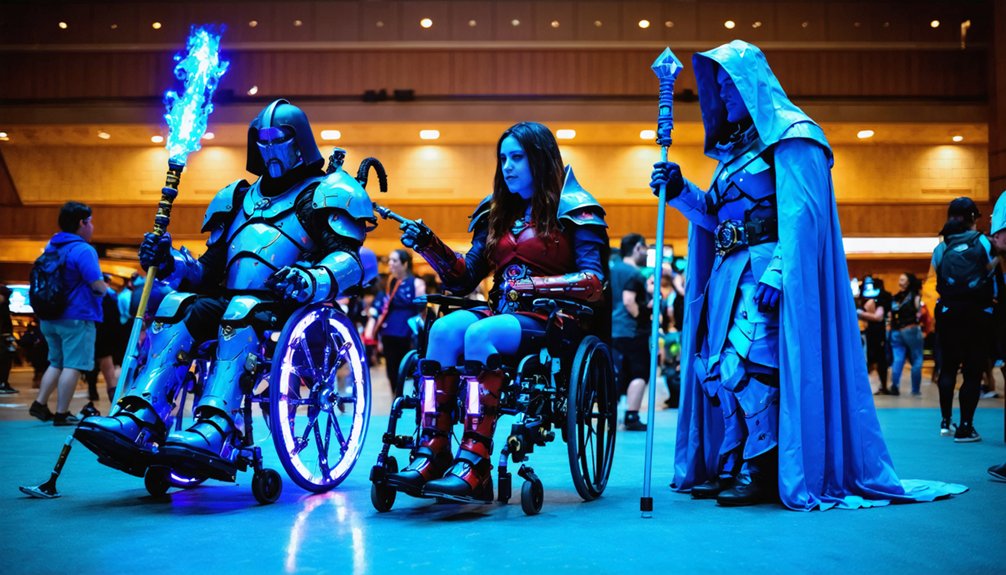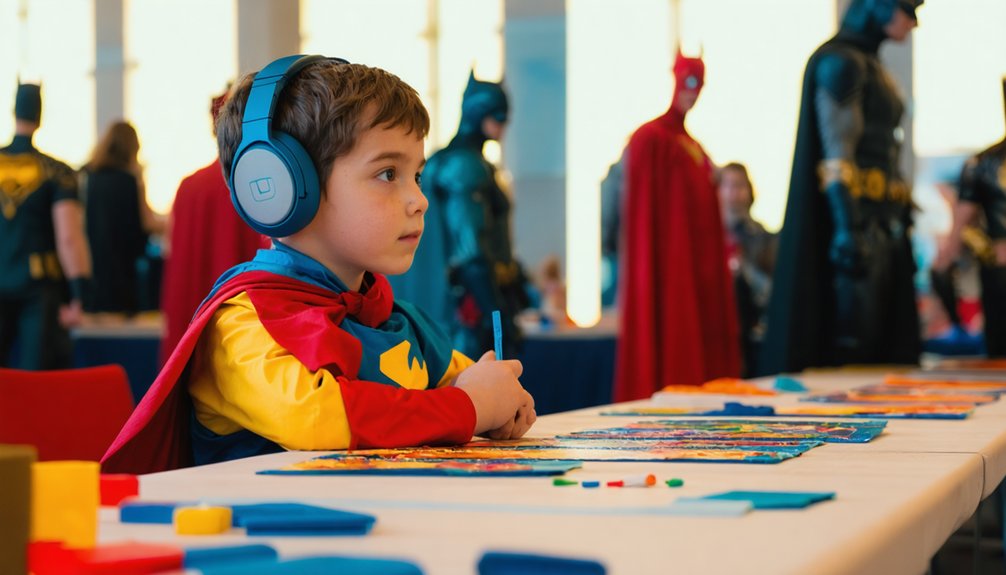
Making cosplay accessible starts with choosing characters and costumes that match your sensory needs, energy levels, and executive function. Use breathable, flexible fabrics, and modify designs so they don’t cause discomfort during long convention days. Plan sensory breaks in advance, carry noise-canceling headphones, and research quiet spaces at your venue before you arrive. You’ll also find nonprofit funding, peer-led communities, and neurodivergent-friendly tutorials that make the entire process far less overwhelming when you know where to look.
Key Takeaways
- Plan sensory breaks in advance, carry noise-canceling headphones, and identify quiet spaces on the convention map before attending.
- Choose breathable, flexible costumes that prioritize comfort, mobility, and minimal sensory surprises for extended convention wear.
- Join neurodivergent cosplay communities on Facebook and YouTube for judgment-free troubleshooting, material sourcing, and adaptive strategies.
- Research nonprofit organizations like Cosability for grants and donated materials that fund adaptive costumes and convention attendance.
- Utilize peer-led forums and convention panels co-facilitated by mental health professionals to navigate executive function and sensory challenges.
What Makes Cosplay So Overwhelming for Neurodivergent Fans
Cosplay can feel like sensory overload before you even walk through the convention doors. The sheer volume of overwhelming choices — characters, materials, construction methods, and event logistics — creates decision paralysis that’s especially intense for neurodivergent minds.
You’re not just building a costume; you’re managing executive function challenges, sensory sensitivities, unpredictable environments, and social expectations simultaneously.
Cosplay isn’t just costume-building — it’s navigating executive function, sensory overload, and social demands all at once.
Crowds, loud music, bright lights, and packed schedules hit differently when your nervous system processes stimulation at a heightened intensity. Without solid planning strategies, conventions can shift from exciting to exhausting within hours.
But here’s what matters: these challenges aren’t barriers to cosplay — they’re signals that standard approaches need rethinking. Neurodivergent cosplayers don’t need to do less; they need smarter systems designed around how their brains actually work.
Choose Characters and Costumes That Work With Your Brain
Start your cosplay journey by researching characters you already love, since that built-in enthusiasm makes the process feel less like work and more like play.
Once you’ve got a list, narrow it down by honestly evaluating which costumes match your sensory needs, mobility, and energy levels on both good and hard days.
Choosing a costume that works *with* your brain rather than against it sets you up for an experience you’ll actually enjoy from start to finish.
Start With Character Research
When starting your cosplay journey, character selection can make or break the experience — especially if decision paralysis is part of your neurodivergent reality. Character Exploration doesn’t have to feel overwhelming.
Start small by searching for characters whose traits, aesthetics, or stories genuinely resonate with you.
From there, narrow your focus through targeted Costume Research. Search YouTube tutorials, Reddit threads, and cosplay forums for your specific character.
Seeing completed builds helps your brain visualize a realistic path forward rather than staring down an intimidating blank slate.
Filtering options early reduces cognitive load considerably. Instead of browsing endless possibilities, you’re working within a defined scope — something your brain can actually process.
Focused research transforms an overwhelming decision into a manageable, exciting creative starting point.
Narrow Down Your Choices
Prioritize costume simplicity without guilt. A cleaner design often means fewer sensory surprises — less scratchy trim, fewer tight closures, simpler construction.
Ask yourself: Can I wear this for six hours? Does it accommodate my assistive devices or sensory needs?
Narrowing your choices isn’t settling — it’s strategic. The right costume fits your energy, your body, and your brain, not just the reference image.
Match Costumes To Comfort
Choosing a character you genuinely connect with makes the entire cosplay process feel less like a chore and more like an extension of who you are. That emotional connection carries you through difficult construction days and keeps motivation alive.
Sensory awareness should drive every material decision. Scratchy fabrics, tight waistbands, and restrictive headpieces can derail an entire convention experience.
Prioritize costume comfort by selecting breathable, flexible materials that feel good against your skin for extended wear.
You don’t have to recreate a costume exactly. Adapt designs to accommodate your sensory needs without sacrificing character recognition.
Swap heavy materials for lighter alternatives, eliminate uncomfortable accessories, or modify silhouettes entirely. Your neurodivergent brain works best when your body isn’t fighting your outfit.
Make Your Costume Work With Sensory Sensitivities and Mobility Aids
There are 3 main ways to handle assistive devices in your costume: conceal them completely, leave them as-is, or creatively incorporate them into your design.
Mobility inclusivity means your wheelchair, crutches, or walker becomes part of the character, not a compromise. Sensory adaptations keep your costume wearable all day.
Try these approaches:
- Wrap crutches in thematic materials matching your character’s aesthetic.
- Transform wheelchairs into character-specific vehicles or canonical mobility aids.
- Swap scratchy fabrics for soft, breathable alternatives without changing the visual design.
- Build in costume flexibility for high-stimulation days versus low-energy days.
Your assistive device doesn’t limit authenticity—it enhances it.
Design around your actual needs, and your costume becomes genuinely yours.
Plan Your Neurodivergent Cosplay Day Before You Leave Home
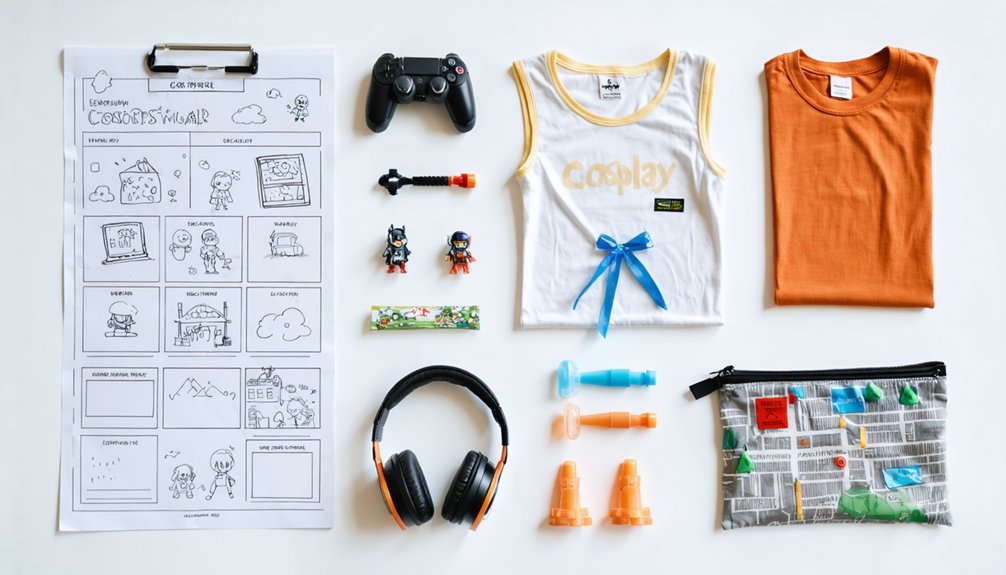
Before you leave home, map out your sensory breaks, emergency supplies, and convention layout so you’re not managing logistics while overstimulated.
Effective cosplay planning starts with researching your venue’s accessibility page and locating quiet rooms, manga libraries, or low-traffic hallways before you arrive.
Build your neurodivergent strategies around predictability. Pre-identify two or three break locations on your convention map, pack sensory essentials into hidden costume compartments or character-appropriate bags, and store your ID, money, and phone somewhere you can access without dismantling your costume.
Check whether your convention offers accessibility accommodations during registration, not after. Organizations like Cosability can help fund attendance if cost creates a barrier.
Front-loading this preparation lets you spend your energy on creativity and connection, not crisis management.
How to Manage Sensory Overload While You’re at the Convention?
Even with the best preparation, sensory overload can catch you off-guard once you’re inside a busy convention hall. Your sensory strategies need to be ready before overwhelm sets in. Effective overload management starts with knowing your escape routes and reset options ahead of time.
Preparation only goes so far — know your escape routes before the overwhelm finds you first.
Use these adaptive approaches when stimulation spikes:
- Locate quiet rooms early — identify designated break spaces, manga libraries, or back hallways on your convention map before crowds build.
- Carry sensory tools — noise-canceling headphones, sunglasses, or fidget items reduce input fast.
- Set timed breaks — schedule short exits from the main floor before exhaustion hits, not after.
- Communicate your needs — convention staff and fellow cosplayers are typically responsive when you ask for support directly.
Where Neurodivergent Cosplayers Find Funding, Resources, and Community
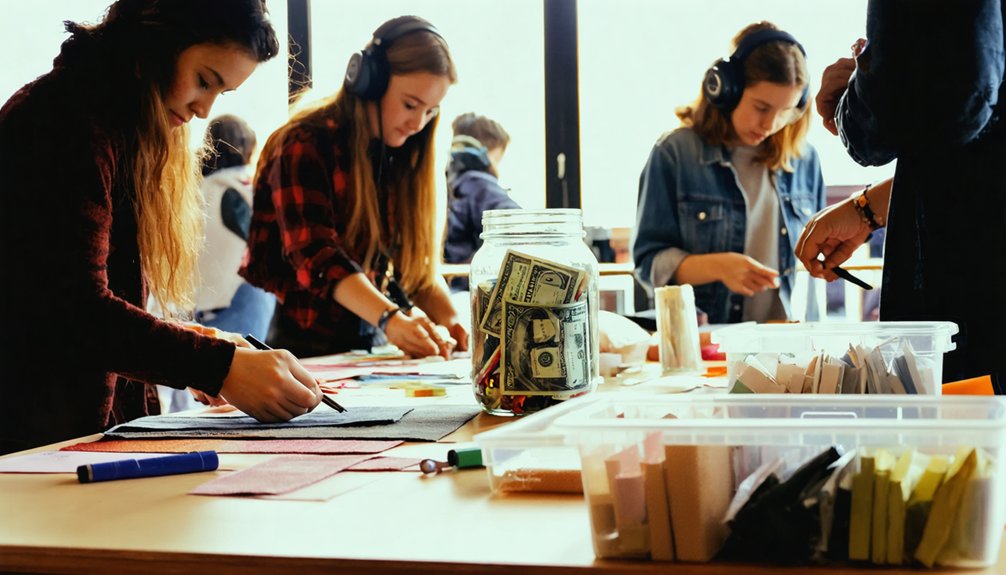
You don’t have to figure out accessible cosplay alone—online communities on Facebook and social media platforms connect you with neurodivergent cosplayers who share material sources, costume ideas, and event recommendations.
If costs create a barrier, nonprofits like Cosability offer funding assistance and resources that make convention attendance more financially realistic.
You can also tap into peer-led panels and YouTube channels hosted by experienced neurodivergent cosplayers, where lived experience and practical strategies replace generic advice.
Online Communities and Networks
Finding your people makes all the difference when you’re steering through cosplay with a neurodivergent brain. Online support transforms isolated crafting sessions into vibrant creative collaboration. These digital spaces center resource sharing and community engagement without neurotypical social pressure.
Connect through platforms built around your needs:
- Facebook groups dedicated to adaptive cosplay connect you with accessible materials and accommodation strategies.
- YouTube channels hosted by neurodivergent cosplayers deliver evidence-based tutorials grounded in lived experience.
- Social media communities surface costume ideas, material sourcing, and upcoming accessible events.
- Peer-led forums offer judgment-free troubleshooting when sensory or executive function challenges stall your progress.
These networks don’t just solve practical problems—they validate your creative vision and remind you that your neurodivergent perspective genuinely enriches cosplay culture.
Nonprofit Funding Opportunities
Financial barriers shouldn’t keep you from the convention floor. Organizations like Cosability exist specifically to connect neurodivergent and disabled cosplayers with nonprofit grants, material resources, and event funding.
These groups understand that adaptive costumes and accessible convention attendance carry real costs.
Start by researching disability-focused cosplay nonprofits before your target event. Many offer funding applications with straightforward processes designed to reduce overwhelm.
Deadlines matter, so build application research into your planning timeline early.
Beyond direct funding, these organizations often connect you with donated materials, discounted vendor partnerships, and community members willing to share resources.
Cosability’s Facebook community, for instance, surfaces opportunities you won’t find through standard searches.
Financial support exists—you just need a clear path toward finding it.
Peer-Led Learning Resources
Beyond funding organizations, peer-led spaces offer something nonprofits can’t fully replicate: lived experience from cosplayers traversing the same neurological landscape you’re working with.
Through peer mentorship and resource sharing, you’ll discover adaptive strategies built from real convention floors, not clinical frameworks.
These communities meet you where you are:
- YouTube channels hosted by neurodivergent cosplayers demonstrate sensory-friendly construction techniques step-by-step
- Facebook groups connect you with members sharing accessible material sources and accommodation hacks
- Convention panels co-facilitated by mental health professionals and cosplayers bridge creativity with neurological needs
- Online forums provide space to troubleshoot costume challenges alongside people who genuinely understand executive function barriers
Tap into these networks early. The collective knowledge inside them accelerates your process considerably.
Frequently Asked Questions
Can Neurodivergent Cosplayers Compete in Costume Contests at Conventions?
Yes, you can absolutely compete! Your costume adaptations and sensory considerations make your entry unique. Conventions increasingly welcome innovative designs, so showcase your creativity confidently—your neurodivergent approach brings fresh, authentic perspectives to any costume contest.
Are There Conventions Specifically Designed for Neurodivergent Attendees?
Like finding a lighthouse in a storm, you’ll discover some conventions now offer sensory friendly environments and inclusive programming tailored for neurodivergent fans — but researching accessibility features before purchasing tickets guarantees you’re choosing your perfect harbor.
How Do Caregivers or Support Persons Access Conventions With Neurodivergent Cosplayers?
Before attending, you’ll want to research the convention’s website for caregiver access strategies, including companion passes and sensory accommodations. Many venues offer reduced-cost or free entry for support persons assisting neurodivergent cosplayers.
What Age Groups Benefit Most From Neurodivergent Cosplay Participation?
All ages benefit, but you’ll find teen engagement especially thrives through cosplay’s creative outlets. You can embrace sensory adaptation strategies at any life stage, building confidence, community connection, and self-expression that genuinely supports your neurodivergent journey.
Can Cosplay Therapy Be Prescribed or Recommended by Mental Health Professionals?
Right up your alley — mental health professionals can absolutely recommend cosplay benefits as therapeutic tools. They’re bridging creative expression with neurological needs, so you’ll find cosplay increasingly recognized in innovative, sensory-aware mental health treatment plans.
References
- https://www.youtube.com/watch?v=-Mb8PubK7qg
- https://www.youtube.com/watch?v=awreeQagxPk
- https://www.breakthestigma.org/single-post/2018/09/26/cosplaying-with-disabilities-tips-tricks-for-a-successful-con
- https://stlouiswheelchair.com/cosability-cosplaying-with-disabilities/
- https://www.youtube.com/shorts/fBwDKmkAF8g
- https://themindfulneuro.com/cosplay-conventions-empower-neurodivergent-kids/
- https://www.youtube.com/playlist?list=PL6B297IE51meW8m169QtFbe05aRBKMAh_