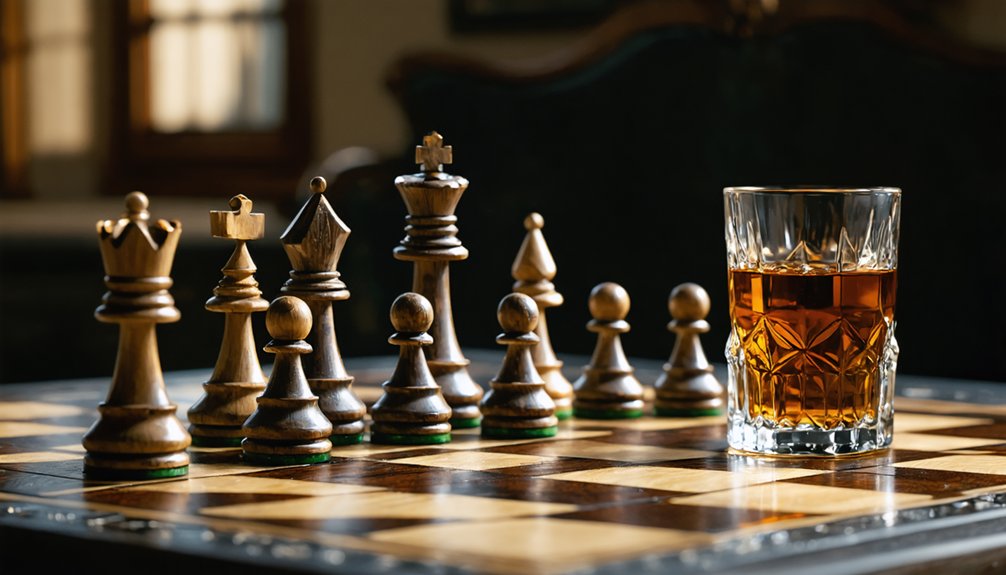
The Queen’s Gambit chess set props are iconic because they blend archaeological authenticity with deliberate cinematic design. Inspired by the 9th-century Lewis Chessmen, they’re not generic replicas — they’re hand-carved symbols of ambition, power, and psychological tension. Their ivory-effect finishes, shadow-catching grooves, and expressive medieval faces anchor Beth Harmon’s story in chess’s rich cultural heritage. They helped drive a 125% surge in global chess set sales. There’s far more to uncover about what makes these pieces extraordinary.
Key Takeaways
- The props draw inspiration from the 9th-century Lewis Chessmen, grounding them in genuine medieval history and archaeological authenticity.
- Hand-carved textures, ivory-effect finishes, and weathering techniques create tactile realism that makes the pieces feel historically significant.
- Deliberate color symbolism and light-catching details transform the chess pieces into powerful visual storytelling instruments.
- The designs symbolize Beth Harmon’s psychological journey, functioning as narrative architecture rather than simple decorative props.
- Their cultural impact drove a 125% increase in global chess set sales following the series premiere.
The Lewis Chessmen: The 800-Year-Old Inspiration Behind the Props
When production designer Uli Hanisch and his team set out to create the chess props for Netflix’s *The Queen’s Gambit*, they didn’t look to modern design—they looked back 800 years to the Lewis Chessmen, the world’s oldest surviving ivory chess artifacts, discovered in Scotland and dating to the 9th century.
This deliberate choice carries profound historical symbolism, anchoring the show’s visual identity to medieval Europe’s most enduring chess legacy. You can see the cultural influence embedded in every carved expression and textured surface—each piece echoing the distinctive craftsmanship of those ancient ivory figures.
What Sets The Queen’s Gambit Chess Pieces Apart From Other TV Props
When you examine *The Queen’s Gambit*’s chess pieces against typical TV props, you’ll find three distinguishing factors that elevate them above standard production fare: historical authenticity, cinematic design precision, and superior material construction.
Production designer Uli Hanisch’s team didn’t settle for generic replicas—they drew directly from the Lewis Chessmen‘s 800-year-old aesthetic, embedding scholarly legitimacy into every carved detail. You can trace this commitment to authenticity through the props’ distinctive claw-like textures and ivory-grade finishes, which together create a visual standard that most television productions never approach.
Historical Authenticity Stands Out
What truly distinguishes *The Queen’s Gambit*’s chess pieces from standard TV props is their grounding in genuine historical artifacts. You’re looking at designs directly inspired by the 9th-century Lewis Chessmen, Scotland’s iconic ivory carvings representing 800 years of medieval craftsmanship.
Most productions settle for generic props; this team didn’t.
The connection runs deeper than aesthetics. These pieces carry cultural symbolism rooted in medieval Europe’s most sophisticated artistic traditions. When you examine their distinctive facial expressions and carved details, you’re engaging with design language that predates the Renaissance.
Production designer Uli Hanisch ensured every piece honored that lineage rather than approximating it. That commitment to archaeological accuracy guarantees that ordinary screen objects become artifacts that command intellectual respect from audiences who recognize authentic historical grounding.
Cinematic Design Elements Shine
Beyond historical grounding, the cinematic design elements themselves set these props apart from anything else on television. Production designer Uli Hanisch didn’t simply recreate chess pieces — he engineered visual instruments that actively drive narrative.
You’ll notice how deliberate color symbolism operates throughout Beth’s journey, with piece tones shifting from cold institutional grey to warm, commanding hues as her confidence grows. Lighting effects amplify this further, transforming carved wood and ivory textures into emotionally charged symbols rather than passive objects.
Hanisch’s team understood that exceptional props must function as storytelling agents. Every claw-like carving catches light with calculated precision, reinforcing psychological tension in critical match sequences.
This level of intentional design thinking distinguishes Queen’s Gambit’s chess pieces from conventional television props entirely.
Unique Material Construction Techniques
That intentional design thinking couldn’t have succeeded without equally rigorous material construction techniques underpinning every piece. Uli Hanisch’s prop team deployed material craftsmanship that distinguishes these pieces from conventional TV props through deliberate design innovation:
- Carved wood bases replicating aged, tactile medieval textures
- Ivory-effect surface treatments evoking the Lewis Chessmen’s ancient organic materiality
- Claw-detail replication mirroring Mr. Shaibel’s distinctive chess set carvings
- Layered finishing techniques producing authentic weathering and dimensional depth
You’re witnessing construction methodology that transcends decoration — each technique serves narrative function.
The materials communicate Beth Harmon’s psychological relationship with chess viscerally, making pieces feel historically weighted rather than manufactured. This precision separates Queen’s Gambit props from superficial set dressing into genuine cinematic artifacts demanding scholarly attention.
How Uli Hanisch Designed Mr. Shaibel’s Chess Set for the Screen
When production designer Uli Hanisch set out to construct Mr. Shaibel’s chess set, he didn’t settle for generic period props. You can see his modern design sensibility throughout every carved detail, where each piece reflects deliberate artistic choices rooted in historical authenticity.
Hanisch drew cultural influence from the 9th-century Lewis Chessmen, replicating their distinctive claw-like carvings and expressive facial characteristics within a cinematic framework.
His approach wasn’t merely decorative. The chess set functions as a narrative instrument, visually anchoring Beth Harmon’s psychological development to tangible, tactile objects.
By collaborating closely with the director, Hanisch ensured every prop maintained period consistency while elevating dramatic storytelling.
The result is a meticulously constructed artifact that transforms wooden chess pieces into powerful symbols of intellectual ambition and emotional complexity.
The Wood, Ivory Finishes, and Hand-Carving That Made the Props Believable
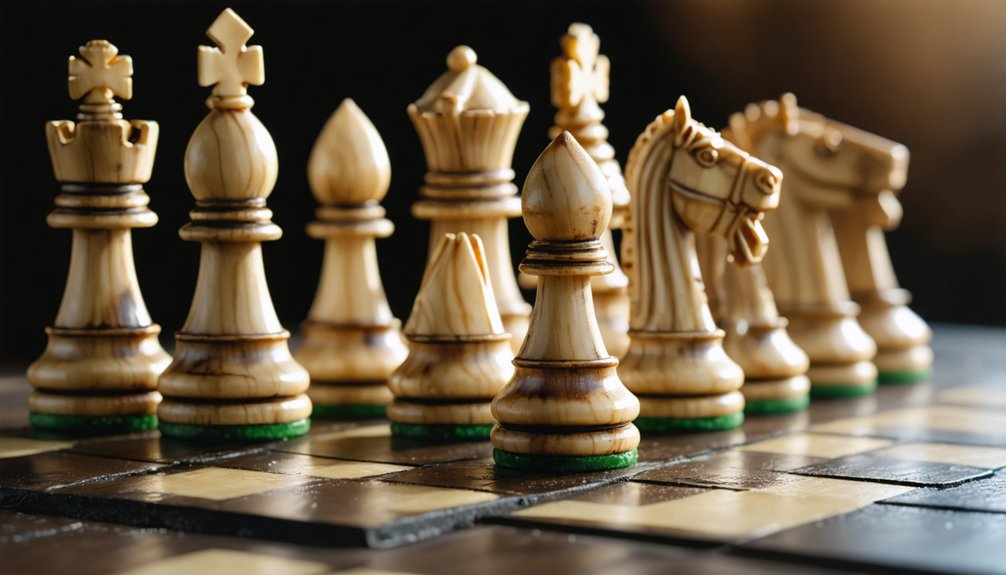
When you examine the props up close, you’ll notice that the hand-carved wooden textures and ivory finishes aren’t mere aesthetic choices—they’re deliberate commitments to material authenticity.
The prop team’s use of carved wood and simulated ivory surfaces grounds the chess pieces in a tactile realism that reinforces the show’s period setting.
You can trace the believability of these props directly to the precision of their construction techniques, where each carved detail replicates the weight and texture of historically significant chess artifacts.
Hand-Carved Wooden Textures
Because the tactile authenticity of a prop often determines whether an audience believes in the world it inhabits, the hand-carved wooden textures of *The Queen’s Gambit*’s chess pieces deserve careful analytical attention.
You’ll notice how the construction techniques amplify the drama through precise material choices:
- Grain variations create organic color symbolism, distinguishing power from vulnerability across opposing pieces.
- Shadow-catching grooves maximize lighting effects, making each carved surface cinematically dynamic.
- Irregular tool marks signal authentic hand-craftsmanship rather than mechanical reproduction.
- Textural contrast between smooth bases and carved figures reinforces visual hierarchy.
Uli Hanisch’s prop team understood that wood’s natural imperfections communicate history. These deliberate construction decisions transform static objects into narrative instruments, grounding Beth Harmon’s psychological journey within a convincingly tactile, historically resonant material world.
Ivory Finish Authenticity
Complementing the carved wooden textures, the ivory finish applied to select pieces in *The Queen’s Gambit* props introduces a separate layer of material authenticity that demands equal scrutiny.
You’ll recognize how the production team drew directly from the Lewis Chessmen’s aged ivory aesthetic, replicating centuries-old surface characteristics through modern material innovations rather than actual ivory. This ethical substitution didn’t compromise visual credibility; it enhanced it.
The prop team employed synthetic resins and pigmented lacquers to simulate oxidized ivory’s distinctive warmth and translucency. These deliberate choices function simultaneously as audience engagement strategies, anchoring viewers emotionally to Beth Harmon’s tactile world.
When you examine these finishes closely, you understand that authenticity isn’t about literal materials—it’s about precision in replicating the visual language of historical artifacts.
How The Queen’s Gambit Props Helped Make the World Chess Mad
The Queen’s Gambit didn’t just tell a compelling story — it sparked a global chess renaissance. When you watched Beth Harmon command the board, those meticulously crafted props became cultural catalysts. Modern manufacturing and digital visualization techniques transformed historical chess aesthetics into compelling television imagery that resonated worldwide.
The props drove measurable cultural impact across four dimensions:
- Chess set sales surged 125% globally following the premiere
- Online chess platforms reported millions of new registrations overnight
- Youth chess enrollment increased across multiple demographics
- Tournament participation expanded across previously untapped regions
You’re witnessing how authentic prop design transcends decoration — it becomes narrative architecture. By connecting viewers to chess’s rich medieval heritage through visually precise artifacts, the production team didn’t just recreate history; they reinvented cultural enthusiasm for an ancient game.
Why Chess Set Designers Still Look to The Queen’s Gambit for Inspiration
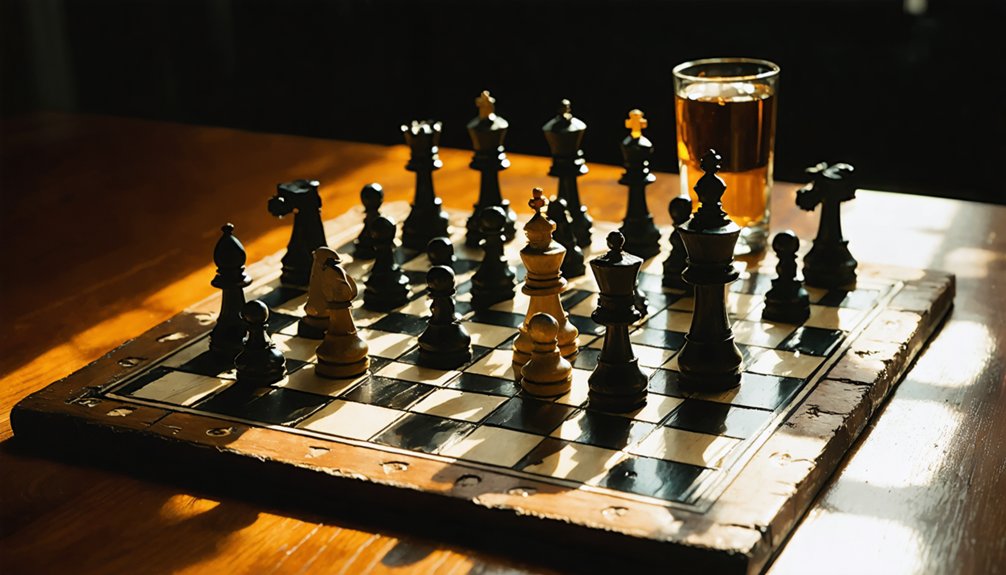
You’ll notice that today’s designers study these props because they successfully bridge material innovation with narrative purpose. The carved wooden textures and ivory-inspired finishes weren’t decorative choices—they were deliberate visual arguments about chess’s cultural weight.
When you’re designing pieces that must communicate character and history simultaneously, *The Queen’s Gambit* remains the definitive reference point. It proves that rigorous historical grounding and bold aesthetic reinterpretation aren’t mutually exclusive—they’re complementary imperatives.
Frequently Asked Questions
Where Can Fans Purchase Replicas of the Queen’s Gambit Chess Sets?
Like a knight seeking its kingdom, you’ll find collector’s editions and custom designs through specialized retailers like Noble Collection, Etsy artisans, and Amazon, where craftsmanship mirrors the show’s iconic aesthetic authentically.
Did Real Chess Grandmasters Consult on the Prop Design Process?
The knowledge doesn’t confirm grandmaster consultation, but you’ll find that historical accuracy drove prop craftsmanship, with production designer Uli Hanisch’s team drawing inspiration from authentic medieval artifacts like the Lewis Chessmen to achieve scholarly precision.
Are the Original Queen’s Gambit Chess Props Displayed in Any Museums?
You’d think museums worldwide would be fighting over these props! While no confirmed permanent museum displays exist, their historical significance and design influence—rooted in Lewis Chessmen heritage—make them undeniably worthy of prestigious institutional recognition.
How Much Did Production Spend Creating the Chess Set Props?
The exact production budget for the chess set props isn’t publicly disclosed, but you can appreciate that the set design and prop craftsmanship prioritized premium materials and meticulous detail over cost-cutting measures.
Did Anya Taylor-Joy Learn Chess Using the Actual Show Props?
Straight from the horse’s mouth, the knowledge doesn’t confirm this. You’d find that character development and cinematic authenticity drove prop design, but Anya Taylor-Joy’s chess training methods using actual show props remain undocumented here.
References
- https://www.regencychess.co.uk/blog/2022/06/queens-gambit-chess-sets/
- https://www.youtube.com/watch?v=4WiIGMCnYiw
- https://www.cinemablend.com/television/2559015/how-netflixs-the-queens-gambit-ceiling-chess-games-are-a-lot-more-complex-than-you-might-think
- https://www.chess.com/blog/sthabirrr/the-impact-of-the-queens-gambit-on-chess-popularity
- https://www.britishmuseum.org/blog/queens-gambit-how-lewis-chessmen-won-world-over
- https://www.chess.com/openings/Queens-Gambit
- https://samuel-thomas.com/graphic-props-from-the-queens-gambit/
- https://www.youtube.com/watch?v=GYhmNMmGrLk
- https://medium.com/cinemania/metaphor-queens-gambit-6e19041ddfe5
- https://www.chess.com/forum/view/chess-equipment/mr-shaibels-chess-set-in-netflixs-queens-gambit