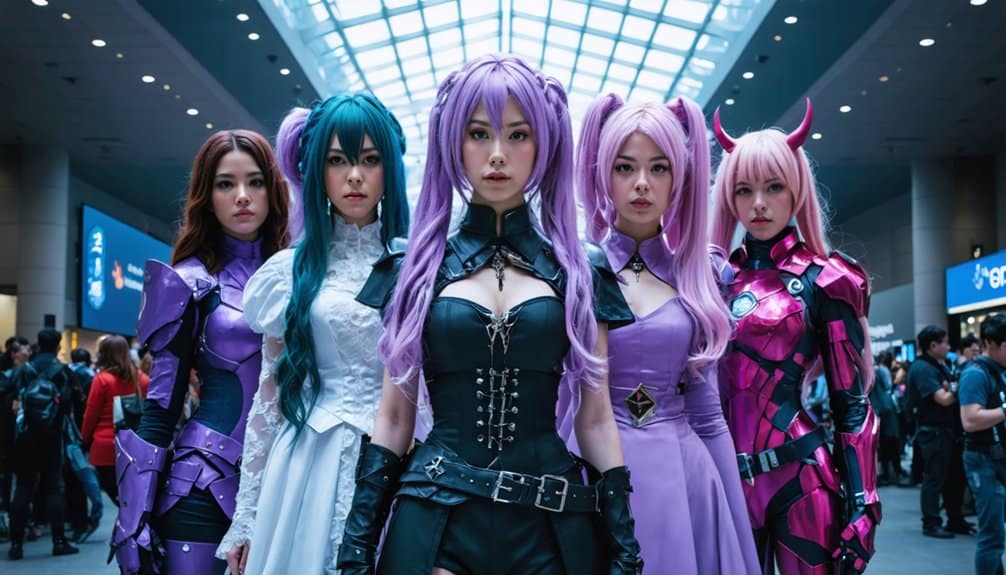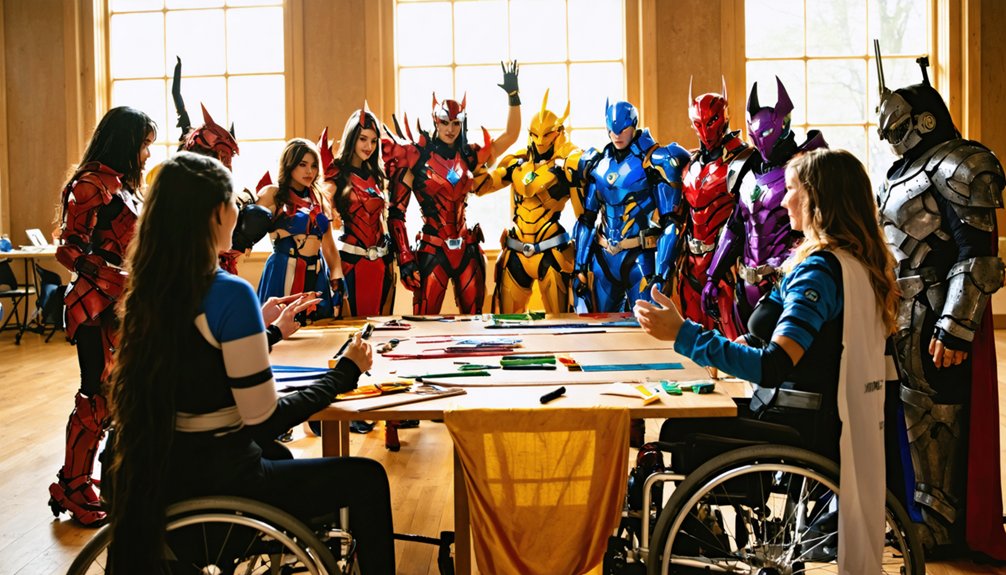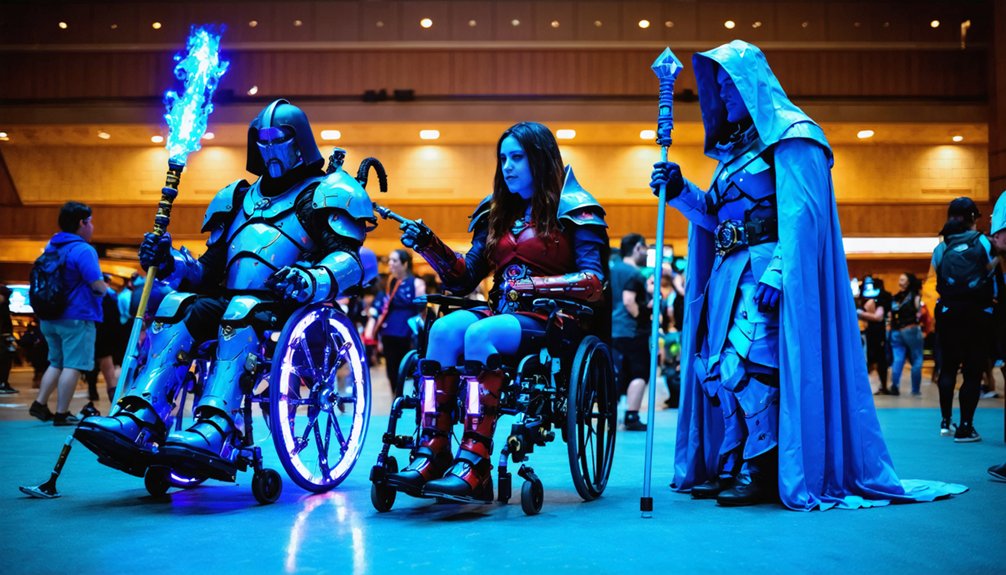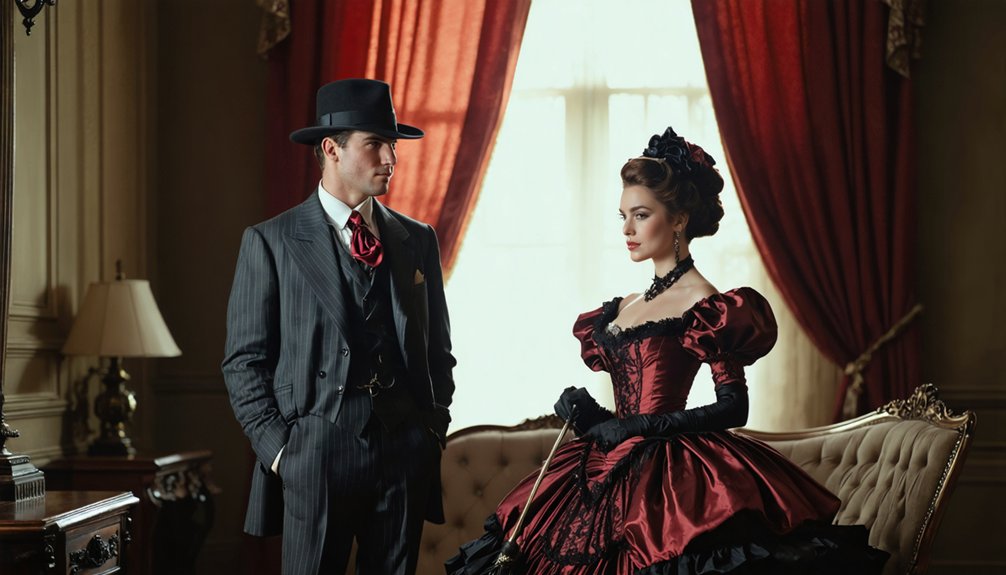
Gender-bent pop culture icon costumes let you engineer characters through your own lens, where Princess Diana’s structured blazers gain new dimension with broader shoulder pads, or where David Bowie’s Ziggy Stardust bodysuit drapes differently across your proportions. You’ll master dart placement, interfacing techniques, and silhouette manipulation while accessing characters previously boxed by outdated gender assumptions. These fabrication challenges transform convention floors into spaces where your construction skills and creative vision merge, revealing how costume architecture can reshape both character interpretation and your craftsmanship potential.
Key Takeaways
- Gender-bent costumes expand character options beyond traditional limitations, allowing access to beloved icons regardless of original gender presentation.
- Crossplay challenges construction skills through tailoring techniques like dart placement, interfacing, and silhouette engineering that redefine gendered costume norms.
- Fabric choices and structural details stem from character aesthetics rather than outdated assumptions about who can wear specific materials.
- Gender-bending icons like Harry Styles and Janelle Monáe normalize self-expression through accessible costume construction and innovative design approaches.
- Unconventional costume approaches provide comfort through garments whose structural integrity matches individual body proportions and movement patterns.
Breaking Free From Traditional Gender Roles in Cosplay
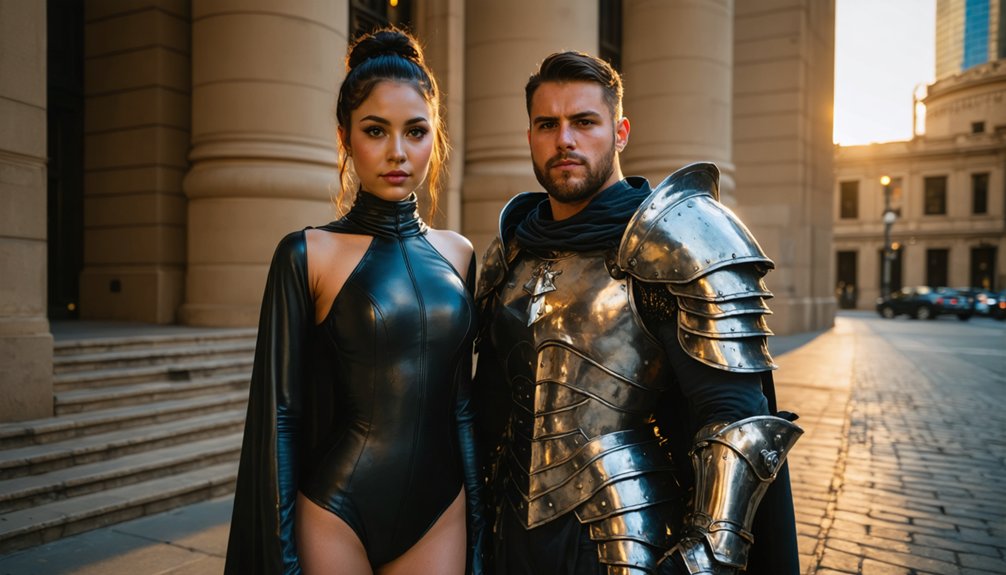
Crossplay has transformed convention floors into runways where sequined blazers reimagine the Joker’s chaos and structured capes redefine Batman’s silhouette across gender lines. You’re witnessing clothing technology disrupt Western gendered norms—each stitch, each fabric choice challenges predetermined boundaries.
When you construct a genderbend costume, you’re exploring character essence beyond physical presentation, using interfacing, boning, and tailoring techniques to manifest fluid gender identities.
TikTok tutorials now guide your journey through dart placement and chest binding methods, while workshops at events like NC Comicon provide hands-on construction expertise. These transformative convention spaces welcome your empowered self expression, whether you’re engineering masculine shoulder structures or draping feminine silhouettes.
You’re not just wearing costumes—you’re architecting new visual narratives where fabric weight, seam placement, and silhouette engineering become tools for gender fluency.
Expanding Your Character Options Beyond Stereotypes
You’ll gain access to a wider roster of characters when you stop treating gender as a costume limitation—suddenly Prince’s purple ruffled shirts and Grace Jones’s sharp-shouldered blazers become equally accessible wardrobe blueprints.
Villains like Bowie’s Goblin King or Marilyn Manson’s shock-rock personas offer rich fabrication challenges without gendered restrictions on who can construct their leather harnesses and distressed textiles.
Your material choices—sequined bodysuits, platform boots, tailored vests—should stem from the character’s aesthetic vision rather than outdated assumptions about who can wear them.
Break Traditional Character Boundaries
When you swap a character’s traditional gender presentation, the construction details suddenly matter in unexpected ways. You’ll navigate fabric drape differently—a masculinized Britney Spears requires structured blazer tailoring where her original costume flowed, while a feminized David Bowie demands strategic pleating to capture his iconic silhouettes.
These technical challenges become opportunities for thoughtful self expression. You’re not simply reversing gender markers; you’re reconstructing garments that challenge how we’ve consumed decades of media stereotypes.
Consider how Harry Styles’ ruffled blouses translate through altered dart placements, or how Billie Eilish’s oversized proportions shift when fitted to different body types. Each seam placement and fabric choice contributes to normalizing gender fluidity beyond surface-level costume swaps, creating wearable statements that acknowledge pop culture’s evolving relationship with gender boundaries.
Access Beloved Opposite-Gender Icons
The sequins on Harry Styles’ 2021 Grammy gown don’t translate identically when you’re reconstructing the piece—bias-cut charmeuse requires different understructure considerations depending on your body’s proportions, and those feather boa trims demand strategic weight distribution across shoulder seams.
This technical challenge unveils representing diverse role models previously restricted by gender conventions. You’ll engineer Janelle Monáe’s structured tuxedo jackets with princess seaming adaptations, or reverse-construct Lady Gaga’s meat dress using silicone appliqués scaled to your torso measurements.
Boy George’s layered kimono wraps demand fabric-weight calculations regardless of who’s wearing them. Gender-bending icons normalize celebrating unique self expression through costume construction, where pattern-grading mathematics matter more than arbitrary clothing categories.
Sam Smith’s asymmetrical tailoring, Billie Eilish’s oversized silhouettes—all become accessible through skilled draping and structural problem-solving.
Embrace Villains Without Limits
Why should Ursula’s tentacles belong exclusively to women, or Scar’s regal mane to men? Gender-bending villain costumes opens up character exploration beyond restrictive molds. You’ll construct Loki’s horned crown regardless of gender, draping emerald fabrics that channel chaos and charm simultaneously.
Female Jokers layer purple suit jackets over custom-tailored vests, while male Cruella designs demand bold spotted faux fur and structured silhouettes.
This approach transforms costume construction into rebellious expressions. You’re free to craft Maleficent’s horned headpiece with thermoplastic, stitch villain capes from heavyweight satin, or mold foam armor for genderbent Thanos interpretations.
Counter-authority roles—pirates, ninjas, villains—typically dominated by male costumes now welcome innovative fabric choices and construction techniques. Non-sexualized zombie prosthetics, self-assured ninja tunics, and villain accessories become yours to engineer, expanding your creative possibilities without traditional gendered limitations.
Expressing Your Fandom Without Gender Limitations
Satin capes billow and sequined bodysuits catch stage lights as modern pop icons demolish decades-old costume barriers that once confined fans to gender-specific Halloween aisles. You’ll find construction templates in Harry Styles’ pearl-embellished Gucci gowns and Billie Eilish’s deliberately oversized silhouettes—each piece demonstrating fluid gender expression through deliberate fabric choices.
When you select Lil Nas X’s crystallized Versace bodysuit or Todrick Hall’s corseted ensembles, you’re accessing precise pattern-making that prioritizes aesthetic impact over anatomical assumptions. These costumes require technical skills: draping chiffon panels, setting rhinestones into structured bodices, tailoring jackets that merge traditionally masculine cuts with feminine embellishments.
You’re subverting binary expectations through every stitch, replicating designs that transform awards shows into laboratories for gender-neutral construction methods your younger self never encountered in commercial patterns.
Finding Comfort and Confidence in Unexpected Costumes
Slip into a floor-length velvet coat traditionally marketed toward another gender, and you’ll discover how weight distribution across your shoulders recalibrates your entire posture—the fabric’s heft grounds you differently than expected, anchoring confidence through sheer materiality. Gender exploration through costume reveals how construction details—princess seaming, dart placements, lapel widths—interact with your frame in unexpected ways.
Unconventional cosplay approaches demonstrate that comfort isn’t about conforming to gendered sizing charts but finding garments whose structural integrity matches your movement patterns. When you pair Harry Styles’ pearl-embellished cardigan with tailored trousers, the tactile contrast between delicate embroidery and crisp wool weave creates visual tension that commands attention.
Parent-guided costume selections historically reduced gender-typing, proving that alternatives provide comfort zones beyond childhood stereotypes into adult creative expression.
Standing Out With Creative and Memorable Looks
Gender-bent costumes achieve memorable impact through deliberate construction choices that interrupt visual expectations—when velvet encounters mesh, when pearls punctuate leather, when pleating defies traditional garment categories. You’re exploring representation through costumes by selecting icons whose wardrobes already challenged conventions—Bowie’s structured blazers meeting silk scarves, Prince’s ruffled blouses paired with sharp tailoring.
Three construction elements amplify your gender-bent impact:
- Pattern disruption: Incorporate graphic prints from Billie Eilish’s oversized silhouettes with traditionally feminine embellishments
- Textile contrast: Layer Harry Styles’ sequined fabrics against masculine suiting structures
- Silhouette inversion: Adapt qipao-inspired elements onto masculine frames, creating visual tension
Challenging gender norms through dress up demands technical precision—each seam placement, each fabric weight selection contributes to costume architecture that defies categorization while maintaining structural integrity and visual coherence.
Accessing a Wide Range of Pop Culture Icons
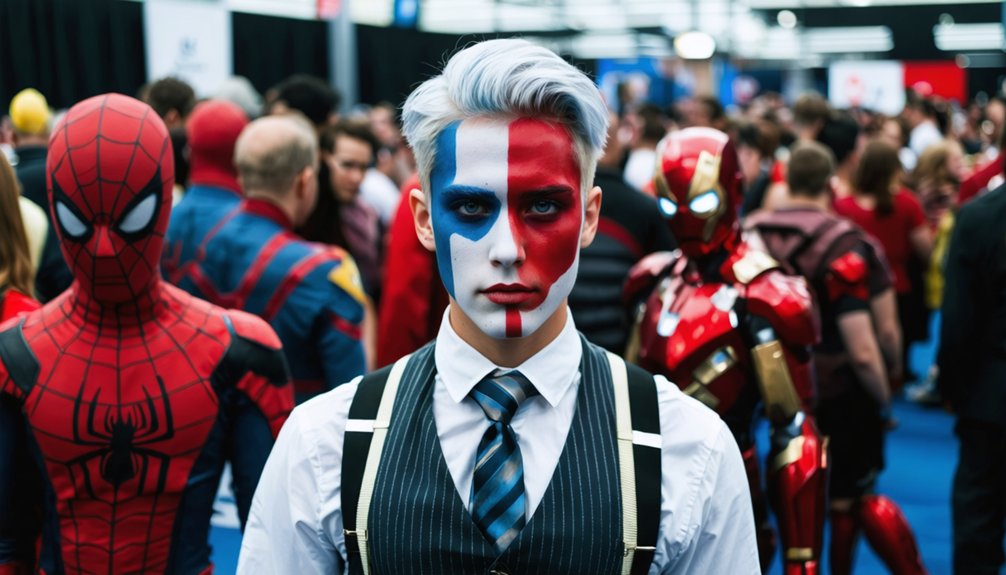
Sequins interrupt tweed, ruffles challenge leather—your costume source material now spans seven decades of boundary-defying performers who’ve weaponized wardrobe against rigid categorization. From Bowie’s 1970s Ziggy Stardust bodysuits to Harry Styles’ 2021 Grammy gowns, you’re expanding character breadth through archived fashion rebellions.
Each era delivers distinct silhouettes: Prince’s purple ruffled blouses, Boy George’s kimono-inspired layers, Janelle Monáe’s architectural tuxedo tailoring, Lady Gaga’s metallic exoskeletons. This timeline offers technical diversity—draping techniques, structured corsetry, oversized proportions Billie Eilish popularized.
You’re celebrating intersectional identities through fabric choices that document queer visibility’s evolution: Anderson Cooper’s tailored blazers signaling professional authority, Adam Lambert’s guyliner bridging punk and glam. Gender-bent interpretations access construction methods traditional costume categories exclude, letting you engineer hybrid garments from contradictory style languages.
Embracing Villains and Heroes Alike
When you shift from pop icons to fictional archetypes, your fabric palette expands beyond stage wear into armor construction, weapon-integrated accessories, and costume pieces engineered for combat choreography. Gender-bending these characters means unlocking new perspectives on power aesthetics—transforming Jill Valentine’s tactical vest into masculine silhouettes or reimagining Sub-Zero’s armor with feminine contours.
Combat-ready costume elements include:
- Structured bodices and breastplates that redistribute traditional gendered armor patterns across chest geometries
- Qipao-inspired fighting gear adapting Chun Li’s signature cuts for all body types
- Modular weapon harnesses designed for interchangeable masculine-feminine costume configurations
You’re transcending binary norms through fabric choices that prioritize functionality over gender assignment. Alternative costume mechanics in gaming already demonstrate how gear systems regender traditional hero-villain aesthetics, making your construction process simultaneously authentic and transformative.
Joining an Inclusive and Growing Community
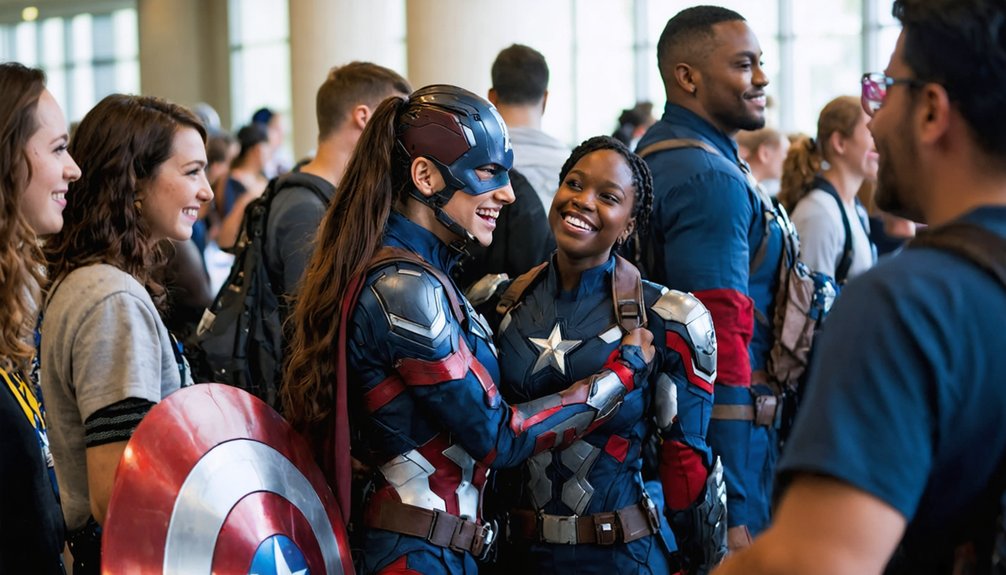
As you stitch the final seam on your gender-bent costume, you’re joining a community that’s fundamentally reshaped convention spaces through sheer presence. Women now comprise 30-45% of major convention attendance, pushing organizers to implement family-friendly policies and merchandise standards.
Your needle and thread are tools of cultural transformation, stitching together a convention landscape where presence becomes power and participation demands change.
Your costume construction participates in celebrating diverse representation—from Cosplaying While Black initiatives challenging racial boundaries to gender-swapped interpretations that expand character possibilities.
The fabric you’ve chosen, the construction techniques you’ve mastered, and the character you’re reimagining contribute to fostering inclusive communities. Conventions have evolved beyond booth babe bans to create spaces where your creative interpretation matters more than demographic matching.
Each carefully crafted seam, each precisely placed embellishment signals that geekdom’s future belongs to innovators willing to transform pop culture through needle, thread, and imagination.
Frequently Asked Questions
Where Can I Purchase Quality Gender-Bent Costumes Online?
You’ll find exceptional reimagined character wear at Cossky.com and Etsy, where the costume selection process prioritizes hand-stitched seams and premium textiles. Their customization options let you specify measurements, ensuring properly-structured bodices and perfectly-tailored silhouettes for your vision.
How Do I Choose the Right Size for Gender-Swapped Costumes?
You’ll want to compare your chest, waist, and hip costume measurements against size charts, then consider costume tailoring for perfect fit. Examine seam construction and fabric stretch—innovative designs often accommodate gender-swap proportions better than standard cuts.
Are Gender-Bent Costumes Appropriate for All Ages?
Gender-bent costumes work for all ages when you prioritize quality construction and thoughtful fabric choices. Appropriateness for young audiences depends on avoiding sexualization while embracing societal perspectives on gender expression that celebrate creativity over stereotypical silhouettes and embellishments.
What Makeup Techniques Work Best for Gender-Swapped Character Looks?
Skillfully sculpt structure through strategic contouring techniques—sharpen jawlines, deepen temples, reshape brows. Layer dramatic eyeshadow application from lid to nose bridge, creating depth. Build facial hair with painted strokes, blending shadows precisely to transform your bone structure convincingly.
How Much Do Gender-Bent Pop Culture Costumes Typically Cost?
You’ll find gender-bent pop culture costumes ranging $50-$250 on affordable online retailers like Etsy. Sizing considerations affect pricing—standard fits start around $80, while plus-size options reach $115. Custom fabric choices and construction details push premium pieces beyond $100.