Vintage steampunk and gothic cosplay let you build a fully original identity rooted in Victorian elegance, mechanical artistry, and dark romantic aesthetics. You’re not borrowing someone else’s iconography — you’re crafting your own persona through deliberate material choices, historical silhouettes, and industrial motifs. The genre rewards makers, empowers self-expression, and remains accessible at nearly any budget. Each design decision carries thematic weight, and the deeper you explore these disciplines, the richer your creative vision becomes.
Key Takeaways
- Vintage steampunk and gothic cosplay creates a visually striking, internally consistent aesthetic blending Victorian elegance with industrial mechanical motifs and dark romantic elements.
- It enables original persona creation through personal storytelling, freeing you from replicating licensed characters while expressing unique backstories and identities.
- The genre rewards hands-on craftsmanship, developing real skills in sewing, prop-building, and material knowledge through deliberate, technically demanding construction.
- Wearing elaborate silhouettes and weighted accessories fosters genuine confidence, emotional empowerment, and theatrical self-expression within a supportive creative community.
- Ensembles can be built incrementally on modest budgets using vintage sourcing, repurposed hardware, and affordable DIY accessories like hand-crafted goggles.
The Visual Identity That Makes Steampunk and Gothic Cosplay Iconic
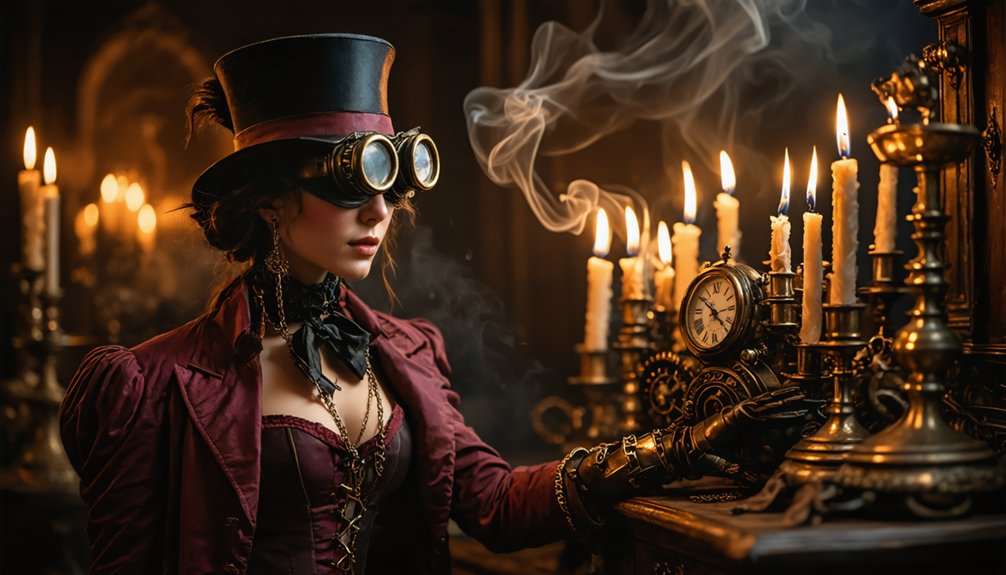
Steampunk and gothic cosplay share a visual language so deliberate and layered that recognition is nearly instantaneous. You’re engaging with two aesthetics that derive their authority from Victorian elegance — corsets, brocade, velvet, and structured silhouettes that communicate period-specific sophistication without demanding strict historical reproduction.
Steampunk layers mechanical motifs over that foundation: brass fittings, goggles, gears, and weathered hardware that suggest a functioning alternate-industrial world.
Gothic cosplay intensifies the same base through darker palettes, ornate textures, and dramatic form.
Together, they produce a visual identity that’s both internally consistent and immediately legible. Warm metallic tones contrast against deep, moody fabrics, creating photogenic compositions that reward detailed examination.
When you commit to this aesthetic, you’re constructing a recognizable identity built on deliberate design choices rather than licensed character mimicry.
The Creative Freedom to Invent Your Own Character
What distinguishes steampunk and gothic cosplay from most other costume genres isn’t just how they look — it’s that they don’t require you to look like anyone in particular. You’re not replicating a licensed character or matching a reference sheet.
Instead, you’re constructing an original persona grounded in personal storytelling and period-inspired visual language.
You’re not borrowing someone else’s character — you’re building your own, rooted in story and shaped by history.
Historical accuracy isn’t a constraint here — it’s a creative tool. You draw from Victorian silhouettes, industrial motifs, and dark romantic aesthetics to build a character that exists entirely within your own worldbuilding.
You name them, define their backstory, and express their identity through every costume choice you make.
This authorial control distinguishes the genre. You’re not cosplaying someone else’s vision — you’re designing your own, with historical depth as your foundation.
Why Steampunk and Gothic Cosplay Are Built for Makers
Few costume genres reward hands-on craft the way steampunk and gothic cosplay do. Both styles demand deliberate construction, material knowledge, and technical skill that transform clothing into wearable worldbuilding.
When you engage with these aesthetics, you’re working across three distinct maker disciplines:
- Fabrication — sewing brocade waistcoats, leather harnesses, and structured corsets that reflect historical accuracy in silhouette and construction.
- Prop-building — crafting goggles, mechanical devices, and brass-fitted accessories that signal genre authenticity instantly.
- Costume preservation — applying weathering finishes and aged patinas that give pieces functional, period-consistent visual weight.
These aren’t decorative shortcuts. They’re intentional craft decisions. Each material choice, seam, and surface treatment signals your understanding of the genre’s industrial and gothic visual language.
Why Wearing Steampunk and Gothic Cosplay Feels So Empowering
Putting on a highly constructed steampunk or gothic costume doesn’t just change how you look — it changes how you carry yourself. The elaborate silhouette, weighted accessories, and deliberate aesthetic choices signal intentionality, and that intentionality translates directly into confidence.
You’re not simply wearing a costume; you’re inhabiting a persona you’ve built from the ground up.
Both styles are exceptionally well-suited to personal expression because neither demands fidelity to a pre-existing character. You define the narrative.
That creative ownership produces genuine emotional empowerment — a sense that your appearance reflects your imagination rather than someone else’s blueprint.
For adults who rarely encounter spaces that reward theatrical self-presentation, steampunk and gothic cosplay offer a legitimate, community-supported context for transformation.
The results are as psychological as they’re visual.
Getting Started With Steampunk Cosplay on Any Budget
One of steampunk cosplay’s most practical advantages is that you don’t need a large budget to enter the aesthetic convincingly. You can build a striking ensemble incrementally, prioritizing historical accuracy through affordable vintage sourcing and selective handcrafting.
- Source a waistcoat, corset, or structured jacket from thrift stores to establish your Victorian silhouette immediately.
- Add brass-toned accessories and repurposed hardware — gears, clock faces, and weathered buckles — to signal genre recognition without overspending.
- Craft basic goggles from inexpensive materials like craft foam, acrylic lenses, and metallic paint for a signature finishing piece.
Costume maintenance remains equally straightforward — store garments properly, touch up weathering finishes seasonally, and reinforce handmade components as needed. You’ll refine your kit deliberately over time.
Frequently Asked Questions
When Did Steampunk Cosplay First Emerge as a Recognized Genre?
Over 40 years ago, you’ll find steampunk’s fashion evolution began in the 1980s, when science fiction writers actively shaped its cultural influences through alternate Victorian futures powered by steam-driven innovation.
Can Steampunk and Gothic Cosplay Styles Be Blended Together Successfully?
You can successfully blend steampunk and gothic cosplay through fusion fashion, leveraging shared Victorian influences, dark palettes, and ornate textures. This style versatility lets you craft a distinctive, innovative costume that’s both dramatically expressive and visually compelling.
Is Steampunk Cosplay Welcoming to People of Different Ages and Backgrounds?
Yes, steampunk cosplay embraces fashion inclusivity and cultural diversity, welcoming you regardless of age or background. You’ll find it’s an adaptable subculture where you can scale detail progressively, fostering innovative self-expression across varied communities.
What Historical Period Most Directly Influences Steampunk Costume Design?
You’re drawing from an era of remarkable mechanical awakening — the Victorian fashion and Industrial Revolution period most directly shapes steampunk costume design, blending 19th-century silhouettes with steam-powered ingenuity into a visually transformative, innovation-driven aesthetic you’ll masterfully embody.
Are There Active Communities Where Steampunk and Gothic Cosplayers Connect?
Yes, you’ll find vibrant communities at cosplay conventions and through online forums where steampunk and gothic enthusiasts actively exchange techniques, showcase craftsmanship, and collaborate on innovative designs, making entry into this inclusive subculture remarkably accessible regardless of your experience level.
References
- https://www.abc.net.au/news/2023-04-29/steampunk-rebels-against-historical-and-modern-societal-norms/102270284
- https://starstruckpanda.com/essential-elements-of-steampunk-cosplay/
- https://sfconservatoryofdance.org/buying-guides/best-steampunk-costumes/
- https://cosplaycurves.com/pages/steampunk-cosplay-guide
- https://cosplaycompanion.wordpress.com/2014/01/27/the-types-of-cosplayers-part-2-steampunk/
- https://steampunkhub.com/steampunk-cosplay
- https://vintagedancer.com/steampunk/steampunk-costume-essentials-women/
- https://steampunk.fandom.com/wiki/Steampunk_fashion