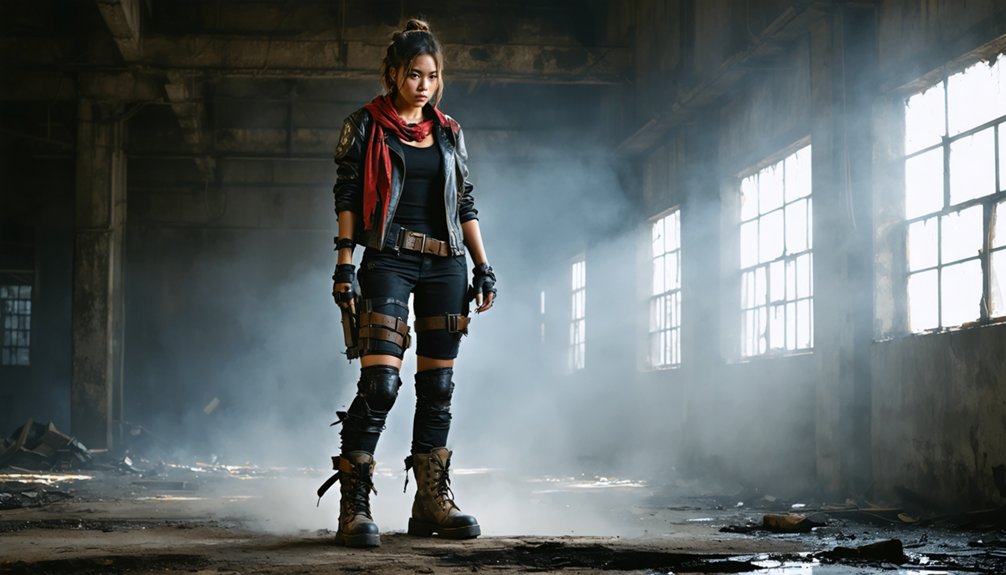
To transform into a sci-fi character, you’ll start by defining your archetype—alien, android, cyborg, or mutant—then gather prosthetics, liquid latex, spirit gum, and metallic pigments. Prep your skin with isopropyl alcohol, apply prosthetics in thin adhesive layers, and blend edges seamlessly with foundation. Layer flat body paint, airbrush depth into recessed areas, and finish with neon accents and flexible sealant. There’s much more technique ahead to perfect every detail.
Key Takeaways
- Define your sci-fi character archetype first—alien, android, or cyborg—to guide your material choices and prevent wasted effort.
- Stock essential tools including stipple sponges, liquid latex, spirit gum, metallic pigments, and an airbrush system for professional results.
- Prep skin by degreasing with isopropyl alcohol before applying prosthetics in thin adhesive layers, then blend edges with liquid latex.
- Layer paint strategically: apply a flat non-human base, airbrush depth into recesses, then add metallic and iridescent details to focal points.
- Patch-test all adhesives 24 hours before application and always use a barrier spray to protect skin from irritation.
Choose Your Sci-Fi Character Before Touching a Brush
Before you open a single product, you’ll need a fully realized character concept to guide every makeup decision you make. Define your character’s role first — alien, android, cyborg, or mutant — because each archetype demands a distinct visual language.
Every character archetype demands its own visual language — define yours before you open a single product.
Alien anatomy, for example, requires you to rethink facial structure, skin pigmentation, and surface texture entirely. An android demands metallic precision and mechanical symmetry.
Once you’ve locked in the archetype, research reference imagery from productions like *Star Trek*, *Guardians of the Galaxy*, or *The Terminator* to identify which techniques apply.
Factor in futuristic accessories like contact lenses or cranial prosthetics early, since these elements influence your application sequence.
A clear concept prevents wasted materials, mismatched components, and unfocused execution from the first brushstroke forward.
Stock These Must-Have Sci-Fi Makeup Tools First
Once your character concept is locked, your toolkit determines how accurately you can execute it. Start with a core set of brushes and sponges designed for layering—flat, round, and stipple varieties handle different textures efficiently.
Add liquid latex, scar wax, and spirit gum to sculpt and secure prosthetics that redefine alien anatomy convincingly.
Stock metallic and iridescent pigments alongside standard body paint to build depth across nonhuman skin tones.
An airbrush system accelerates chrome and gradient finishes that hand-blending can’t replicate cleanly.
Include a strong foundation and seam-blending products to integrate prosthetic edges seamlessly.
Finally, coordinate contact lenses and futuristic accessories early—both require fitting and sourcing time.
Each tool directly controls how precisely your finished character reads on camera or at close range.
How to Apply and Blend Prosthetics Like a Pro
Applying prosthetics cleanly starts with skin prep—degrease the target area with isopropyl alcohol and let it dry completely before touching any adhesive. Strong prosthetic adhesion depends on this step.
Skin prep is everything—degrease, dry, then adhere. Skip this step and your prosthetic won’t stand a chance.
Apply spirit gum or prosthetic-grade adhesive in thin layers, pressing the piece firmly and holding it for full contact.
Follow this blending sequence for professional results:
- Feather liquid latex over prosthetic edges using a damp sponge
- Let each latex layer dry before adding the next
- Apply foundation across both skin and prosthetic simultaneously for unified tone
- Use contour shading to reinforce facial contouring and make structural additions read naturally
Never skip edge blending—visible seams break the illusion instantly.
Patience between layers separates amateur results from convincing, camera-ready transformations.
Layer Body Paint, Metallics, and Neon for the Finished Effect
With your prosthetics blended and your base foundation set, you’re ready to build the color layers that define your character’s species, faction, or technology level. Start with a flat body paint layer to establish alien skin tones—use desaturated greens, purples, or grays to push beyond human color ranges.
Build depth by airbrushing darker shades into recessed areas and lighter tones across raised surfaces. For cyborg details, apply metallic silver or chrome paint along mechanical ridges, panel lines, and structural edges using a fine brush.
Seal each layer before adding the next to prevent blending. Finish with neon or iridescent pigments at focal points—bioluminescent markings, energy conduits, or faction symbols. Set everything with a flexible sealant to lock color and preserve expressiveness throughout wear.
Protect Your Skin During Long Sci-Fi Makeup Sessions
Long sci-fi makeup sessions place real stress on your skin, so prep work before application matters as much as the products you layer on top. Prioritize skin hydration and allergy precautions before you commit to hours under latex, adhesive, and paint.
- Patch-test all prosthetic adhesives and latex on your inner arm 24 hours before your session.
- Apply a hydrating moisturizer and let it fully absorb before any product touches your face.
- Use a barrier spray between your skin and spirit gum to reduce adhesive stress.
- Remove all prosthetics slowly with adhesive remover, then follow immediately with a gentle cleanser and recovery moisturizer.
Skipping these steps risks irritation, breakouts, and sensitivity that’ll compromise your next application.
Frequently Asked Questions
How Long Does a Full Sci-Fi Makeup Transformation Typically Take to Complete?
You’ll typically spend two to ten hours completing a full transformation. Complex alien anatomy and futuristic facial designs demand meticulous layering, prosthetic blending, and paint application, so plan your schedule accordingly for professional results.
Can Sci-Fi Prosthetic Makeup Actually Improve an Actor’s On-Screen Performance?
Yes, it can. With 9-hour applications like Mystique’s, you’ll find that wearing alien anatomy physically grounds your performance. Futuristic fashion elements in prosthetics give you tangible character presence that pure CGI simply can’t replicate.
Which Famous Sci-Fi Films Are Best Known for Their Practical Makeup Effects?
You’ll find the best practical makeup in *Star Wars*, *Alien*, *Predator*, and *Guardians of the Galaxy*. Each film masters alien anatomy and futuristic fashion through precisely engineered prosthetics, textures, and paint that redefine character transformation standards.
Are Contact Lenses Safe to Wear During Extended Sci-Fi Makeup Sessions?
You can wear contact lenses safely during extended wear sessions, but you’ll need advance fittings and proper coordination. Prioritize contact lens safety by scheduling professional consultations, following hygiene protocols, and limiting continuous wear time to reduce eye stress.
Can Reusable Makeup Designs Reduce Daily Application Time on Set?
“Work smarter, not harder.” Reusable designs boost cosmetic sustainability and makeup longevity, cutting your daily application time considerably. You’ll preserve intricate prosthetics, avoid redundant blending sessions, and maintain consistent character accuracy across each innovative production shoot.
References
- https://www.slashfilm.com/888620/the-most-impressive-sci-fi-makeup-transformations-of-all-time/
- https://www.lemon8-app.com/@makeup.r.d/7456934186696639022?region=us
- https://www.youtube.com/watch?v=IDGlYbEDZpI
- https://www.youtube.com/watch?v=uVNP_k-dw0A
- https://www.cinemamakeup.com/blogs/sfx-makeup-school-sci-fi-horror-fantasy-creature-design/
- https://www.youtube.com/watch?v=abKO5jASiLs
- https://www.youtube.com/watch?v=MEVR451QTHY