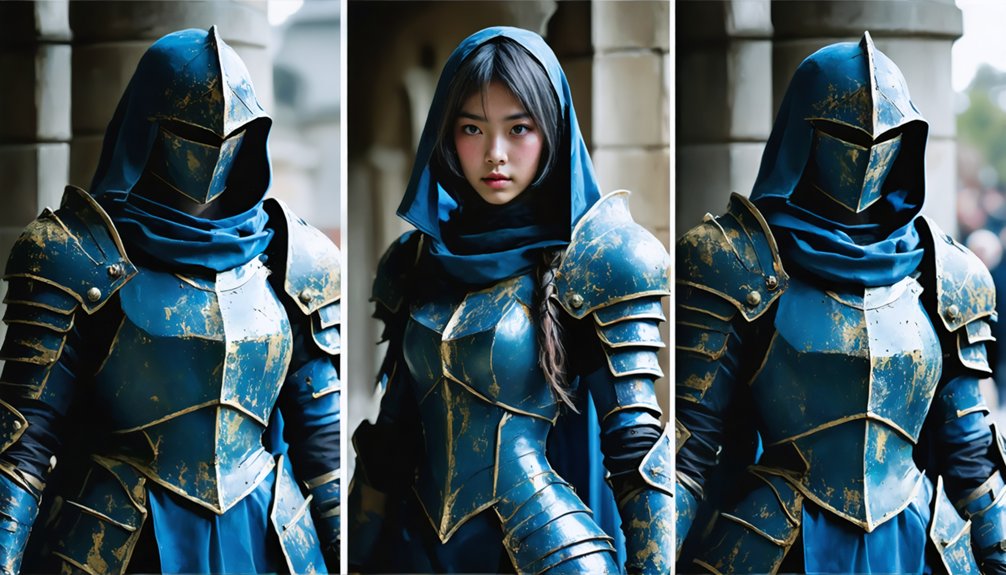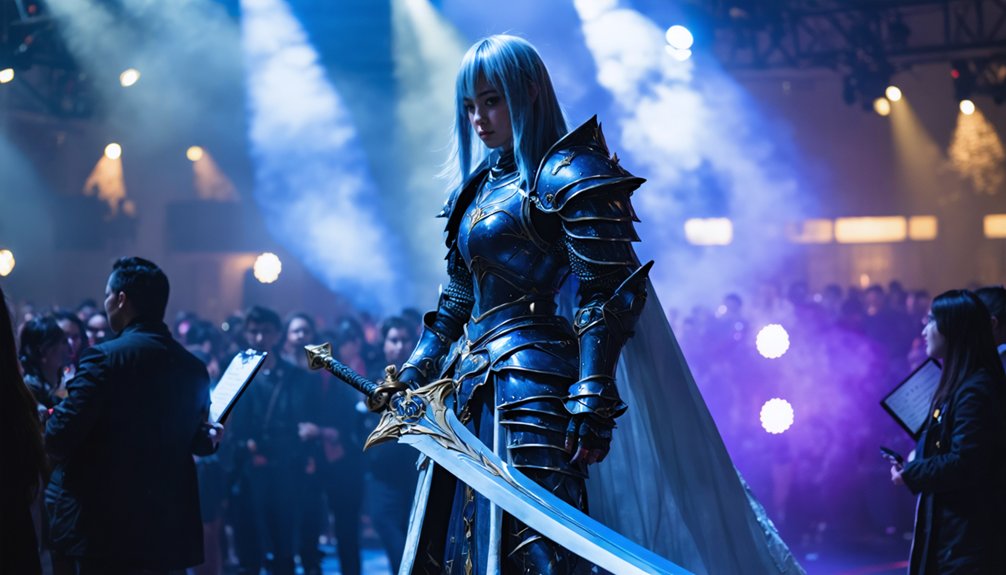
Character accuracy is essential in cosplay contests because judges actively examine seam lines, paint execution, and structural details that distinguish competitive entries from casual ones. You can’t win by approximating a character—you’ve got to nail the defining traits that make them instantly recognizable. Accurate costumes signal intentional, research-driven commitment, which crowds and judges reward instinctively. Master these principles, and the strategic advantages of precision become clear as you explore what separates forgettable entries from unforgettable ones.
Key Takeaways
- Judges closely examine seams, paint, and structural details, making accuracy essential for scoring well in competitive cosplay evaluations.
- Precise character accuracy ensures instant recognition, reducing ambiguity and strengthening a contestant’s overall impression during judging.
- Accurate color, texture, and proportional matching provide critical context that highlights craftsmanship quality to trained evaluators.
- Established characters face sharper scrutiny since judges reference known source material, making deviations more noticeable and costly.
- Intentional, research-driven accuracy signals competitive seriousness, distinguishing deliberate entries from casual, less detail-focused costumes.
Why Cosplay Accuracy Wins Over Crowds and Judges?
When you walk into a cosplay contest, accuracy is what immediately separates a forgettable entry from a showstopper. Judges like Yaya Han scrutinize seam lines, paint execution, and structural details that reflect deliberate craftsmanship.
Character recognition isn’t accidental — it’s engineered through visual fidelity to the source material.
Costume success isn’t luck — it’s built through deliberate, detail-driven commitment to the character’s visual identity.
Crowds respond instinctively to accuracy. When your costume captures a character’s defining visual cues, the reaction is immediate and powerful. That response validates your effort and elevates your presence on the contest floor.
Competition judges evaluate precision separately from craftsmanship, meaning both dimensions must perform independently. Established characters give you a measurable benchmark, making your accuracy verifiable and defensible.
You’re not just wearing a costume — you’re constructing a visual argument that commands attention from both judges and audiences.
What Judges Actually Look for in Cosplay Accuracy?
Judges don’t just glance at your costume — they dissect it. During pre-judging, they examine seams, glue lines, paint application, and fabric choices against the source material. Every visible edge tells them how seriously you approached the build.
Detail precision separates competitive entries from casual ones. Judges like Yaya Han assess whether your finishing work elevates materials — whether foam reads as metal, or cloth drapes like armor plating. They’re measuring your execution against a known visual standard.
Recognizable characters receive sharper scrutiny because judges can directly compare your work to established references. Original designs face the same standards but carry heavier burdens — without a known source, your craftsmanship must speak entirely for itself.
Accuracy and quality aren’t separate concerns; together, they define your score.
How Character Accuracy Gives You a Real Contest Edge
Knowing what judges examine is only half the equation — putting that knowledge to work through character accuracy is where your contest standing actually shifts.
Detail distinction separates competitive entries from forgettable ones. When you nail recognizable elements, judges immediately connect your build to the source material, strengthening your overall score.
Accuracy delivers strategic advantages across multiple judging dimensions:
- Body differences diminish when precise details command attention
- Craftsmanship gains context through accurate color, proportion, and texture matching
- Recognition becomes instant, reducing ambiguity during evaluation
- Original designs require higher accuracy thresholds to compensate for unfamiliar source material
You’re not just recreating a costume — you’re demonstrating intentional, research-driven execution.
That precision signals seriousness, elevating your entry above competitors who prioritize aesthetics over authentic character representation.
What the Cosplay Community Expects on Accuracy
Community expectations on accuracy aren’t monolithic — they shift depending on whether you’re competing, cosplaying casually, or engaging with the public. In competitive spaces, community standards tighten considerably. Judges scrutinize color matching, proportional accuracy, and faithful replication of outfit components.
Accuracy debates frequently erupt over what constitutes acceptable modification versus deviation from source material.
Interestingly, broader community noise often downplays strict accuracy, yet contests consistently uphold it as a defining measure. You’ll notice this tension most clearly in masquerade categories, where precision separates contenders from participants.
Some communities prioritize total detail replication; others embrace creative interpretation within recognizable boundaries.
What matters is understanding which environment you’re entering. Competitive cosplay demands deliberate accuracy decisions, not accidental ones. Knowing where the community draws that line gives you a strategic advantage.
How to Stay Accurate Without Losing Creative Freedom
Balancing accuracy with creative freedom isn’t about choosing one over the other — it’s about knowing which elements are non-negotiable.
Preserve the character essence — signature colors, silhouette, and iconic props — while applying design modifications that reflect your craftsmanship.
Focus your creative decisions strategically:
- Lock core visual identifiers — color palette, costume structure, and key accessories must remain recognizable
- Modify secondary elements — fabric texture, material choice, or construction methods can flex without breaking accuracy
- Avoid altering defining traits — hairstyle, insignia, or weapon design anchor character recognition
- Document your design modifications — judges respect intentional creative choices backed by clear reasoning
You don’t sacrifice originality by honoring accuracy; you elevate it.
Smart cosplayers treat constraints as creative challenges, not limitations, producing contest entries that are both technically precise and distinctly personal.
Frequently Asked Questions
Does Character Accuracy Affect Cosplay Judging at International Competitions Like World Cosplay Summit?
Yes, character accuracy directly impacts your scores at the World Cosplay Summit, where judges measure precise character portrayal against competition standards, evaluating how closely you’ve matched every detail to the original source material.
Can Inaccurate Cosplays Negatively Impact Public Recognition and Crowd Interactions at Conventions?
Yes, inaccurate cosplays can hurt your crowd interactions. When you don’t meet fan expectations or community standards, strangers won’t recognize your character, reducing positive engagement and leaving you discouraged by the lack of meaningful convention responses.
Are There Specific Banned Practices in Cosplay Contests Related to Physical Trait Accuracy?
Yes, contests ban racefacing and penalize harmful physical representation practices. You’ll find that costume modification remains your best tool for achieving character accuracy without crossing ethical boundaries that organizers actively enforce in competitions.
How Does Screen Accuracy Help Cosplayers Achieve Instant Character Embodiment at Events?
When you nail screen accuracy, you’re enabling instant character recognition by replicating key visual details one-to-one. This creates an immersive experience, allowing audiences to immediately identify and connect with your portrayal without any interpretive gaps.
Does Cosplay Accuracy Matter Differently for Established Characters Versus Original Costume Designs?
Yes, accuracy matters differently. With established characters, you’re meeting fan expectations and cultural representation standards. With original costume designs, you’ve got creative expression freedom, but your character design must demonstrate superior craftsmanship to compete effectively.
References
- https://www.oldtrenchy.com/2018/07/15/from-a-cosplay-judges-perspective/
- https://www.momokarinyo.com/single-post/2018/12/05/cosplay-convos-accuracy
- https://repository.lib.ncsu.edu/bitstreams/3242e9ff-fd07-4973-ac24-592a47b16f9c/download
- https://www.youtube.com/watch?v=fm4CxNdBQBY
- https://www.youtube.com/watch?v=QGCEDY0eYMI