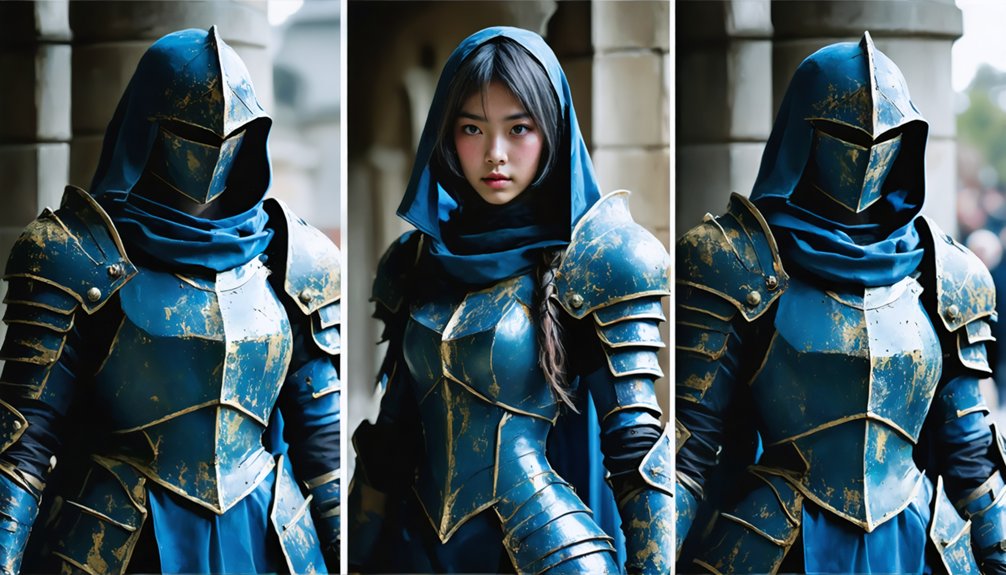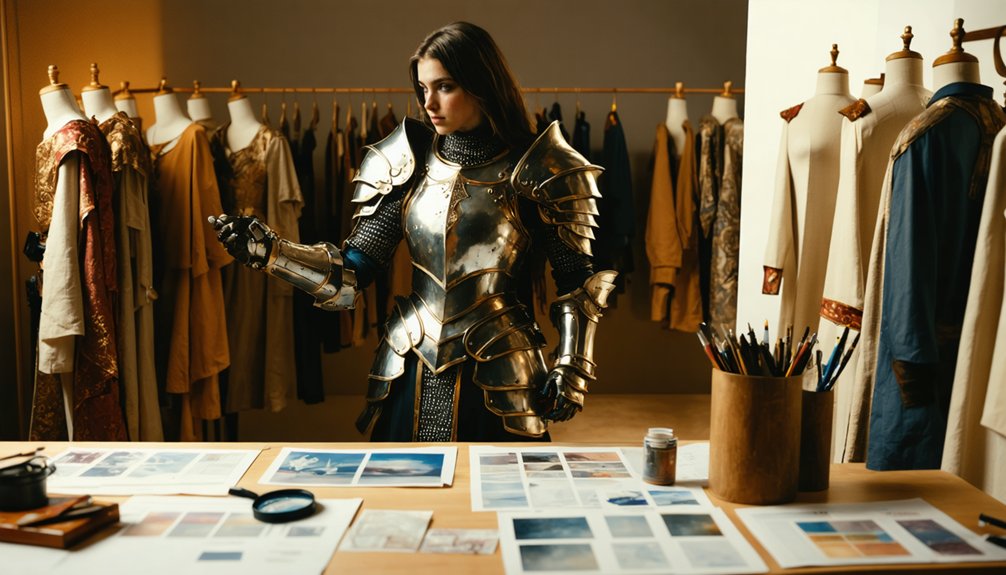
Perfecting character accuracy in cosplay starts with thorough research before you ever cut a single piece of fabric. You’ll need multi-angle references to capture front, back, and side details that define your character’s visual identity. Identify non-negotiable visual markers early, honestly assess your skill level, and start your build weeks ahead of your deadline. The common mistakes that quietly destroy accuracy are easier to avoid than you’d think—keep exploring to find out exactly where most cosplayers go wrong.
Key Takeaways
- Skipping thorough character research leads to inaccurate builds; study hidden details that define the character’s complete visual identity before starting.
- Collect front, back, side, and close-up reference images before cutting any fabric to prevent costly construction errors.
- Identify non-negotiable visual markers like signature colors and iconic accessories early, as these trigger immediate audience recognition.
- Start builds weeks ahead of deadlines, allowing adequate time to correct mistakes before they become permanent flaws.
- Honestly assess your skill level against required techniques, selecting designs one challenge above your ability to ensure accurate portrayal.
Why Most Cosplays Miss the Mark on Accuracy
When cosplayers rush into construction without thorough character research, accuracy suffers before a single stitch is made. You can’t rely solely on a single front-facing image as your design inspiration — hidden details on sleeves, backs, and accessories define the character’s complete visual identity.
Rushing into construction without research guarantees inaccuracy — hidden details define a character’s complete visual identity.
Most cosplays miss the mark because builders underestimate how much a flawed character interpretation compounds across every construction decision. Wrong fabric choices, missed color gradients, and overlooked emblems all stem from incomplete reference gathering.
You need multi-angle references collected before purchasing materials or cutting patterns. Each design element you identify upfront eliminates costly rework later.
Accuracy isn’t achieved through guesswork — it’s built systematically through disciplined research that guarantees your construction reflects the character’s true visual blueprint from every angle.
Which Details Actually Make Your Character Recognizable?
Thorough reference research means nothing if you can’t identify which details actually trigger recognition in your audience.
Strategic accuracy focuses on distinctive character features that general viewers immediately associate with the character. A signature color palette, silhouette, or iconic accessory often carries more detail importance than perfectly replicated seam placements nobody notices.
Prioritize elements that function as visual shorthand. Naruto’s orange tracksuit, Sailor Moon’s twin buns, Batman’s cowl—these are recognition anchors. Without them, even an otherwise flawless costume reads as generic.
Identify your character’s two or three non-negotiable visual markers before construction begins, then build remaining elements around those priorities. You’ll allocate time, budget, and effort where they deliver maximum audience comprehension, transforming a technically impressive build into an instantly identifiable character portrayal.
Gather Reference Images From Every Angle for Accuracy
Accurate costume construction demands reference images from multiple angles before you cut a single piece of fabric.
Front-facing images alone create incomplete costume design blueprints, leaving critical construction details undiscovered until it’s too late. Multi angle references expose hidden seams, back panel designs, and accessory placements invisible from a single perspective.
Collect references covering:
- Front view — primary design elements and color placement
- Back view — hidden closures, panel construction, and design continuity
- Side profiles — silhouette accuracy and layering depth
- Detail close-ups — texture, hardware, and embellishment specifics
Print or save every angle before purchasing materials.
Characters frequently feature design elements that only appear in specific scenes or promotional artwork. Extensive visual research prevents costly rework and keeps your build precise from start to finish.
Start Early So Mistakes Don’t Compromise Costume Accuracy
Reference images give you a complete picture of what you’re building, but that picture means nothing if you’re racing against a deadline. Early planning transforms ambitious designs into achievable builds by giving you room to course-correct without panic.
Planning ahead turns an overwhelming design into a manageable build — giving you time to fix mistakes, not just make them.
Sewing mistakes happen — sleeves end up on wrong arms, bobbins run dry mid-seam, machines jam at the worst moments. Without adequate time, those errors become permanent compromises.
Mistake prevention isn’t about sewing perfectly; it’s about having space to fix imperfections before they’re locked into the finished costume. Start your build weeks, not days, before the event.
Each additional day in your timeline represents an opportunity to refine construction, rework problem areas, and assess accuracy against your reference materials. Deadlines shouldn’t dictate quality — your planning should.
Match Your Skill Level to Your Costume’s Complexity
Planning a costume you can’t yet build wastes materials, kills momentum, and produces results that undermine your character portrayal. Honest skill assessment before purchasing anything determines whether your chosen build is genuinely within reach.
Evaluate project feasibility using these criteria:
- Technique inventory: Identify every construction method the costume requires before committing.
- Complexity matching: Select designs one challenge level above your current ability, not five.
- Resource reality: Confirm you can source necessary materials within budget and timeline.
- Skill gaps: Research tutorials addressing unfamiliar techniques before construction begins.
Choosing an overly ambitious costume doesn’t demonstrate dedication — it produces abandoned projects and wasted investment.
Build progressively challenging costumes across multiple conventions, advancing your capabilities systematically. Accurate character portrayal comes from mastered execution, not overreaching ambition.
Sewing Mistakes That Quietly Destroy Costume Accuracy
Even with a realistic skill assessment and a manageable build plan, sewing errors can silently sabotage your finished costume. Sleeves sewn inside out, misaligned seams, and unnoticed bobbin thread depletion are among the most destructive yet preventable mistakes.
Poor fabric choices compound these issues — selecting materials that fray easily or behave unpredictably under tension magnifies every construction error.
The fabric you choose either supports your construction or betrays it — fraying edges and unpredictable tension forgive nothing.
Refining your sewing techniques means checking thread continuity regularly, verifying piece orientation before stitching, and never rushing seam work under deadline pressure.
Keep a seam ripper accessible throughout your build; correcting mistakes early prevents structural failures later. Needle jams and machine malfunctions can compromise entire costume sections, so test your equipment before beginning critical components.
Precision during construction directly determines how accurately your finished costume represents the character.
Costume Accuracy Standards Don’t Apply to Your Physical Appearance
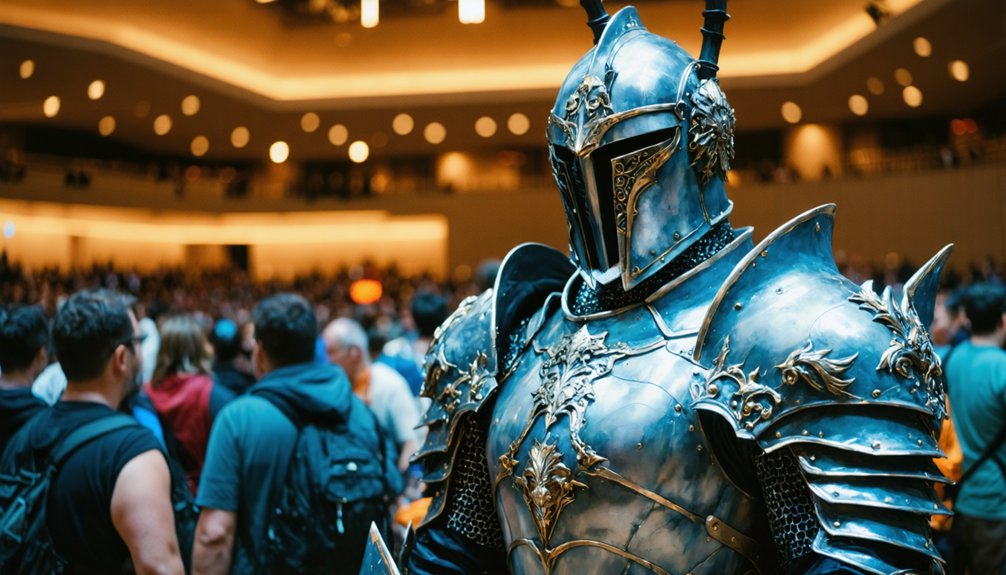
While construction accuracy and character recognition standards matter deeply in cosplay, they don’t extend to your physical appearance. Body positivity isn’t just welcomed in cosplay—it’s foundational. Animated characters carry exaggerated, impossible proportions. You’re a human being, not a 2D rendering.
Authentic character representation comes from your costume craftsmanship, not your body type, height, skin tone, or facial features. Own that distinction completely.
- Your body type, weight, or height never invalidates your cosplay.
- Skin tone differences between you and a character don’t reduce accuracy scores.
- Mobility aids and adaptive modifications don’t compromise character representation.
- Gender-bending and crossplay are fully legitimate creative expressions.
Focus your accuracy energy entirely on construction quality, prop precision, and distinctive costume elements. That’s where recognition lives.
Frequently Asked Questions
How Much Does an Accurate Cosplay Costume Typically Cost to Make?
Costs run the gamut—you’ll spend $50–$500+ depending on complexity. Prioritize budget planning early and choose fabric selection wisely to stretch your dollars without sacrificing the accuracy that makes your cosplay truly recognizable.
What Conventions Are Best Suited for Debut of a New Cosplay?
For debut strategies, you’ll want to target genre-specific convention types that align with your character’s fandom. Anime, gaming, or pop culture cons attract knowledgeable audiences who’ll recognize and appreciate your costume’s accuracy most enthusiastically.
Can Purchased Costumes Achieve the Same Accuracy as Handmade Ones?
Purchased costumes rarely match handmade costumes in accuracy. When you build your own, you’re controlling every detail, material, and proportion. Handmade construction lets you reference multi-angle character designs, ensuring distinctive features align precisely with the original.
How Do Cosplayers Protect Finished Costumes During Transportation to Events?
Like fragile museum artifacts wrapped for transit, you’ll safeguard finished costumes using garment bags, rigid containers, and strategic padding. Prioritize smart costume storage and deliberate transportation methods to arrive event-ready, protecting every carefully constructed detail you’ve built.
Should Beginners Enter Cosplay Competitions Before Mastering Advanced Construction Skills?
You shouldn’t wait to compete! Entering beginner-friendly competitions early combats performance anxiety and accelerates skill progression. You’ll gain invaluable feedback, identify construction weaknesses, and strategically innovate your builds faster than practicing in isolation ever could.
References
- https://www.momokarinyo.com/single-post/2018/12/05/cosplay-convos-accuracy
- https://cos-bond.com/2020/05/01/the-right-kind-of-research-common-cosplay-mistakes/
- https://thewoodlandelf.com/11-mistakes-every-cosplayer-makes/
- https://www.youtube.com/watch?v=nzq_B0aWALw
- https://creedleather.com/blogs/events-cons-fairs/top-mistakes-to-avoid-in-a-cosplay-competition
- https://www.youtube.com/watch?v=fm4CxNdBQBY
- https://www.skywingknights.com/cosplay/comfort-vs-accuracy/