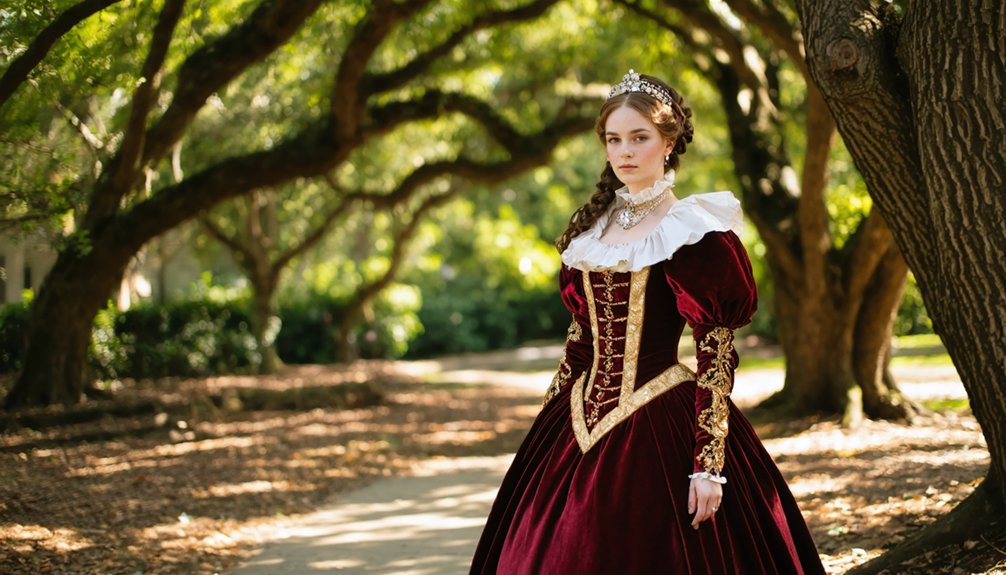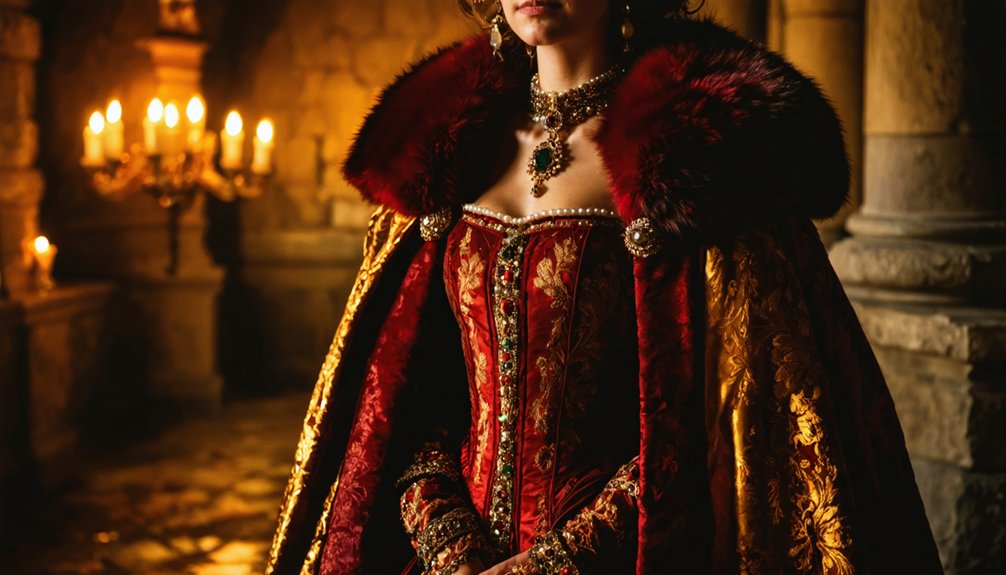
Tudor royals didn’t dress extravagantly to look impressive — they dressed extravagantly because their survival depended on it. When you wore cloth of gold or purple silk, you weren’t making a fashion statement — you were making a political declaration. Every fabric choice signaled rank, allegiance, and authority before you spoke a single word. Clothing functioned as governance, propaganda, and legal enforcement simultaneously. The deeper you look into Tudor dress, the more you’ll uncover about how power truly operated.
Key Takeaways
- Tudor monarchs used extravagant clothing as deliberate political messaging, broadcasting power and dynastic authority before speaking a single word.
- Extravagant dress functioned as governance; visibility equated to power, making lavish wardrobes essential political infrastructure rather than mere vanity.
- Sumptuary laws reserved the most expensive materials exclusively for royalty, making extravagance a legally enforced symbol of supreme status.
- Fabric represented calculated financial investment, with Henry VII spending millions in modern currency to project unquestionable royal authority.
- Each garment communicated theological and political allegiances, with embroidered emblems and fabric choices functioning as a structured political language.
The Real Reason Tudor Royals Dressed So Lavishly
When you examine Tudor fashion, the extravagance wasn’t mere vanity — it was calculated political theater. Every fabric choice, every embroidered emblem communicated social identity with deliberate precision.
By the 1550s, clothing defined a gentleman’s rank more powerfully than birthright alone. Fashion symbolism functioned as a political language.
By the 1550s, what you wore outranked who you were born — clothing had become the ultimate political statement.
Henry VII strategically rebuilt his wardrobe after Bosworth, spending what equates to millions today, projecting legitimacy through lavish dress rather than established lineage. Sumptuary laws reinforced this system, legally restricting cloth of gold and sable furs exclusively to royalty.
You’re looking at a civilization that treated royal garments as state assets — equivalent to gold reserves. Tudor monarchs understood that visibility was power, and dressing extravagantly wasn’t indulgence; it was governance made visible.
The Staggering Cost of Tudor Royal Dress
When you examine Tudor royal expenditure, you’ll find that fabric represented a financial burden far exceeding what modern consumers might imagine.
Henry VII, keen to cement his legitimacy after Bosworth, spent what would equate to millions in today’s currency outfitting himself in the materials of power.
You can measure the era’s priorities precisely through one 1533 gentleman who surrendered a third of his annual salary for yards of cloth alone.
Fabric as Financial Investment
During the Tudor period, fabric wasn’t merely material—it was currency, power, and identity stitched into every yard. You’d find that fabric rarity directly shaped economic implications across every social tier. Unlike today’s mass-produced textiles, acquiring quality cloth demanded extraordinary financial sacrifice.
Consider the evidence: one gentleman surrendered one-third of his annual salary for yards of fabric in 1533. Henry VII spent millions in modern currency restocking his wardrobe after Bosworth. The Earl of Leicester paid more for a single outfit than Shakespeare paid for his entire house.
Nobles strategically layered expensive fabrics to create illusions of broader wardrobes, maximizing visual impact while managing costs. Fabric wasn’t expenditure—it was calculated investment, broadcasting wealth, rank, and political allegiance simultaneously through every thread worn.
Elite Spending on Garments
Royal garments in Tudor England weren’t luxuries—they were political instruments with staggering price tags to match. When you examine elite garment culture closely, the numbers are striking. Henry VII spent millions in today’s currency renewing his wardrobe after Bosworth, signaling legitimate rule through sheer financial commitment.
A single gentleman in 1533 surrendered one-third of his annual salary on fabric alone. The Earl of Leicester paid more for one outfit than Shakespeare paid for his house. These weren’t impulsive purchases—they were calculated performances of power.
Extravagant fashion trends functioned as measurable demonstrations of rank, reinforcing hierarchy through cost rather than proclamation. You couldn’t separate the Tudor court’s authority from its wardrobe; spending extravagantly wasn’t excess—it was governance expressed through cloth.
Why the Crown Treated Wardrobes Like State Treasury
Tudor monarchs didn’t merely wear their wealth—they weaponized it. When you examine wardrobe symbolism within the Tudor court, you’ll recognize that royal garments functioned as state assets, not personal luxuries. The Crown catalogued clothing alongside gold and plate, treating each embroidered doublet as a measurable political instrument.
Political messaging operated through every thread. You’d find that dress hierarchy dictated who could wear cloth of gold, sable fur, or tissued silver—material restrictions enforced through sumptuary laws that declared social boundaries without spoken words.
Nobility display reinforced royal embellishments as deliberate fashion influence, projecting dynastic authority across diplomatic courts. Each garment communicated power before a monarch spoke.
You’re fundamentally looking at a wearable foreign policy—calculated, codified, and constitutionally consequential.
The Laws That Controlled What You Could Wear at Court
Sumptuary laws didn’t merely suggest courtly decorum—they legally prescribed it. These dress regulations codified fashion hierarchy into enforceable statute, dictating precisely which fabrics, colors, and embellishments you could wear based on your rank. Court attire wasn’t personal expression; it was institutional declaration.
Clothing restrictions operated with surgical precision. Only royalty could don cloth of gold tissued or sables fur, while Viscounts and Barons accessed tinseled satin and embroidered silk. Violating these boundaries wasn’t a social faux pas—it was a legal transgression.
Fabric symbolism reinforced social order at every stitch. Royal privilege manifested visually, ensuring you’d immediately recognize power’s hierarchy upon entering any chamber.
These laws didn’t just dress the court—they architecturally structured its entire political landscape through carefully regulated textile grammar.
The Fabrics That Separated Royalty From Everyone Else
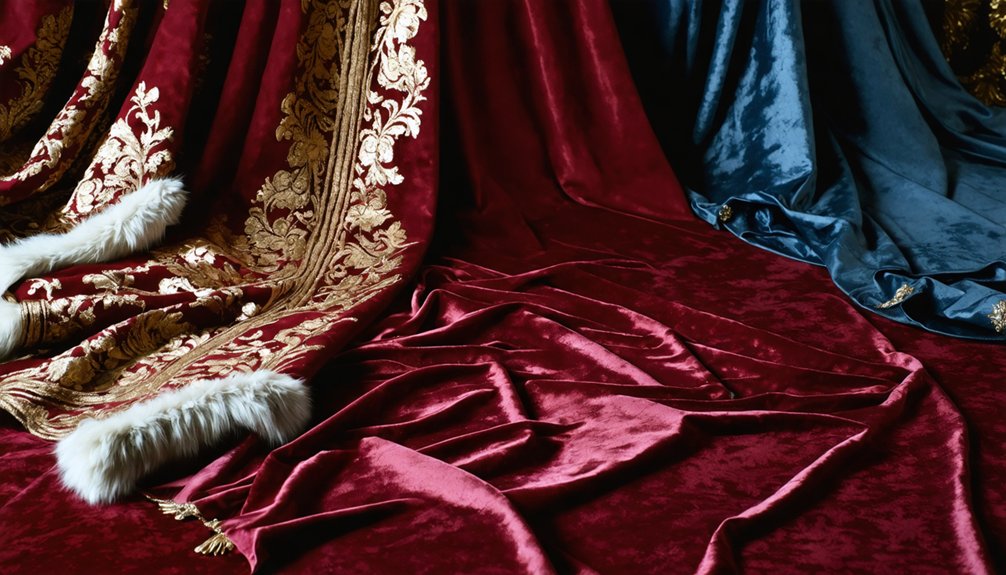
When you examine the Tudor wardrobe, you’ll find that fabric choice wasn’t mere preference — it was legally enforced social stratification made visible.
Only the Royal Family could wear cloth of gold tissued or sable fur, materials so exclusive that sumptuary laws treated their misuse as a political offense.
You’d recognize royal power instantly through silk of purple and silver tissued materials, fabrics that declared dynastic authority before a single word was spoken.
Exclusive Royal Fabric Choices
Few distinctions in Tudor England carried more weight than the fabrics reserved exclusively for royal use.
When you examine the hierarchy of textiles, cloth of gold and silver tissued material sat at the absolute pinnacle, their exclusive fabric origins rooted in continental European workshops producing materials no commoner could legally touch.
Royal fabric symbolism wasn’t accidental — these textiles declared sovereign authority before a monarch spoke a single word.
Only the Royal Family could wear sables or cloth of gold tissued, making each garment a walking declaration of dynastic legitimacy.
Sumptuary laws enforced these boundaries with legal precision, transforming dress into political architecture.
You weren’t simply observing fashion; you were witnessing a carefully regulated system where fabric itself constituted an instrument of power.
Fabrics Signaling Royal Power
Hierarchy in Tudor England wasn’t merely inherited — it was worn. Fabric hierarchy operated as a visible legal system, separating monarchs from subjects through textile alone. You’d recognize royal symbolism instantly — certain materials weren’t aspirational; they were forbidden to you by law.
Three fabrics exclusively commanded royal authority:
- Cloth of gold tissued — reserved solely for the Royal Family
- Purple silk — signaled direct royal lineage
- Sable fur — legally restricted beyond the monarch’s circle
Sumptuary laws enforced these distinctions ruthlessly. Wearing restricted materials wasn’t fashion rebellion — it was a punishable offense.
Tudor monarchs transformed their wardrobes into political declarations, making fabric itself an instrument of governance. What you wore announced exactly where power resided.
How Tudor Monarchs Weaponized Clothing as Political Propaganda
Tudor monarchs didn’t merely dress to impress—they dressed to dominate. When you examine their wardrobes, you’ll recognize deliberate political engineering. Every embroidered badge, specific hood choice, and restricted fabric communicated dynastic authority before a single word was spoken.
Henry VII strategically deployed clothing symbolism immediately after Bosworth, constructing royal identity through carefully controlled visual messaging. His wardrobe wasn’t personal preference—it was propaganda infrastructure.
Sumptuary laws reinforced this weaponization by legally codifying who could wear what, positioning the monarch visually above all subjects. When you wore cloth of gold, you weren’t simply wealthy—you were declaring sovereign legitimacy.
Embroidered emblems signaled political loyalties, while specific color restrictions reminded every observer exactly where power resided.
Tudor dress was, fundamentally, political warfare conducted through textile.
Henry VIII’s Style Shift and What It Revealed About Power
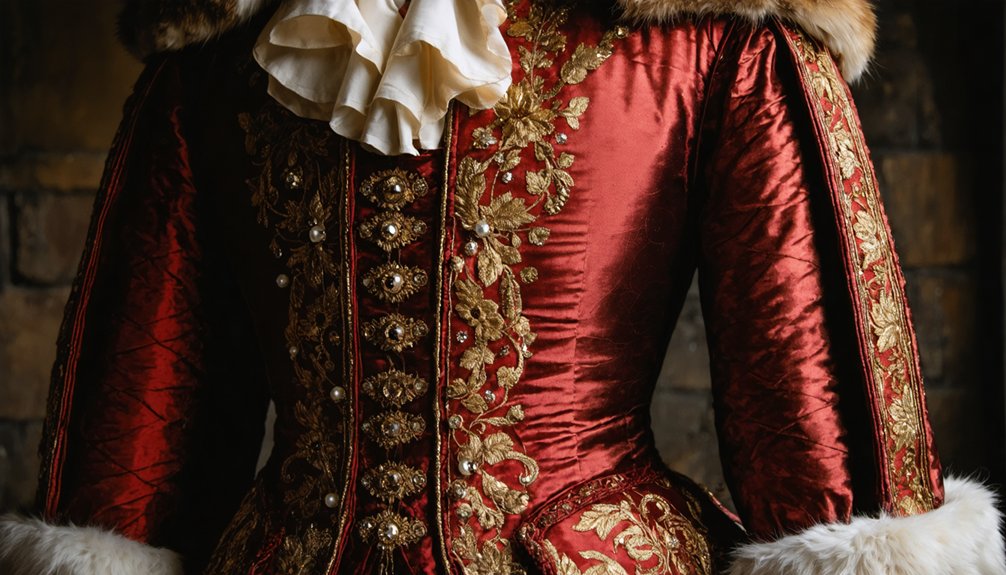
When Henry VIII’s physique expanded in his later years, his sartorial choices expanded with it—deliberately. His style evolution wasn’t accidental—it was calculated political messaging through clothing symbolism.
You can trace his power dynamics through three deliberate fashion statements:
- Broadened shoulders via padded doublets exaggerated masculine identity, projecting dominance despite physical decline.
- Layered cloth of gold reinforced royal image, signaling untouchable authority through sheer material excess.
- Top-heavy silhouettes functioned as social commentary, visually commanding spaces and subordinating courtiers by contrast.
Henry understood that clothing communicated what words couldn’t safely declare. His wardrobe became armor—shaping perception, suppressing vulnerability, and asserting masculine identity when his body betrayed him.
Every stitch carried deliberate royal messaging that you’d recognize instantly as calculated, not decorative.
How Protestant Reform and Court Rivalry Changed Royal Dress
Protestant Reform didn’t just reshape theology—it rewired the visual language of royal dress entirely. As Protestant Influence swept through Tudor court culture, ostentatious ornamentation became politically charged. You’d notice reformers advocating restraint while Catholic-aligned courtiers doubled down on embellishment, transforming clothing into theological argument.
Court Rivalry intensified this tension. Competing factions dressed strategically, deploying embroidered badges, symbolic colors, and layered fabrics as weapons of political allegiance. You couldn’t separate a courtier’s outfit from their ideological positioning—every sartorial choice declared loyalty or dissent.
Edward VI’s reign accelerated the shift toward austere silhouettes, while Mary I’s court reasserted Catholic visual opulence.
Elizabeth I later navigated both traditions masterfully, synthesizing Protestant modesty with sovereign spectacle, making royal dress an instrument of calculated political performance.
Frequently Asked Questions
How Did Tudor Royal Children’s Clothing Differ From Adult Royal Attire?
Tudor royal children’s clothing mirrored adult attire in royal symbolism yet softened childhood fashion’s rigid formality. You’d notice they wore scaled-down versions of luxurious fabrics, gradually adopting sumptuary-regulated garments as they approached adulthood and courtly responsibilities.
Did Tudor Royals Ever Recycle or Repurpose Their Extravagant Outfits?
Yes, you’d find Tudor royals practiced fashion sustainability despite their excess — they’d repurpose garments through hand-me-downs, layering, and reembellishment, balancing royal economies by transforming yesterday’s extravagance into tomorrow’s politically strategic, status-affirming attire.
How Long Did It Take Tailors to Complete a Royal Tudor Garment?
Royal Tudor garments could take weeks or months to complete. You’d find tailor techniques incredibly labor-intensive, as craftsmen meticulously hand-stitched luxurious garment materials—silk, cloth of gold—layer by layer, demanding extraordinary precision reflecting the monarch’s uncompromising standards.
Were Foreign Dignitaries Expected to Match Tudor Royal Dress Standards?
Oh, you’d dare show up underdressed? Foreign dignitaries navigated rigid foreign etiquette, actively mirroring Tudor royal symbolism through lavish attire. You’d signal political respect or risk diplomatic catastrophe — clothing wasn’t fashion; it’s was power personified.
Did Tudor Queens Have More Clothing Restrictions Than Tudor Kings?
Tudor queens didn’t face stricter restrictions, but you’d notice distinct clothing symbolism shaped by gender differences—kings projected dominance through silhouette, while queens communicated dynastic virtue, marital status, and political allegiance through carefully regulated fabrics, colors, and embellishments.
References
- https://kb.osu.edu/server/api/core/bitstreams/8289ece3-2723-4b52-9435-8dad5e0e1ff3/content
- https://journals.openedition.org/lectures/25593
- https://www.rmg.co.uk/stories/royal-history/tudor-fashion
- https://www.youtube.com/watch?v=mE9rOSDWi7s
- https://www.johnmooremuseum.org/tudor-fashion-and-clothing/
- https://yalebooksblog.co.uk/2024/01/17/tudor-fashion-50-years-in-50-books/
- https://www.youtube.com/watch?v=xBRQqcei7Tg
- https://erenow.org/biographies/henryviiithekingandhiscourt/23.php
- https://researchke.kingston.ac.uk/ws/portalfiles/portal/49389363/Ritchie-E-49389296.pdf
- https://www.reddit.com/r/Tudorhistory/comments/1n4czpx/tudor_royal_family_clothing/