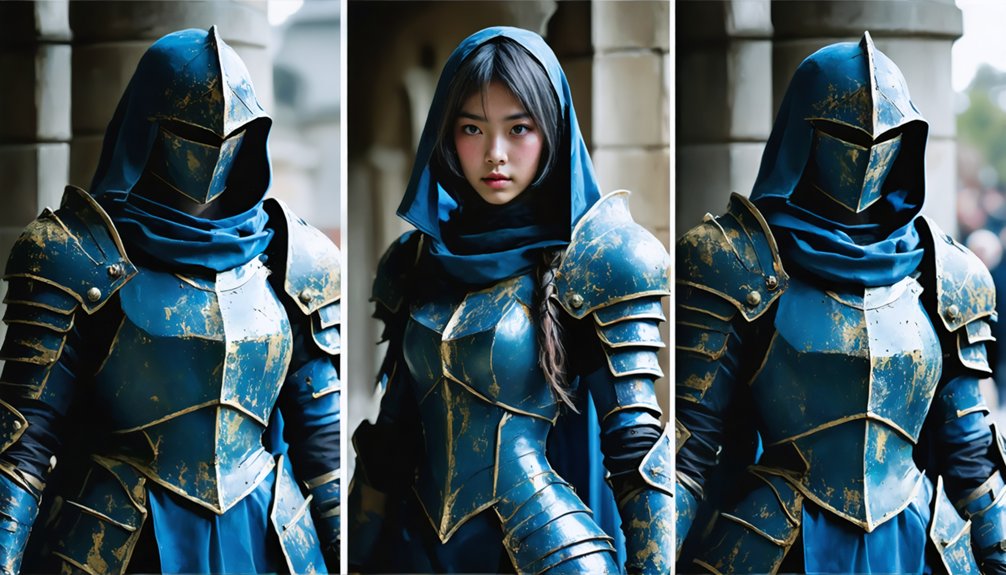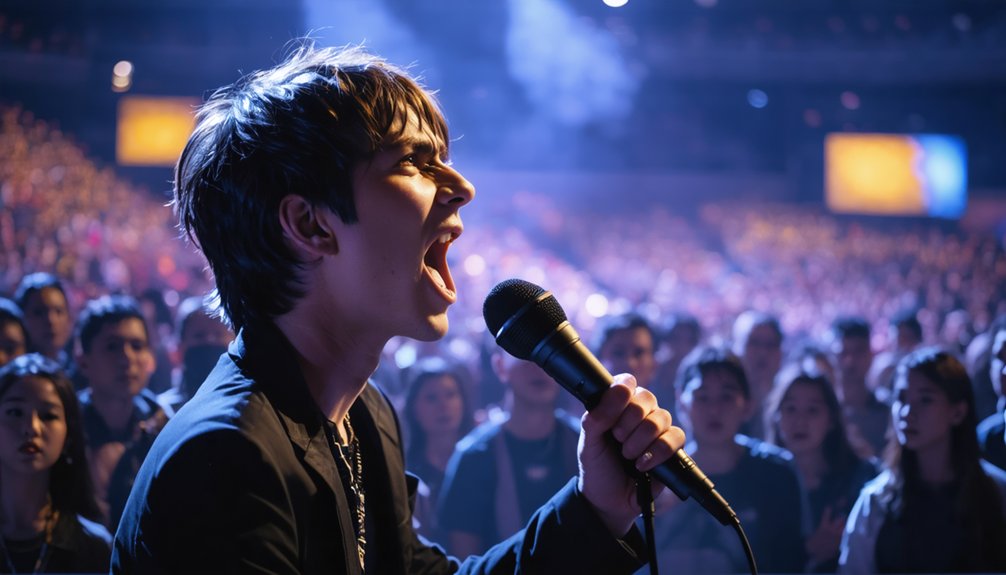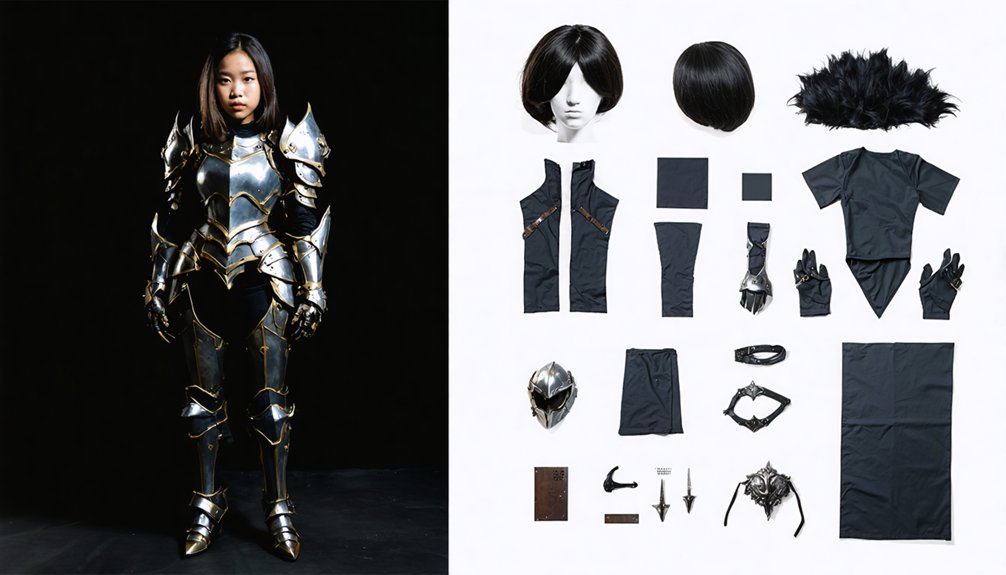
Achieving character accuracy in cosplay requires mastering five interconnected elements. You’ll need to match your silhouette to the source material using custom fitting and structural support. Surface finishing, weathering, and precise insignia placement signal true accuracy. Facial styling—wig structure, makeup, and skin tone—is equally critical. Your props must hold up at close range with correct scale and layered finishes. Finally, posture, movement, and expression complete the illusion. Each element is covered in detail below.
Key Takeaways
- Match the character’s silhouette by studying multiple reference views and using structural elements like boning to maintain accurate proportions.
- Apply weathering, insignias, and surface finishes precisely to replicate the character’s canonical appearance and distinguish your build.
- Style wigs and makeup to mirror the character’s facial features, hair structure, and emotional expressions accurately.
- Build props to correct scale using calipers and grids, layering finishes to replicate authentic textures and damage patterns.
- Embody the character through deliberate posture, gestures, facial expressions, and voice modulation drawn from source references.
Match Your Cosplay Silhouette to the Source Material
The silhouette is the first thing a viewer registers, so matching it to the source material is foundational to character accuracy. Study front, back, and side reference views to map the character’s exact proportions, structural lines, and volume distribution.
Costume fit directly determines whether those proportions translate correctly onto your body, so prioritize custom-fitted construction over generic sizing. Analyze how each major piece, whether a bodysuit, armor panel, or cape, contributes to the overall outline.
Structural elements like boning, interfacing, and underlining help maintain intended shapes during wear. Color matching reinforces silhouette reading by ensuring tonal contrasts land where the source design places them.
Use fabric swatches against reference images under consistent lighting to verify accuracy before committing to any material.
Add Weathering, Insignias, and Finishing Touches That Signal Accuracy
Once the silhouette and fit are locked in, surface-level finishing work is what separates a competent build from a precise character reproduction. Every marking, weathering effect, and insignia communicates authenticity at close range—and judges notice.
Surface-level finishing is where competent builds end and precise character reproductions begin.
Cross-reference your source images when applying:
- Weathering and wear effects — scratches, shading, and distressing should match the character’s canonical lived-in condition, not generic aging
- Insignias and typography — scale, placement, and color matching must align with official reference; even minor drift breaks recognition
- Fabric textures and surface sheen — paint sealing, fabric treatments, and topcoats should replicate the visual finish seen in promotional material
Precision at this stage isn’t decorative—it’s diagnostic. The finishing layer is where accuracy is confirmed or quietly lost.
Nail the Wig, Makeup, and Facial Styling
Facial styling carries the same diagnostic weight as the costume itself—if the wig silhouette, color, or makeup reads wrong, recognition collapses regardless of how precise the rest of the build is.
Cross-reference front and side view references to confirm bang placement, layer distribution, and overall volume before cutting or styling. Use heat tools, teasing, and Got2b Glued to lock structural shapes permanently.
Match your skin tone to the character’s using color-correcting foundations, contouring, and strategic shading that mirrors the source art’s lighting model. Colored contacts sharpen eye accuracy markedly.
Study the character’s facial expressions through frame-by-frame reference analysis—replicate the brow positioning and lip tension that define their emotional signature.
Prosthetics and face paint address species-specific or non-human facial features. Every element should function as a unified system.
Build Cosplay Props That Hold Up at Close Range
Wig and makeup work closes the gap between your face and the character’s—but props close the gap between your hands and theirs. At close range, judges scrutinize dimensions, finish quality, and surface wear. Cross-reference source images to lock in correct scale, canon colors, and visible damage patterns before you build.
Apply the same discipline you’d use for fabric selection and seam placement to your prop materials and surface layers:
- Match dimensions precisely using calipers and printed reference grids to avoid scale distortion.
- Layer finishes intentionally—base coats, weathering, and sealants should replicate the source material’s texture and sheen.
- Reinforce structural joints with internal armatures so props maintain their shape under handling pressure.
Precision at the construction level is what separates a recognizable prop from a convincing one.
Use Posture, Gesture, and Movement to Complete the Character
Props and costume bring the character’s shell—but how you carry that shell determines whether you *become* the character or simply wear them.
Study your character’s movement signatures frame by frame—their weight distribution, stance width, and idle posture tell you how they occupy space. Replicate those physical choices deliberately.
Dynamic expressions aren’t improvised; they’re sourced directly from canon facial beats and emotional cues the character consistently displays. Practice them until they’re instinctive.
Voice modulation matters equally—match pitch, pacing, and cadence if you’re engaging attendees or competing in performance categories.
Record yourself rehearsing to identify where your physicality drifts from the reference.
When costume, props, expression, and movement converge into one cohesive system, character accuracy stops being visual and becomes experiential.
Frequently Asked Questions
How Do I Find Reliable Reference Images for an Obscure Character?
Search fan wikis, official art books, and game files for screenshots. You’ll refine props accuracy and material selection by cross-referencing multiple sources, ensuring you’re capturing every obscure detail with technical precision.
How Many Reference Angles Should I Collect Before Starting My Costume?
Like a sculptor circling their subject, collect at least four angles—front, back, both sides. You’ll refine posing techniques and accessory detailing far more confidently when you’re not guessing what’s hidden behind the character.
Does Costume Accuracy Matter More Than Craftsmanship in Contest Judging?
Neither dominates—judges typically weigh cosplay authenticity, craftsmanship, and character portrayal equally. You’ll maximize your score when precision construction, accurate detailing, and embodied performance integrate seamlessly into one technically cohesive, innovative presentation.
How Do I Match Fabric Colors Accurately to Official Character Artwork?
Use high-resolution official artwork as your color matching reference, then test fabric swatches under natural and event lighting. You’ll often need fabric dyeing to correct off-the-shelf options and achieve precise, screen-accurate hues.
Can Small Color Deviations Actually Affect How Judges Score My Cosplay?
Yes, small color deviations can impact your scores. Judges actively evaluate color consistency as part of their judging criteria, and even subtle mismatches on iconic visual markers can distinguish an average entry from an exceptional one.
References
- https://starstruckpanda.com/what-defines-accurate-character-details-in-cosplay/
- https://starstruckpanda.com/what-are-the-key-secrets-to-perfecting-character-accuracy-in-cosplay/
- https://starstruckpanda.com/what-are-the-essentials-for-accurate-cosplay-characters/
- https://cosplay.com/archive/thread/w2ognp/how-important-is-character-accuracy-when
- https://www.momokarinyo.com/single-post/2018/12/05/cosplay-convos-accuracy
- https://herofest.ch/events-safe-url/rails/active_storage/blobs/proxy/eyJfcmFpbHMiOnsibWVzc2FnZSI6IkJBaHBBbU8yIiwiZXhwIjpudWxsLCJwdXIiOiJibG9iX2lkIn19–311c01cc27b41dc14c99dd23bc3382db59c3853d/Judging criteria HeroFest english 2023.pdf
- https://en.wikipedia.org/wiki/Cosplay
- https://springventuresllc.com/mastering-character-portrayal-a-guide-to-immersive-cosplay/
- https://cos-bond.com/2020/10/30/when-to-strive-for-accuracy-cosplay-survival-guide/
- https://nerdbot.com/2026/07/05/finishing-the-look-how-cosplayers-nail-a-characters-signature-style/