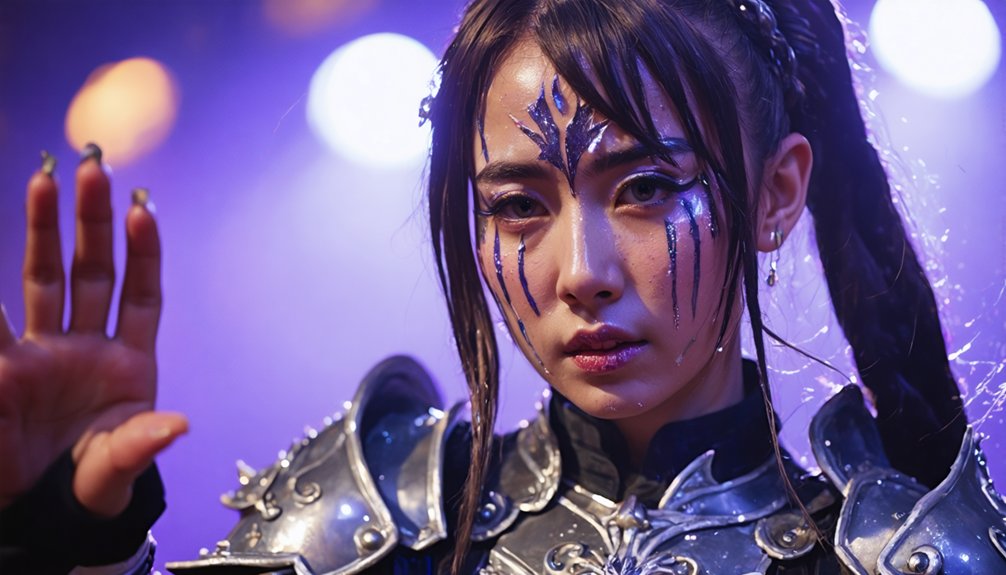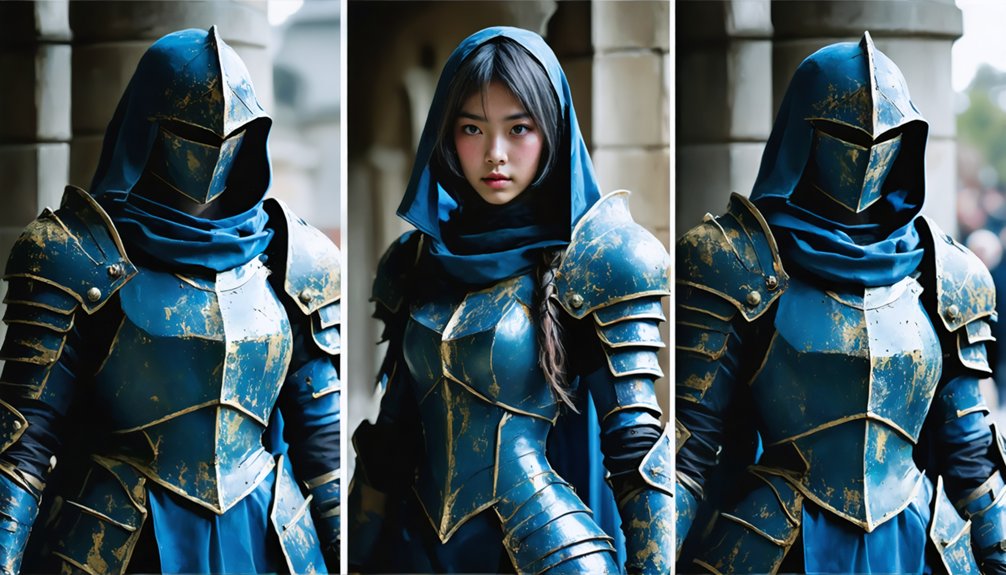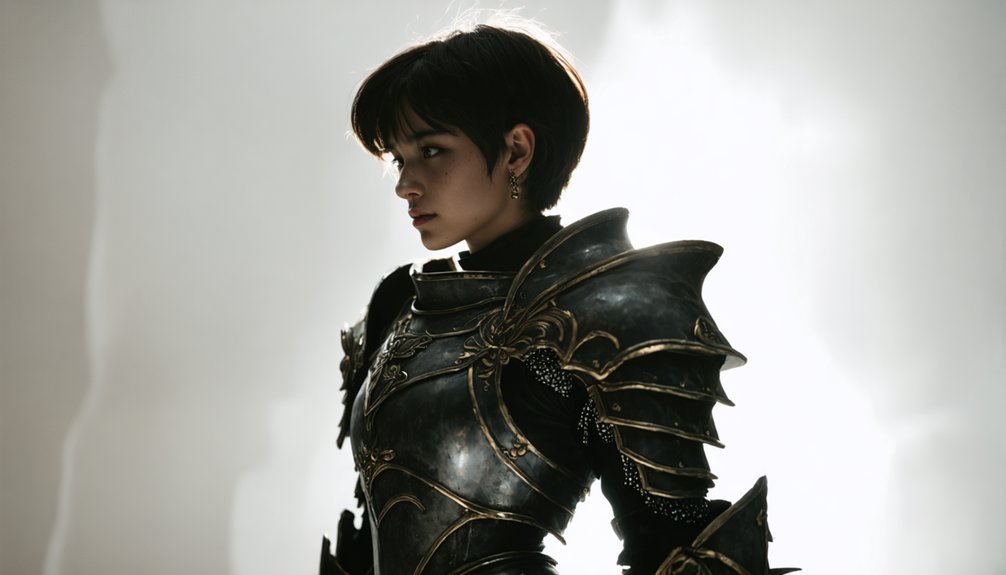
Perfecting character accuracy in cosplay means mastering every layer simultaneously — from deep research into official artwork and backstory to fabric selection, armor detailing, and surface weathering. You’ll need to match wigs, contacts, and contouring precisely to your character’s features while internalizing their posture, voice, and movement signatures. Each element must reinforce the others to create instant recognition. Stick around, because what follows breaks down exactly how to execute every critical detail.
Key Takeaways
- Build a detailed reference library using official artwork, screenshots, and concept sketches to ensure precise costume, texture, and proportion accuracy.
- Master fabric selection by matching sheens, weaves, and surface finishes observed in high-resolution reference images.
- Style wigs carefully using teasing, heat-shaping, and adhesives while matching the character’s exact color palette and silhouette.
- Use colored contacts and strategic contouring to replicate distinctive facial features and eye details authentically.
- Study source footage frame by frame to internalize posture, gestures, voice, and movement as muscle memory.
Start With Deep Cosplay Character Research
Nailing character accuracy starts long before you pick up a needle or paint a prop — it starts with obsessive, methodical research. Build a thorough reference library using official artwork, concept sketches, high-resolution screenshots, and community feedback from experienced cosplayers who’ve tackled the same character.
Analyze backstory, personality quirks, and motivations — these details directly inform costume construction choices that impact both accuracy and costume durability. When source materials conflict, commit to one definitive design version immediately.
Study layering sequences, material textures, and silhouette shapes at the microscopic level. Identify signature props, jewelry, or weapons that trigger instant character recognition.
Precision at this research stage eliminates costly construction errors later, ensuring every fabric choice, seam placement, and accessory decision is rooted in documented, verifiable reference data.
Choose Fabrics That Match Your Character’s Visual Texture
Once you’ve locked in your character research, you’ll need to scrutinize every reference image for specific fabric cues — identifying whether a material reads as matte wool, glossy satin, or textured leather.
This directly determines how your finished costume registers on camera and in person. You should cross-reference multiple high-resolution screenshots to decode sheen levels, drape behavior, and surface grain before purchasing a single yard of fabric.
However, you’ll often need to make strategic substitutions — swapping heavy theatrical materials for lighter, breathable alternatives — without sacrificing the visual accuracy your audience expects.
Analyze Reference Material Textures
Matching your fabrics to a character’s visual texture is one of the most technically demanding steps in costume construction, and it starts with dissecting your reference images at the highest resolution available. Zoom into armor plates, cloth folds, and surface finishes to identify whether you’re seeing matte weaves, satin sheens, or structured brocades.
Use varied lighting techniques when photographing fabric swatches against printed references—natural light reveals true color saturation while directional artificial light exposes surface texture depth.
Don’t just prioritize appearance; factor in fabric durability to guarantee your chosen materials survive extended convention wear without degrading visually.
Cross-reference multiple scenes since in-universe lighting shifts can distort perceived texture.
Build a tactile swatch library, testing how each candidate fabric photographs under conditions mimicking the character’s original visual environment.
Balance Accuracy With Wearability
Achieving visual accuracy means nothing if your costume becomes unwearable two hours into a convention, so you need to treat fabric selection as a dual-criteria decision from the start. Evaluate every material against two questions: does it match the character’s visual texture, and can you sustain it for eight-plus hours?
Substitute rigid theatrical fabrics with structured stretch alternatives that preserve silhouette without restricting movement. Costume durability depends on reinforced seams at high-stress points like shoulders, hips, and attachment zones.
For accessory integration, build mounting points directly into the garment’s construction rather than relying on pins or tape that fail mid-event. Prioritize breathable linings beneath heavy outer layers to regulate temperature.
Accurate cosplay isn’t just visual—it’s functional, and smart material choices deliver both simultaneously.
Make Your Costume Comfortable Enough to Actually Wear
Even the most visually stunning costume fails if you can’t wear it comfortably for an eight-hour convention day, so tailor every construction decision around your body’s specific needs from the start. Fabric versatility and costume durability aren’t compromises—they’re strategic priorities.
A visually stunning costume means nothing if wearing it becomes an eight-hour ordeal—build comfort in from the start.
- Choose breathable, moisture-wicking linings that prevent overheating during peak crowd hours.
- Build adjustable closures so your costume adapts as your body shifts throughout the day.
- Reinforce high-stress seams at joints and movement points before they catastrophically fail.
- Pad armor pieces internally to eliminate pressure points that become unbearable after hour three.
- Test every costume component through full range-of-motion movements before your event date.
Comfort engineering transforms a display piece into a wearable performance tool, letting you fully inhabit your character without distraction or physical suffering undermining your portrayal.
Replicate Cosplay Armor, Seams, and Surface Details Accurately
Once your costume fits and moves with you, the next layer of accuracy lives in the surface details—armor paneling, seam placement, and texture work that separate a recognizable costume from a screen-accurate replica. Study high-resolution reference images to decode exact panel shapes, topstitching lines, and layering sequences.
Use digital modeling and prototype testing before committing to final materials, reducing material cost while preserving precision. Apply ImageJ measurements to scale armor proportions correctly relative to your body.
Iron seams completely flat and eliminate loose threads to strengthen costume durability and achieve a professional finish. Weather surfaces strategically to reflect your character’s story history.
Clean panel placement and precise topstitching aren’t decorative afterthoughts—they’re the technical signatures that transform a good cosplay into an undeniably accurate one.
Use Contouring, Wigs, and Contacts to Match Your Character’s Face
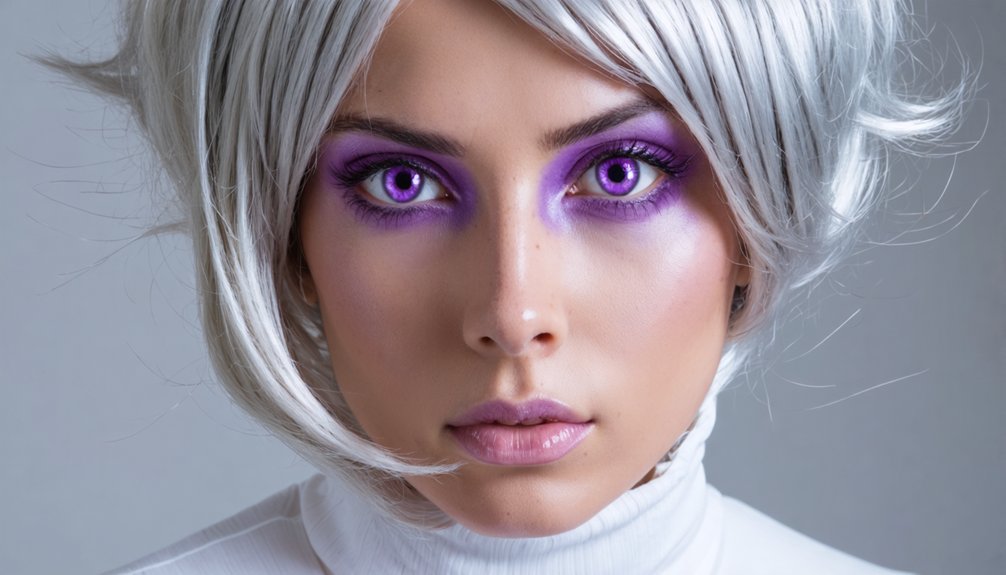
Contouring lets you sculpt your face to match your character’s bone structure, using highlight and shadow to reshape cheekbones, jawlines, and noses with surgical precision.
You’ll style your wig by teasing, heat-shaping, and securing it with strong-hold adhesives to nail the character’s exact hair silhouette.
Colored contacts then complete the transformation by replicating your character’s distinctive eye color and intensity, making the illusion unmistakably convincing.
Contouring Sculpts Facial Features
Transforming your face into a character’s requires mastering contouring, wigs, and contacts as a unified system rather than isolated techniques. Contouring sculpts your natural bone structure into the character’s facial geometry, creating illusions that elevate cosplay photography and strengthen social media promotion impact.
- Carve cheekbones sharper or softer using highlight and shadow placement precisely
- Reshape your nose bridge length and width through strategic dark and light tones
- Redefine your jawline to match angular or rounded character silhouettes authentically
- Blend contour seamlessly so studio lighting and flash photography don’t expose harsh lines
- Use setting sprays to lock sculpted definition through long convention hours
Every brushstroke serves architectural purpose. You’re not covering your face—you’re rebuilding it to honor the character’s distinct visual identity with technical precision.
Wigs Match Hair Silhouettes
Your contoured face sets the foundation, but the wig completes the character’s silhouette—and a poorly styled one undermines everything you’ve built beneath it. Select heat-resistant fibers that hold sculpted shapes through teasing, pinning, and product application.
Match your wig’s color palette precisely to reference images under multiple lighting conditions, since convention floors expose inconsistencies instantly.
Trim lace fronts cleanly, then secure them with Got2b Glued for edges that withstand movement and humidity.
Style volume and directional spikes before you arrive—not during.
Your accessories pairing matters here too; headpieces, clips, or signature ornaments must integrate seamlessly into the styled wig, not sit awkwardly on top.
When silhouette, color, and accessories align cohesively, viewers recognize your character immediately, confirming that your wig work elevated the entire transformation.
Contacts Enhance Character Eyes
When every facial detail aligns, colored contacts deliver the final, defining shift that locks your transformation into place. Contact lenses bridge the gap between your natural eye color and your character’s distinctive gaze, creating instant emotional recognition.
Choose contact lenses that precisely replicate your character’s eye color, pupil shape, and limbal ring intensity:
- Feel the surge of confidence when strangers recognize your eyes before anything else
- Experience the electric moment your character’s stare reflects back from a mirror
- Capture audience emotions through an authentic, soul-level gaze that resonates deeply
- Command every photograph with eyes that tell your character’s complete story
- Trigger genuine reactions when your eye color matches panels exactly
Always consult an eye care professional before wearing any contact lenses.
Bring Your Cosplay Character to Life Through Movement and Voice
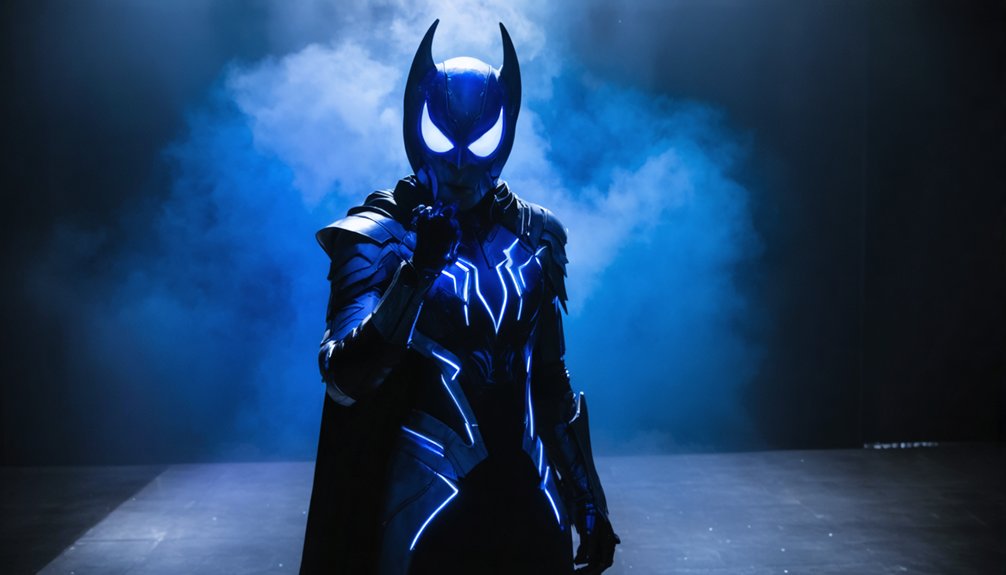
Bringing a cosplay character to life requires more than a flawless costume — it demands that you master the character’s distinct physical and vocal identity. Study source footage frame by frame, analyzing posture, stride patterns, and gesture timing to internalize movement signatures that audiences instantly recognize. Practice replicating these mannerisms before a mirror until muscle memory takes over naturally during events.
Voice modulation is equally critical. Match your character’s pitch, cadence, and emotional register through deliberate vocal warm-ups before performances. Adjust volume and pacing to reflect specific mood states — a battle-hardened warrior speaks differently than a comedic sidekick.
Respond spontaneously using the character’s actual vocabulary and catchphrases when engaging audiences. This cohesive fusion of precise movement and authentic vocal delivery transforms your portrayal from visual imitation into genuinely compelling character embodiment.
Frequently Asked Questions
How Do You Handle Prop Scaling for Accurate Character Representation?
Measuring precisely, scaling digitally, and prototyping repeatedly guarantees accuracy. You’ll use ImageJ for proportions, apply fabric selection for texture realism, and master paint techniques to weather props authentically, making every detail reflect your character’s true representation.
What Budget Strategies Help Balance Accuracy With Material Costs Effectively?
You’ll maximize accuracy by prioritizing strategic fabric selection—substituting costly materials with budget-friendly alternatives that mimic texture and sheen. Refine your sewing techniques to elevate cheaper fabrics, ensuring polished construction that maintains visual fidelity without compromising your costume’s overall authenticity.
How Do Competitions Evaluate Technical Construction Skill in Cosplay Entries?
Judges reward flawless execution over grand concepts—they’ll scrutinize your fabric selection precision, seam quality, and makeup techniques up close. You’ve got to document every construction step, demonstrating innovative problem-solving and technical mastery that transforms raw materials into competition-worthy craftsmanship.
Which Adhesives Work Best for Securing Wigs During Long Convention Days?
For unmatched wig security, you’ll want Got2b Glued or Bold Hold adhesives—they deliver exceptional adhesive durability throughout long convention days, resisting sweat and movement while keeping your lace front flawlessly positioned under intense performance conditions.
How Do You Choose Between Conflicting Official Designs for One Character?
Like a compass finding true north, pick the design that’s most iconic. You’ll want to prioritize costume color matching and accessory detailing from official artwork, selecting whichever version delivers the strongest, most recognizable character representation.
References
- https://www.reddit.com/r/CosplayHelp/comments/1eryaq4/how_to_make_a_cosplay_look_more_professional/
- https://wigs101.com/10-tips-cosplay-beginners
- https://starstruckpanda.com/character-accuracy-mistakes-to-avoid-in-cosplay/
- https://starstruckpanda.com/how-to-match-character-features-for-cosplay-accuracy/
- https://starstruckpanda.com/achieving-character-accuracy-in-cosplay/
- https://starstruckpanda.com/mastering-character-accuracy-in-cosplay-crafting/
- https://starstruckpanda.com/balancing-character-accuracy-and-comfort-in-cosplay/