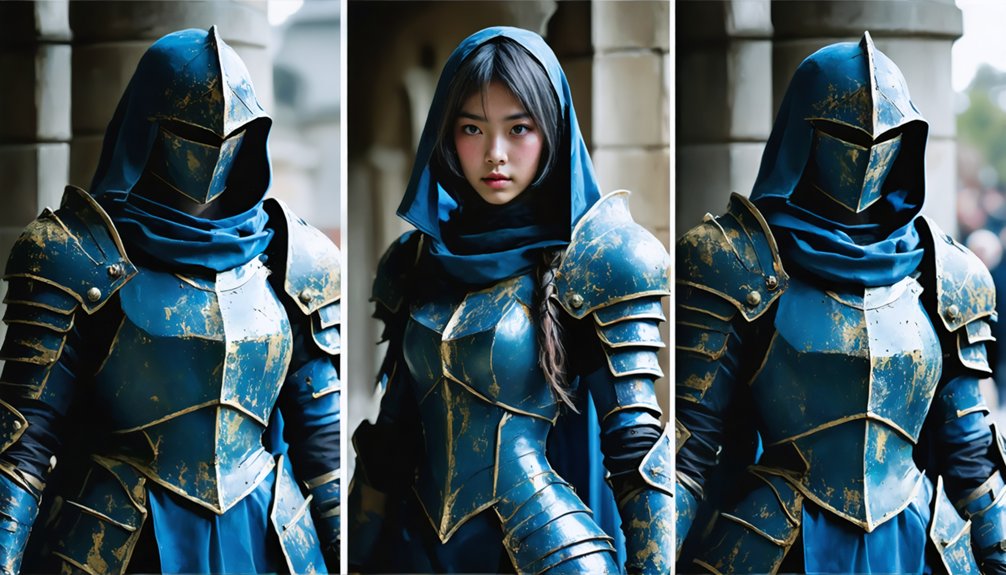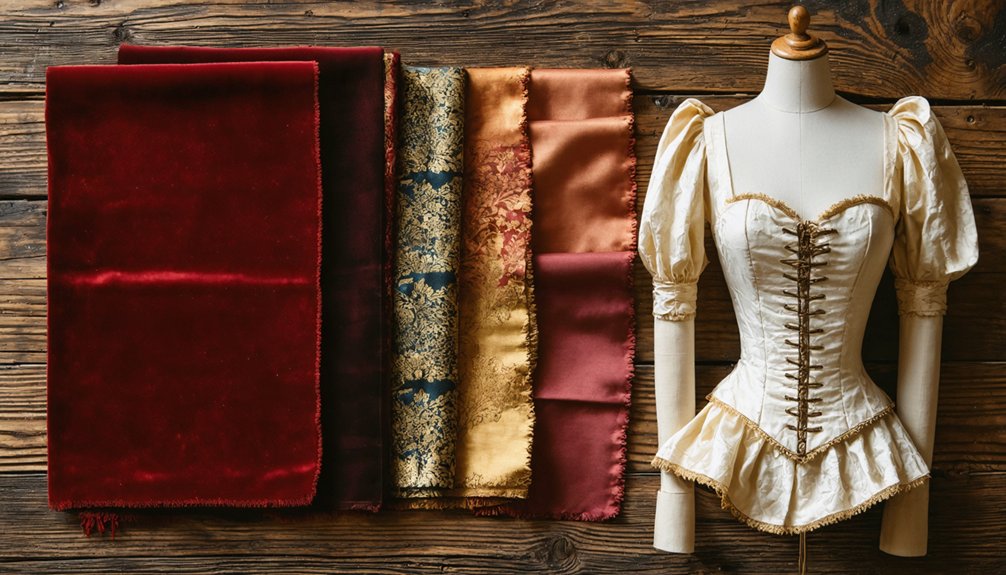
Choosing the right fabric for character accuracy means matching texture, weight, drape, and stretch to your source material before you cut anything. Use concept art, official illustrations, and scene references to identify how the fabric behaves on screen. Consider the character’s status, setting, and costume type to guide your fabric family selection. Test swatches for color, finish, and drape before committing. The sections ahead break down every decision point in detail.
Key Takeaways
- Use concept art, screenshots, and official illustrations to identify the character’s fabric texture, color, silhouette, and drape before purchasing.
- Match fabric weight and drape to the character’s silhouette; heavyweight fabrics suit structured designs, while lightweight fabrics create flowing lines.
- Test fabric swatches under flash photography and bright light to detect unexpected sheen, sheerness, or color shifts.
- Balance screen accuracy with wearability by substituting rigid or fragile materials with durable, breathable, performance-blend alternatives.
- Prioritize fiber content and weave quality over brand reputation to ensure authentic character replication.
Research Your Character Before Buying Any Cosplay Fabric
Before spending a single dollar on fabric, research your character thoroughly using concept art, official illustrations, screenshots, and scene references. Identify fabric texture, color, silhouette, and drape behavior from lighting cues and fold patterns visible in reference images.
Match your fabric selection to the character’s status, occupation, and setting. A royal costume demands historical authenticity through period-accurate textiles, while a culturally grounded character requires attention to cultural significance in pattern, weave, and material choices.
Compare costume variations across source material to pinpoint the most recognizable version. Determine whether the design reads as armored, fantasy, futuristic, or ceremonial, since each category points toward a distinct fabric family.
Solid research eliminates costly guesswork before you cut a single piece.
Know Which Fabric Properties Control Character Accuracy
Once your reference research is complete, fabric selection shifts from visual identification to physical property matching. Four core properties determine character accuracy: texture, weight, drape, and stretch.
Texture defines how light interacts with the surface, making fiber elasticity and surface sheen critical variables when replicating armor, silk gowns, or matte cottons.
Texture controls how light reads a surface — sheen, fiber, and finish determine whether your fabric convinces or fails.
Weight controls silhouette stability, so heavier fabrics hold structured shapes while lighter ones flow naturally.
Drape determines how fabric falls from the body, directly affecting whether your costume reads as regal or casual.
Stretch governs mobility and fit precision, especially for form-fitting designs.
You’ll compromise accuracy if you prioritize one property while ignoring the others. Match all four simultaneously against your reference material to produce a costume that replicates the character’s intended visual and functional identity.
Match Fabric Weight and Drape to Your Silhouette
Silhouette accuracy depends on matching two interdependent properties—weight and drape—to the structural demands of your pattern.
Heavyweight fabrics like brocade and structured satin hold angular shapes, making them ideal for silhouette enhancement in armored or regal designs.
Lightweight materials like chiffon collapse into soft, fluid lines that suit flowing gowns or layered fantasy costumes.
Fabric texture compounds this effect—a matte crepe drapes differently than a glossy charmeuse, even at identical weights.
You’ll need to test drape by holding your fabric off the bolt and observing how it falls naturally.
If it collapses when volume is needed, add interfacing or underlining.
If it stands too rigidly for a flowing design, select a lighter-weight alternative.
Weight and drape must work together, not independently.
Choose Cosplay Fabrics Your Pattern Can Actually Handle
Pattern choice and fabric choice aren’t independent decisions—your pattern’s recommended fabric weight sets a hard limit on what materials will actually work during construction. Ignoring that limit increases sewing complexity and raises the likelihood of warped seams, skipped stitches, and misaligned panels.
Match fabric texture to what the pattern actually demands. Intricate multi-piece bodices perform better in stable cotton or polyester blends, since slippery satins and stiff brocades resist precise alignment under pressure.
Reserve those elevated materials for simpler pattern geometries where fewer seams reduce failure points.
Always cut a mockup in inexpensive cotton before committing your fashion fabric. That single step exposes fit problems, construction hazards, and fabric behavior early—before costly material gets wasted on a pattern your current skill level can’t yet support.
Balance Screen Accuracy With Real-World Wearability
Screen accuracy matters, but wearing a costume for eight hours at a convention demands practical trade-offs that pure reference matching can’t accommodate.
You’ll often need to substitute rigid or fragile screen-accurate materials with durable, comfortable alternatives that preserve the visual silhouette without sacrificing mobility or seam integrity.
Prioritize fabrics that replicate the character’s on-screen texture and color profile while still allowing the range of motion, breathability, and structural durability your build actually requires.
Screen Accuracy Vs. Comfort
Chasing perfect screen accuracy can work against you the moment you step onto a convention floor for eight hours straight. A fabric that photographs beautifully under studio lighting may trap heat, restrict movement, or break down under physical stress.
Prioritize fabric breathability when building costumes meant for extended wear, especially for fitted bodices, layered ensembles, or full-coverage suits. Moisture-wicking linings, ventilation panels, and breathable underlayers let you preserve the visual silhouette without sacrificing function.
Costume flexibility matters equally when your design requires sitting, climbing stairs, or posing dynamically. Substitute rigid fashion fabrics with performance blends that mimic the original texture while adding stretch. You’ll maintain character integrity without compromising structural durability or physical comfort across a full convention day.
Fabric Substitutions That Work
When screen-accurate fabric simply isn’t practical for full-day wear, smart substitutions let you preserve visual fidelity without sacrificing comfort or durability. Alternative fabric textures and unconventional material options can closely replicate source visuals while improving wearability markedly.
- Swap heavy brocade for jacquard-knit to retain pattern richness with added stretch.
- Replace rigid taffeta with structured ponte, preserving silhouette without restricting movement.
- Substitute genuine velvet with velvet-spandex blends for mobility without losing depth.
- Use matte jersey instead of silk charmeuse to mimic drape while increasing durability.
- Replace stiff organza with crisp chiffon layers to achieve volume with lighter weight.
Each substitution targets specific fabric properties, texture, drape, and weight, so your costume reads accurately on camera while performing reliably through extended convention wear.
Prioritizing Movement And Durability
Even the most visually faithful costume fails if it limits your mobility or falls apart by noon, so you need to weigh screen accuracy against real-world performance from the moment you select your fabric.
For dynamic characters requiring bending, crouching, or extended wear, prioritize stretch flexibility by selecting four-way spandex blends that maintain silhouette without restricting movement. Verify color fastness ratings before committing to any yardage, since repeated wear, sweat exposure, and convention lighting can degrade dyes rapidly.
Reinforce high-stress seams at joints, armholes, and closures using strong thread and double-stitched or serged finishing. If the screen-accurate fabric lacks durability, substitute a structurally superior alternative that closely mirrors the original’s texture and weight.
Performance always determines longevity.
Check Transparency, Lining, and Finish Before You Cut
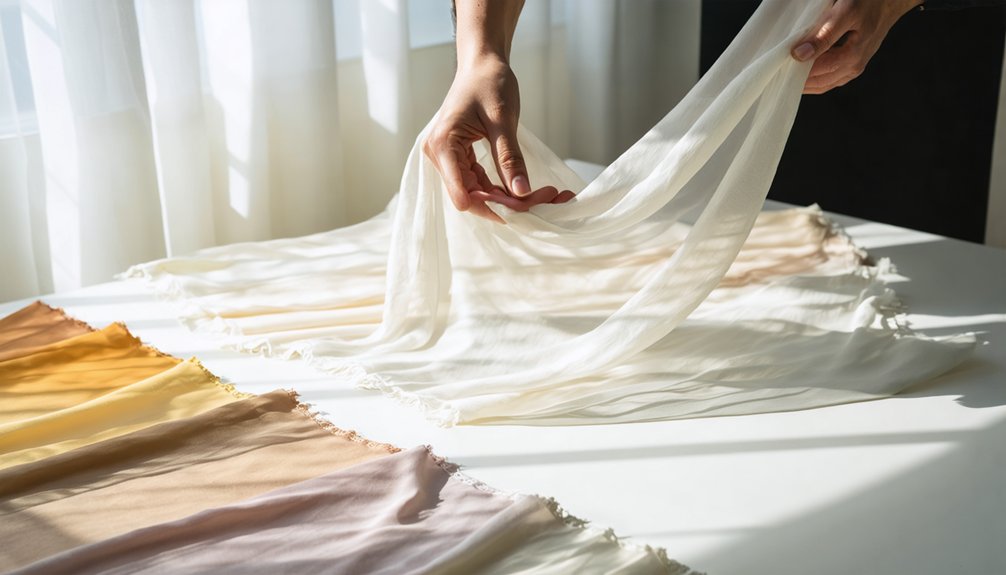
Before you cut a single piece of your fashion fabric, check its transparency, because what looks opaque on the bolt can become sheer under stage lighting or camera flash. Sheer fabrics require opaque linings to maintain character accuracy and prevent unwanted visibility.
- Hold fabric against bright light to expose hidden sheerness.
- Layer sheer fabrics over opaque linings cut to matching pattern pieces.
- Apply interfacing to structured sections needing opacity and body.
- Test finish under flash photography to catch unexpected sheen or color shifts.
- Match surface finish to source material, avoiding fabrics that read too modern or synthetic.
Finish affects how your costume reads visually. A matte surface reads differently than a high-sheen satin, even when the color matches perfectly. Always test before committing.
Source Quality Costume Fabric Without Blowing Your Budget
Sourcing quality fabric on a costume budget comes down to three decisions: where you shop, how much you buy, and when you commit.
Order swatches before committing to yardage, especially for fabrics intended for fabric dyeing or textile printing, since color uptake and print clarity vary markedly by fiber content and weave density.
Shop wholesale retailers, mill-direct suppliers, and fabric co-ops to reduce per-yard costs without sacrificing material integrity.
End-of-bolt remnants often yield enough yardage for single garments at steep discounts.
Prioritize fiber content and weave quality over brand.
When accuracy demands a specific colorway unavailable in retail stock, budget for professional fabric dyeing or custom textile printing services rather than settling for an inferior substitute that compromises character authenticity.
Frequently Asked Questions
Can I Mix Multiple Fabric Types Within a Single Cosplay Costume?
Yes, you can mix multiple fabric types. Combine materials strategically by matching each zone’s fabric texture to its visual role while ensuring fabric durability stays consistent across seams, stress points, and construction interfaces throughout your costume.
How Do I Handle Fabric Shrinkage Before Cutting My Costume Pieces?
Pre-wash your fabric before cutting to control shrinkage. Run it through your machine’s normal cycle, then measure changes using shrinkage testing. These pre-wash procedures prevent pattern distortion, ensuring your costume pieces retain accurate dimensions after construction.
Should I Wash Fabric Before Sewing to Prevent Future Shrinkage?
Some fabrics shrink up to 10%—you’ll ruin your fit if you skip pre-treatment. Always pre-wash your fabric; the pre wash benefits include shrinkage prevention, ensuring your cut pieces retain accurate dimensions after future laundering.
Can Fabric Dye Help When I Cannot Find the Exact Color Needed?
Yes, fabric dye can bridge color matching gaps effectively. You’ll achieve precise character accuracy by testing dye on swatches first, ensuring fabric texture absorbs color evenly without compromising drape, finish, or the material’s structural integrity.
How Do I Store Finished Cosplay Costumes to Prevent Fabric Damage?
Ironically, your hardest work ends at storage. You’ll protect costumes with breathable garment bags, avoiding plastic. Apply smart fabric care by folding knits flat, and use acid-free storage solutions to prevent yellowing, crushing, or moisture damage.
References
- https://wigs101.com/how-to-choose-the-perfect-fabric-for-your-cosplay
- https://www.reddit.com/r/sewing/comments/10vd5ai/tips_and_resources_for_choosing_fabric/
- https://starstruckpanda.com/choosing-fabrics-for-character-accuracy-in-cosplay/
- https://www.youtube.com/watch?v=ZpC2BThjVS0
- https://www.numberanalytics.com/blog/art-fabric-selection-costume-designer-handbook
- https://sewingtrip.com/fabric-options-for-costume-making/
- https://www.modestystudio.com/2022/02/costume-fabric-cheat-sheet-how-to-pick_25.html