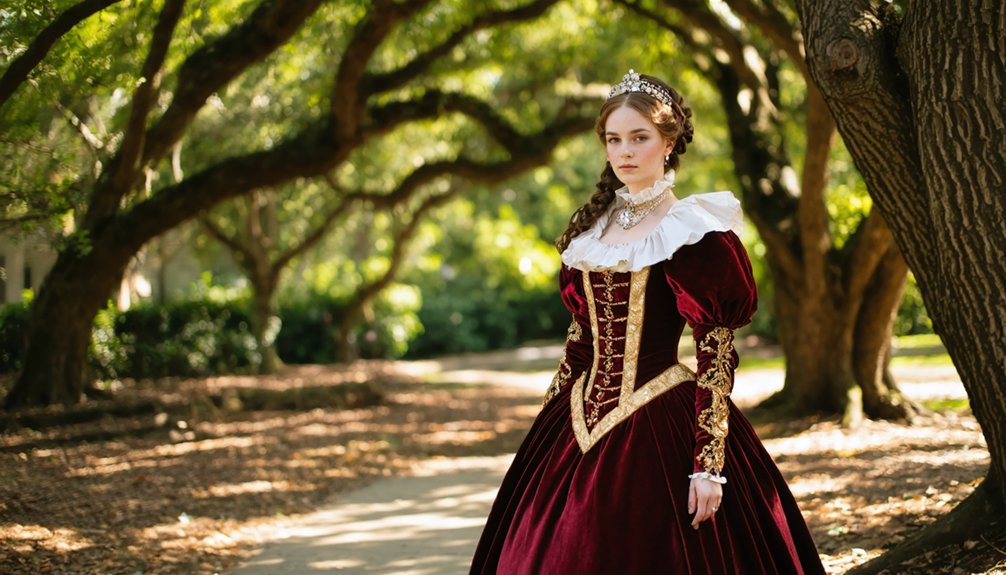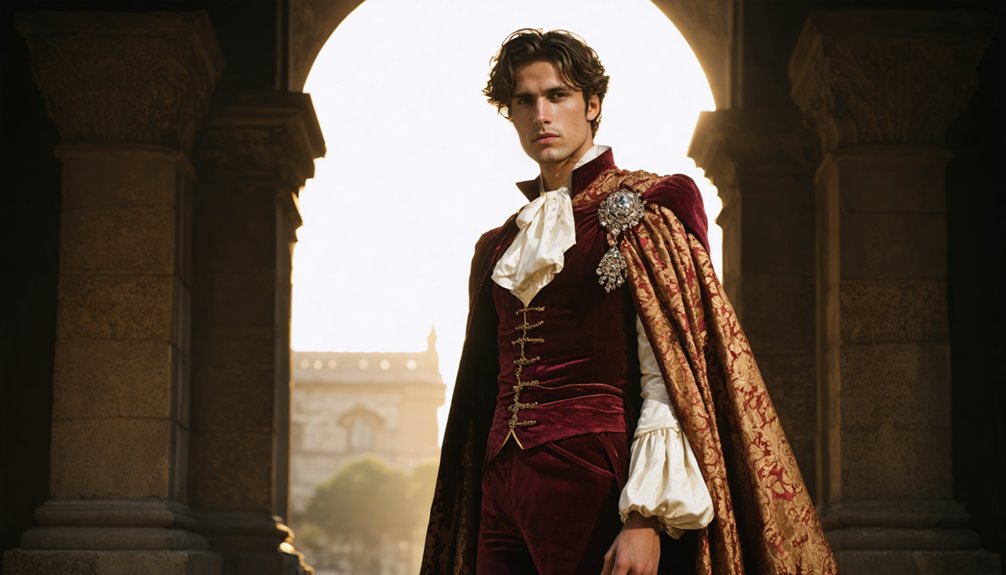
To cosplay a Renaissance noble authentically, you’ll need to prioritize natural fibers—silk, velvet, brocade, linen, and wool—over synthetic substitutes that betray the illusion immediately. Choose deep, saturated hues like crimson, rich purple, and royal blue, which historically signaled aristocratic wealth. Layer your garments correctly, beginning with a white linen undergarment, and finish with period-appropriate embroidery and braiding. Every construction detail matters enormously, and what follows will sharpen your execution considerably.
Key Takeaways
- Prioritize natural fibers like silk, velvet, brocade, linen, and wool, avoiding synthetic blends such as polyester satin or spandex.
- Choose deep, saturated colors like crimson, rich purple, and black to accurately signal aristocratic wealth and social status.
- Study Renaissance portraits to understand fabric weight, sheen, and color saturation, ensuring your materials match documented historical references.
- Layer garments correctly: start with a linen undergarment, add a structured bodice, petticoats, and properly attached sleeves.
- Eliminate modern details like zippers, machine stitching, and synthetic embellishments, replacing them with silk embroidery and decorative braiding.
Choose Base Fabrics That Signal Noble Renaissance Status
Because fabric choice communicates rank before a single word is spoken, you’ll want to prioritize silk, velvet, and brocade as your primary materials for a noble Renaissance cosplay. These textiles historically denoted aristocratic standing through their costly production and labor-intensive textile dyeing techniques, which yielded the deep crimsons, rich blacks, and saturated blues sumptuary laws reserved for elites.
When sourcing materials, critically evaluate what modern textile manufacturing offers. While it’s expanded accessibility to silk and velvet alternatives, synthetic approximations often compromise visual authenticity.
Prioritize natural fiber weaves with fine construction over polished or shiny substitutes that read as anachronistic. Wool remains appropriate for outer layers, but your primary visible garments should reflect the luxurious weight and finish that unambiguously signal noble Renaissance status.
Colors That Communicated Wealth in Renaissance Italy
When cosplaying a Renaissance Italian noble, you’ll want to prioritize deep, saturated hues, since sumptuary laws of the period reserved costly dyes for the wealthy.
Red carries particular weight, as its production demanded expensive dyestuffs like kermes or cochineal, making it an unmistakable marker of elite status.
Black, though counterintuitive, rose sharply in noble fashion across Renaissance Italy, and you should treat it as an equally strong signal of rank when paired with fine fabric and quality construction.
Red Signals Elite Status
Few colors carried as much symbolic weight in Renaissance Italy as red. Sumptuary laws actively restricted its use, precisely because legislators understood its power to communicate elite rank.
When you incorporate red into your noble cosplay, you’re drawing on the same visual language that distinguished patricians from commoners. Unlike Medieval armor, which signaled martial authority through metal and form, red fabric signaled wealth through dye cost alone.
Crimson and scarlet required kermes or cochineal, both extraordinarily expensive pigment sources. Renaissance music celebrated noble courts where red-clad figures commanded rooms—that same commanding presence is what you’re reconstructing.
Choose deep, saturated reds in silk, velvet, or fine wool. Avoid orange-leaning or washed-out tones, which read as modern rather than period-authentic.
Black Rises In Nobility
Red’s dominance in Renaissance sumptuary regulation wasn’t the only color story worth understanding—black rose alongside it as an equally deliberate, equally powerful statement.
In Italian Renaissance culture, black signaled a cultivated, aristocratic restraint that red’s overt luxury couldn’t replicate. You should recognize that achieving black at deep, consistent saturation required expensive dyeing processes, making it inherently exclusive.
It wasn’t the flat black of Medieval armor or utilitarian dress—it was rich, absorptive, and deliberately refined. When you select black velvet or finely woven black wool for your noble cosplay, you’re invoking that same social calculus.
Pair it with period-accurate Renaissance footwear rather than modern shoes, and the historical authority of your ensemble holds. Black, worn correctly, communicates power through precision rather than spectacle.
Rich Hues Denote Wealth
Beyond black and red, the full spectrum of Renaissance noble dress operated on a clear economic logic: the more difficult a dye was to produce, the more status it conferred on the wearer. Deep crimsons, rich purples, and saturated blues demanded costly ingredients and complex dyeing techniques that most households couldn’t access.
When you select fabric, prioritize these depth-heavy tones over pale or earthy alternatives. Textile weaving quality compounds the effect — a finely woven wool or silk holds dye more evenly, intensifying color saturation in ways coarser cloth can’t replicate.
Italian sumptuary laws actively restricted certain hues to specific social ranks, confirming that color carried legal weight. Choose deliberately, and your palette alone will signal aristocratic standing before a single accessory appears.
Combine Fabric and Color the Way Noble Portraits Show
Renaissance noble portraits aren’t decorative exercises—they’re sartorial records, and you’ll learn more from studying them than from any modern costume guide. Examine how Titian, Bronzino, and Holbein render fabric weight, sheen, and color saturation against skin tone and silhouette.
You’ll notice that velvet absorbs light differently than silk brocade, and that textile dyeing techniques of the period produced deep, slightly uneven color saturation rather than flat, synthetic uniformity. Replicate that subtlety deliberately.
Choose fabrics whose natural fiber structure interacts with dye the way period cloth did. Apply period appropriate sewing methods—flat-felled seams, linen lining, structured bodice boning—to ensure your construction supports the silhouette the portraits confirm.
When fabric, color, and construction align with documented portraiture, your cosplay transcends costume and reads as credible reconstruction.
Layer Your Garments in the Correct Historical Order
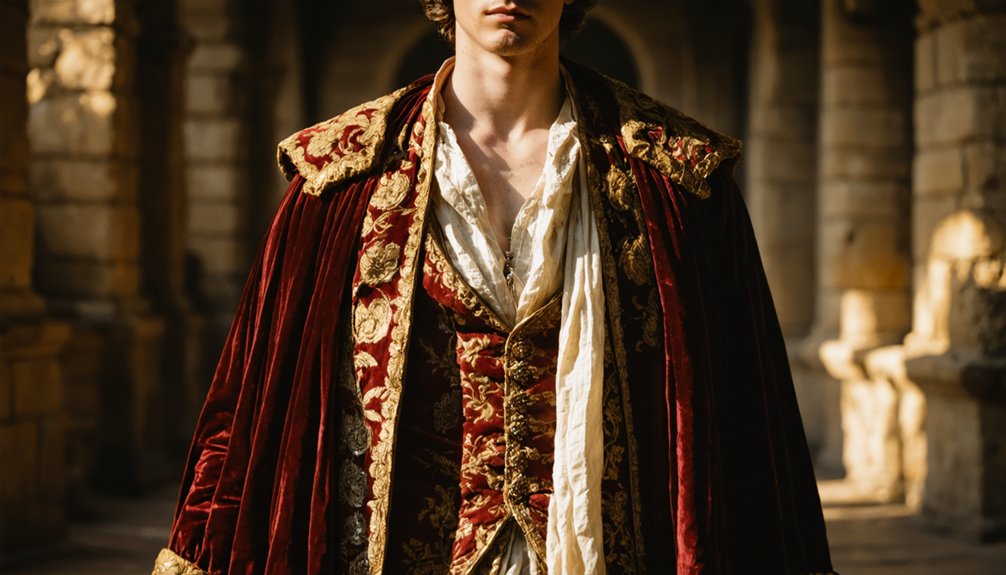
Layering defines the structural logic of Renaissance dress, and you’ll undermine your entire silhouette if you ignore the sequence. Begin with a white linen undergarment directly against the skin — it’s non-negotiable for both authenticity and hygiene function.
Over that, add your structured bodice or doublet, lined with linen using modern sewing techniques like flat-felled seams for durability and clean interior finishing.
Petticoats follow, establishing the skirt’s necessary volume before the outer gown descends over everything.
Seasonal fabric choices govern weight selection here — lighter linen layers suit warmer months, while wool interlining reinforces outer garments in cold conditions.
Sleeves attach at the doublet, not the undergarment.
Each layer serves a documented structural purpose; treat the sequence as architectural logic, not decorative preference.
Choose Trims and Embellishments Appropriate to Noble Rank
Trim and embellishment carry rank information as legibly as fabric itself, so you’ll want to select them with the same deliberateness you’ve applied to every earlier construction decision. Noble dress demanded intentional ornamentation, not random decoration.
Prioritize these three embellishment strategies:
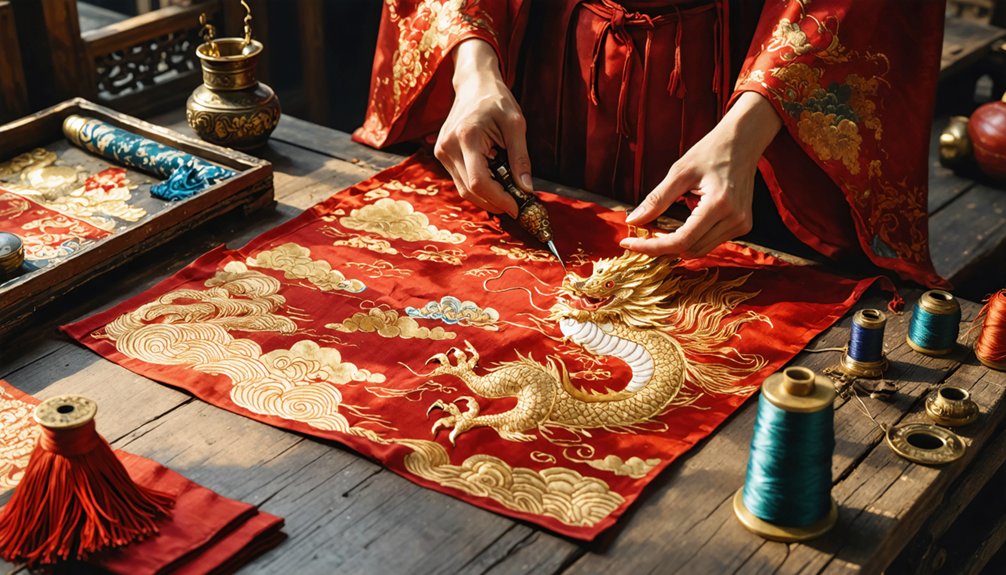
- Embroidery techniques — Apply silk or metallic thread work at cuffs, necklines, and hems; geometric and foliate motifs read as authentically period.
- Decorative braiding — Use narrow woven braid at seams and edges to reinforce structure while signaling wealth through refined craftsmanship.
- Lace and jeweled trim — Reserve these for highest-status details, keeping placement historically plausible rather than decoratively excessive.
Avoid anachronistic finishes like iron-on rhinestone strips or machine-printed ribbon, as they immediately undermine the scholarly credibility of your reconstruction.
Fabrics and Finishes That Destroy Period Credibility
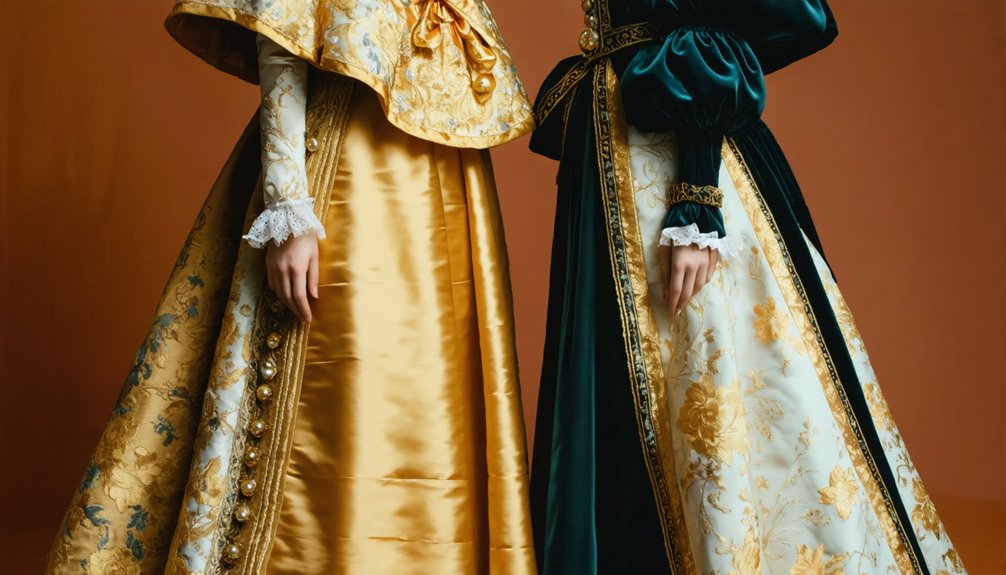
Your fabric choices can unravel an otherwise convincing noble ensemble faster than any other single decision, so you’ll want to eliminate modern materials before cutting a single seam.
Avoid polished cotton, polyester satin, and any stretchy or shiny synthetics, since these read as anachronistic on sight and signal costume rather than reconstruction. Equally damaging are machine-printed textiles and disco-like finishes, which carry a visual quality no amount of careful tailoring can overcome.
Modern Fabrics To Avoid
Even the most carefully researched silhouette collapses the moment you reach for polyester satin, spandex, or polished cotton.
Synthetic blends and modern dyeing techniques produce sheens, stretch, and color saturation that Renaissance textiles never exhibited, immediately signaling anachronism to any informed observer.
Eliminate these specific offenders before cutting a single pattern piece:
- Polyester satin — Its high-gloss surface mimics no period-accurate silk weave and reads as costume rather than reconstruction.
- Spandex or stretch blends — Renaissance garments relied on cut and structure, never fabricated elasticity.
- Polished or printed cotton — Modern dyeing processes produce unnatural uniformity absent from hand-dyed historical cloth.
Prioritize linen, wool, and genuine silk instead. Fabric selection isn’t a minor detail — it’s the foundational credibility of your entire presentation.
Anachronistic Finishes And Textures
Fabric finish undermines period credibility just as quickly as fiber choice does. Even historically correct silhouettes collapse when you introduce high-sheen synthetic fibers that catch light unnaturally. Renaissance textiles had luster earned through hand-weaving and natural dyes, not the mirror-bright flatness of modern polyester satin.
Avoid fabrics with plastic-like surfaces, mechanical stretch, or uniformly perfect drape — these qualities didn’t exist before industrial manufacturing. Metallic finishes deserve particular scrutiny; period-appropriate gold or silver threading appeared in woven brocades with visible texture and weight, not ironed-on foil prints or lamé sheeting.
Run your hand across any candidate fabric before purchasing. If the texture feels engineered rather than crafted, it’ll read as costume rather than reconstruction. Prioritize materials with natural irregularity, visible weave structure, and matte-to-soft sheen.
Where To Source Historically Appropriate Renaissance Textiles
Finding the right textiles for a Renaissance noble costume requires deliberate sourcing, since mainstream fabric retailers rarely stock historically appropriate options. Avoid synthetic fibers and modern dyes, which compromise both authenticity and visual credibility. Instead, target specialized vendors that prioritize period accuracy.
- Historical textile suppliers — Retailers like Burnley & Trowbridge or The Fabric Store stock linen, wool, and silk suited to Renaissance construction.
- Online specialty marketplaces — Etsy sellers focusing on reproduction fabrics often carry silk brocade, velvet, and undyed linen in period-appropriate weights.
- Wool and linen wholesalers — Direct sourcing from fiber-specific wholesalers reduces cost while maintaining material integrity.
Cross-reference your fabric selections against period portraiture to confirm weave, weight, and color alignment before purchasing.
Construction and Styling Mistakes That Read as Costume

Certain construction and styling choices immediately signal “costume” rather than historical dress, undermining the credibility of even the most carefully sourced textiles. Modern sewing techniques, including exposed zippers, visible serger edges, and machine-topstitched seams, immediately betray anachronism to any informed observer.
Synthetic fiber hazards compound the problem: polyester satin catches light unnaturally, while stretchy blends destroy period silhouette entirely. You should also avoid mixing cultural or temporal elements, such as pairing Tudor silhouettes with Venetian accessories, since inconsistency collapses historical coherence instantly.
Undergarments matter equally; a colored or patterned base layer visible beneath sheer linen breaks authenticity at the foundation. Cross-reference portraits consistently, maintain correct garment volume, and eliminate every modern detail, including wristwatches, hair clips, and sneakers, before considering the ensemble complete.
Frequently Asked Questions
Can Linen Blends Replace Pure Linen for Budget-Conscious Noble Cosplayers?
Yes, you can utilize linen blend versatility when pure linen strains your resources. These budget-friendly fabrics maintain period-appropriate aesthetics while sacrificing minimal authenticity, letting you construct credible noble garments without compromising your innovative cosplay vision entirely.
Should Undergarments Be Visible or Completely Hidden Beneath Noble Outfits?
You should keep undergarments mostly hidden, yet allow subtle linen edges to peek at necklines or cuffs—this elevates historical accuracy, reinforces costume durability, and signals the layered sophistication that innovative noble cosplay authentically demands.
How Much Extra Fabric Is Typically Needed Beyond Modern Pattern Recommendations?
Flowing folds faithfully frame historical silhouettes—you’ll need considerably more than modern pattern adjustments suggest. Plan your fabric measurements at roughly one-third extra beyond standard recommendations, ensuring you’ve captured the period’s characteristic fullness and volume authentically.
Are Wristwatches Ever Acceptable if Hidden Beneath Long Sleeves?
You shouldn’t rely on hidden wristwatches; historical accuracy demands you eliminate modern practicality compromises entirely. Even concealed beneath long sleeves, they risk exposure and undermine your scholarly commitment to an authentically reconstructed Renaissance noble presentation.
Must Buttons Match the Specific Renaissance Century Being Represented?
Like a lock needing its key, yes, you must match buttons to your specific century. Historical accuracy and fabric authenticity demand period-correct notions, so don’t let anachronistic details undermine your meticulously crafted Renaissance noble presentation.
References
- https://blog.fabrics-store.com/2011/03/25/tips-for-looking-your-best-in-your-renaissance-garb/
- https://www.reddit.com/r/HistoricalCostuming/comments/16whmv3/trying_to_find_fabrics_for_a_renaissance_italy/
- https://fabricwholesaledirect.com/collections/renaissance-fabric
- https://www.bellaonline.com/articles/art28187.asp
- https://www.siwcostumers.org/res_historic.html
- https://sewing.patternreview.com/SewingDiscussions/topic/74493
- https://renaissancewardrobe.com/blogs/renaissance-and-medieval-life/creating-perfect-renaissance-costumes
- http://www.elizabethancostume.net/periodfab.html