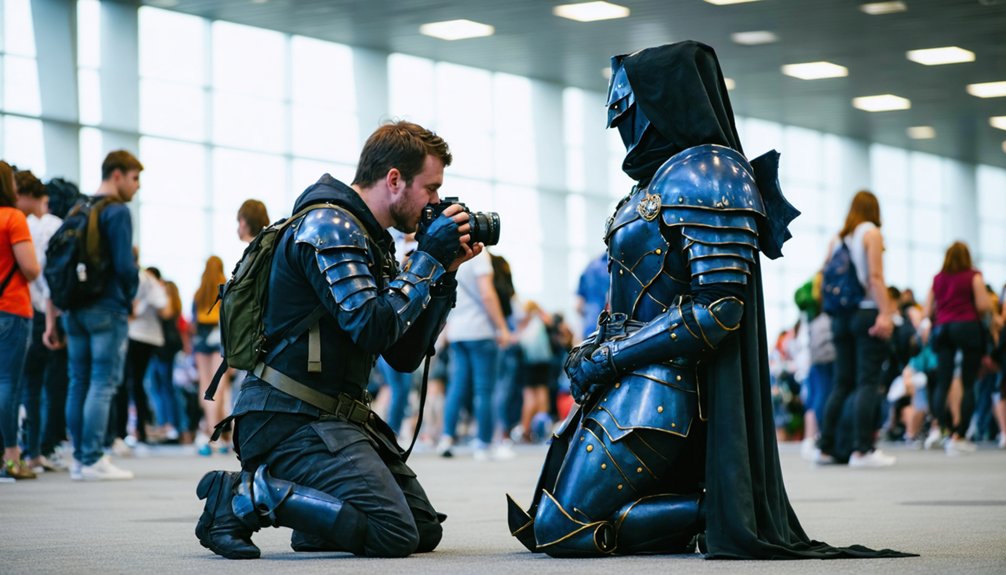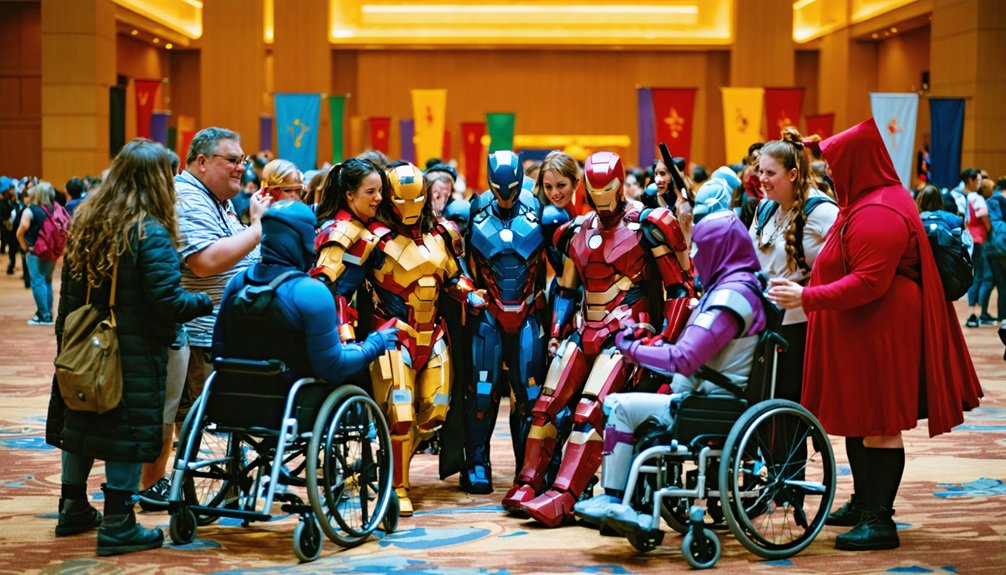
Building an inclusive cosplay community starts with you setting clear behavior standards, enforcing them consistently, and involving members in shaping those rules. You’ll want to prioritize physical accessibility, sensory-friendly spaces, and cultural respect from the ground up — not as afterthoughts. Challenge body bias, reward craftsmanship over clout, and rotate leadership so diverse voices shape decisions. Whether you’re starting fresh or improving an existing space, there’s always a practical next step waiting ahead.
Key Takeaways
- Develop clear, written community guidelines on respectful language, consent, and conduct, involving members in drafting them to promote buy-in and enforcement.
- Enhance physical and sensory accessibility by providing adaptive seating, quiet rooms, sensory maps, and trained volunteers to handle accommodation requests proactively.
- Celebrate cultural diversity through exchange events and open panels while educating members on the difference between cultural appreciation and appropriation.
- Support body positivity by auditing event language, organizing inclusive fashion shows, and evaluating contributions based on craftsmanship and effort over appearance.
- Rotate leadership roles, recognize lesser-known creators, and consistently enforce inclusion standards to foster belonging over exclusivity and clout culture.
Set Behavior Standards Your Inclusive Cosplay Community Will Actually Follow
Building an inclusive cosplay community starts with behavior standards that everyone understands and genuinely supports. You’ll need clear, written guidelines covering respectful language, consent protocols, and acceptable conduct at every event. Don’t leave interpretation to chance—define what welcoming behavior looks like concretely.
Clear, written behavior standards are the foundation of any truly inclusive cosplay community.
Actively involve your community when drafting these standards. When members help shape the rules, they’re far more likely to follow and enforce them. Post guidelines visibly, both online and at events, so everyone stays informed.
Designate safe spaces and trained moderators who can address harassment quickly and fairly. Shut down bullying and public shaming immediately—these behaviors erode trust fast.
Empower attendees to speak up, knowing leadership will respond with accountability rather than dismissal. Standards only work when you consistently enforce them.
Make Your Event Physically Accessible: Not Just Technically Compliant
Meeting the minimum legal requirements for accessibility isn’t enough—you’ll want to create an experience where every attendee can fully participate without barriers. Go beyond ramps and elevators by offering adaptive seating throughout your venue, ensuring comfort for attendees with mobility differences.
Install clear visual signage with high-contrast text and symbols to guide everyone confidently through your space. Designate quiet rooms where sensory-sensitive attendees can decompress without judgment.
Train a dedicated accessibility team to respond quickly to accommodation requests before frustration builds.
During registration, collect specific needs—standing limits, costume handling assistance, or seating preferences—so you’re prepared before doors open. Include accessible hall contest formats that don’t require stage presence.
True accessibility means designing with intention, not retrofitting as an afterthought.
Represent Every Culture in Your Cosplay Community Respectfully
When you embrace cultural costume diversity, you open the door to richer storytelling and deeper community bonds.
You can host cultural exchange events where members actively share their heritage through costumes, inviting authentic conversation rather rather than assumption.
These gatherings help you build a community where representation feels respectful, informed, and genuinely celebratory.
Embracing Cultural Costume Diversity
How you embrace cultural costume diversity can define the kind of community you build. When members wear traditional costumes from cultures outside their own, approach those choices with curiosity and respect rather than judgment.
Educate your community about the difference between appreciation and cultural appropriation so everyone understands where meaningful boundaries lie.
Encourage open dialogue by hosting cultural exchange panels where cosplayers share the stories behind their costumes.
Create clear guidelines that help members research and represent diverse cultures accurately and honorably.
When someone gets it wrong, respond with education, not humiliation.
You’re building something bigger than a fan group — you’re creating a space where every cultural background feels celebrated.
Embracing diversity in costuming strengthens your community’s creativity and deepens its collective respect for one another.
Hosting Cultural Exchange Events
Cultural exchange events give your cosplay community a powerful opportunity to move beyond surface-level diversity and into genuine, meaningful connection. By creating structured spaces for sharing heritage, you’re building bridges through cultural authenticity and costume symbolism.
Consider organizing events that include:
- Heritage costume showcases where members explain their culture’s traditional dress
- Guided Q&A panels featuring cosplayers from underrepresented backgrounds
- Collaborative costume workshops pairing members across different cultural traditions
- Storytelling circles exploring the symbolism behind specific garments and characters
- Resource tables offering research guides for respectful, accurate costume creation
These formats invite curiosity without pressure. When your community learns *why* a costume matters—not just *how* it looks—you transform passive appreciation into active respect. That’s where real inclusion begins.
Support Body Positivity in Cosplay Without Making It Performative
Body positivity in cosplay means more than posting affirmations or celebrating “brave” cosplayers—it’s about building a culture where every body is simply accepted as valid without fanfare. When you normalize diverse bodies without treating them as inspirational exceptions, you create space for authentic self-expression to thrive naturally.
Body positivity in cosplay isn’t about fanfare—it’s about every body being accepted as simply, quietly valid.
Start by auditing your event’s language. Replace comments like “so inspiring” with genuine engagement about craftsmanship and creativity.
Organize inclusive fashion shows that spotlight design skill across all body types equally.
Host self-love workshops that give cosplayers practical confidence tools rather than empty validation.
Encourage your community to challenge bias openly when it surfaces.
True body positivity lives in consistent, quiet action—not performative praise—and that distinction transforms how every cosplayer experiences belonging.
Build Sensory-Friendly Spaces for Neurodivergent Cosplayers

Neurodivergent cosplayers bring incredible creativity to your community, but sensory overload can turn an exciting event into an overwhelming ordeal. You can build smarter spaces by prioritizing sensory-friendly design and calming techniques throughout your event.
Consider implementing these practical accommodations:
- Quiet rooms stocked with noise-canceling headphones, dim lighting, and calming techniques like breathing guides
- Sensory maps distributed at registration highlighting loud, bright, or crowded zones
- Low-stimulation scheduling offering early-access hours before peak crowd noise
- Trained support volunteers who recognize sensory overload signs and respond without judgment
- Clear visual signage using simple icons to reduce cognitive navigation stress
These aren’t optional extras — they’re foundational to genuine inclusion. When you design with neurodivergent cosplayers in mind, everyone benefits from a more thoughtful, human-centered event experience.
Run Mentorship Programs That Actually Fight Bias
Design your mentorship curriculum around open conversations about privilege, representation, and unconscious bias. Don’t just host one workshop — build ongoing accountability check-ins that keep growth consistent.
Build mentorship around ongoing conversations about privilege and bias — not just one workshop, but consistent accountability.
Encourage mentors to share diverse perspectives and model respectful behavior publicly.
Create healing spaces where community members can address harm without fear of retaliation.
Stop rewarding clout-chasing and start celebrating creativity, passion, and genuine connection.
That’s how mentorship actually transforms your community.
How Do You Make Inclusion Stick Long-Term?
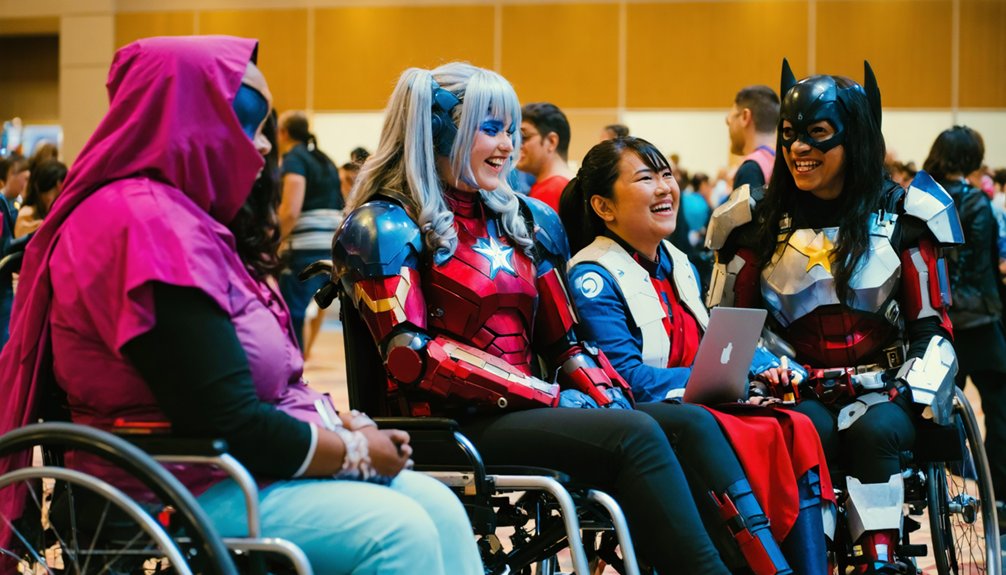
Mentorship builds the foundation, but lasting inclusion means embedding these values into every layer of your community’s culture. Long-term commitment requires consistent action, not occasional gestures. Community engagement must evolve with your members’ needs.
Sustain inclusion by building it into your structure:
- Review policies annually to ensure behavior standards reflect current community values
- Collect ongoing feedback through surveys and open forums to identify gaps
- Rotate leadership roles so diverse voices consistently shape decision-making
- Celebrate milestones that honor progress in representation, accessibility, and belonging
- Hold accountability check-ins where organizers assess what’s working and what isn’t
Inclusion isn’t a destination—it’s a practice. When your community treats these principles as non-negotiable standards rather than optional add-ons, belonging becomes the norm, not the exception.
Stop the Popularity Contest Mentality Before It Poisons Your Community
When popularity overshadows passion, your community starts losing the people who matter most. Clout-chasing culture quietly pushes out creative, dedicated cosplayers who don’t fit the influencer mold, and that’s a loss you can’t afford.
Shift toward merit-based evaluation by recognizing craftsmanship, storytelling, and effort over follower counts or social media presence. Design community recognition systems that spotlight lesser-known cosplayers alongside established ones, celebrating what they’ve built rather than who they know.
Merit should be measured by what you create, not how many people follow you.
Encourage judges, organizers, and members to actively challenge bias during competitions and casual interactions alike. Create transparent criteria that value creativity and passion equally.
When you build recognition around genuine contribution, you attract innovators who push your community forward rather than performers who simply seek applause.
Frequently Asked Questions
How Can Cosplay Communities Support Members Experiencing Financial Hardship?
Like a village raising a barn together, you can uplift members through financial assistance programs and resource sharing networks—pooling materials, trading skills, and co-funding costumes guarantees everyone thrives creatively, regardless of economic circumstance.
What Age Restrictions Should Inclusive Cosplay Events Consider Implementing?
You’ll want to implement clear age verification processes while ensuring accessibility accommodations suit all participants. Design tiered programming for children, teens, and adults, so everyone enjoys age-appropriate experiences within a welcoming, innovative, and barrier-free environment.
How Do You Handle Conflicts Between Longtime Members and Newcomers?
Like a bridge connecting two shores, you’ll resolve conflicts by establishing clear community boundaries, using structured conflict resolution processes, empowering mentors to guide newcomers, and ensuring longtime members model welcoming behavior for everyone.
Can Online Cosplay Communities Apply These Same Inclusive Practices Effectively?
Yes, you can absolutely apply these practices online! Prioritize digital accessibility, enforce anti-harassment policies, and champion representation awareness by hosting virtual cultural exchanges, mentorship sessions, and body-positive showcases—transforming your online community into a genuinely welcoming, innovative space.
How Should Communities Address Language Barriers Among International Cosplay Members?
You’ll bridge language barriers by offering translation support during events and online spaces. Embrace cultural sensitivity when communicating with international members, encouraging multilingual resources and inclusive tools that guarantee everyone’s voice is heard and valued.
References
- https://azluminaria.org/2023/02/02/cosplay-boom-has-grown-a-larger-more-inclusive-community-in-arizona/
- https://journal.transformativeworks.org/index.php/twc/article/view/712/645
- https://starstruckpanda.com/embracing-diversity-in-cosplay-communities/
- https://www.tandfonline.com/doi/full/10.1080/14733285.2025.2576906
- https://www.youtube.com/watch?v=VSF58lw5jkA
- https://noizu.asia/unite-for-acceptance-in-cosplay/
- https://www.youtube.com/watch?v=BDUWmaBY-3I