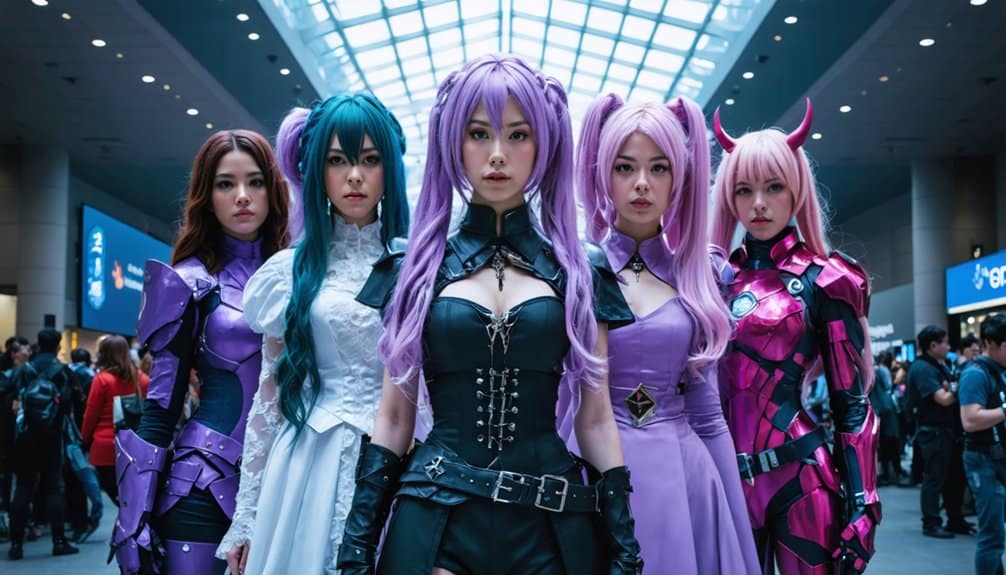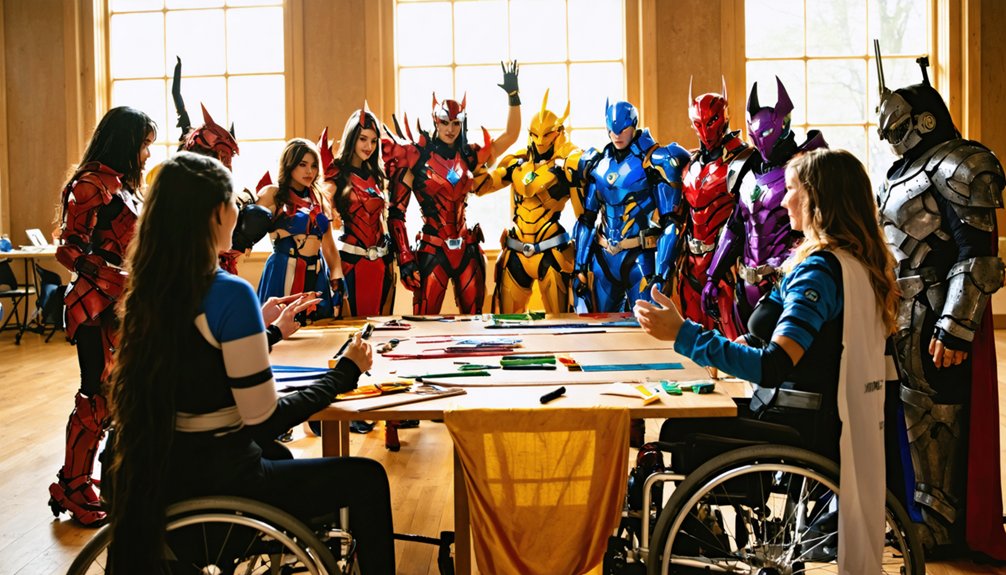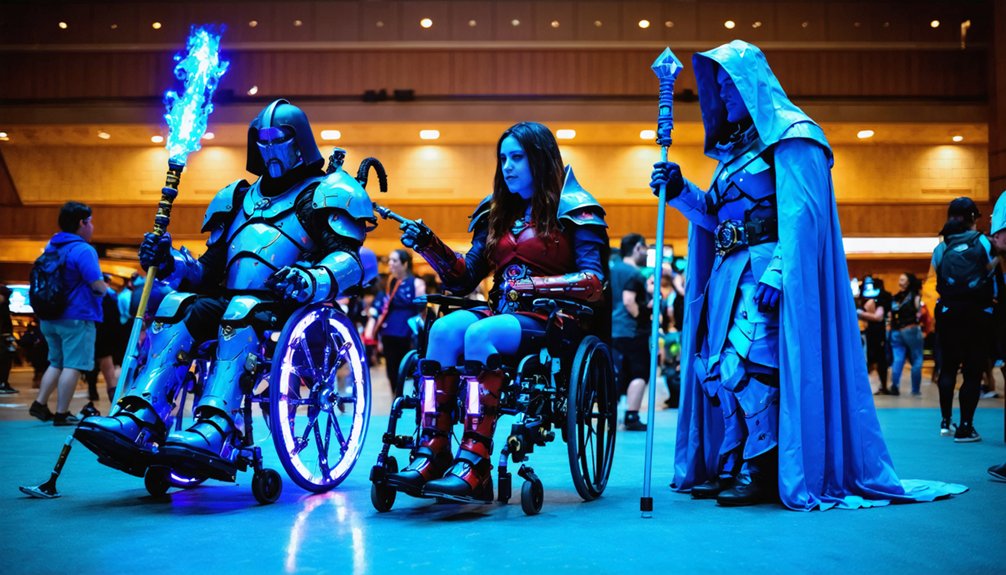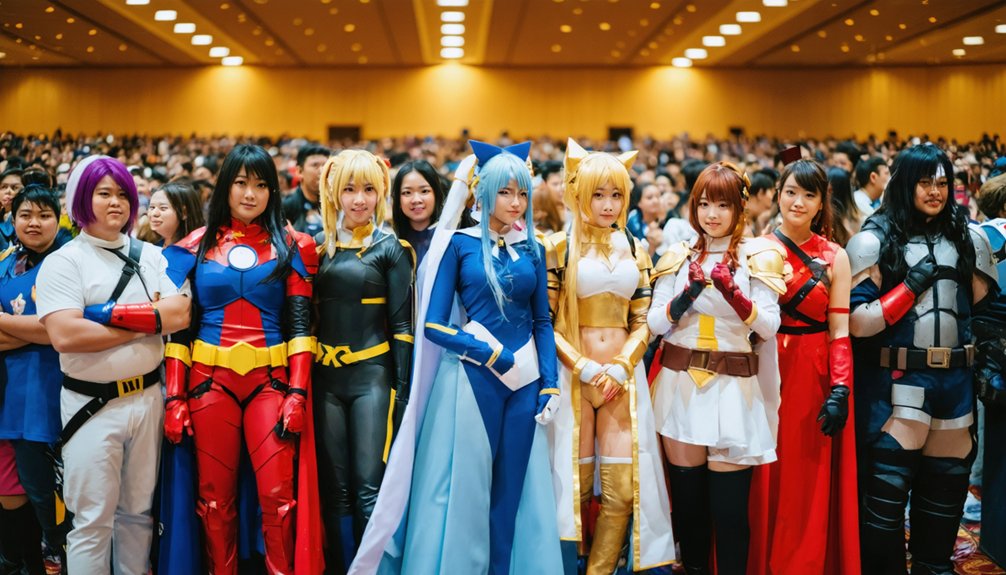
Embracing diversity in cosplay starts with you actively making space for everyone. Challenge exclusionary comments, amplify marginalized voices, and support minority cosplayers’ shops and platforms. If you’re organizing events, guarantee venues are accessible, staff are trained in anti-harassment measures, and your panels reflect diverse identities. Cosplay’s community thrives when people of all backgrounds, ages, orientations, and abilities feel genuinely welcomed. Keep exploring this guide to discover exactly how that’s done.
Key Takeaways
- Amplify underrepresented cosplayers by actively sharing, crediting, and supporting their work, shops, and platforms within the community.
- Challenge exclusionary behaviors and cultural appropriation while educating others on challenges faced by marginalized cosplayers.
- Design inclusive events with accessible venues, gender-neutral restrooms, trained staff, and zero-tolerance harassment policies.
- Recruit diverse panelists, vendors, and volunteers while partnering with local cultural organizations for authentic programming.
- Conduct attendee surveys to understand community needs and ensure all identities feel genuinely welcomed and represented.
Why Diversity in Cosplay Communities Still Falls Short
Despite the cosplay community’s reputation as a welcoming escape from mainstream intolerance, its demographic makeup tells a more complicated story. Surveys reveal that 81.2% of cosplayers identify as white, while Black participants represent just 0.8%. These representation gaps aren’t accidental — they reflect real cultural barriers that discourage participation from underrepresented groups.
You might wonder why this matters in a space built around creativity and fun. It matters because when people don’t see themselves reflected in a community, they’re less likely to join it. Cultural barriers like limited character representation, financial accessibility, and unwelcoming experiences push diverse cosplayers away before they even begin.
Recognizing these gaps is your first step toward meaningful change. Understanding the problem empowers you to actively reshape the community into something truly inclusive.
Who Gets Left Out of Cosplay Spaces and Why
When you look at the numbers, it’s clear that cosplay’s welcoming reputation doesn’t extend equally to everyone. Surveys show that 81.2% of cosplayers identify as white, leaving Latino, Black, Asian, and mixed-race communities markedly underrepresented. That gap isn’t accidental.
81.2% of cosplayers identify as white — a gap that isn’t accidental, and isn’t invisible.
Several barriers push people out. Cultural appropriation remains a persistent tension, where costumes drawn from marginalized cultures can make those communities feel exploited rather than celebrated.
Age inclusivity is another overlooked issue — older fans often feel invisible in spaces dominated by youth-centered marketing and media.
You can’t build a truly innovative community while ignoring who’s missing from it. Recognizing these patterns is the first step toward creating cosplay spaces where everyone genuinely belongs, not just the majority.
How to Support LGBTQIA+ and Marginalized Cosplayers
Building a more inclusive cosplay community starts with you. Supporting LGBTQIA+ and marginalized cosplayers requires intentional allyship strategies that go beyond passive acceptance. Actively amplify underrepresented voices by sharing their work, crediting their creativity, and challenging exclusionary comments when you see them.
Intersectional representation matters, so recognize that cosplayers navigate overlapping identities including race, gender, and sexuality simultaneously. You can advocate for diverse programming at conventions, support minority cosplayers’ shops and platforms, and educate yourself on community-specific challenges.
Small actions create lasting cultural shifts. Use correct pronouns, welcome newcomers openly, and push event organizers to expand inclusion panels. When you normalize respect and celebrate diverse portrayals, you help transform cosplay spaces into communities where everyone genuinely belongs.
What Safe Cosplay Conventions Actually Look Like
Allyship sets the foundation, but convention organizers carry significant responsibility in making safety a structural reality. When you attend a truly safe convention, you’ll notice deliberate design choices that prioritize everyone’s experience.
Safety isn’t accidental — convention organizers must intentionally design spaces where every attendee feels protected and welcome.
Safe conventions feature accessible venues with ramps, quiet rooms, and gender-neutral restrooms. Staff members receive active anti-harassment training, and clear reporting systems are visible throughout the space.
Inclusive costumes are celebrated rather than policed, meaning body-shaming dress codes don’t exist.
You’ll also see diversity represented on panels, not just in attendance. Organizers actively recruit speakers from marginalized communities and establish zero-tolerance harassment policies with real consequences.
Since 92.8% of respondents feel welcomed at fan events, these structural efforts clearly work. Recognizing these markers helps you identify and advocate for conventions that genuinely prioritize community safety.
Run Cosplay Events That Reflect Your Whole Community
Organizing a cosplay event that reflects your whole community starts with intentional planning before the first ticket is sold. Survey your potential attendees to understand who you’re serving, then build your programming around those insights.
Prioritize cultural representation by inviting guests, panelists, and vendors from diverse backgrounds. Inclusive costuming workshops help attendees explore characters beyond their own cultural experience while learning respectful creative boundaries.
Your volunteer staff should reflect your community too. Representation behind the scenes signals that everyone genuinely belongs.
Design accessible spaces, offer pronoun-inclusive registration options, and create dedicated areas where attendees can connect around shared identities. Partner with local cultural organizations to co-create programming that feels authentic rather than performative.
When your event mirrors your community’s full spectrum, attendance grows and everyone leaves feeling seen.
Frequently Asked Questions
How Much Money Can a Professional Cosplayer Realistically Earn Annually?
You can realistically earn up to $200,000 annually as a professional cosplayer! By securing cosplay sponsorships and showcasing your costume craftsmanship, you’ll unleash incredible income potential while inspiring diverse, innovative communities worldwide.
What Percentage of the Cosplay Community Identifies as Mixed Race?
You’ll find that 6.2% of cosplayers identify as mixed race, painting a vivid mosaic of cultural representation within the community. Embracing racial inclusivity means you’re helping weave even richer, more vibrant threads into cosplay’s evolving tapestry.
How Large Is the Global Cosplay Market Projected to Become?
You’ll be amazed to know the global cosplay market’s projected to reach $12.81 billion, driven by cultural representation and inclusive storytelling that’s reshaping fandom spaces into innovative, welcoming communities where everyone’s creativity and identity truly thrive.
Why Do Most People Initially Choose to Start Cosplaying?
It’s no coincidence that you’ve found cosplay—most people start simply because it’s fun! You’re drawn by creativity, cultural representation, and inclusive storytelling, naturally connecting with characters while building friendships that celebrate your unique identity.
How Have Diversity Panels at Conventions Changed Since 2015?
You’ve witnessed diversity panels at conventions grow by 300% since 2015! These spaces champion cultural representation and inclusive practices, giving you powerful opportunities to learn, connect, and help shape a more welcoming cosplay community together.
References
- https://mars.gmu.edu/server/api/core/bitstreams/1565b4a0-daf9-4e6b-b882-7338d4b5523a/content
- https://netlibrary.aau.at/obvuklhs/content/titleinfo/7643412/full.pdf
- https://www.scribd.com/document/723080966/MarketandConsumerAnalysis
- https://wifitalents.com/cosplay-industry-statistics/
- https://www.comicsbeat.com/eventbrite-survey-conventions-have-achieved-gender-parity-but-some-still-feel-unwelcome/
- https://www.dailydot.com/pop-culture/fandom/psychology-cosplay-survey-results/
- https://etheses.whiterose.ac.uk/id/eprint/25835/1/AMB Final thesis PDF (1).pdf