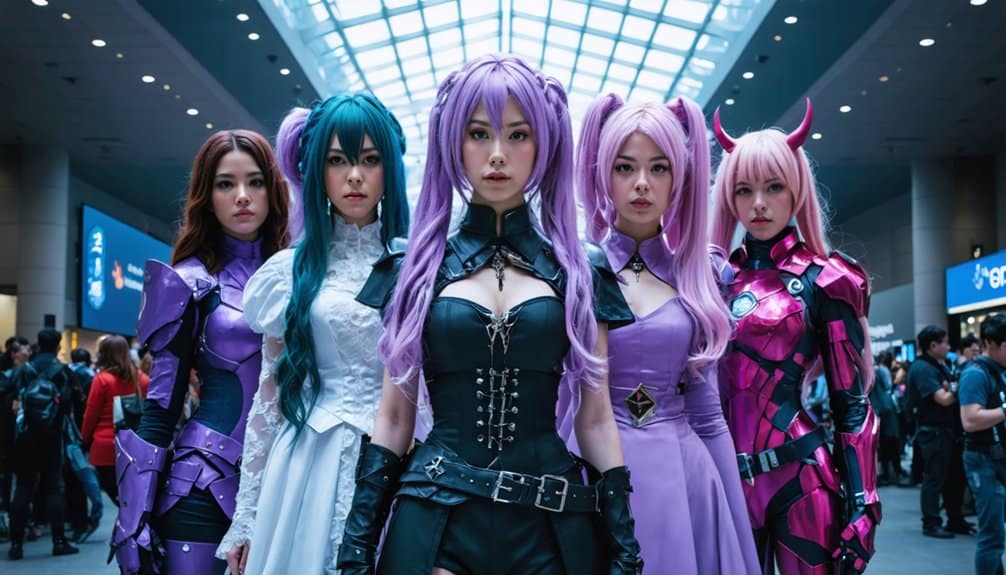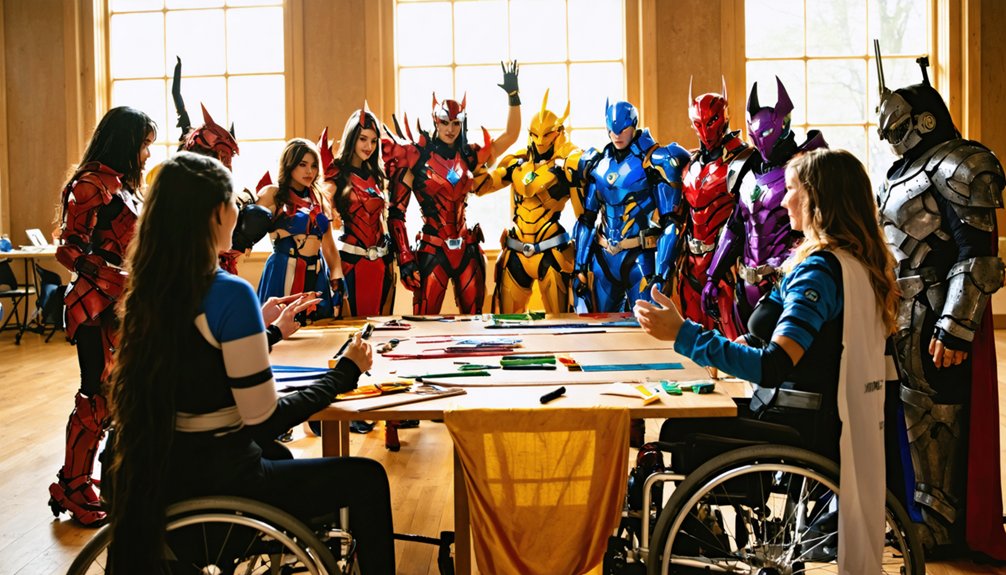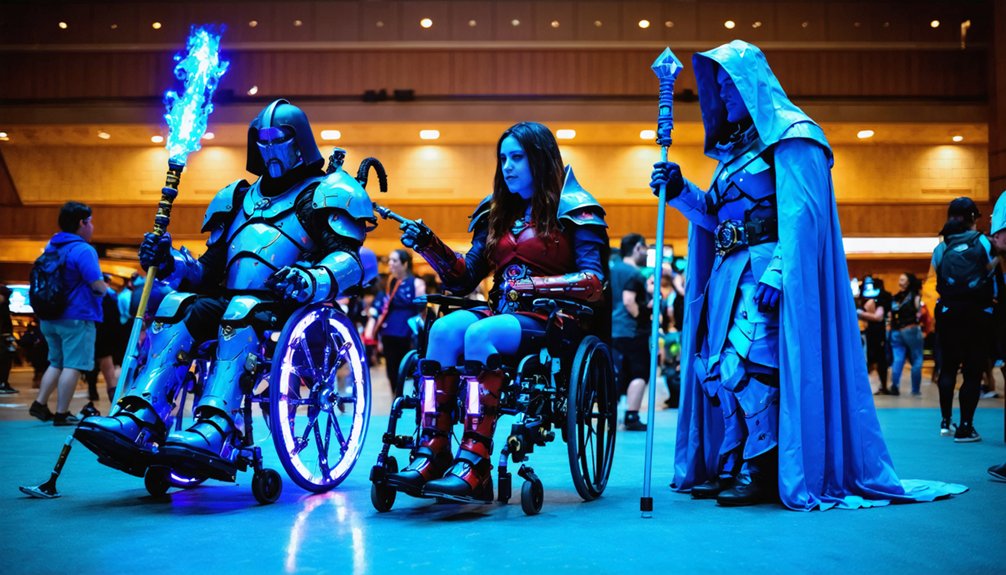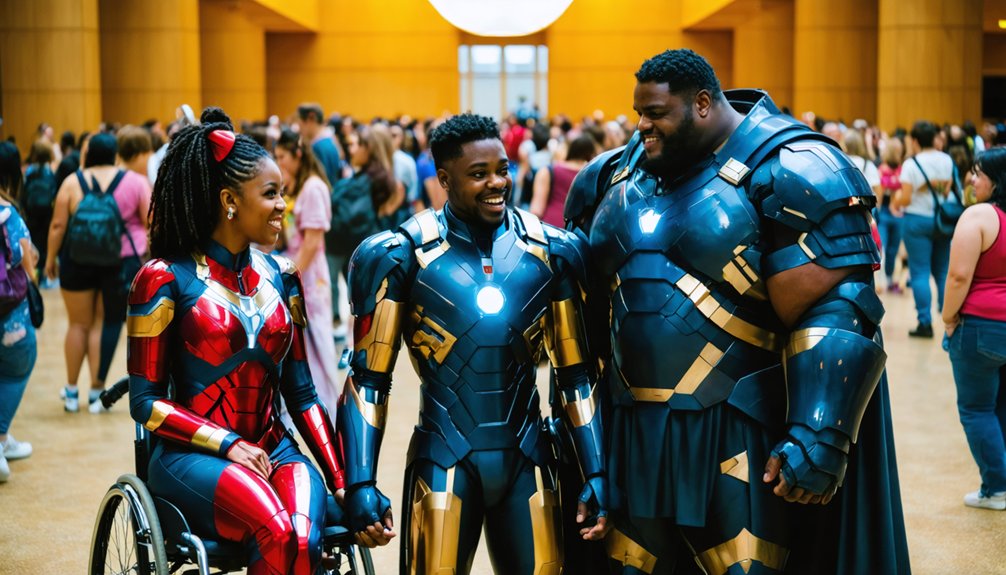
Embracing diversity in cosplay means you’re doing more than wearing a costume — you’re participating in cultural storytelling. Your character choices can challenge stereotypes, validate marginalized experiences, and signal belonging to fans who rarely see themselves represented. By researching authentically, engaging respectfully with communities, and honoring intersectional identities, you transform cosplay into meaningful advocacy. Keep exploring to discover how inclusive portrayal practices can reshape your craft and strengthen the communities around you.
Key Takeaways
- Cosplay serves as a platform for visibility, cultural storytelling, and challenging stereotypes through authentic, intersectional character portrayal.
- Distinguishing cultural appreciation from appropriation requires genuine engagement with cultural narratives rather than reducing heritage to surface aesthetics.
- Researching marginalized characters demands prioritizing primary sources, lived experiences, and community insights for accurate, respectful representation.
- Gender-bending cosplay challenges binary norms, enabling personal identity exploration and contributing to broader cultural conversations.
- Building inclusive costumes requires intentional research, authentic material sourcing, and meaningful engagement with the communities being represented.
Why Diverse Cosplay Representation Matters Today?
Cosplay has evolved far beyond simple costume play — it’s become a powerful platform for visibility, identity, and cultural storytelling. When you embody characters reflecting intersectional identities, you’re actively participating in stereotype disruption and diverse storytelling that reshapes community narratives.
Representation impact extends beyond costumes. Your creative expression communicates belonging, challenges exclusionary norms, and validates experiences often overlooked in mainstream media.
Inclusive practices within cosplay communities build genuine community unity by honoring cultural narratives that deserve recognition.
Character authenticity matters enormously here. When you research a character’s cultural background thoroughly, you’re demonstrating respect while expanding identity exploration for everyone watching.
You’re not just wearing a costume — you’re dismantling barriers, amplifying underrepresented voices, and proving cosplay belongs to absolutely everyone.
Cultural Appreciation vs. Appropriation in Cosplay
Understanding representation’s power naturally raises a harder question: where’s the line between honoring a culture and exploiting it?
Cultural appreciation means you’ve invested genuine effort into cultural understanding — researching identity narratives, acknowledging historical context, and pursuing nuanced portrayal rather than reducing someone’s heritage to aesthetic accessories.
Appropriation happens when you borrow surface elements without engaging meaningfully with their significance.
You can navigate this distinction through community dialogue. Connect directly with people from the culture you’re drawing inspiration from.
Ethical inspirations emerge when you’re listening, learning, and centering respectful representation over novelty.
Ask yourself whether you’re amplifying a culture’s story or flattening it.
Cosplay’s innovative potential thrives when you approach diverse characters with curiosity, humility, and accountability — transforming costume choices into genuine bridges between communities rather than barriers.
How to Research Characters From Unfamiliar Cultures
When researching characters from unfamiliar cultures, you’ll want to prioritize primary sources — academic texts, cultural organizations, and media created by people from that culture — over secondhand interpretations that may carry bias.
You can strengthen your understanding by actively consulting cosplayers and community members who share the character’s cultural background, treating their lived experiences as valuable expertise rather than optional input.
This combination of rigorous research and genuine community collaboration guarantees your portrayal honors the character’s cultural roots with both accuracy and respect.
Primary Cultural Research Sources
For character authenticity, explore museums, cultural archives, and historical context through firsthand accounts.
Representation ethics demand that your research methodologies prioritize marginalized voices over mainstream interpretations.
Community engagement strengthens your identity exploration — connect directly with cultural organizations, attend heritage events, and follow creators from that background.
These relationships provide design inspiration rooted in genuine understanding rather than assumption.
Primary sources transform your portrayal from surface-level imitation into something deeply respectful, ensuring your cosplay honors rather than appropriates the culture it represents.
Community Collaboration And Consultation
This approach fuels collective creativity, pushing your work beyond stereotypes toward authentic representation.
Gender-Bending Cosplay and Identity Expression
When you explore gender-bending cosplay, you’re actively challenging the norms that traditionally confine characters to rigid gender presentations, opening up a richer, more expansive creative landscape.
Your costume choices become a powerful tool for identity exploration, allowing you to connect with characters in deeply personal ways that transcend conventional expectations.
Breaking Gender Norms
Cosplay’s most transformative power lies in its ability to let you step beyond the gender boundaries that society often imposes. When you choose a character whose gender differs from your own, you’re not just wearing a costume — you’re challenging deeply embedded norms.
Gender fluidity becomes a creative language through costume innovation, allowing you to reimagine characters in ways that reflect your authentic identity. You’re expanding storytelling possibilities while simultaneously dismantling restrictive expectations.
Cosplay communities increasingly recognize that character portrayal transcends binary definitions. By embodying characters across the gender spectrum, you contribute to a broader cultural conversation about identity representation.
Your costume becomes a statement — not just about fandom passion, but about the fundamental human right to express yourself freely, authentically, and without predetermined limitations.
Identity Through Costume
Gender-bending cosplay isn’t just about swapping clothing — it’s a profound vehicle for identity exploration and self-discovery. When you embody a character beyond your assigned gender, you’re practicing genuine gender fluidity, challenging rigid boundaries that traditional media reinforces.
Character authenticity becomes transformative here. You’re not simply wearing a costume; you’re engaging in cultural immersion, connecting with narratives that resonate deeply. Your costume innovation signals representation impact — demonstrating to others that identity isn’t fixed.
Community respect grows when cosplayers honor the complexity behind each portrayal. You contribute to narrative creativity by reimagining characters through your unique perspective, expanding storytelling possibilities for everyone watching.
Your cosplay becomes a powerful statement: identities are fluid, multidimensional, and worthy of celebration beyond conventional expectations.
Expanding Creative Boundaries
Beyond swapping costumes, you’re actively dismantling the rigid gender constructs that traditional media perpetuates.
Gender-bending cosplay transforms character evolution by reimagining beloved figures through completely new identity lenses.
Your creative inspiration doesn’t require permission. When you portray characters outside your assigned gender, you’re expanding storytelling possibilities that mainstream narratives consistently overlook.
This practice challenges assumptions about who characters “should” be while celebrating fluid interpretations.
Intersecting identities matter here. Race, disability, body type, and gender expression combine uniquely within your portrayal, creating representations that resonate across multiple communities simultaneously.
Safe cosplay environments empower you to experiment without judgment, fostering genuine self-discovery alongside artistic expression.
Every gender-bent costume you craft becomes a powerful statement: characters belong to everyone, and authentic embodiment transcends the limitations that traditional media repeatedly imposes.
How to Build Cosplay Costumes That Honor Marginalized Characters
Building cosplay costumes that honor marginalized characters starts with intentional research and a genuine commitment to respectful representation.
You’ll want to explore the historical context surrounding your character, understanding the cultural nuances that shaped their narrative. Don’t treat marginalized voices as aesthetic inspiration—engage with them meaningfully.
Authentic craftsmanship means sourcing materials and design elements that reflect genuine cultural traditions rather than approximations.
You’re constructing inclusive narratives through every stitch and fabric choice.
Connect with communities whose stories you’re portraying. Community respect isn’t optional—it’s foundational.
Seek feedback, ask questions, and remain open to correction.
When you approach character building this way, you transform cosplay from performance into powerful advocacy, demonstrating that honoring marginalized representation requires both creative skill and profound cultural accountability.
How Your Cosplay Choices Push Back Against Media Stereotypes
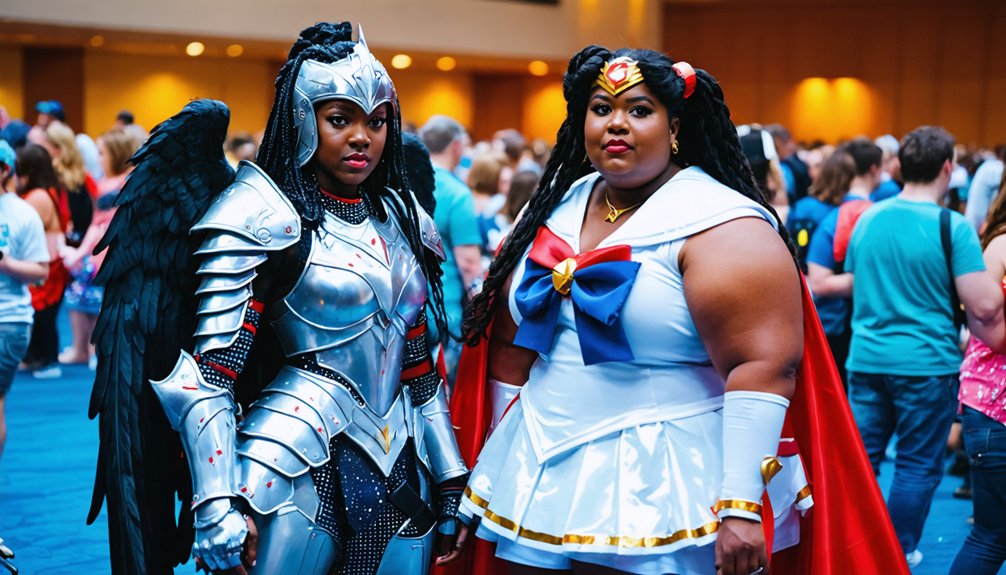
This commitment to narrative authenticity carries real representation impact—visibility matters profoundly.
When diverse cosplayers populate conventions and social platforms, community empowerment follows naturally.
You’re signaling to marginalized fans everywhere: these characters belong to everyone, and their stories deserve richer, more honest interpretation.
How Diverse Cosplayers Strengthen Your Craft
Surrounding yourself with diverse cosplayers isn’t just community-building—it’s one of the most practical investments you can make in your craft. Each collaborator brings unique cultural storytelling, intersectional representation, and historical context that deepens your artistic expression.
Here’s what diverse collaboration genuinely delivers:
- Crafting authenticity — Peers from varied backgrounds reveal construction techniques rooted in their community narratives and traditions.
- Character depth — Collaborators help you understand a character’s personal connection to cultural identity beyond surface aesthetics.
- Historical context — Learning directly from cosplayers with lived experience sharpens your accuracy and intentionality.
- Intersectional representation — Diverse perspectives challenge your assumptions, pushing your work toward more nuanced, innovative portrayals.
When you actively seek these relationships, your craft evolves from imitation into genuine artistic expression that honors the characters you embody.
How to Find and Support Inclusive Cosplay Communities
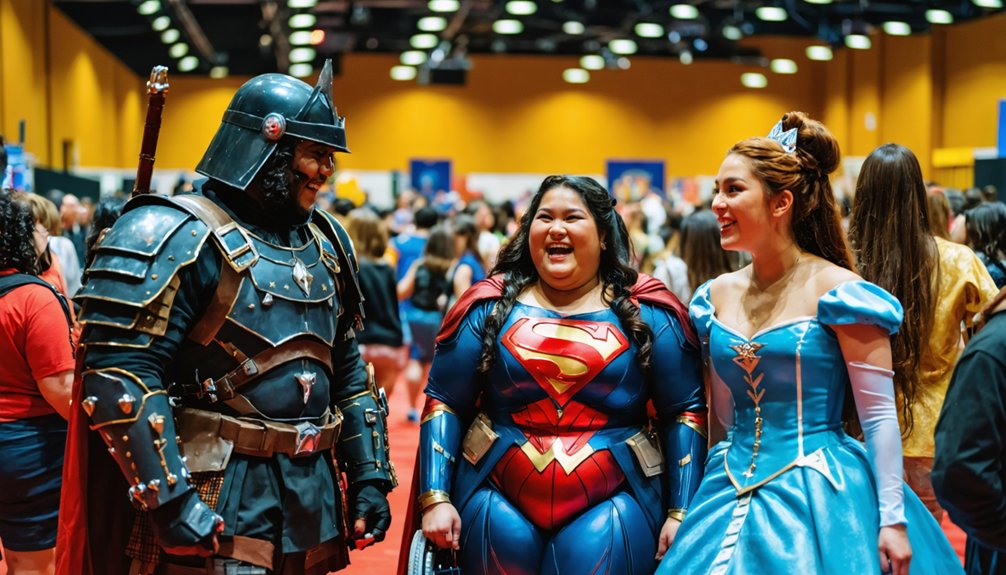
Once you’ve built those collaborative relationships, the next step is knowing where to find communities that actively nurture them. Seek inclusive spaces prioritizing community engagement through open dialogue about cultural nuances and identity exploration.
Platforms like Discord servers, convention panels, and social media groups dedicated to character authenticity and respectful representation offer genuine connection opportunities.
Dedicated Discord servers, convention panels, and social media communities create meaningful spaces for authentic cosplay connection and representation.
Support these communities by participating in collaborative learning discussions, amplifying empowering narratives from marginalized cosplayers, and practicing stereotype awareness when engaging with diverse character portrayals.
Actively champion body positivity by celebrating varied interpretations across different presentations.
You’ll strengthen these communities by contributing resources, sharing research, and holding space for honest conversations. Your consistent presence signals commitment to building cosplay environments where everyone’s identity receives authentic recognition and celebration.
Frequently Asked Questions
How Do Cosplay Competitions Evaluate Diversity and Cultural Authenticity in Judging Criteria?
Like a mosaic gaining beauty through varied tiles, competitions now weave judging standards that honor cultural sensitivity. You’ll find panels increasingly reward authentic research, collaborative representation, and meaningful cultural storytelling beyond surface-level costume accuracy.
What Legal Protections Exist for Cosplayers Facing Discrimination at Conventions?
You’re protected by legal rights through anti-discrimination laws, convention policies, and discrimination cases precedents. Connect with advocacy groups who’ll champion your intersectional identity, ensuring conventions remain innovative, inclusive spaces where you can freely express yourself.
How Can Cosplayers With Disabilities Authentically Portray Physically Demanding Characters?
You can authentically portray physically demanding characters through adaptive techniques and character modifications that honor your abilities. Explore accessibility options, collaborate with the community for community support, and you’ll innovate representations that challenge traditional portrayals intersectionally and powerfully.
What Financial Resources Exist to Help Underrepresented Cosplayers Afford Inclusive Costumes?
You’ve got options! Tap into crowdfunding platforms, apply for costume grants, launch fundraising campaigns, or seek community sponsorships. These intersectional resources empower underrepresented cosplayers, ensuring financial barriers don’t prevent your authentic, innovative character representation.
How Do International Cosplay Communities Differ in Their Approaches to Cultural Representation?
Vivid global tapestries reveal that you’ll find international cosplay communities tackle cultural appropriation, representation challenges, and global perspectives uniquely—community engagement shapes each region’s standards, creating intersectional conversations that continually redefine inclusive, innovative character portrayal worldwide.
References
- https://starstruckpanda.com/race-inclusive-character-portrayal-in-cosplay/
- https://starstruckpanda.com/cosplay-characters-from-diverse-backgrounds/
- https://folklife.si.edu/magazine/cosplay-community
- https://www.tiktok.com/@cocoabutterofficial/video/7480674975142251806
- https://www.pinterest.com/pin/embracing-diversity-in-cosplay-inclusive-character-portrayal–82401868176443325/
- https://popcultureuncovered.com/2017/09/05/embodying-values-of-the-characters-we-cosplay/
- https://www.tiktok.com/@vraithra/video/7521949261555191071
- https://digital.lib.washington.edu/researchworks/items/a268de52-eafe-4d9c-894b-423c40a904ca
- https://www.belloflostsouls.net/2023/01/cosplay-is-for-everyone-cosplayers-talk-inclusivity.html
- https://journal.transformativeworks.org/index.php/twc/article/view/246/230