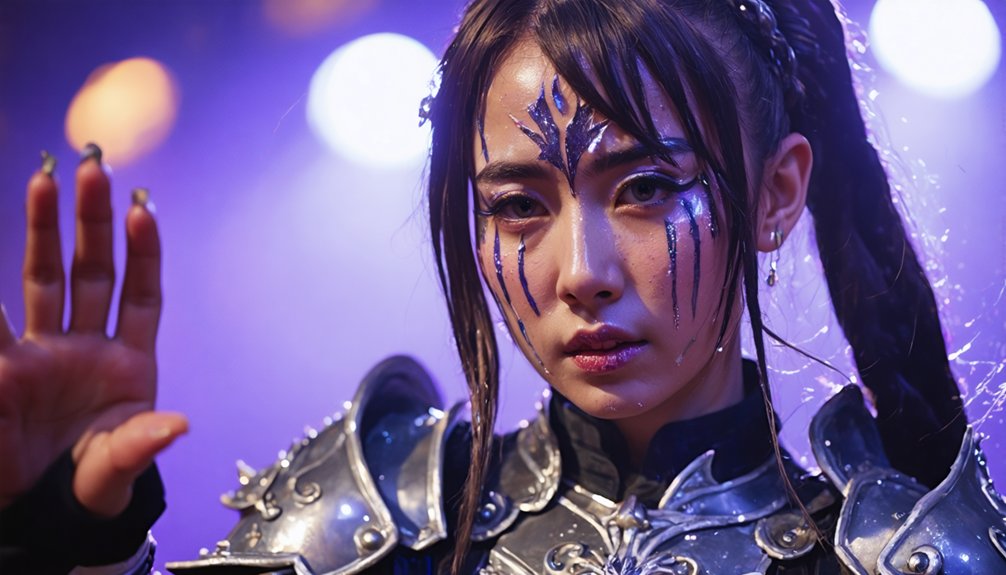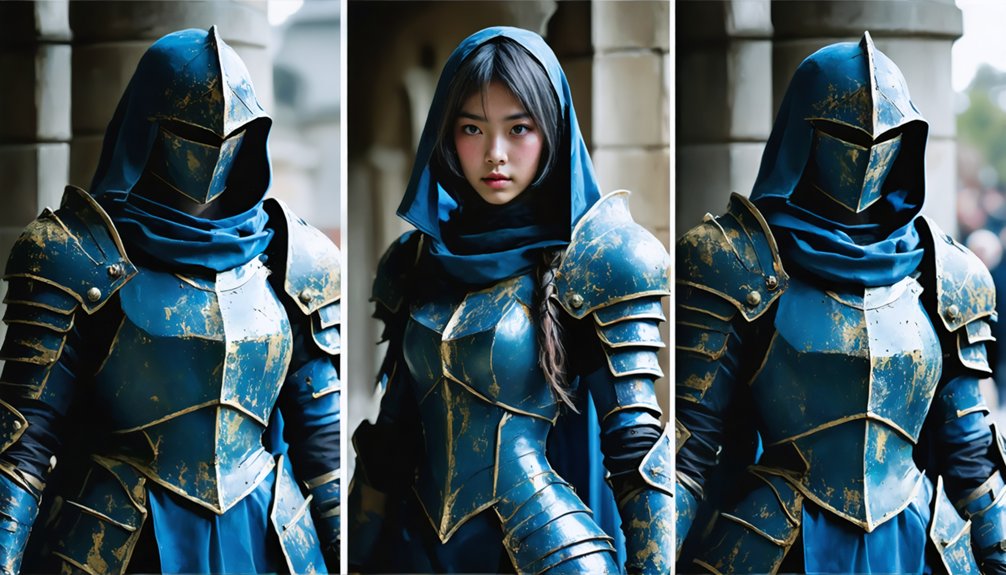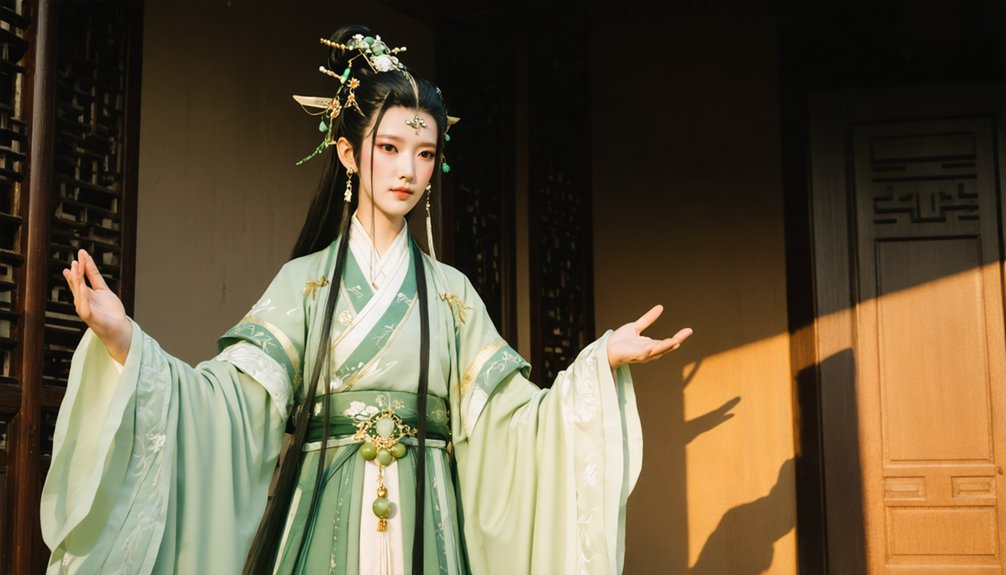
To improve cosplay character accuracy and cultural representation, you’ll want to start with thorough research using reference images, concept art, and behind-the-scenes materials. Treat every color, pattern, and cultural symbol as a deliberate design choice rather than a rough approximation. Engage with community members to understand the deeper meaning behind cultural elements, and validate your materials, proportions, and accessories before committing to construction. There’s much more to uncover as you build your most authentic cosplay yet.
Key Takeaways
- Conduct early-stage research using reference images, concept art, and screen captures to ensure character accuracy and design consistency.
- Recognize cultural symbols, patterns, and colors to avoid stereotypes and achieve respectful, authentic representation.
- Use affordable materials like EVA foam and Worbla for cost-effective, durable construction without sacrificing visual accuracy.
- Prioritize silhouette, color blocking, and signature accessories to maintain strong character recognizability during wear.
- Engage directly with cultural communities and forums to gather feedback, uncovering nuances that prevent offensive misrepresentation.
Research Your Cosplay Character’s Visual Details First
Before you sew a single stitch or source a single prop, you’ll need to build a solid visual reference library for your character. Pull screen captures, concept art, and behind-the-scenes production photos to identify every distinguishing detail — logos, patterns, accessories, and structural elements that define the character’s silhouette.
Historical accuracy matters here, particularly when your character draws from a specific cultural or period-based aesthetic. Cross-reference multiple sources to confirm design consistency across different media appearances.
Prioritize material durability when evaluating how original textures translate into wearable construction. A metallic surface that reads beautifully on screen may require thermoplastic alternatives that perform better physically.
Digital modeling and prototype testing before final construction prevent costly errors, ensuring your finished cosplay reflects both precision and intentional craftsmanship.
Match Cosplay Materials to the Original Design on a Budget
You don’t need an unlimited budget to achieve material accuracy — strategic substitutions let you replicate the look of leather, metal, or fabric using affordable alternatives that photograph and perform just as well.
Thermoplastics like Worbla and EVA foam are your best tools for replicating armor, weapons, and structural elements at a fraction of the cost of screen-used materials.
Before cutting into your final materials, always construct a mock-up in cheap fabric or craft foam to test fit, proportion, and accuracy without wasting money on costly mistakes.
Affordable Material Substitution Strategies
Matching your cosplay to the source material doesn’t require an unlimited budget—it requires strategic thinking. Thermoplastics like Worbla and EVA foam convincingly replicate metals, leathers, and rigid armor at fractions of original material costs.
Fabric dyeing transforms generic textiles into precise color matches, eliminating expensive specialty fabric purchases entirely.
Smart accessory sourcing means scouring thrift stores, craft suppliers, and online marketplaces for components you’ll modify rather than fabricate from scratch. Repurposing existing items reduces both cost and construction time without sacrificing recognizability.
Mock-ups in inexpensive muslin test pattern accuracy before committing to pricier fabrics.
Prioritize replicating the most visually prominent elements audiences immediately recognize—silhouette, color palette, and signature accessories—while applying simpler solutions to less-scrutinized areas. Strategic substitution delivers accuracy where it matters most.
Budget-Friendly Thermoplastic Options
Two thermoplastics dominate budget-conscious cosplay construction: Worbla and EVA foam. Both materials let you replicate screen-accurate armor, props, and structural elements without exceeding your budget. When combined with fabric dyeing techniques, they elevate your overall costume cohesion markedly.
Key advantages these materials offer:
- Worbla bonds to itself when heated, eliminating adhesives during accessory fabrication
- EVA foam carves and sands smoothly, mimicking rigid surfaces like leather or metal
- Heat-shaping capability allows precise contouring that matches original character designs exactly
- Paint compatibility on both materials accepts acrylics and flexible coatings for screen-accurate finishes
You’ll achieve professional-grade results by combining both materials strategically. Use EVA foam for large structural pieces and Worbla for detailed accessory fabrication requiring sharp definition and durability.
Mock-Up Testing Saves Money
Before cutting into your final fabric, mock-ups in inexpensive materials let you test pattern accuracy, fit, and design proportions without risking costly mistakes. Muslin and canvas reveal structural flaws early, letting you refine seams, darts, and panel placements before committing to premium textiles.
Apply this same logic to prop crafting — build rough prototypes from cardboard or low-grade foam to verify scale and silhouette against reference images. Once proportions align, you’ll shift confidently to final materials.
For fabric dyeing, test your color formulas on mock swatches first. Dye reacts differently across fiber types, and a failed dye batch on expensive fabric wastes both money and time.
Iterative testing at every stage keeps your build accurate, efficient, and budget-conscious without sacrificing fidelity to the source design.
How Do You Build True Screen Accuracy Into Your Cosplay?
Achieving true screen accuracy starts with obsessive research—you’ll want to gather screen captures, concept art, and behind-the-scenes set photos as your primary references.
Obsessive research separates good cosplay from great—start with screen captures, concept art, and behind-the-scenes photos.
Historical accuracy demands identifying every logo, pattern, and accessory placement before cutting a single piece of fabric. Material durability shapes your final selections, ensuring your build survives both construction and convention wear.
Prioritize these construction fundamentals:
- Match materials precisely — thermoplastics like Worbla and EVA foam replicate screen details cost-effectively
- Test color accuracy under multiple lighting conditions before committing
- Digitally model complex armor or props to validate proportions early
- Document reference images by body zone — head, torso, limbs, accessories
Every detail compounds. When you treat each component as critical, your finished cosplay communicates undeniable character recognition instantly.
Style Your Cosplay Wig to Match the Character’s Exact Hair
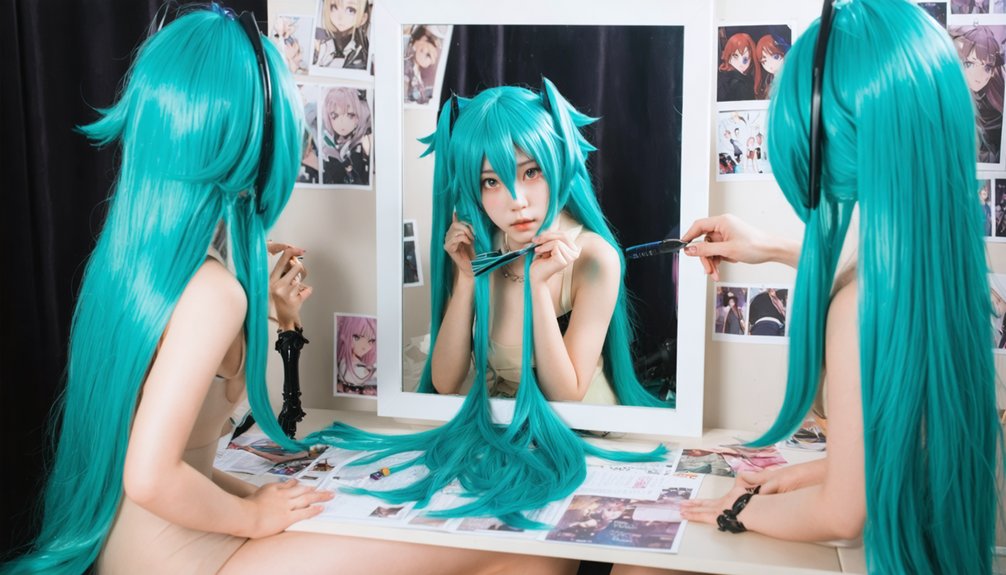
Styling your wig correctly can make or break character recognition faster than any other single costume element. Match hair texture first — straight, wavy, or voluminous styles each require different fiber types and heat-styling techniques. Reference screen captures to confirm exact length, layering, and color gradients before cutting a single strand.
For characters like Hatsune Miku, precision isn’t optional. Specific twin-tail lengths and teal shades demand measured replication, not approximation. Use hair extensions strategically to build volume without sacrificing natural movement.
Accessory placement completes the illusion. Position hairpins, ribbons, or ornaments at exact screen-accurate coordinates — even slight misalignment disrupts overall authenticity. Test the fully styled wig under convention lighting conditions beforehand, adjusting as needed to maintain visual accuracy across different environments.
Spot the Cultural Elements in Your Cosplay Before You Build Them
Cultural elements embedded in a character’s design carry meaning that extends far beyond aesthetics, so you’ll need to identify them before a single material gets purchased. Cultural symbolism woven into traditional attire communicates heritage, status, and belief systems that demand respectful, accurate replication.
Audit your character’s design by researching these critical elements:
- Symbolic patterns or motifs appearing on garments, armor, or accessories
- Traditional attire construction, including fabric types, draping methods, and silhouette origins
- Religious or ceremonial insignia that carry specific cultural weight
- Color symbolism, since specific hues hold distinct cultural meanings across different societies
Cross-reference primary sources with insights from community members connected to that culture. Misidentifying cultural symbolism produces inaccurate portrayals and causes genuine harm, making early-stage research your most essential construction tool.
Represent Cultural Cosplay Characters Without Falling Into Stereotypes

Steering clear of stereotypes requires you to distinguish between a character’s intentional cultural design and the harmful generalizations that reduce entire communities to visual shorthand.
Research the historical influences behind every garment, accessory, and symbol your character wears. Cultural symbolism carries weight — a pattern, color, or emblem often signals social status, spiritual meaning, or regional identity that stereotypes completely erase.
When you understand why a design element exists, you replicate it with earned intention rather than surface mimicry.
Avoid exaggerating physical features or reducing complex cultural aesthetics to costume-shop caricatures.
Engage directly with community members and primary sources to verify your interpretation’s accuracy.
Thoughtful representation distinguishes a skilled cosplayer from one who simply borrows culture without comprehending its depth or significance.
Talk to People From Your Character’s Culture Before You Finalize the Look
Before you finalize any culturally significant costume, seek direct input from people who belong to your character’s community. Community feedback transforms assumptions into informed decisions, helping you navigate cultural sensitivities you might otherwise overlook.
Reach out through these targeted approaches:
- Join cultural forums where members openly discuss representation and traditional attire significance
- Attend community events to observe authentic styling, accessories, and symbolic elements firsthand
- Ask specific questions about garment construction, pattern meanings, and ceremonial versus everyday wear distinctions
- Share prototype images with community members before committing to final materials or designs
Their perspectives reveal nuances no reference image captures. You’ll identify potentially offensive shortcuts and discover meaningful details that elevate accuracy.
Authentic engagement demonstrates genuine respect, transforming your cosplay from surface-level imitation into thoughtful, culturally informed representation.
Make Your Cosplay Recognizable Without Chasing Impossible Standards
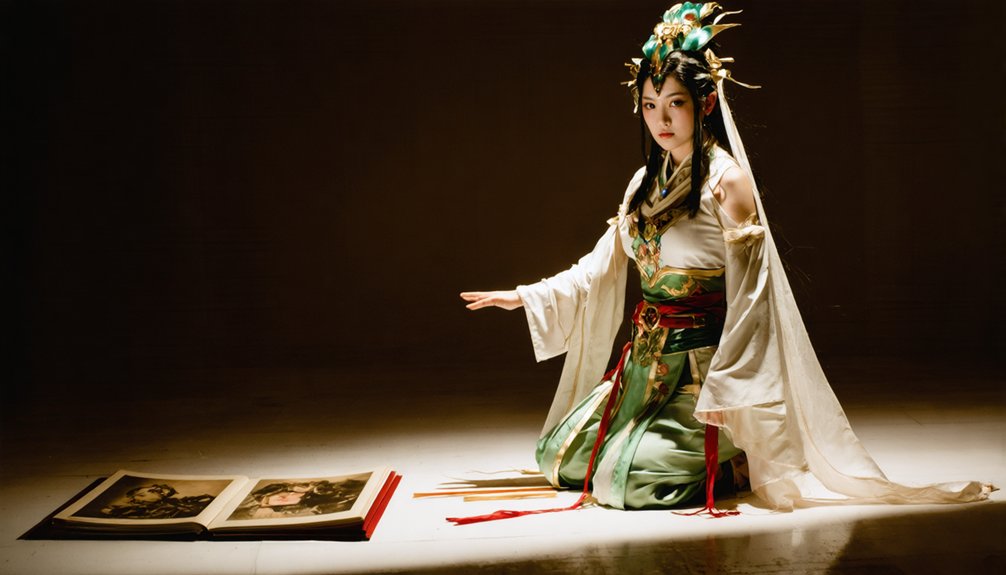
While screen-accurate cosplays dominate competition stages and social media feeds, they don’t reflect what most convention floors actually look like. Most attendees arrive wearing character-inspired interpretations shaped by budget realities and wearability needs. You should prioritize recognizability over perfection by focusing on silhouette, color blocking, and signature accessories that instantly identify your character.
Choose fabric durability over replica exactness when construction demands it—convention wear endures hours of movement, crowds, and varying environments. Reinforce high-stress seams and select materials that hold their shape throughout the day.
Use lighting techniques during planning phases to test how colors and textures read under harsh fluorescent or outdoor conditions. What photographs beautifully in a studio can fall flat on a convention floor. Craftsmanship and clever design choices always outperform hyperidealized, physically impossible standards.
Frequently Asked Questions
How Do Conventions Typically Judge Cosplay Accuracy in Official Competitions?
Judges evaluate your craftsmanship, cosplay authenticity, and cultural sensitivity by examining construction quality, material accuracy, and character recognizability. They’ll assess your attention to detail, creative problem-solving, and how faithfully you’ve replicated the design’s innovative elements.
Can Children Participate in Culturally Inspired Cosplay With Parental Guidance?
Yes, children can participate when you guarantee parental supervision guides every choice. You’ll foster cultural sensitivity by researching traditions thoroughly, selecting respectful costumes, and actively engaging with communities to create meaningful, accurate, and innovative culturally inspired portrayals.
What Online Communities Best Support Beginner Cosplayers Seeking Accuracy Feedback?
You’ll find Reddit’s r/cosplay and Discord servers offer excellent feedback platforms where you can share your work, refine details, and guarantee cultural authenticity through constructive critiques from experienced, innovation-driven cosplay communities worldwide.
How Do Professional Cosplayers Monetize Their Culturally Accurate Character Builds?
Like a master artisan selling rare tapestries, you monetize cultural authenticity and costuming craftsmanship through commissions, tutorials, sponsored conventions, Patreon memberships, and brand partnerships—transforming your meticulous, culturally-informed builds into sustainable, innovative revenue streams that reward your expertise.
Are There Legal Concerns When Replicating Trademarked Logos on Cosplay Costumes?
Yes, you’ll face trademark infringement and copyright concerns when replicating logos. You can craft inspired interpretations rather than exact replicas, keeping your builds legally sound while maintaining meticulous character accuracy without compromising innovative, culturally-informed costume design.
References
- https://repository.lib.ncsu.edu/bitstreams/3242e9ff-fd07-4973-ac24-592a47b16f9c/download
- https://www.reddit.com/r/cosplayers/comments/1b47z4g/is_it_normal_to_go_to_cons_with_a_character/
- https://www.youtube.com/watch?v=oQ5OoW067b4
- https://starstruckpanda.com/cosplay-character-accuracy-and-cultural-representation/
- https://starstruckpanda.com/mastering-character-accuracy-in-cosplay-crafting/
- https://dspace.stir.ac.uk/bitstream/1893/33808/1/QMR-RR- Cosplay final accepted version.pdf
- https://starstruckpanda.com/cultural-significance-of-cosplay-diversity/