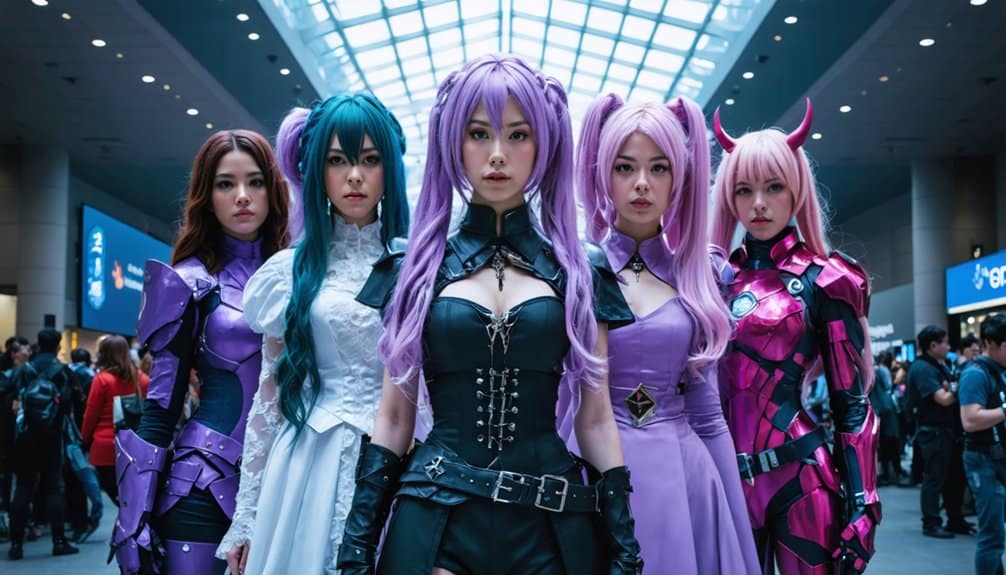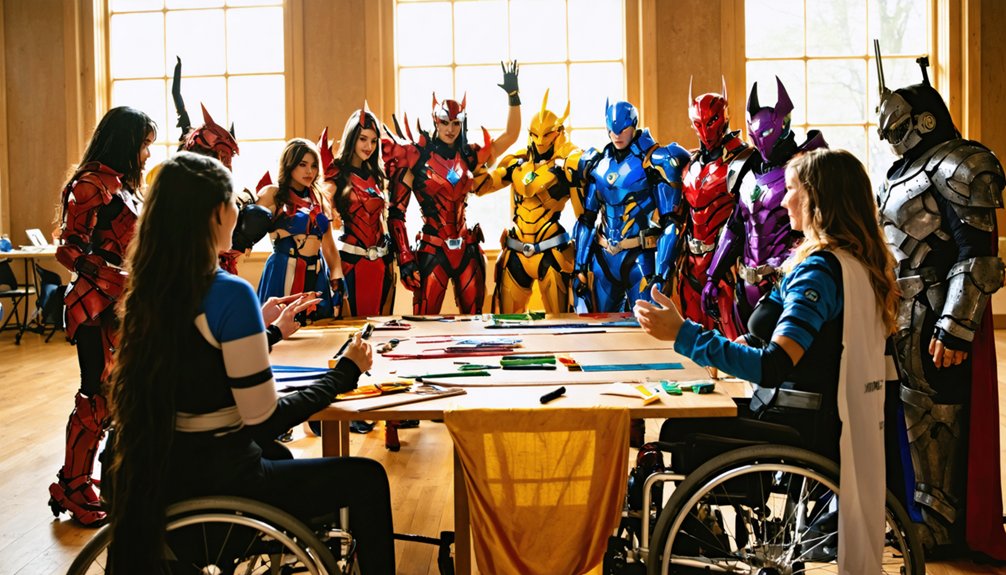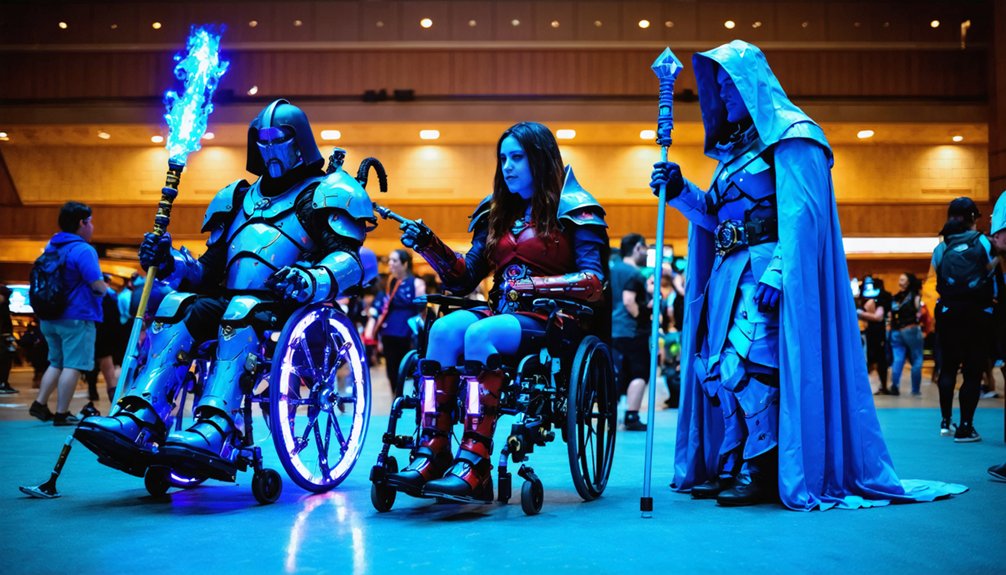
You reimagine traditional ethnic attire in cosplay because wearing a culture’s garments transforms you from a passive observer into an active participant in its living history. You’re not just recreating a look — you’re reconstructing ancestral techniques, preserving endangered craft knowledge, and asserting cultural legitimacy through embodied practice. Each stitch carries narrative weight that museum displays can’t replicate. Stick around, and you’ll uncover just how deep this cultural conversation actually goes.
Key Takeaways
- Reimagining traditional ethnic attire in cosplay preserves endangered weaving techniques, embroidery methods, and cultural details through active reconstruction and community engagement.
- Ethnic cosplay interrupts cultural erosion by introducing younger audiences to ancestral garments beyond static museum displays.
- Traditional silhouettes combined with modern materials create aesthetic innovation, enriching character design with unexplored cultural visual languages.
- Cosplay representation asserts cultural legitimacy for minority communities, reclaiming historical narratives and challenging stereotypes through artistic expression.
- Ethnic cosplay transforms cultural knowledge into participatory, embodied learning, forging emotional connections to heritage through tactile practice.
What Is Traditional Ethnic Attire Cosplay?
Traditional ethnic attire cosplay is a practice where participants reimagine, reconstruct, or embody garments rooted in specific cultural and ancestral traditions within the broader cosplay framework.
You’re engaging with living cultural narratives when you select fabrics, silhouettes, and motifs tied to specific ethnic lineages. It’s not mere costume play — it’s an analytical process of interpreting traditional influences through contemporary creative frameworks.
You actively research historical context, ritual significance, and construction techniques to faithfully or innovatively represent specific heritages.
This practice sits at the intersection of cultural scholarship and artistic expression, demanding both precision and creativity.
Whether you’re honoring an ancestor’s wardrobe or reimagining it through a fantasy lens, you’re participating in a broader conversation about identity, visibility, and the evolving relevance of cultural dress in modern spaces.
How Cosplay Keeps Fading Cultural Traditions Alive
When you reconstruct a Han dynasty robe or recreate Andean textile patterns for a cosplay build, you’re actively preserving weaving techniques and embroidery methods that formal institutions often overlook.
Your research process—cross-referencing historical records, consulting diaspora communities, and sourcing period-accurate materials—functions as an informal archiving system that captures granular cultural details before they disappear.
Through this embodied practice, you resurrect ancestral garments not as museum artifacts but as living, breathing expressions of identity.
Preserving Fading Techniques
As globalization accelerates the erosion of minority textile traditions, cosplay emerges as an unexpected preservation space where fading techniques—intricate hand-embroidery, natural dyeing methods, and region-specific weaving patterns—find renewed practitioners.
When you engage in garment reimagining, you’re not simply crafting a costume; you’re actively documenting cultural techniques that formal institutions often overlook.
Cosplay communities function as decentralized archives, where members research, replicate, and refine dying textile methods through collaborative construction.
You’ll find that practitioners cross-reference historical records, consult elder artisans, and digitize pattern vocabularies that might otherwise disappear within a generation.
This grassroots methodology transforms cosplay events into living ethnographic exhibits, ensuring that endangered craft knowledge transfers organically across demographics.
Your participation directly sustains these traditions against cultural homogenization.
Archiving Cultural Details
Beyond preservation of technique lies an equally critical function: the meticulous archiving of cultural details—specific ornamental arrangements, color hierarchies, regional emblem placements—that distinguish one community’s textile identity from another’s.
When you reconstruct an ethnic garment for cosplay, you’re actively engaging in cultural documentation, cataloging precise visual data that institutional archives frequently overlook.
Cosplay communities function as distributed repositories, where collective scrutiny validates historical accuracy through peer comparison and cross-referencing.
You’re fundamentally mapping garment evolution—tracking how embroidery placement shifted across generations, how dye hierarchies signaled social rank, how regional motifs diverged across geographic boundaries.
This granular attention transforms cosplay from mere performance into structured ethnographic practice.
Your commitment to accuracy doesn’t just honor tradition; it generates accessible, living records that scholars, descendants, and designers actively reference.
Reviving Ancestral Garments
Fading cultural traditions don’t disappear overnight—they erode gradually through generational disengagement, economic disruption, and the quiet abandonment of practices that once defined communal identity.
When you reconstruct ancestral garments through cosplay, you’re actively interrupting that erosion. You transform heritage storytelling from passive documentation into embodied practice, forcing forgotten construction techniques, dye methods, and silhouettes back into visible circulation.
This isn’t nostalgic recreation—it’s strategic revival. You’re engaging cultural dialogue across generational gaps, introducing younger audiences to garments they’d otherwise encounter only in museum cases or deteriorating photographs.
Each stitch you research, each pattern you replicate, represents a micro-intervention against cultural amnesia. Cosplay’s participatory nature means these traditions don’t merely survive in archives—they breathe, adapt, and reach communities that conventional preservation efforts consistently miss.
Why Cosplay Preserves Cultural Detail Better Than Museum Displays
While museum displays freeze cultural garments behind glass, cosplay breathes life into them through active embodiment and continuous reinterpretation. When you engage in cultural storytelling through cosplay, you’re not passively observing—you’re participating in living heritage representation.
Museums prioritize preservation over interaction, limiting craftsmanship appreciation to distant observation. Cosplay demands you understand construction techniques, fabric choices, and historical accuracy firsthand. That tactile engagement deepens your narrative connection to ancestral traditions far beyond reading a placard.
Community engagement within cosplay circles creates dynamic dialogue around visual authenticity, where participants actively question, research, and refine their interpretations. This collective identity exploration generates evolving cultural documentation.
You’re fundamentally becoming a mobile archive—one that walks, interacts, and educates audiences through direct embodiment rather than static institutional display.
The Real Difference Between Appreciation and Appropriation in Ethnic Cosplay
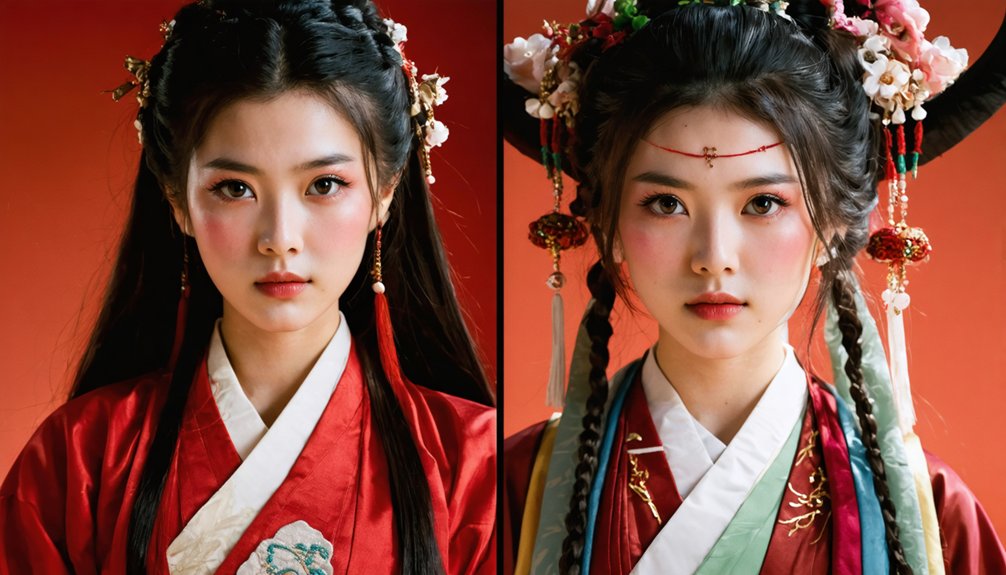
When you engage with ethnic attire in cosplay, the line between appreciation and appropriation hinges on your awareness of the cultural weight behind each garment.
You’re showing respect when you research the historical and ritual significance of the clothing, credit its origins openly, and engage with members of that community in meaningful dialogue.
You cross an ethical boundary, however, when you reduce sacred or identity-bearing symbols to aesthetic novelty, stripping them of their cultural context for spectacle or profit.
Defining Cultural Respect
The line separating cultural appreciation from appropriation in ethnic cosplay isn’t abstract—it’s rooted in intent, research, and relational accountability.
Cultural sensitivity demands you actively engage with a community’s history rather than extract its aesthetics superficially. Representation ethics require you to ask whose narrative benefits from your portrayal.
Defining cultural respect means you must:
- Credit the ethnic origin of every garment you reimagine
- Consult community members before finalizing design interpretations
- Distinguish ceremonial attire from everyday traditional clothing
- Avoid reducing complex cultural symbols to decorative elements
- Amplify indigenous voices rather than speaking over them
When you approach ethnic cosplay this way, you transform performance into genuine dialogue.
Respect isn’t passive acknowledgment—it’s active, informed engagement that honors living cultural traditions rather than fossilizing them for aesthetic consumption.
Crossing Ethical Boundaries
Respecting cultural frameworks gets you only halfway—you also need to recognize when those frameworks are being violated. Cultural sensitivity isn’t passive awareness; it’s active discernment.
When you adopt sacred symbols without understanding their ceremonial weight, you’ve crossed from identity exploration into extraction. Ethical representation demands that you interrogate your motivations honestly: Are you amplifying a community’s narrative, or consuming it for aesthetic gain?
Community engagement separates appreciation from appropriation in measurable ways. You’re appreciating when you’ve consulted cultural insiders, credited artisans, and shared platforms with heritage bearers.
You’re appropriating when you’ve bypassed those conversations entirely. The distinction isn’t about ethnic origin—it’s about process and accountability.
Innovation in cosplay demands creative courage, but that courage must include the discipline to ask harder questions before you design.
Why Minority Communities Actually Care About Cosplay Representation
For minority communities, cosplay representation isn’t just about aesthetics—it’s a direct assertion of cultural legitimacy in spaces that have historically marginalized their identities.
When you witness authentic costume authenticity paired with narrative storytelling, you’re observing communities actively reclaiming their historical connection.
Representation impact drives deeper cultural significance than outsiders typically recognize.
Consider why community pride matters:
- It validates identity exploration beyond stereotypical portrayals
- It transforms artistic expression into cultural documentation
- It challenges inclusivity challenges within mainstream cosplay spaces
- It facilitates cross cultural engagement through visible heritage
- It strengthens collective memory against erasure
You’re not simply watching someone wear a costume—you’re witnessing resistance, continuity, and innovation simultaneously.
Minority communities leverage cosplay as a dynamic platform where cultural survival intersects with creative reimagination.
How Ethnic Attire Drives Character Design Innovation
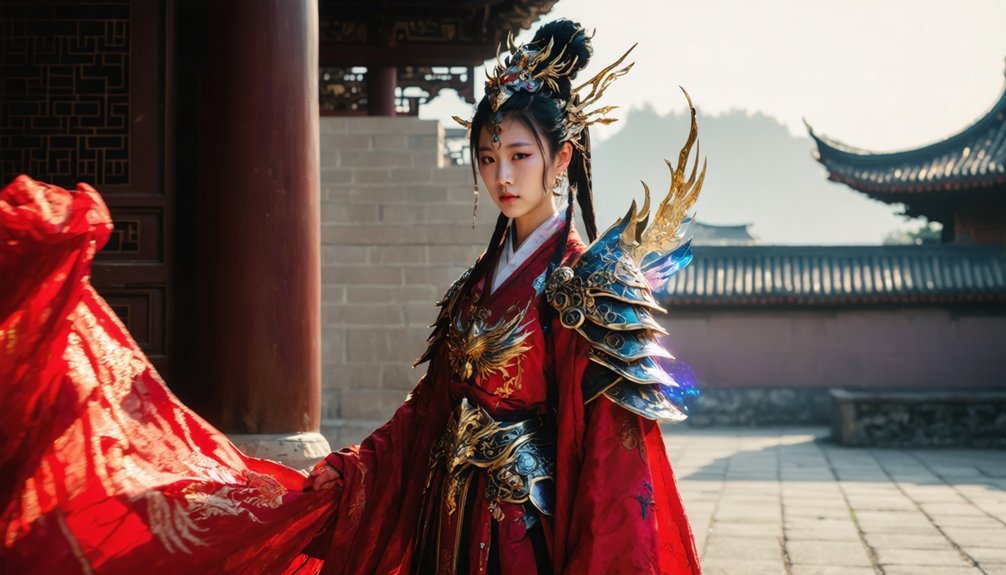
Dozens of distinct visual languages emerge when character designers draw from ethnic attire traditions, transforming what might seem like purely aesthetic choices into culturally encoded storytelling systems.
When you integrate cultural motifs into character design, you’re not decorating—you’re embedding narrative history directly into visual form. Each pattern carries lineage, ritual significance, and regional identity that generic fantasy aesthetics simply can’t replicate.
Design innovation accelerates when you push traditional silhouettes against modern materials, creating aesthetic fusion that honors origins while expanding possibilities.
Minority textile traditions—geometric Andean weaving, West African Kente patterning, Central Asian ikat dyeing—offer designers structural and symbolic vocabularies that Western design conventions haven’t exhausted.
You’re accessing untapped creative systems. The result isn’t imitation; it’s a sophisticated dialogue between historical craftsmanship and contemporary character-building methodology.
How Ethnic Cosplay Teaches Culture Better Than a Textbook
When you slip into a meticulously researched Hanfu or drape yourself in a reconstructed Yoruba agbada, you’re absorbing cultural grammar that no textbook chapter can replicate—you’re learning through embodied practice.
Wearing history is reading it—every stitch, fold, and drape a sentence no textbook dares to write.
Ethnic cosplay transforms visual education into immersive learning, activating historical context through design fusion and narrative exploration.
You’re not passively reading—you’re actively participating in cultural storytelling that drives community engagement and identity expression.
Ethnic cosplay delivers what textbooks can’t:
- Tactile understanding of garment construction techniques
- Direct artistic dialogue with living cultural traditions
- Emotional connection to ethnic heritage through embodiment
- Immediate visual literacy regarding symbolic pattern meanings
- Collaborative knowledge-sharing across diverse cosplay communities
This approach repositions learning as participatory rather than consumptive—making cultural knowledge visceral, memorable, and genuinely transformative for innovation-driven audiences.
The Growing Market for Culturally Inspired Cosplay Costumes
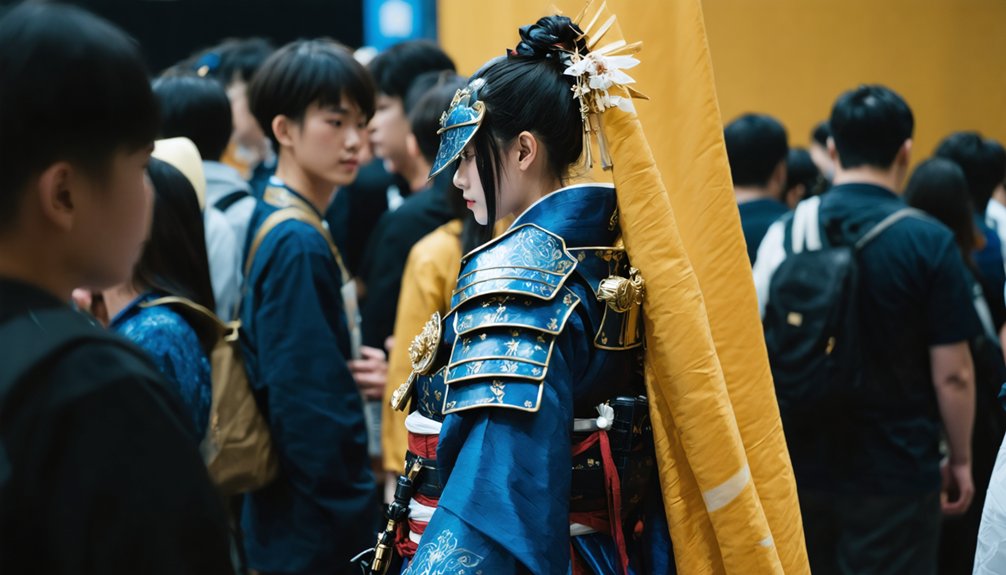
The market for culturally inspired cosplay costumes isn’t just growing—it’s restructuring how the global costume industry defines value and authenticity.
You’re witnessing a design evolution driven by consumer interest in cultural authenticity over generic fantasy wear. Market trends confirm that buyers increasingly reward costume craftsmanship rooted in real ethnographic traditions.
Global influences are reshaping supplier networks, pushing manufacturers to collaborate with artisans who understand heritage textiles intimately.
Community engagement accelerates this shift—cosplay collectives actively curate standards for accurate visual storytelling, pressuring brands to prioritize research over replication.
You’re no longer purchasing a costume; you’re investing in a cultural artifact.
This momentum signals that ethnic-inspired cosplay isn’t a niche trend—it’s becoming a foundational pillar of the industry’s commercial and creative identity.
Why Ethnic Attire Makes Ancient Myths Feel Alive Again
Beyond commercial momentum lies something more elemental—ethnic attire doesn’t just dress a myth; it resurrects it. When you embody a legend through culturally authentic garments, you’re activating mythical connections that generic fantasy costumes simply can’t replicate.
Cultural storytelling becomes visceral when the textile itself carries ancestral memory. You’re not performing myth—you’re channeling it.
Ethnic attire revitalizes ancient narratives by:
Ethnic attire doesn’t preserve ancient narratives—it resurrects them, transforming myth from archived curiosity into living cultural argument.
- Grounding abstract legends in historically verifiable visual languages
- Signaling cultural specificity that distinguishes one mythology from another
- Transforming passive folklore into active, embodied experience
- Connecting contemporary audiences to pre-colonial cosmologies
- Preserving ritual symbolism encoded within traditional patterns
Each stitch references a worldview. When you wear that worldview into a cosplay space, ancient myths stop being archived curiosities—they become living, breathing cultural arguments demanding modern engagement.
Frequently Asked Questions
Can Cosplay of Ethnic Attire Be Legally Protected Under Copyright Law?
You can’t always copyright ethnic attire, as traditional designs often lack individual authorship. You’ll navigate copyright infringement issues and cultural appropriation debates carefully, ensuring your innovative cosplay respects communal heritage while legally protecting original, creative reinterpretations you’ve personally developed.
What Mental Health Benefits Arise From Wearing Ancestral Attire in Cosplay?
When you wear ancestral attire, you’re actively reclaiming your cultural identity, enabling emotional expression, and fostering personal empowerment. You’ll experience profound community connection, reducing isolation while strengthening psychological resilience through embodying your heritage authentically within innovative cosplay spaces.
How Do Cosplay Judges Evaluate Authenticity in Ethnic Costume Competitions?
Judges weigh handcrafted tradition against modern innovation—you’ll find they assess cultural representation through historical textile accuracy, symbolic motifs, and construction techniques, while costume accuracy reflects your research depth into authentic ethnic garment details and ritual significance.
Which Sewing Techniques Are Most Suitable for Replicating Traditional Ethnic Fabrics?
You’ll find hand-stitching and weaving techniques most effective for replicating traditional ethnic fabrics. Prioritize authentic fabric selection—silk, linen, or wool—and employ culturally-specific sewing methods like smocking or embroidery to innovatively honor ancestral textile traditions accurately.
How Do Ethnic Cosplay Trends Differ Between Western and Eastern Conventions?
Like two rivers flowing differently, you’ll notice Western conventions prioritize cultural appreciation through fantasy fusion, while Eastern conventions navigate representation issues more intimately, reflecting deeper personal heritage connections that actively shape authentic, community-driven cosplay identities.
References
- https://www.youtube.com/watch?v=jJiWP764Mbk
- https://starstruckpanda.com/cosplay-and-traditional-cultural-attire/
- https://www.reddit.com/r/cosplayers/comments/1bmkmhd/is_it_okay_to_switch_a_characters_clothing_to_the/
- https://www.reddit.com/r/worldbuilding/comments/1tin22n/how_can_i_redesign_a_countries_traditional/
- https://www.youtube.com/watch?v=nUCnS93S8IE
- https://folklife.si.edu/magazine/cosplay-community
- https://worldfootprints.com/cultural-heritage/cultural-immersion-and-pop-culture-costuming-and-cosplay-while-traveling/
- https://www.mdpi.com/2571-9408/7/10/250
- https://cad-journal.net/files/vol_22/CAD_22(5)_2025_768-781.pdf
- https://pdfs.semanticscholar.org/6357/44c07cad0bb34b87ea0c4029f20841560cb8.pdf