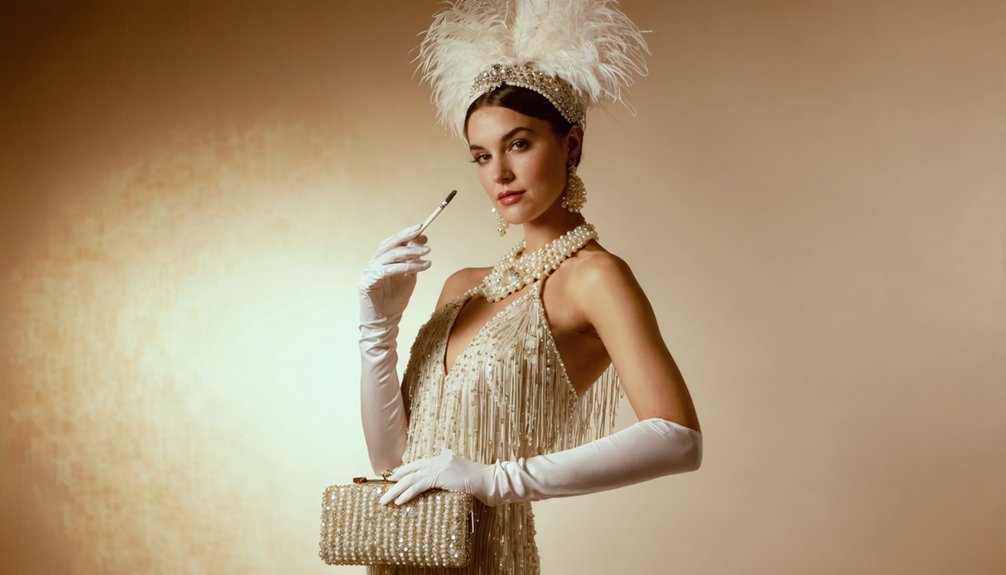
To cosplay a 1920s flapper authentically, you’ll need a drop-waist, knee-length dress in chiffon, silk, or satin, adorned with beading or fringe. Layer long pearl necklaces, add a jeweled headband, and carry a small beaded purse. Style your hair into a finger-waved bob, perfect a smoky eye with a cupid’s bow lip, and finish with T-strap heels and seamed stockings. Every detail matters, and there’s much more to uncover.
Key Takeaways
- Wear a drop-waist, knee-length dress in chiffon, silk, or satin with beading, sequins, or fringe for authentic movement.
- Accessorize with layered pearl necklaces, a jeweled headband worn low on the forehead, and a small beaded purse.
- Choose T-strap or Mary Jane heels in black, gold, or silver to complement the dress proportions accurately.
- Style hair into a short finger-waved bob secured with jeweled clips or beaded headbands for period accuracy.
- Apply smoky eyes, cupid’s bow red lipstick, thin-drawn eyebrows, and heavy blush for a dramatic 1920s makeup look.
What Makes a 1920s Flapper Look Authentic?
Authenticity is everything when cosplaying a 1920s flapper. You’ll need to master flapper fashion from the silhouette down to the smallest detail.
Nailing a 1920s flapper look demands total commitment, from the silhouette to every last carefully chosen detail.
Start with a drop-waist dress in chiffon, silk, or satin, featuring beading, sequins, or fringe that moves dynamically when you dance. Keep hems at knee length for historical accuracy.
Vintage styling demands you pair your dress with long pearl necklaces, a feathered or gemstone headband, and T-strap heels in gold, silver, or black.
Don’t overlook a small beaded purse and long gloves for a polished, period-correct finish.
Complete the look with a short finger-waved bob, smoky eyes, cupid’s bow red lips, and thin-drawn eyebrows.
Every element works together to build an undeniably authentic 1920s flapper aesthetic.
Choose the Right Flapper Dress Silhouette for Cosplay
When building your flapper cosplay, you’ll want to start with the defining feature of 1920s fashion: the drop-waist silhouette, which places the waistline at the hips rather than the natural waist.
You should choose lightweight fabrics like chiffon, silk, satin, or crepe, as these materials drape authentically and move fluidly during dancing.
Keep your hem at knee length to capture the era’s signature look while ensuring you’ve got the freedom of movement that made flappers iconic.
Drop-Waist Dress Basics
The drop-waist silhouette is the cornerstone of any authentic flapper look, so you’ll want to understand it before shopping for your cosplay dress. Unlike traditional waistlines sitting at your natural curve, the drop-waist falls at the hips, creating the signature boyish, elongated torso that defined 1920s flapper fashion.
This deliberate design shift wasn’t accidental — it revolutionized vintage trends by prioritizing freedom of movement over structured femininity.
When selecting your dress, look for a seam or decorative band sitting just below your hip bones. The skirt should fall straight or slightly flared from that point, hitting at or near the knee.
Fabrics like chiffon, silk, satin, and crepe drape beautifully within this silhouette, delivering the effortless, dynamic movement that made flapper dressing genuinely groundbreaking.
Fabric Selection Matters
Once you’ve nailed the drop-waist silhouette, fabric choice becomes your next decision — and it’s one that can make or break the authenticity of your look.
Flappers favored chiffon, silk, satin, and crepe for their lightweight drape and fluid movement on the dance floor. These materials catch light beautifully, enhancing beading and sequin embellishments with every step you take.
When selecting fabric patterns, gravitate toward geometric Art Deco motifs or subtle shimmer weaves that defined the era’s aesthetic.
For fabric colors, deep jewel tones like emerald, sapphire, and black dominated evening fashion, while softer pastels suited daywear.
Avoid stiff, heavy materials — they’ll kill the dynamic fringe movement that makes flapper cosplay so visually striking.
Choose wisely, and your dress will move exactly like the 1920s intended.
Hem Length Considerations
Hem length quietly dictated the entire social identity of a flapper’s wardrobe, so you’ll want to choose carefully. Understanding hem length history reveals that knee-length cuts weren’t arbitrary—they represented deliberate liberation from Edwardian floor-sweeping constraints.
For cosplay accuracy, hem length styles broke down by occasion. Daywear sat precisely at the knee, allowing unrestricted Charleston footwork and social movement. Evening dresses occasionally dropped slightly lower but never betrayed that signature silhouette.
You’re reconstructing a cultural statement, not just a costume.
Measure your hem against your actual knee placement before finalizing any dress purchase or construction. Deviations above or below that line immediately compromise historical authenticity.
Pair your correctly hemmed dress with T-strap heels to visually anchor the proportions exactly as original flappers intended.
Best Fabrics for an Authentic 1920s Flapper Dress
When building your flapper costume, you’ll want to prioritize lightweight fabrics that allow freedom of movement and capture the spirit of the era.
Silk and satin deliver that signature luminous sheen seen in Roaring Twenties evening wear, while chiffon offers an ethereal drape perfect for layered or embellished designs.
Crepe, by contrast, provides a matte, structured finish that suits daywear silhouettes and holds fringe detailing exceptionally well.
Lightweight Fabrics For Movement
Fabric choice makes or breaks a flapper costume, so prioritize lightweight, fluid materials like chiffon, silk, satin, and crepe that defined 1920s evening and daywear.
These vintage fabric types weren’t chosen arbitrarily — they directly supported the flapper fashion evolution toward freedom, mobility, and self-expression. You’ll want fabrics that catch the light dramatically while allowing unrestricted movement across the dance floor.
Chiffon offers a breezy, ethereal drape, while silk delivers refined luminosity. Satin creates the bold, glamorous sheen synonymous with Roaring Twenties sophistication.
Crepe provides subtle texture with excellent flow, making it ideal for drop-waist silhouettes. When you select materials that move naturally with your body, your costume transforms from simple dress-up into an authentic, living tribute to one of history’s most revolutionary fashion movements.
Silk And Satin Options
Silk and satin stand apart as the gold standard for authentic flapper dress construction, each bringing distinct qualities that defined 1920s eveningwear.
Silk benefits extend beyond surface beauty — it’s breathable, drapes effortlessly across the body, and moves with fluid precision during fast Charleston steps. Its natural fiber construction meant flappers stayed comfortable through late-night ballroom sessions.
Satin sheen delivers that unmistakable luminous finish you’ll immediately recognize from vintage photographs. Unlike silk, satin’s weave creates a reflective surface that catches light dramatically under chandeliers and stage lighting, amplifying beading and sequin embellishments.
You’ll find modern satin blends more affordable while still achieving that era-defining glossy appearance.
For cosplay purposes, choosing either fabric instantly elevates your silhouette from costume to historically credible tribute to the Roaring Twenties.
Chiffon Versus Crepe Fabrics
Chiffon and crepe each carved out distinct roles in 1920s flapper fashion, and understanding their differences helps you make smarter cosplay fabric choices.
Chiffon versatility made it a go-to material for layered overlays, floaty sleeves, and lightweight evening dresses that caught the light beautifully during dancing. Its sheer quality means you’ll need a matching slip underneath for full authenticity.
Crepe drape, by contrast, produces a heavier, more structured fall that hugs the drop-waist silhouette with elegant precision. It resists wrinkling better than chiffon, making it ideal for extended cosplay events.
If you want movement and ethereal lightness, choose chiffon. If you prioritize polished structure and durability throughout long evenings, crepe delivers that refined 1920s sophistication your costume demands.
Must-Have Flapper Accessories for a Complete Costume
To nail the flapper look, you’ll need accessories that are just as carefully chosen as the dress itself.
Flapper jewelry trends centered on long pearl necklaces, which became the era’s most iconic statement piece. Layer them boldly for authenticity.
Vintage hairstyle influences demand a jeweled headband or feathered fascinator worn low across the forehead.
Pair it with a short bob styled into finger waves using modern waving tools.
Complete your ensemble with T-strap heels in gold, silver, or black, and carry a small beaded or mesh purse for practicality.
Don’t forget long gloves for theatrical effect.
Add a feather boa or embroidered shawl for warmth and visual drama.
Every detail reinforces the era’s fearless, boundary-breaking spirit.
Style Your Flapper Bob With Finger Waves
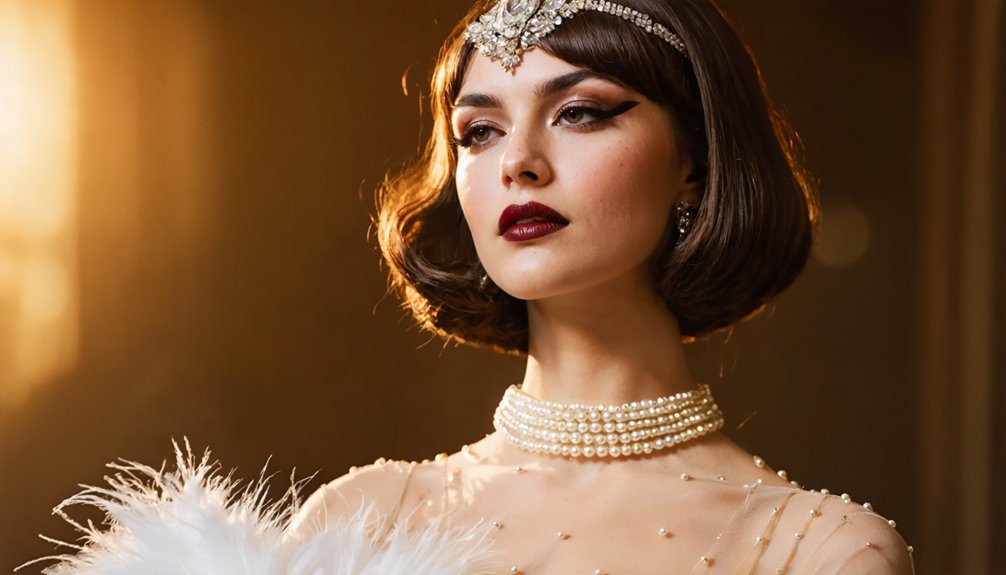
With your accessories locked in, your hairstyle becomes the next defining feature of an authentic flapper look. The classic bob hairstyle variations — from the sleek chin-length cut to the dramatic Eton crop — defined the era’s rebellious femininity.
Master finger wave techniques to achieve those signature soft, sculpted curves that photograph beautifully under event lighting. Start with damp hair and a firm-hold gel, then use a comb and your fingers to press alternating wave patterns along each section. Clip each wave in place and allow it to dry completely before removing the clips.
Jeweled clips and a beaded headband can then secure the finished style. Marcel waving tools recreate tighter, more defined shapes when you want maximum period accuracy.
Nail the Flapper Makeup Look Step by Step
Once your hair is set, flapper makeup transforms your look with equally bold intention.
Authentic vintage techniques demand precision and the right makeup tools to capture that iconic 1920s drama.
Follow these essential steps:
- Eyes: Apply dark, smoky shadow and define lids sharply for maximum theatrical depth.
- Lips: Shape red lipstick into a distinct cupid’s bow, the era’s most recognizable signature.
- Brows: Draw thin, arched brows low on the forehead to frame your expression authentically.
Finish with heavy blush across your cheekbones and set everything with pressed powder for that signature matte finish.
Carry powder for touch-ups throughout the event.
These vintage techniques, executed with quality makeup tools, deliver a historically grounded flapper aesthetic that’s instantly commanding.
Get Your Shoes and Stockings Period-Perfect
Completing your flapper look from the ground up means getting your footwear and hosiery exactly right. For shoe styles, you’ll want T-strap or Mary Jane heels in black, gold, or silver to capture authentic 1920s elegance.
These structured designs supported the energetic Charleston and foxtrot movements flappers performed nightly. Avoid modern pointed toes or platform soles, as both instantly break the period illusion.
Your stocking options depend entirely on the occasion you’re recreating. Choose black stockings for daytime events, reflecting working-class flapper practicality, while nude stockings better replicate evening sophistication.
Seamed hosiery adds a precise vintage detail that photography and close-up observation will reward. Pair your stockings with garter clips rather than modern elastic bands to maintain complete historical accuracy throughout your cosplay.
Finish the Look With Wraps, Gloves, and Feather Boas
Accessories like wraps, gloves, and feather boas aren’t afterthoughts—they’re the finishing layer that transforms a good flapper costume into a convincing one. Choosing the right wrap styles and boa colors elevates your authenticity considerably.
Consider these period-accurate options:
- Wraps: Elaborately embroidered shawls or faux fur stoles add warmth while maintaining visual drama consistent with 1920s eveningwear.
- Gloves: Long gloves complete the formal silhouette—wear them traveling to events, but remove them before eating or drinking, as etiquette dictated.
- Feather boas: Classic boa colors like white, black, and champagne gold complement most flapper dress palettes without overwhelming beading or fringe details.
Each accessory layer adds historical texture, signaling that you’ve researched the era rather than simply assembled a costume.
Where to Shop for Your Complete Flapper Costume
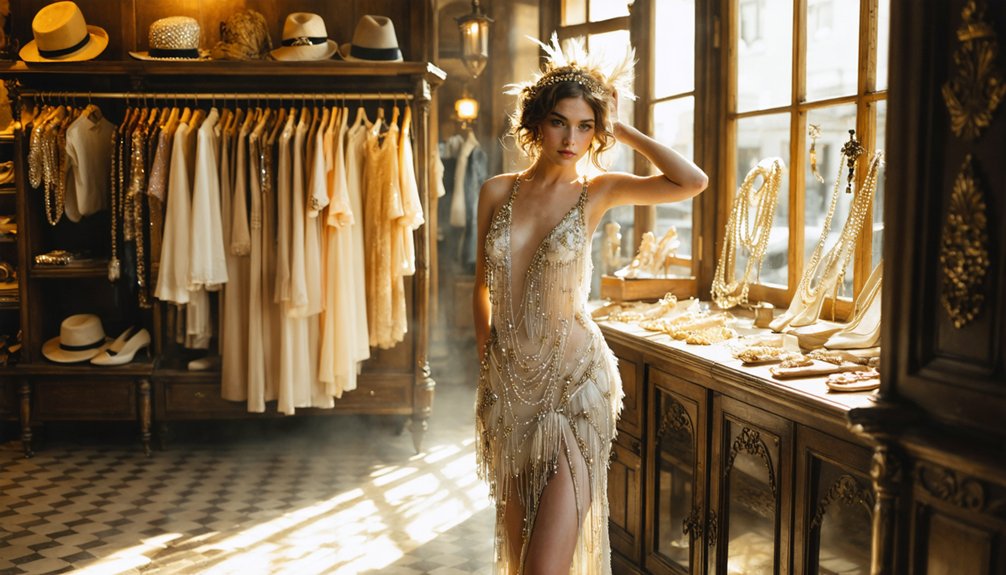
Where you shop shapes the authenticity of your final look as much as any individual piece you choose. Vintage shops remain your strongest resource for genuine 1920s-era garments, offering real beaded dresses, T-strap heels, and mesh purses that carry historical accuracy modern reproductions rarely match.
Vintage shops offer unmatched authenticity, stocking genuine beaded dresses and T-strap heels modern reproductions simply cannot replicate.
Browse local estate sales and consignment stores for unexpected discoveries.
Online boutiques expand your options considerably, connecting you with specialized sellers who stock drop-waist silhouettes, pearl necklaces, feathered headbands, and fringed dresses in one curated space.
Platforms listing over 5,000 results for “1920s accessories” prove demand is strong and inventory is vast.
Filter searches by era-specific details like finger-wave styling tools, jeweled clips, and sequin embellishments to refine your selections quickly and build a genuinely cohesive flapper ensemble.
Frequently Asked Questions
Can Men Cosplay as a 1920S Flapper for Themed Events?
Over 5,000 listings prove flapper fashion’s universal appeal! You can absolutely embrace gender expression by rocking a flapper cosplay. Don’t hesitate—wear the fringe, sequins, and pearls authentically, breaking boundaries just as flappers originally did.
Are Flapper Costumes Appropriate for Children’s Vintage Themed Parties?
You can absolutely adapt flapper costumes for children’s parties while respecting fashion etiquette. Choose longer hemlines, minimal embellishments, and playful fringe details that capture the nostalgic 1920s spirit, making children’s vintage-themed celebrations both stylish and age-appropriate.
How Do I Care for and Store Delicate Beaded Flapper Dresses?
Hand-wash your beaded dress care routine with cold water and mild soap. For storage techniques, you’ll want to wrap it in acid-free tissue, lay it flat, and keep it away from humidity to preserve those stunning vintage beads.
What Budget Should I Set for a Complete Flapper Cosplay Outfit?
You’ll want a $100–$300 budget for a complete flapper cosplay. Use this cost breakdown: dress, accessories, shoes, and makeup. Explore thrift options at vintage shops to capture that authentic Roaring Twenties charm affordably.
Can I Wear a Flapper Costume in Warm or Humid Weather Conditions?
Think Instagram-worthy comfort: you’ll thrive in warm weather by prioritizing flapper fabric choices like chiffon or silk. These breathable materials keep you cool, and summer styling tips like shorter layers guarantee you’re dancing all night effortlessly.
References
- https://www.jolly-vintage.com/collections/1920s-accessories
- https://www.amazon.com/Floraltop-Flapper-Costume-Accessories-Vintage/dp/B0DFM529HR
- https://flapperboutique.com/collections/flapper-accessories
- https://vintagedancer.com/1920s/flapper-outfit-costume-guide/
- https://www.ebay.com/b/Flapper-Costume-Reenactment-Theater-Accessories/82161/bn_7115364450
- https://www.youtube.com/watch?v=fHRpoO50Ju4
- https://www.amazon.com/flapper-accessories/s?k=flapper+accessories
- https://www.cappelsinc.com/product-category/halloween-store/costume-accessories/costume-accessories-shop-by-theme/costume-accessories-shop-by-theme-1920s-flappers-gangsters-of-roaring-20s/
- https://www.blossomcostumes.com.au/themes/old-fashioned-and-ancient-costumes/flapper-accessories.html
- https://www.vintagepost.com/products/1920s-flapper-costume-accessories