When cosplaying characters from other cultures, you must treat research as your foundation, not an afterthought. Study the character’s cultural symbols, textiles, and historical context before selecting a single material. Avoid reducing meaningful elements to aesthetic novelty, and never amplify surface markers for dramatic effect. Engage directly with community voices, cross-reference academic and insider sources, and credit your cultural references publicly. Everything else you need to do this right is ahead.
Key Takeaways
- Research a character’s cultural origins, symbols, and textile meanings thoroughly before selecting materials or beginning costume construction.
- Distinguish appreciation from appropriation by understanding the cultural framework behind design elements, not just borrowing their aesthetics.
- Avoid stereotypes and caricatures by reflecting a character’s actual cultural context rather than exaggerated or media-driven tropes.
- Never use sacred markings, skin-darkening techniques, or ceremonial designs as generic costume elements without proper cultural understanding.
- Engage directly with source communities, credit cultural origins in captions, and distinguish between creative interpretation and source material.
What Separates Cultural Appreciation From Appropriation in Cosplay
When you cosplay a character rooted in a culture that isn’t yours, the line between appreciation and appropriation comes down to intent, research, and execution.
Appreciation means you’ve studied the cultural framework behind the character’s design — its symbols, textiles, and historical context. Appropriation strips those elements of meaning and reduces them to aesthetic novelty.
Appreciation studies meaning. Appropriation borrows aesthetics. The difference lives in what you choose to understand.
Cultural sensitivity isn’t passive; it requires active engagement with source communities and critical evaluation of your design choices. Authentic representation demands that you preserve the character’s cultural integrity rather than reinterpret it through convenience or trend.
The distinction also lives in accountability. You credit the culture publicly, acknowledge what you don’t fully understand, and remain open to correction.
Intent matters, but execution is what the community actually sees.
Research the Character’s Cultural Background Before You Build
Accountability and execution only hold weight if they’re built on a foundation of genuine knowledge, which means your research has to happen before you pick up a needle or a paintbrush. Study the character’s origin story, not just their visual silhouette.
Identify what colors, patterns, and accessories symbolize within their specific cultural framework. Verify whether any elements carry sacred or ceremonial significance that restricts casual use. Cross-reference multiple sources, prioritizing community voices over media interpretations.
Cultural sensitivity isn’t a checkbox — it’s an ongoing analytical process that shapes every construction decision you make. Authentic representation demands that you understand the culture behind the design, not merely replicate its surface aesthetics.
Treat shallow visual research as insufficient, because meaning matters as much as appearance.
How to Avoid Stereotypes and Cultural Caricature in Cosplay
Stereotypes don’t emerge from malice alone — they emerge from shortcuts. When you cosplay a culturally rooted character, cultural stereotypes surface the moment you substitute research for assumption.
Caricature pitfalls appear subtly — in exaggerated accents performed for laughs, in sexualized reinterpretations that flatten complex identities, or in costume choices built on media tropes rather than lived cultural reality.
You avoid these traps by interrogating your design decisions. Ask whether each element reflects the character’s actual cultural context or a simplified version of it.
Mockery doesn’t require intent; it requires inaccuracy. Prioritize the original aesthetic over theatrical embellishment.
When you strip culture down to its most recognizable surface markers and amplify them for effect, you’ve crossed from appreciation into caricature — regardless of your admiration for the source material.
Makeup Boundaries You Should Know Before You Start
Makeup choices carry cultural weight that extends far beyond aesthetics, and you need to understand those boundaries before you pick up a brush. Makeup symbolism varies across cultures — facial markings, body paint, and ceremonial designs aren’t decorative options you can freely borrow. They’re often tied to identity, spiritual practice, or social status.
Cultural boundaries become critical when skin-darkening techniques mimic ethnic features, a practice widely recognized as offensive regardless of cosplay intent. Similarly, applying sacred markings as generic costume elements strips them of meaning and disrespects living communities.
Before finalizing your look, research what each design element represents within its source culture. Cross-reference community voices, not just visual references. Precision in your research directly shapes whether your makeup reads as informed appreciation or uninformed appropriation.
How Community Input Shapes Respectful Cosplay Choices
When you bring community voices into your design process, you shift from assumption to informed interpretation—a move that separates respectful cosplay from accidental offense.
You can find reliable cultural guidance through diaspora forums, ethnographic documentaries, cultural consultants, and direct dialogue with people who hold insider knowledge of the character’s source tradition.
Once you gather that input, you apply it structurally—letting it shape your material choices, symbolic elements, and presentation rather than treating it as a final approval checkbox.
Why Community Voices Matter
How you gather knowledge about a culture shapes the entire integrity of your cosplay. Relying solely on visual references strips away cultural nuances that communities themselves understand best. When you consult source communities directly, you’re accessing lived experience rather than filtered media representations.
Community advocacy actively corrects misrepresentation before it reaches convention floors. Cosplayers who engage with cultural insiders discover distinctions that external research simply can’t capture — which symbols carry sacred weight, which garments signal specific social roles, and which design choices cross into offensive territory.
You benefit practically from this dialogue. It sharpens your creative decisions, grounds your interpretations in accuracy, and builds credibility within cosplay spaces.
Treating community voices as primary sources rather than optional checkpoints fundamentally transforms cultural appreciation from passive admiration into informed, responsible craft.
Finding Reliable Cultural Guidance
Knowing that community voices matter is only half the equation — you also need to know where and how to find them. Start with culturally specific forums, documentaries, and academic panels where insiders discuss cultural symbolism on their own terms.
Follow artisans whose authentic craftsmanship preserves traditional methods — their work reveals meaning that surface-level research misses.
Attend cultural conventions or diaspora-led cosplay spaces where dialogue is active and accessible. When you engage directly, ask specific questions rather than broad ones; precision invites richer responses.
Cross-reference multiple community perspectives since cultures aren’t monolithic — one voice doesn’t represent the whole. Treat conflicting viewpoints as data, not noise.
Reliable guidance emerges from sustained engagement, not a single search. Build relationships with source communities before you finalize any design choice.
Applying Input To Design
Gathering community input only becomes meaningful once it actively reshapes your design decisions. You’re translating lived knowledge into visible craft choices. When insiders flag symbolic meanings behind traditional attire elements, those flags become your blueprint.
- A sash’s color carrying ancestral grief, not decoration
- Embroidery patterns encoding clan identity, not surface texture
- Headwear restricted to ceremonial roles, not fashion accessories
- Sleeve length signaling social status within the source culture
- Beadwork arrangements communicating specific spiritual protection
Each flagged element demands a concrete design response. You either incorporate it accurately, substitute it thoughtfully, or omit it entirely with intention. Passive acknowledgment isn’t enough. Community input should visibly alter your fabric choices, construction methods, and accessory decisions.
The final cosplay should reflect that consultation happened, not just that research occurred.
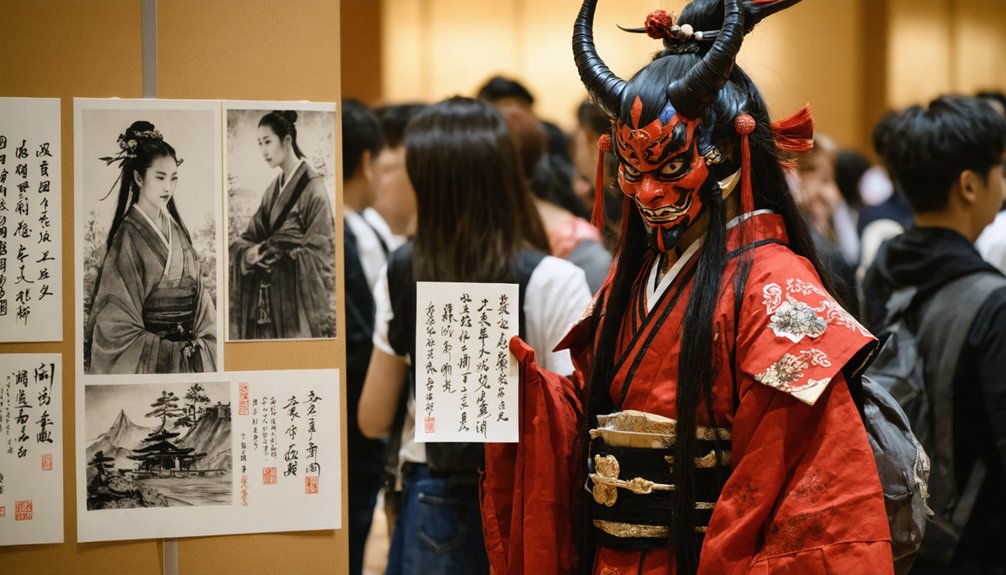
Sharing your cosplay publicly carries a responsibility that extends beyond tagging the franchise or character name. Cultural misrepresentation often begins not in the costume itself but in how you frame it afterward.
Authentic acknowledgment means naming the specific culture, tradition, or regional influence that shaped the design — not vague labels like “Asian-inspired” or “tribal.” In your caption or post notes, explain which design elements carry cultural meaning and why you chose to honor them accurately.
Credit living artisans or traditional garment sources when applicable. Distinguish clearly between your creative interpretation and the source material. This transparency signals respect to community members who recognize their heritage in your work.
Crediting culture isn’t a formality — it’s an active, visible commitment to informed appreciation over aesthetic extraction.
Creative Reinterpretations That Respect Cultural Roots in Cosplay
Creative reinterpretation becomes appropriation the moment cultural meaning gets sacrificed for aesthetic novelty. When you remix a culturally grounded character, you’re steering through living symbolism, not costume parts.
Preserving traditional symbolism within your creative vision signals genuine engagement rather than extraction.
- A gender-swapped Mulan cosplay retaining Han dynasty silhouettes and phoenix embroidery
- A futuristic Moana design keeping Polynesian tattoo patterns structurally intact
- A steampunk Pochahontas preserving Powhatan beadwork geometry within mechanical accessories
- A modern-AU Tiana cosplay honoring Louisiana Creole textile traditions through fabric selection
- A mash-up cosplay blending two culturally specific characters while keeping each culture’s symbolism visually distinct
You preserve cultural symbolism by treating it as load-bearing, not decorative. Innovation that respects origin strengthens the design; innovation that erases it simply rebrands extraction as creativity.
Research Habits That Keep Every Cosplay Culturally Grounded

Respectful reinterpretation only holds up when it’s built on a research foundation solid enough to distinguish load-bearing symbolism from surface aesthetics. Before constructing any culturally grounded cosplay, you need to trace a character’s traditional attire back to its origin community, not just its on-screen rendering.
Identify symbolic meanings embedded in color choices, textile patterns, and accessory placement, since these often carry ceremonial or social weight that visual reference alone won’t reveal. Cross-reference academic ethnographic sources against community-written perspectives to reduce interpretive blind spots.
Treat media adaptations as filtered versions, not primary sources. Prioritize insider documentation, cultural forums, and direct community dialogue when verifiable. Catalog your findings systematically so your design decisions remain defensible and traceable, ensuring innovation serves cultural integrity rather than overwriting it.
Frequently Asked Questions
Can Children Cosplay Culturally Specific Characters Without the Same Ethical Concerns?
Children don’t escape ethical representation concerns—you’re still responsible for guiding their cosplay with cultural sensitivity. Their age doesn’t neutralize impact; it amplifies your duty to model respectful, informed choices that honor the character’s cultural roots.
How Do Convention Organizers Handle Reported Cases of Offensive Cultural Cosplay?
Convention organizers typically enforce cultural sensitivity through ethical guidelines by investigating reports, warning or removing offenders, and updating dress codes. You’ll find they’re increasingly consulting cultural advisors to innovate fairer, more inclusive enforcement systems at modern conventions.
Does Purchasing an Official Licensed Costume Automatically Make Cultural Cosplay Respectful?
Purchasing an official licensed costume doesn’t automatically make your cosplay respectful. You still carry ethical considerations around cultural sensitivity—understanding symbolism, avoiding stereotypes, and honoring the culture’s meaning matters far beyond what licensing legally permits.
Are There Legal Protections Around Sacred Cultural Symbols Used in Cosplay?
Legal protections around sacred cultural symbols remain limited. You’ll find intellectual property law rarely shields indigenous heritage, making cultural sensitivity your primary ethical guide—not legislation—when steering through sacred symbols in cosplay contexts.
How Should Cosplayers Respond When Criticized for Their Cultural Costume Choices?
Words can cut deep—so when criticized, don’t deflect. You should listen actively, reflect on cultural sensitivity, acknowledge missteps, and commit to respectful representation by researching further and engaging directly with the community you’ve affected.
References
- https://starstruckpanda.com/celebrating-cultural-diversity-through-cosplay-representation/
- https://starstruckpanda.com/authentic-cultural-cosplay-representation/
- https://www.youtube.com/watch?v=H_f8Ix8p6Ng
- https://tokyo-cosplay.com/cultural-appropriation-vs-appreciation-in-cosplay/
- https://www.youtube.com/watch?v=qbOb8w9PiOA
- https://www.mmoday.com/the-ethics-of-cosplay-addressing-cultural-appropriation-and-respect/
- https://starstruckpanda.com/why-is-cultural-diversity-important-in-cosplay/
- https://starstruckpanda.com/why-is-cultural-sensitivity-important-in-cosplay/
- https://www.costume-shop.com/blogs/professional-blogs/the-importance-of-cultural-sensitivity-in-costumes
- https://www.thepopverse.com/cosplay-cultural-appropriation-cosplayers-costume