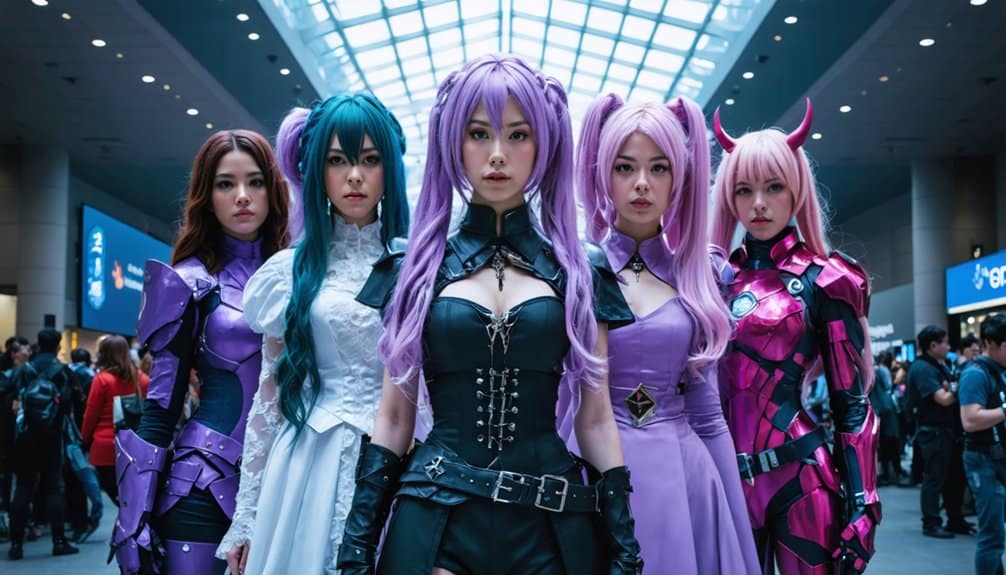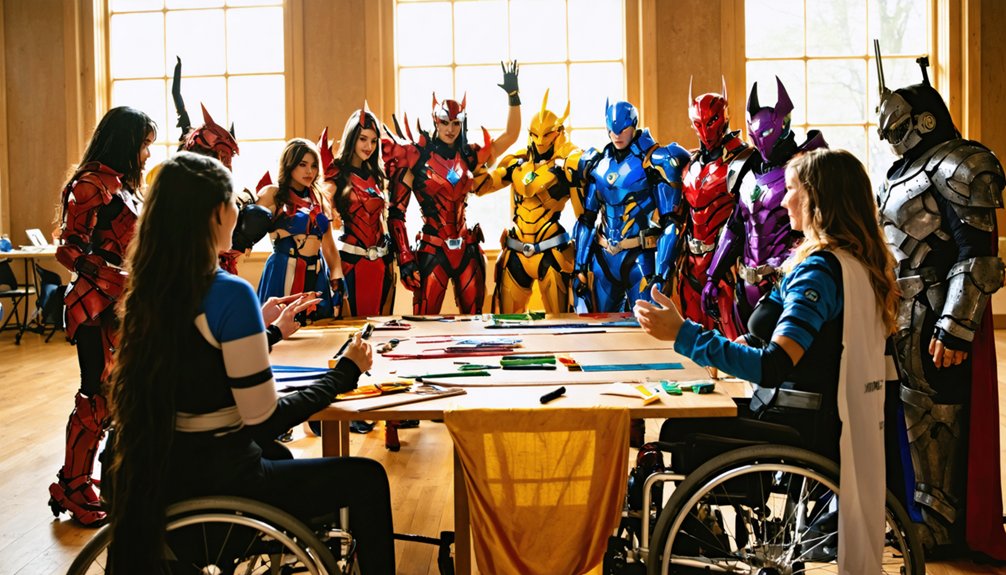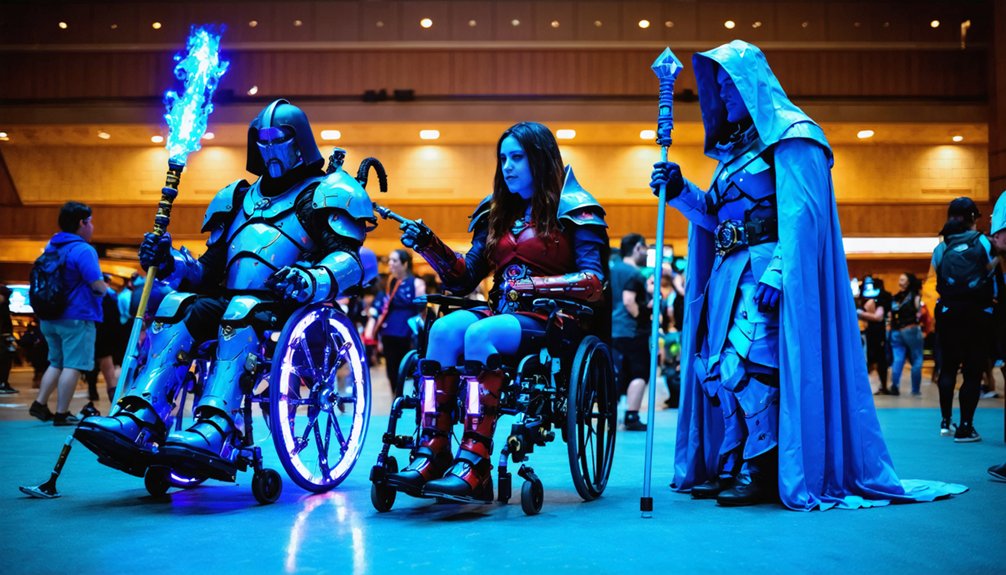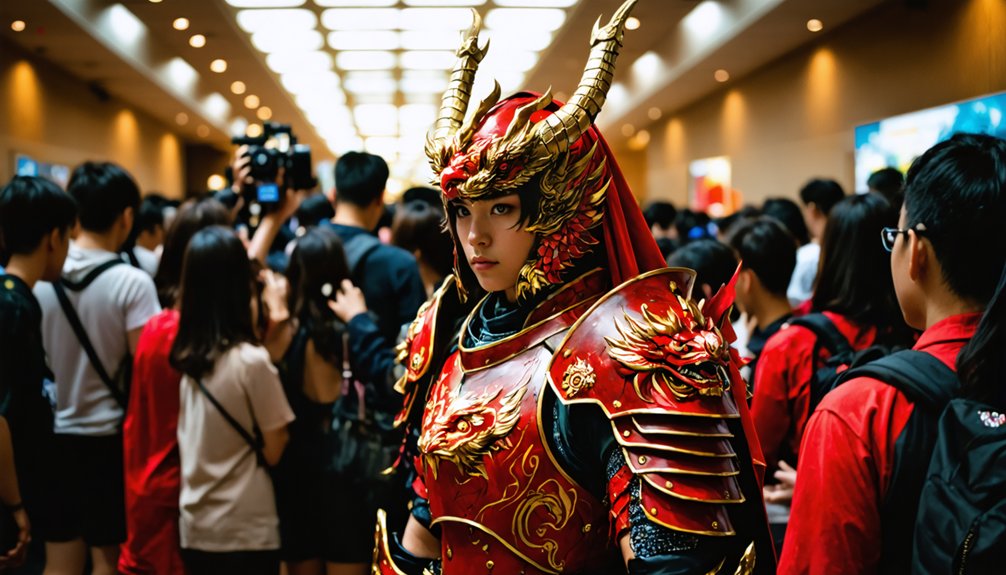
When you put on a cosplay costume, you’re transmitting a complex cultural signal that trained community members can decode instantly. Your costume communicates group allegiance, skill level, and narrative ownership simultaneously. It marks you as an insider or outsider, challenges gender norms, and can even function as political resistance. Material choices, accuracy, and adaptation all carry ethnographic weight — each decision revealing identity, belonging, and creative autonomy. Explore each layer further, and the full cultural vocabulary of cosplay becomes remarkably visible.
Key Takeaways
- Cosplay costumes signal group identity and belonging, marking in-group boundaries and differentiating dedicated fans from casual observers through costume accuracy.
- Costumes communicate cultural ownership, demonstrating that fans actively participate in expanding and reinterpreting narrative universes beyond original creators.
- Craftsmanship and material choices encode cultural fluency, positioning makers within community skill hierarchies and revealing creative investment and identity.
- Cosplay enables personal storytelling through the body, transforming physical features, gender expression, and identity into intentional, performative statements.
- Costumes worn publicly function as social commentary, signaling resistance, challenging stereotypes, and making ideological or political statements visible.
What Does a Cosplay Costume Actually Communicate?
When you wear a cosplay costume, you’re doing far more than imitating a fictional character — you’re broadcasting a layered set of cultural signals about identity, belonging, and social position. Every design choice carries costume symbolism, communicating gender expression, community affiliation, and even economic status through visible material decisions.
Comparatively, cosplay functions like religious or heritage dress — each element references a worldview or narrative allegiance. You’re not simply wearing fabric; you’re performing cultural representation, signaling which stories you claim ownership over and how you position yourself within fan communities.
Ethnographically, costumes also mark in-group boundaries, transforming convention spaces into readable social maps. When you adapt a character’s design, you actively reinterpret cultural meaning, shifting the costume from imitation into a precise statement about who you are.
How Cosplay Costumes Signal Fan Community Belonging?
When you wear a costume tied to a specific fandom, you’re doing more than referencing a character — you’re broadcasting group membership to everyone around you.
Shared characters function as a kind of social shorthand, instantly marking who belongs and who doesn’t within convention spaces and fan communities.
Your costume choice, in this sense, operates less like personal expression and more like a cultural signal, aligning you with a collective identity built around shared narratives and emotional investment.
Shared Characters Build Bonds
Stepping into a convention hall dressed as a beloved character, you’re doing more than wearing a costume—you’re broadcasting membership in a shared cultural world. Costume symbolism works as an instant language—fan participation becomes visible through recognizable design choices that signal alignment with specific narratives.
Shared characters create bonds by functioning as social infrastructure:
- They establish immediate recognition between strangers
- They mark collective investment in specific fictional universes
- They generate spontaneous collaborative interactions, like group photos
- They distinguish insiders from casual observers
- They reinforce community hierarchies through costume accuracy and craftsmanship
Across different fandoms, this pattern holds consistently: the costume isn’t just personal expression—it’s a cultural handshake. You’re participating in a living archive of shared storytelling, where dress actively constructs community identity rather than simply reflecting it.
Costumes Mark Group Identity
Beyond recognizing fellow fans, your costume does something more structurally significant—it marks you as a member of a specific cultural group, with boundaries that are actively maintained through dress. Costume authenticity functions as a gatekeeping mechanism; communities evaluate whether your construction, materials, and details meet established standards. Inaccuracies don’t just read as mistakes—they signal outsider status.
Character interpretation adds another layer. When you reinterpret a character through gender-bending, cultural adaptation, or stylistic innovation, you’re not simply deviating—you’re making a claim about creative ownership within the community. Some groups reward this flexibility; others enforce canon strictly.
Either way, your costume operates like a visible credential. It communicates affiliation, signals investment, and positions you within a hierarchy of recognition that’s constantly negotiated through collective participation.
What Cosplay Craftsmanship Communicates About Its Makers?
Cosplay craftsmanship does more than recreate a fictional character—it signals the maker’s technical fluency, cultural investment, and artistic identity. When you examine craftsmanship techniques closely, you’re reading a personal archive of skill, intention, and cultural literacy.
Material symbolism deepens this further—fabric weight, surface finish, and structural precision each carry meaning beyond aesthetics.
Your costume communicates:
- Skill hierarchy — construction quality positions you within community expertise rankings
- Cultural fluency — accurate material choices signal source-text literacy
- Creative autonomy — deviations reveal deliberate artistic reinterpretation
- Economic strategy — material substitutions demonstrate resourceful problem-solving
- Emotional investment — finishing details reflect personal commitment to the character
Craftsmanship, then, functions as a silent biography—encoding your values, competencies, and relationship to both the fictional source and the broader cosplay community.
How Cosplay Challenges Gender Norms?
Where craftsmanship encodes personal identity, gender performance extends that encoding further—into the body itself.
When you choose a costume that defies your assigned gender, you’re using costume symbolism to disrupt expectations rather than reinforce them. Cosplayers regularly gender-bend characters, recasting masculine figures as feminine and vice versa, transforming the costume into active social commentary.
This practice isn’t accidental. You’re leveraging gender expression as a deliberate communicative tool, making visible what everyday dress often suppresses.
Ethnographically, these choices cluster around conventions where deviation becomes normalized, even celebrated.
Comparatively, such disruptions mirror broader fashion activism, where clothing challenges binary categorization.
The costume, then, functions less as imitation and more as intervention—a wearable argument that gender categories remain fluid, constructed, and continuously open to renegotiation.
The Body Confidence Cosplay Costumes Put on Display
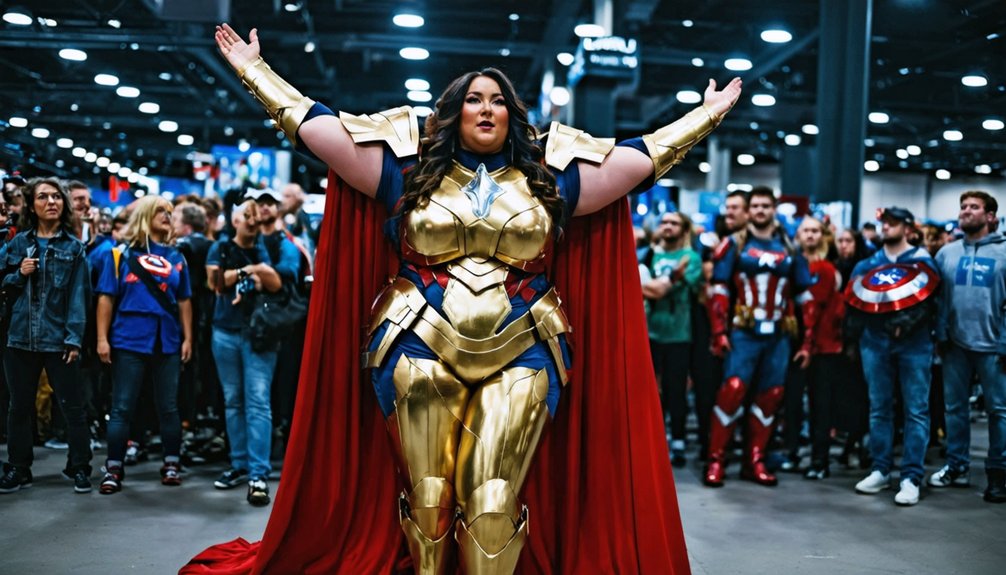
When you step into a cosplay costume, you’re not just embodying a character—you’re actively reclaiming authority over how your body is seen and interpreted.
Cosplay creates conditions where you can present body features—scars, size, skin—that everyday social norms often pressure you to conceal, making visibility itself a cultural statement.
Across convention spaces, you’ll find that character embodiment functions as a confidence mechanism, one that comparative ethnographic observation consistently links to self-presentation practices otherwise avoided outside the cosplay context.
Costumes Reclaim Body Narratives
For many cosplayers, the costume isn’t just a character tribute—it’s a deliberate reclamation of how their body is seen and interpreted. Through personal expression and cultural symbolism, you can reshape the narrative your body carries in everyday spaces.
Costumes become active tools for redefining visibility:
- Exposing scars or skin conditions through character-accurate designs challenges medical stigma
- Adapting costumes to non-normative body sizes rejects industry-standard character representation
- Selecting characters with matching cultural or racial features asserts representational legitimacy
- Modifying gender-coded costumes disrupts assumptions about who a character can embody
- Incorporating disability-specific adaptations transforms accessibility into intentional aesthetic choice
Each decision communicates a counter-narrative. You’re not simply wearing a costume—you’re authoring how your body exists within shared cultural space.
Visibility Beyond Everyday Norms
Cosplay creates a performance space where body confidence operates by different rules than everyday social environments. When you wear a costume, you’re engaging in fashion innovation that restructures how your body gets read socially.
Ethnographic accounts consistently show cosplayers presenting body features — scars, size, skin, disability — that everyday dress actively conceals. The costume shifts the frame from personal vulnerability to personal storytelling, transforming what might feel exposed into something intentionally performed.
Compared to street fashion, cosplay conventions establish alternative visibility norms where creative commitment outweighs conformity pressure. You’re not simply dressing a body; you’re authoring a statement about what that body can communicate.
This reframing makes cosplay a measurable site where social norms around appearance get actively tested and renegotiated.
Confidence Through Character Embodiment
Embodying a character shifts the psychological relationship you have with your own body in ways that everyday dress rarely achieves. Through personal expression and artistic craftsmanship, cosplay lets you present your body on your own terms.
Character embodiment builds confidence by:
- Reframing how you perceive physical features typically avoided in public
- Allowing gender presentation that everyday dress codes suppress
- Transforming scars, size, or ability markers into visible, intentional statements
- Grounding self-image in creative authorship rather than social expectation
- Separating body value from conventional appearance standards
Comparative ethnographic observation across conventions consistently shows cosplayers reporting heightened self-acceptance. The costume becomes a structured permission system, enabling body visibility you’d otherwise negotiate against cultural pressure.
Character and self merge into a redefined, confident presence.
The Cultural Heritage Coded Into Cosplay Costumes
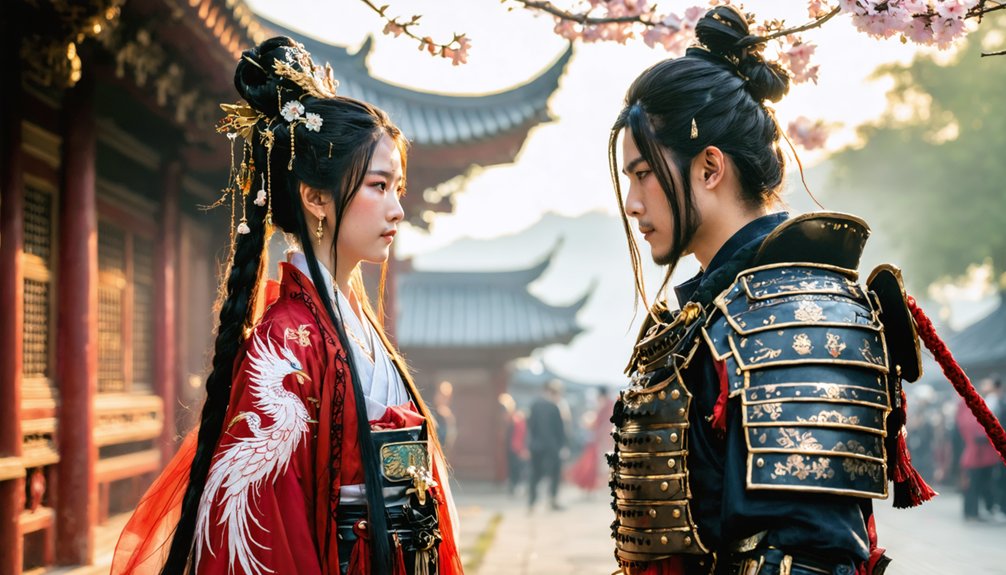
When cosplayers choose to recreate characters through culturally specific costume elements—head coverings, sacred motifs, traditional textiles, or historically grounded jewelry—they’re encoding layers of cultural heritage into their performance. Each deliberate material choice activates cultural symbolism, transforming costume into a readable archive of identity, belief, and worldview.
You’ll notice this most clearly when cosplayers adapt characters to reflect their own backgrounds—modifying silhouettes, fabric patterns, or accessories to signal authentic heritage representation. These adaptations don’t dilute the source character; they expand it, layering personal and communal history onto fictional frameworks.
Comparative analysis across cosplay communities reveals that costume accuracy often functions ethnographically—documenting living cultural traditions through embodied performance. When executed thoughtfully, these choices teach context, challenge homogenized representation, and position cosplay as a dynamic site of cross-cultural dialogue.
Where Cosplay Appreciation Ends and Appropriation Begins
That archive of heritage representation carries real stakes—because encoding cultural symbolism into costume doesn’t automatically constitute respect. You cross ethical boundaries when costume use extracts meaning without acknowledging origin. Cultural boundaries aren’t decorative—they’re structural, protecting living communities from commodification.
Distinguishing appreciation from appropriation requires examining:
- Intent vs. impact: Your respectful motivation doesn’t neutralize community harm
- Power dynamics: Who profits from wearing whose culture matters
- Sacred vs. secular elements: Ceremonial items carry weight that fashion context erases
- Community consent: Representation without consultation signals extraction, not homage
- Accuracy vs. caricature: Distorted cultural elements reinforce stereotypes rather than challenge them
You’re not just wearing a costume—you’re participating in a broader negotiation between fan creativity and cultural accountability.
How Cosplay Becomes Political Statement and Social Critique?
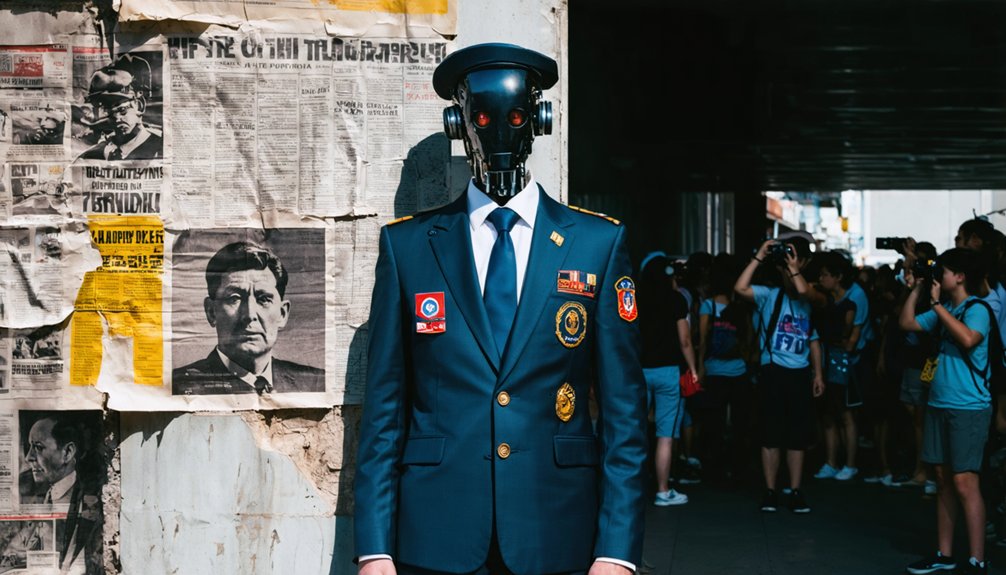
When you wear a costume into a public space with deliberate political intent, you transform it from fan expression into social commentary.
Across documented protests, participants have used character dress to satirize authority, highlight rights restrictions, and make ideological positions visible through recognizable imagery.
You can trace this pattern comparatively across cultures where costumed figures appear in demonstrations, signaling that dress functions not only as identity performance but as a vehicle for structured dissent.
Costumes as Political Protest
How does a fictional costume cross into the territory of political protest? When you wear a character’s identity into a real-world demonstration, costume symbolism shifts from entertainment into activism. Craftsmanship recognition matters here too—a well-constructed costume commands attention, amplifying your message.
Cosplayers have strategically deployed fictional dress to challenge authority, expose contradictions, and demand rights. Consider what costumes communicate in protest spaces:
- Handmaid’s Tale robes signal opposition to reproductive rights restrictions
- Superhero suits reframe citizen power against institutional control
- Gender-bent characters challenge legislative attacks on identity
- Villain costumes satirize political figures through recognizable imagery
- Dystopian uniforms draw direct parallels to contemporary policy failures
You’re not just wearing fiction—you’re weaponizing narrative to make structural critique visible, embodied, and undeniably public.
Challenging Norms Through Dress
Political protest represents one arena where cosplay disrupts authority, but the norm-challenging work of costume extends far beyond demonstration spaces into everyday social negotiation. When you adapt a character’s design to reflect your gender identity, body size, or cultural background, you’re participating in fashion evolution—reshaping what representation looks like from the ground up.
Costume symbolism operates quietly but powerfully here; altered silhouettes, exposed scars, and gender-bent interpretations each communicate resistance to dominant social scripts. You’re not merely imitating fiction—you’re rewriting it.
Cosplay becomes ethnographic evidence of how communities negotiate belonging, visibility, and critique simultaneously. Comparative analysis across conventions reveals consistent patterns: cosplayers actively use dress to challenge race, ability, and gender expectations, transforming costume into a precise instrument of social commentary.
Why “Cosplay Is Not Consent” Is Its Own Cultural Message?
The slogan “Cosplay Is Not Consent” does more than address harassment — it functions as a distinct cultural message embedded within cosplay’s broader communicative framework. Like urban fashion’s historical influence on reclaiming bodily autonomy in public spaces, this slogan reframes costume as expression, not invitation.
You’ll notice it communicates several layered meanings simultaneously:
- Costume choice signals identity, not accessibility
- Dress doesn’t override personal boundaries or social contracts
- Community standards can be codified through collective language
- Slogans function as wearable policy within subcultural spaces
- Visibility of the message strengthens in-group accountability
When you analyze this phrase ethnographically, it mirrors how marginalized groups have historically used dress-based declarations to assert rights. It’s not just protest — it’s cultural infrastructure, actively reshaping how cosplay communities negotiate consent, safety, and belonging.
When dozens of cosplayers embody characters from the same fictional universe at a single convention, something ethnographically significant occurs — collective performance transforms private fandom into shared cultural ownership.
You’re no longer watching isolated individuals dress up; you’re observing a community actively reauthoring a narrative. Fan collaboration functions here like ritual co-creation, where character ownership shifts from corporate intellectual property toward communal interpretation.
Comparative ethnographic observation reveals that groups cosplaying the same franchise develop shared visual vocabularies, negotiating costume accuracy, deviation, and innovation collectively.
These micro-negotiations mirror how oral cultures transmit and modify stories across generations.
When you participate in or witness this dynamic, you recognize that fictional worlds don’t belong exclusively to their creators — they belong to those who embody, extend, and collectively animate them.
Frequently Asked Questions
How Does Cosplay Costume Cost Affect Social Status Within Fan Communities?
You’ll find that costume authenticity signals your position within a social hierarchy—high-cost, detailed builds earn recognition and cultural capital, while budget alternatives may mark outsider status, revealing how economic investment shapes community belonging and peer evaluation.
Can Cosplay Costumes Influence Mainstream Fashion Trends Over Time?
“Art imitates life”—you’ll find cosplay actively shapes mainstream fashion trends. It pushes fashion symbolism and cultural identity into everyday wear, as designers borrow bold aesthetics, gender-fluid silhouettes, and subcultural codes from convention floors into commercial collections.
How Do Online Platforms Change the Cultural Messages Cosplay Conveys?
When you share cosplay online, you’re amplifying virtual identity across global audiences, reshaping cultural authenticity debates. You’ll notice platforms compress local nuance, yet they simultaneously democratize who’s seen, heard, and culturally represented within cosplay’s evolving visual language.
Do Children and Adults Communicate Different Messages Through Cosplay Costumes?
Over 60% of young cosplayers mirror heroes, signaling child identity formation through aspiration. You’ll notice adults shift toward adult expression, using costumes to critique norms, reclaim identity, and communicate complex social, political, and personal narratives beyond simple character imitation.
How Does Anonymous Cosplay Differ Culturally From Identity-Linked Costume Performance?
When you embrace anonymity preservation, you shed personal markers, letting the character’s cultural identity speak. In identity-linked performance, you’re asserting selfhood through costume, merging your real social narrative with the fictional one you’re embodying.
References
- https://folklife.si.edu/magazine/cosplay-community
- https://www.vivianasimos.com/incidental-mythology/cosplay-dressing-identity
- https://en.wikipedia.org/wiki/Cosplay
- https://dl.digra.org/index.php/dl/article/download/658/658
- https://www.facebook.com/groups/1058113398594001/posts/1321671202238218/
- https://starstruckpanda.com/cultural-symbolism-in-cosplay-costumes/
- https://journals.sagepub.com/doi/10.1177/17499755241279495
- https://www.mmoday.com/how-to-incorporate-cultural-symbolism-into-your-cosplay-designs/
- https://papers.iafor.org/submission72877/
- https://medium.com/@thegaminganthropologist/a-brief-analysis-of-the-cultural-history-of-cosplay-an-anthropological-perspective-deffcaac3524