To tame a frizzy cosplay wig, you’ll want to start by detangling with a wide-tooth comb, working from ends to roots. Wash synthetic wigs in cold water with fabric softener to revive tired fibers. On event day, a quick dryer sheet swipe kills static fast. Store your wig on a stand covered in satin to prevent future frizz. Master these techniques, and every section below opens even more precision for flawless cosplay results.
Key Takeaways
- Detangle frizzy wigs using a wide-tooth comb, starting from the ends upward, after pre-separating major knots with your fingers.
- Soak synthetic wigs in cold water with fabric softener to revive fibers and make styling significantly easier afterward.
- Use low-heat flat iron settings on small sections, always testing a hidden area first to prevent melting.
- Combat event-day static by rubbing a dryer sheet over the wig and smoothing flyaways with your fingers.
- Store wigs on a stand covered in satin or silk to prevent friction, compression, and future frizz.
How to Detangle a Frizzy Wig Without Breaking It
Before you touch a single strand, grab a wide-tooth comb — it’s your best defense against breakage and static buildup. Low-friction tools preserve fiber conditioning by reducing the mechanical stress that causes synthetic strands to split or fray prematurely.
Next, apply smart sectioning techniques: clip the wig into manageable panels and work each one independently. This isolates problem areas and prevents you from dragging tangles through already-smoothed fibers.
Always start combing from the ends and work upward toward the roots — never the reverse.
Avoid brushes entirely during this stage. Bristles generate friction that amplifies frizz and creates flyaways rather than eliminating them.
Use your fingers to pre-separate major knots before introducing the comb, keeping your movements deliberate, controlled, and targeted for maximum efficiency.
Quick Fixes for Static and Flyaways on Event Day
When event day arrives and static starts pulling your wig’s fibers in every direction, you’ve got fast, effective options that don’t require a full restyling session. Start by rubbing a dryer sheet lightly over the surface to discharge built-up static instantly.
A dryer sheet rubbed lightly over your wig instantly discharges static before it ruins your event day look.
Follow with a water-based detangler mist to restore slip and weight to flyaways. Silicone-based detanglers work even better, acting as a lubricant that keeps synthetic strands controlled throughout the day.
Smooth remaining flyaways with your fingers rather than a brush, which only amplifies friction. Strategic hair accessories like bobby pins or decorative clips can anchor problem sections while complementing your cosplay aesthetic.
For persistent flyaways near the hairline, a minimal amount of styling gels pressed lightly with fingertips locks fibers flat without buildup or stiffness.
How to Wash a Frizzy Synthetic Wig Back to Life
Even the most stubbornly frizzy synthetic wig can recover with the right soak—and the process is simpler than you’d expect.
Fill a basin with cold water, then add a small amount of laundry detergent and fabric softener. Submerge your wig completely and let it soak for at least 30 minutes—overnight for severe damage.
Cold water preserves color matching integrity by preventing dye bleed or fiber discoloration that warm water can trigger.
After soaking, rinse thoroughly under cold running water to remove residue and restore softness.
Then air-dry on a wig stand to maintain shape.
Once dry, your wig styling options expand dramatically—fibers respond better to combing, heat tools, and finishing sprays after a proper soak revival than before.
How to Safely Use Heat on a Frizzy Cosplay Wig
Heat is one of the most effective tools for taming frizzy synthetic fibers—but only if you use it correctly. Before applying any heat, test a small hidden section first—synthetic fibers can melt irreversibly if overheated, making heat safety non-negotiable.
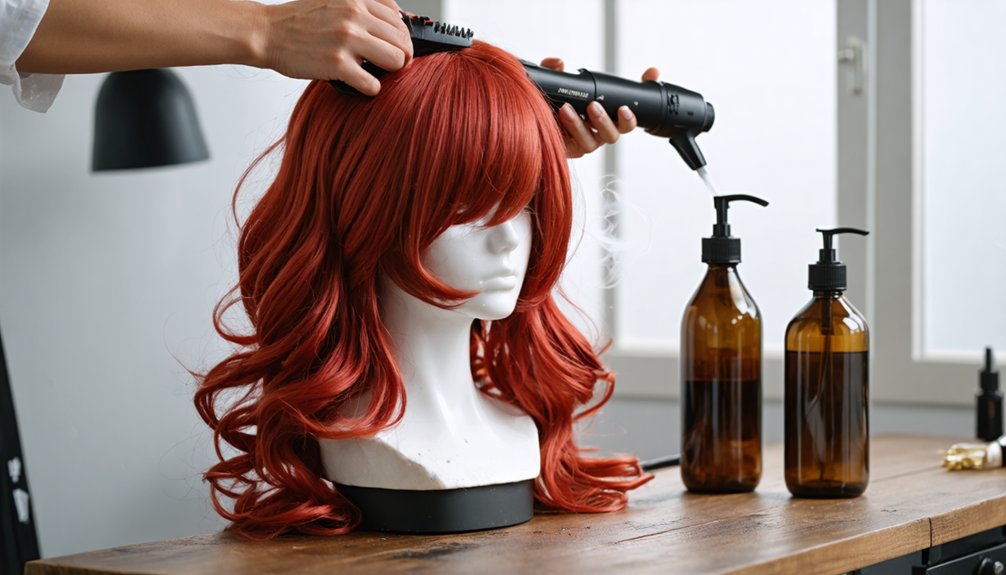
Work in small sections using a flat iron set to low heat, ensuring even contact across all strands. A steamer is another excellent option, often outperforming flat irons by delivering moisture alongside controlled warmth.
Both methods smooth frizz efficiently without the aggressive friction of brushing.
After treating each section, smooth flyaways with your fingers rather than a brush. This preserves your progress and keeps static low. Controlled, methodical heat application transforms damaged synthetic fibers into polished, convention-ready strands every time.
How to Store Cosplay Wigs So Frizz Stays Gone
Proper storage is what separates a wig that stays convention-ready from one that returns to a tangled, frizzy mess. After all your heat work and color correction efforts, poor storage undoes everything instantly.
Proper storage is the final step that keeps convention-ready wigs from reverting to a tangled, frizzy nightmare.
Follow these three non-negotiables:
- Mount your wig on a wig stand — hanging fibers retain their shape and prevent compression-related frizz from reforming overnight.
- Cover it with satin or silk — cotton creates friction that destroys synthetic strands and disrupts accessory placement you’ve already perfected.
- Pin styles loosely — tight tension distorts the fiber structure permanently, forcing you to restart your entire smoothing process.
Never fold wigs into bags or stuff them into drawers. Treat storage as part of your cosplay system, not an afterthought, and your results will last.
Frequently Asked Questions
Can I Use Regular Hair Products on My Synthetic Cosplay Wig?
Sure, drench it in hair serums meant for real hair—what could go wrong? Actually, skip that. You’ll want silicone-based detanglers instead, avoid heat styling unless it’s wig-safe, and always test products on hidden sections first!
How Do I Fix Frizz That Is Spread Across the Entire Wig Cap?
For full-cap frizz management, soak your wig overnight in cold water, laundry detergent, and fabric softener! This wig smoothing method revives every fiber evenly. Afterward, rinse cold, air-dry on a stand, and mist with silicone-based detangler for sleek results!
Is It Safe to Wear a Cosplay Wig in Humid or Rainy Weather?
You can wear your wig in humid or rainy weather, but it’ll challenge wig durability! Moisture amplifies frizz fast. Factor in weather considerations by applying silicone-based detangler beforehand—it repels humidity and keeps synthetic fibers sleek longer!
How Long Does a Synthetic Wig Typically Last Before Frizzing Permanently?
While quality varies, you’ll typically get 1–3 years before permanent frizz sets in—but don’t accept that timeline! Smart wig maintenance and proactive frizz prevention strategies like proper storage and low-friction handling can substantially extend your wig’s lifespan.
Can a Severely Melted Synthetic Wig Ever Be Fully Restored?
Unfortunately, you can’t fully restore a severely melted synthetic wig! Heat styling and wig dyeing won’t reverse deformed fibers. Trim the damaged sections, salvage what’s intact, and embrace innovative upcycling techniques to creatively repurpose your wig’s remaining potential!
References
- https://www.reddit.com/r/CosplayHelp/comments/1j1s8sv/how_to_make_wig_less_frizzy/
- https://www.epiccosplay.com/blogs/wig-tips/wig-frizz
- https://www.youtube.com/watch?v=9JHvSeK5_cU
- https://www.youtube.com/watch?v=gT3jvDtQx4c
- https://www.youtube.com/watch?v=no0vXreHt3M
- https://www.youtube.com/watch?v=0P9pvxxzuQ8
- https://www.reddit.com/r/CosplayHelp/comments/1jyrijj/wig_frizziness/
- https://beautynexuspro.com/hair-care/how-to-style-your-wig-cosplay