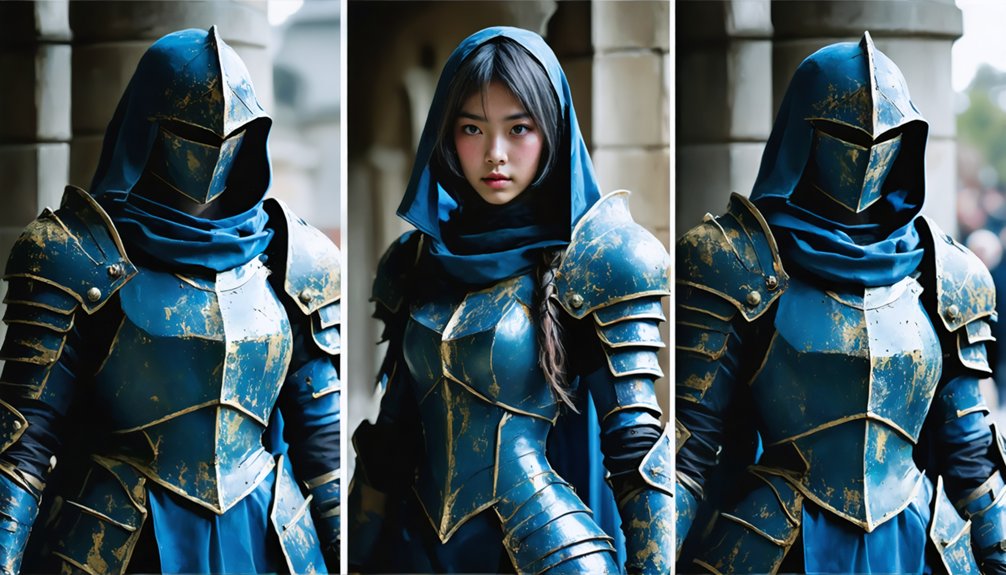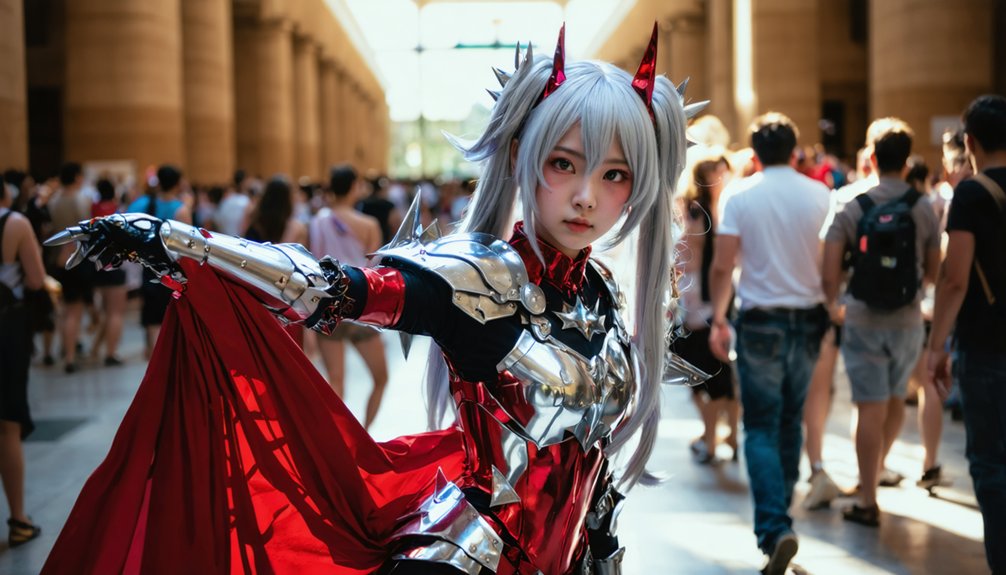
Showcasing personality through character cosplay means going beyond the costume to embody every movement, expression, and reaction authentically. You’ll want to match characters to your natural energy, study source material deeply, and rehearse signature body language until it feels instinctive. Practice facial micro-expressions, integrate props naturally, and simulate fan interactions before events. Reviewing footage sharpens your performance over time. The tips ahead will transform your portrayal from surface-level to genuinely unforgettable.
Key Takeaways
- Choose characters that naturally match your temperament and energy, as authentic alignment makes portrayals more convincing and recognizable to audiences.
- Study source material thoroughly to understand character motivations, enabling accurate body language, speech patterns, and emotional responses.
- Rehearse signature poses, gestures, and facial expressions until instinctive, ensuring micro-details consistently communicate your character’s distinct personality.
- Integrate props and costumes as active storytelling tools, reinforcing character identity through purposeful, natural interaction with accessories.
- Simulate fan interactions beforehand, building scripted responses and emotional resilience to maintain immersive, authentic character portrayal under pressure.
Start With a Character Who Matches Your Natural Energy
Choosing a character who already mirrors your natural energy gives your performance an authentic foundation that no amount of rehearsal can fully manufacture. When your temperament aligns with a character’s core traits, emotional depth emerges organically rather than feeling performed. You’re not mimicking someone foreign to you — you’re amplifying a version of yourself that already exists.
Start by mapping your behavioral tendencies against potential characters. Are you naturally reserved, intense, or spontaneous? That self-awareness becomes your casting guide. Background storytelling also matters here — characters whose histories resonate with your lived experiences allow you to draw from genuine emotion rather than imitation.
This alignment creates sharper, more convincing portrayals that audiences immediately recognize. The right match doesn’t just make cosplay easier; it makes it undeniably real.
Study Your Character Cosplay’s Personality Beyond the Costume
Once you’ve found a character who matches your natural energy, the real work begins — and it goes far deeper than the costume. Dig into the source material with intention. Study every scene, every reaction, every line of dialogue. You’re not just collecting aesthetic references — you’re mapping emotional depth.
Ask yourself what drives this character. Their motivational cues shape how they move, speak, and respond under pressure. Does your character lead with confidence or carry quiet hesitation? Do they soften around allies or stay guarded?
These behavioral layers transform your portrayal from surface-level imitation into something genuinely compelling. When you understand *why* your character acts the way they do, your body language, expressions, and interactions naturally fall into alignment.
Build Body Language That Reflects Your Character Cosplay Role
With your character’s personality mapped out, it’s time to translate that inner understanding into physical expression. Body language transforms a great costume into a living, breathing portrayal.
Start refining your physical performance with these three focused steps:
- Rehearse signature poses until they feel instinctive, recording footage to compare your movement against reference material.
- Apply posture adjustments that match your character’s energy, whether that’s a warrior’s squared shoulders or a villain’s casual slouch.
- Layer in subtle gestures like specific hand placements, head tilts, or weighted pauses that deepen authenticity.
Every micro-detail compounds into a cohesive performance. Don’t overlook how your character sits, turns, or navigates a crowd. These intentional physical choices communicate personality instantly, making recognition effortless and your portrayal genuinely unforgettable.
Practice the Facial Expressions Your Character Cosplay Demands
Body language anchors your portrayal from the neck down, but your face is what pulls people in. Facial muscle training transforms vague impressions into razor-sharp character recognition.
Stand before a mirror and work through your character’s emotional spectrum deliberately — their cold stare, reluctant smirk, or wide-eyed shock aren’t generic expressions, they’re signatures.
Emotional expression exercises help you build muscle memory so reactions feel spontaneous rather than performed. Study key scenes frame by frame, then replicate those exact micro-expressions: the jaw tension, brow position, and eye intensity that define your character’s attitude.
Film yourself practicing and compare it directly against source material. Precision matters here. When your face instinctively matches the character’s emotional truth, audiences recognize it instantly — no explanation needed.
Film Practice Sessions and Compare to the Source Material
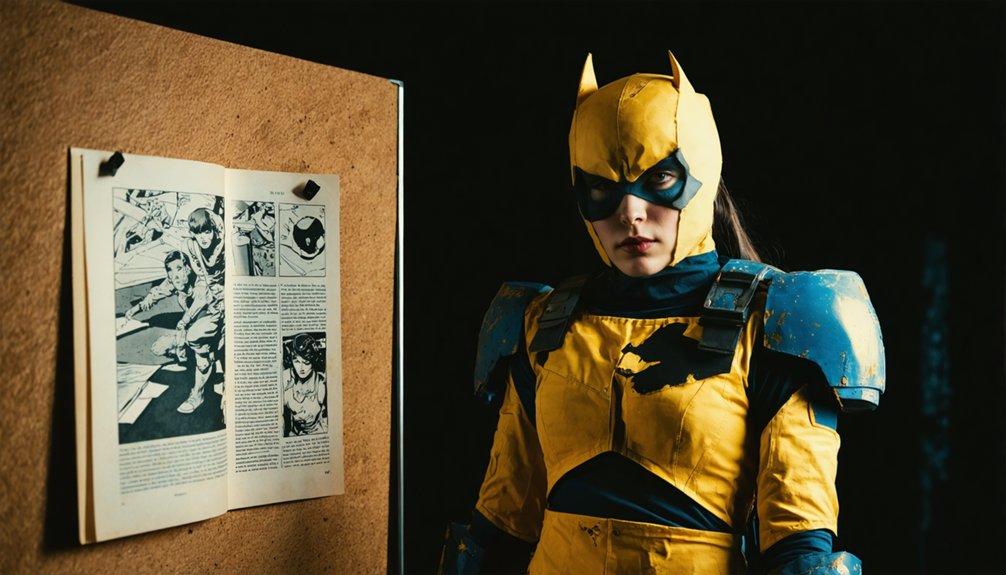
Filming your rehearsals transforms guesswork into actionable data. You’ll immediately spot gaps between your portrayal and the source material that mirror simply can’t reveal.
Compare footage systematically by focusing on these three areas:
- Posture and movement — Does your body language reflect the character backstory accurately, or are you defaulting to your natural habits?
- Emotional reactions — Pause on key moments and match your expressions frame-by-frame against reference clips.
- Timing and rhythm — Does your pacing match how the character carries themselves energetically and emotionally?
Each review session sharpens your awareness of micro-details you’d otherwise overlook. Watch critically, take notes, and re-film immediately after corrections.
This iterative loop accelerates growth faster than any single rehearsal ever could.
Use Voice and Speech to Strengthen Your Character Cosplay
Your character’s voice is just as important as your costume, so study their speech patterns, pacing, and catchphrases until they feel instinctive.
Practice voice modulation techniques to match the character’s age, energy, and emotional tone, whether that means a slow, measured delivery or quick, clipped responses.
When you deliver dialogue, commit fully to the character’s worldview so every interaction feels authentic rather than performed.
Study Character Speech Patterns
When you step into a character, the voice carries just as much weight as the costume. Studying speech patterns transforms your portrayal from visual mimicry into genuine embodiment.
Start by analyzing these three core elements:
- Intonation patterns — Notice where the character’s pitch rises, falls, or flattens during emotional moments.
- Vocal inflections — Identify subtle tonal shifts that signal sarcasm, confidence, or vulnerability.
- Pacing and rhythm — Map out whether the character speaks rapidly under pressure or deliberately during tense exchanges.
Watch source material repeatedly with focused listening, not passive viewing. Isolate specific lines and mirror them until the delivery feels instinctive.
Your voice should reflect the character’s worldview, not just their words. That distinction creates truly immersive, memorable performances.
Practice Voice Modulation Techniques
Tone variation separates flat recitation from genuine embodiment. A villain’s cold delivery demands deliberate pacing and lowered register, while an excitable hero needs sharp pitch rises and rapid rhythm.
Train these contrasts until shifts feel instinctive rather than mechanical. Warm up your voice before events, stay hydrated, and protect your range.
Consistent vocal practice transforms speech into a fully realized character signature audiences immediately recognize.
Deliver Dialogue With Authenticity
Mastering tone and pitch gets you halfway there, but dialogue delivery is where your character truly comes alive. Authentic speech transforms a great costume into a fully realized performance. Match your character’s rhythm, pacing, and emotional depth to the source material precisely.
Follow these three dialogue delivery essentials:
- Mirror speech patterns — Study your character’s sentence structure, pauses, and catchphrases until they feel instinctive.
- Layer emotional depth — Adjust intensity based on context; a battle cry differs from a quiet, vulnerable confession.
- Stay responsive — React to fan interactions using your character’s worldview, keeping exchanges spontaneous yet authentic.
Your dialogue delivery should feel lived-in, not rehearsed. When fans recognize your character through your voice alone, you’ve achieved something genuinely powerful.
Let Your Props and Costume Carry Part of the Performance
Your costume and props aren’t just decorative — they’re active storytelling tools that communicate character identity before you say a single word or strike a single pose. Seamless prop integration transforms a static look into a dynamic performance.
When you wield a weapon, carry a signature item, or interact with accessories naturally, you’re reinforcing character authenticity through action. Test costume durability before event day by simulating full movement ranges — walking, crouching, gesturing — so nothing restricts your performance when it counts.
Treat every costume element as a behavioral cue. A tattered cloak worn with purpose, a staff gripped with intention — these details signal personality instantly. When your costume and props work with your body, they amplify every expression, pose, and interaction you deliver.
Rehearse Fan Interactions So You Stay in Character Under Pressure

Before you ever step onto a convention floor, you’ll want to simulate common fan scenarios like photo requests, trivia questions, and surprise group interactions so that your in-character responses feel instinctive rather than improvised.
Build a response script rooted in your character’s speech patterns, emotional tone, and worldview, giving yourself flexible but authentic replies for predictable situations.
Then practice those scripts under realistic pressure by rehearsing in front of friends, recording yourself, and intentionally introducing unexpected moments that force you to stay locked in character without breaking.
Simulate Common Fan Scenarios
Rehearsing fan interactions before an event is just as critical as perfecting your pose or nailing your costume details. Simulating real scenarios sharpens your emotional reactions and keeps your character backstory firmly grounded in every response.
Practice these three high-frequency fan scenarios:
- Photo requests – Hold your signature pose naturally while maintaining eye contact and character energy.
- Trivia questions – Prepare answers rooted in your character’s backstory so responses feel authentic, not rehearsed.
- Unexpected provocations – Rehearse how your character handles teasing or challenges without breaking immersion.
Run through each scenario repeatedly with a friend acting as the fan. Record sessions, review footage critically, and refine your delivery.
Consistent simulation builds the muscle memory that keeps you fully in character when real pressure hits.
Build In-Character Response Scripts
Simulating fan scenarios builds your reflexes, but scripting your responses takes that preparation one level deeper.
Draft specific replies rooted in your character’s backstory, pulling directly from motivations, relationships, and defining moments. When a fan asks why your character made a pivotal choice, you’ll want a rehearsed answer that carries emotional nuance rather than a vague deflection.
Write scripts for common interaction types: greetings, photo requests, lore questions, and playful challenges. Practice each response aloud until delivery feels instinctive. Layer in your character’s speech rhythm, attitude, and emotional register so replies sound authentic under convention-floor pressure.
Revisit your scripts after each event. If a response felt hollow or broke immersion, refine it. Strong scripting transforms reactive improvisation into deliberate, character-consistent storytelling that audiences immediately recognize and deeply appreciate.
Practice Under Realistic Pressure
Scripts and solo rehearsals build your foundation, but they won’t fully prepare you for the chaotic, unpredictable energy of a real convention floor.
Simulate high-pressure scenarios before the event to sharpen your improvisation skills and emotional resilience.
- Role-play surprise interactions — Have friends throw unexpected questions or crowd distractions at you mid-character.
- Practice in costume — Full gear changes your movement, breathing, and reaction time, so train exactly as you’ll perform.
- Record live simulations — Review footage to catch character breaks, hesitation, or inconsistent expressions under pressure.
The more realistic your rehearsal environment, the faster your responses become instinctive.
When convention chaos hits, your character won’t crack — they’ll thrive, delivering authentic, immersive moments that genuinely connect with fans.
Adapt to Live Events Without Losing Your Character Cosplay Focus

Live events throw unexpected variables at you — shifting crowds, spontaneous photo requests, loud environments, and unpredictable interactions — yet your character focus doesn’t have to crack under that pressure. Treat every disruption as an in-character moment rather than a performance interruption.
When someone approaches mid-stride, respond through your character’s lens — their posture, their tone, their instinct. Prioritize Costume Maintenance by doing quick checks between interactions, catching loose pieces before they compromise your silhouette or mobility.
Strong Audience Engagement doesn’t require perfection; it requires consistency. Ground yourself in two or three core character traits and let those anchor every decision you make on the floor.
The environment shifts constantly, but your character’s identity stays fixed — and that’s exactly where your strongest performances emerge.
Audit What Worked and Sharpen Your Performance Between Events
Once the event ends, your sharpest growth window opens — and how you use it determines the quality of your next performance. Review your footage immediately while details stay fresh, then audit ruthlessly.
Once the event ends, your sharpest growth window opens — seize it before the details fade.
- Identify emotional depth gaps — note moments where your reactions felt hollow or disconnected from the character’s core feelings.
- Revisit character backstory — cross-reference source material to realign motivations you may have drifted from under event pressure.
- Refine movement and expression micro-details — compare rehearsal references against event footage frame by frame.
Targeted refinement beats vague repetition every time. Pinpoint exactly what broke immersion, rebuild those specific skills, and test corrections during focused rehearsals.
Each post-event audit compounds into a sharper, more authentic portrayal that audiences feel instantly.
Frequently Asked Questions
How Do You Handle Cosplaying a Character With Opposing Personality Traits?
You embrace the tension like two storms colliding—lean into personality contrast by studying opposing traits deeply, letting emotional immersion guide your expressions, movement, and reactions until both sides feel authentically alive within you.
Can Cosplaying Multiple Characters at Once Affect Your Personality Portrayal?
Yes, it absolutely can! When you’re blending multiple characters, you’ll dilute your emotional immersion and compromise costume authenticity. Commit fully to one character’s traits, movements, and expressions to deliver a sharper, more innovative, and believable portrayal every time.
How Does Crowd Size Impact Staying in Character During Large Events?
Larger gatherings amplify the energy exchange, making crowd dynamics your ultimate performance test! You’ll find event atmosphere fuels your character’s presence, so embrace every unpredictable moment, stay grounded in your character’s core traits, and let authentic reactions guide you naturally!
Should You Collaborate With Other Cosplayers to Strengthen Character Portrayal Accuracy?
Yes, you should! Collaborating with fellow cosplayers sharpens your character portrayal, elevates cosplay photography dynamics, and pushes costume craftsmanship further. You’ll discover innovative perspectives, refine interaction authenticity, and build immersive group synergy that strengthens every performance detail beautifully!
How Do Cultural Differences Affect Audience Reception of Your Character Cosplay?
You’re walking a tightrope! Cultural authenticity shapes how audiences decode your portrayal, so you’ll want to align with regional audience expectations, adapting expressions, references, and gestures to resonate powerfully across diverse cultural backgrounds.
References
- https://starstruckpanda.com/tips-for-authentic-character-portrayal-in-cosplay/
- https://starstruckpanda.com/mastering-character-portrayal-in-cosplay/
- https://thecelebportal.com/mastering-character-portrayal-a-guide-to-immersive-cosplay/
- https://starstruckpanda.com/engaging-audience-with-character-portrayal-in-cosplay/
- https://starstruckpanda.com/how-to-capture-character-personality-through-cosplay/
- https://www.pointpress.site/cosplay-confidence-tips-to-bring-characters-to-life-1
- https://starstruckpanda.com/mastering-character-portrayal-tips-for-cosplayers/
- https://www.belloflostsouls.net/2023/01/cosplay-roleplaying-a-guide-to-acting-in-character-while-keeping-things-fun.html
- https://www.jay-japan.com/blogs/otaku-spot/cosplay-like-a-pro-7-expert-tricks-for-authentic-anime-character-portrayal
- https://starstruckpanda.com/expressing-personality-through-character-cosplay/