Authentic Japanese samurai warrior costume inspiration draws from centuries of evolving armor traditions, where each component carries distinct historical weight. You’ll find that kabuto helmets, dō-maru body armor, and clan mon crests aren’t merely decorative — they communicate rank, lineage, and battlefield identity. Color choices like red, black, and gold accents signal precise social hierarchies. Understanding these symbolic and structural details transforms a costume from imitation into historically grounded representation, and there’s far more to uncover.
Key Takeaways
- Traditional samurai armor evolved from heavy Yoroi to streamlined Dō-maru, prioritizing mobility and agility during the Sengoku Jidai period.
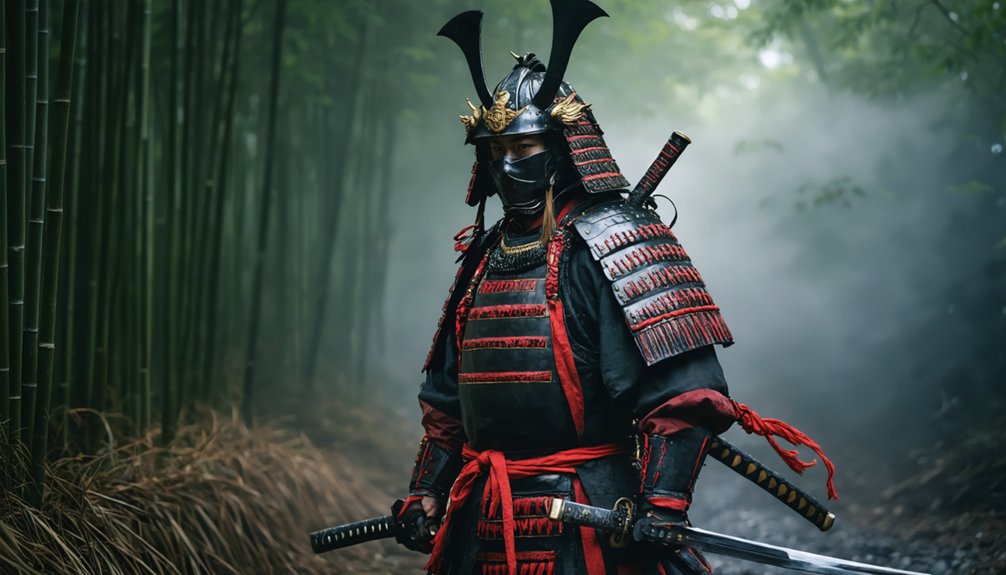
- Key components include the Kabuto helmet, Dō-maru body armor, Sode shoulder guards, Kote forearm guards, and Mengu face masks.
- Color symbolism matters: red signifies rank and power, black represents discipline, and gold accents denote elite noble status.
- Dragon motifs, wave patterns, and clan mon crests authentically reflect personal achievement, lineage, and battlefield significance.
- Modern materials like EVA foam, Worbla thermoplastic, and metallic lacquer paints replicate authentic samurai armor realistically and affordably.
From Yoroi to Dō-maru: How Samurai Armor Evolved Over Time
Samurai armor underwent a dramatic transformation between the Heian and Sengoku periods, shifting from the heavy, box-like Yoroi to the streamlined Dō-maru as battlefield demands evolved.
You’ll recognize this armor evolution as one of profound historical significance—each structural change reflected real combat necessity.
The Muromachi period introduced strap-back Haramaki designs, while the civil war era of Sengoku Jidai demanded greater flexibility and mobility.
Haramaki designs emerged in the Muromachi period, evolving further as Sengoku Jidai warfare urgently demanded mobility.
Changing from the rigid Yoroi’s layered iron and leather construction to the lighter Dō-maru fundamentally improved a warrior’s agility during close combat.
Iron plates replaced cumbersome padding, and flexible joints at elbows and knees enhanced battlefield effectiveness.
Understanding this progression lets you make more informed, historically grounded decisions when designing or interpreting samurai costume aesthetics authentically.
The Armor Pieces That Make a Samurai Costume Look Authentic
When building an authentic samurai costume, you’ll need to focus on the essential armor components that define the warrior’s silhouette and historical credibility.
You should prioritize key pieces like the kabuto helmet, crafted from high-quality metal and leather, the dō-maru body armor with its iron plates and leather lacing, and the sode shoulder protectors bearing intricate motif designs.
Each component’s craftsmanship and material choices directly signal social rank, so you must select fabrics, metals, and embellishments that accurately reflect the warrior’s intended status and period.
Essential Armor Components
Authenticity in a samurai costume hinges on understanding the core armor components that defined feudal Japanese warfare and ceremony.
Each piece carries distinct armor functionality and historical significance that you shouldn’t overlook when crafting your design.
- Kabuto – High-quality metal and leather helmet providing head protection and rank signaling
- Dō-maru – Iron plate body armor with leather lacing for torso defense
- Sode – Shoulder protectors featuring intricate motif designs denoting status
- Kote – Flexible leather and fabric forearm guards enhancing combat mobility
- Mengu – Face masks embellished with gold and copper accents
Craftsmanship and Material Choices
Beyond identifying each armor piece, understanding what they’re made of and how they’re constructed separates a convincing samurai costume from a hollow imitation. Traditional kabuto helmets utilized high-quality metal and leather, while dō-maru body armor relied on iron plates bound with leather lacing.
These craftsmanship techniques weren’t decorative choices—they directly determined material durability under battlefield conditions.
For modern reproductions, you’ll want to mirror this intentionality. EVA foam and Worbla replicate iron surfaces convincingly when finished with lacquer and metallic paint. Hemp and cotton inner linings maintain structural integrity beneath layered armor.
Weathering techniques like dry brushing add authentic wear patterns that elevate realism. Prioritize flexible joints at elbows and knees, ensuring your construction honors both historical accuracy and functional movement.
What Samurai Colors and Symbols Actually Mean
Samurai colors and symbols carry five distinct layers of meaning that directly inform how you should approach costume design. Each color and motif reflects warrior identity within a precise cultural context, shaping your design elements from the ground up.
- Red: Signals rank representation, power, and high-status authority.
- Black: Communicates discipline, formality, and hierarchical humility.
- Gold accents: Denote elite noble status through fabric association with silk brocade.
- Dragon and wave motifs: Confirm personal achievement and motif significance in battle contexts.
- Clan mon crests: Establish historical meanings tied to family lineage.
Understanding color symbolism isn’t decorative—it’s structural. You’re encoding social hierarchies into every stitch.
Misapplying these symbols undermines authenticity and weakens the costume’s overall visual and cultural authority.
How Rank and Status Shaped Every Samurai Costume Detail
Rank dictated every material choice, motif, and structural detail a samurai wore, leaving nothing to personal preference alone.
Armor hierarchy operated as visual storytelling, communicating clan authority before words were exchanged. You’ll notice that rank variations separated elaborate lacquered iron construction from simpler practical designs, each carrying precise design significance. Higher-ranking warriors displayed dragon motifs and gold accents, embedding status symbolism directly into their armor’s surface.
Armor spoke rank instantly—lacquered iron and dragon motifs declared authority before any warrior uttered a single word.
Mon crests provided lineage representation, functioning as coded social commentary within military formations. Cultural implications extended beyond battle—your costume’s construction revealed your lord’s wealth and your personal achievements simultaneously.
Lower-ranking samurai wore restrained earthy tones with minimal ornamentation, reinforcing disciplined humility. Understanding armor hierarchy transforms costume interpretation from aesthetic appreciation into informed recognition of deeply structured feudal communication.
Traditional Fabrics That Define Samurai Costume and Attire
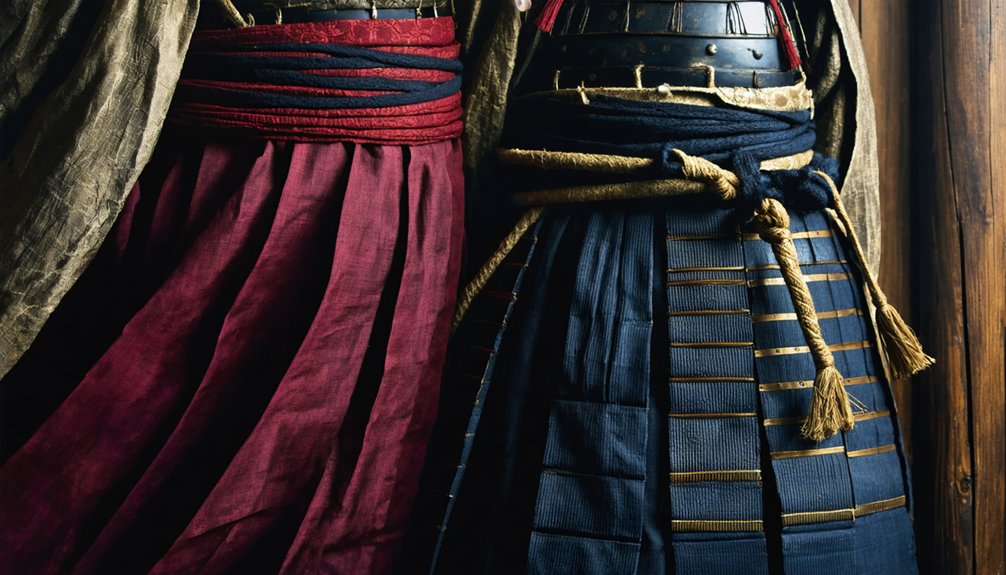
When constructing an authentic samurai costume, you’ll find that fabric selection directly communicates social standing and ceremonial purpose.
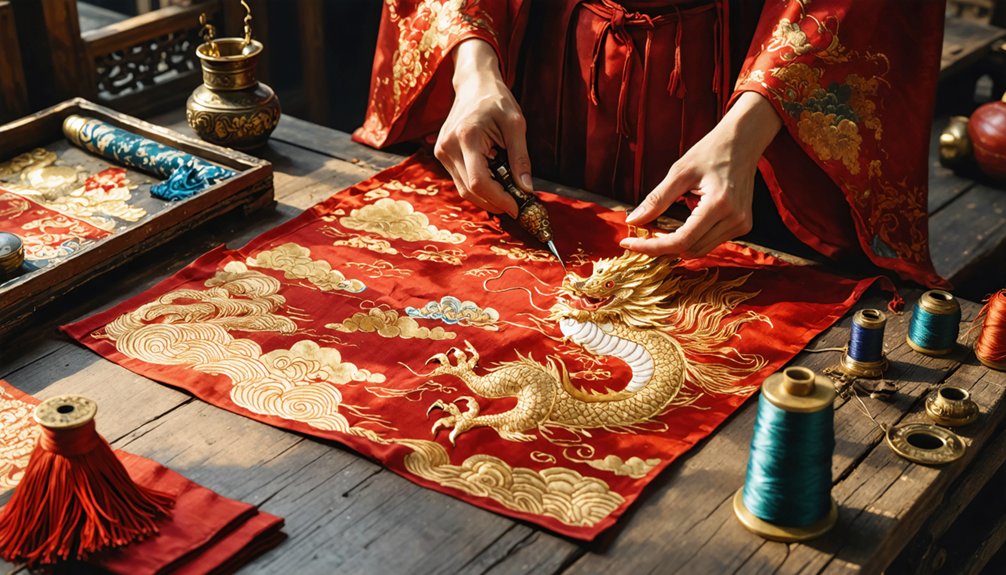
Silk brocade serves as your primary choice for court and ceremonial garments, its intricate woven patterns signaling family lineage and elite rank.
For battle and daily wear, you’ll rely on cotton and linen, which offer the durability and breathability that demanding physical activity requires.
Silk Brocade Ceremonial Choices
Silk brocade stands as the primary ceremonial fabric in samurai attire, and it’s a material that communicates far more than aesthetic preference. Its ceremonial significance extends beyond decoration, encoding social rank, spiritual identity, and clan allegiance into every woven thread.
When you study silk symbolism within historical Japanese contexts, you’ll recognize that pattern selection was never arbitrary.
Key distinctions defining silk brocade’s ceremonial role:
- Woven patterns directly signal family lineage and hierarchical standing
- Gold and silver threading denotes elite noble status and prosperity
- Intricate motifs encode spiritual values like purity and moral character
- Brocade weight and density reflect the formality of specific rituals
- Dragon and floral designs communicate personal achievement and warrior identity
Selecting authentic brocade patterns positions your costume within a precise historical and cultural framework.
Cotton and Linen Durability
Cotton and linen served three distinct functional roles in samurai dress: casual wear, battle attire, and armor padding.
You’ll find that cotton resilience made it the preferred choice for everyday garments and combat clothing, withstanding repeated stress without structural degradation. Its durability under demanding conditions gave warriors reliable, low-maintenance attire when ceremonial silk proved impractical.
Linen versatility addressed a different need entirely. Its breathable weave construction regulated body temperature during summer campaigns and daily activities, making it indispensable for robes requiring sustained comfort.
Additionally, hemp-adjacent linen fabrics created dense inner linings that cushioned iron plates against the body.
Together, these textiles formed the functional backbone of samurai wardrobes, prioritizing performance over ornamentation—a distinction that modern costume designers should deliberately replicate when pursuing historical authenticity.
The Best Modern Materials for Samurai Costume Construction
Choosing the right materials is foundational to constructing a convincing samurai costume, and modern fabrication options have expanded well beyond traditional textiles.
You’ll find that sustainable materials combined with modern techniques yield superior results in both aesthetics and durability.
- EVA foam shapes easily and replicates iron plate armor convincingly
- Worbla thermoplastic allows precise molding for kabuto helmets and mengu masks
- Metallic lacquer paints simulate authentic lacquered iron surfaces effectively
- Strong elastic and magnets enable functional, removable armor components
- Distressed synthetic textiles replicate historical wear patterns realistically
These innovations let you achieve professional-grade construction without sacrificing mobility or visual authenticity.
Weathering techniques like dry brushing further elevate realism, bridging historical accuracy with contemporary fabrication precision that discerning costume builders demand.
Frequently Asked Questions
How Did Samurai Warriors Maintain and Repair Their Armor During Campaigns?
You’d repair damaged iron plates and leather lacing using portable tools during campaigns. Effective armor maintenance aligned with campaign strategies, ensuring you’d reinforce kote guards, replace worn hemp linings, and reapply lacquer finishes to sustain combat readiness.
What Undergarments Did Samurai Wear Beneath Their Battle Armor Daily?
You’d layer samurai undergarments starting with a lightweight kosode robe against your skin. These historical textiles prioritized breathability and moisture-wicking, letting you move freely while providing essential padding and comfort beneath your battle armor daily.
How Were Samurai Costumes Adapted for Ceremonial Court Appearances Specifically?
For ceremonial court appearances, you’d select silk brocade garments that elevated ceremonial significance, incorporating gold accents and clan mon crests. Your fabric choices signaled rank precisely, blending elaborate decorative elements with traditional kimono-inspired silhouettes for authoritative visual distinction.
Did Female Samurai Warriors Wear Distinctly Different Armor Than Males?
You’d find that female samurai armor defied every expectation imaginable — gender differences were minimal, as women’s armor retained iron plates and leather lacing, though slightly tailored proportions accommodated feminine physiques while preserving identical functional combat construction.
How Do Climate and Regional Differences Influence Samurai Costume Design Choices?
You’ll find that climate and regional materials directly shape samurai costume design. Seasonal adaptations drove cooler linen in summer and layered silk in winter, while coastal versus inland regions influenced available textiles and armor construction techniques.
References
- https://starstruckpanda.com/japanese-samurai-warrior-costume-design/
- https://samurai-armor.com
- https://cosplaycostumes.web4.community/read-blog/8_top-10-samurai-cosplay-ideas-samurai-armor-medieval-samurai-amp-fantasy-costumes.html
- https://www.gettyimages.com/photos/samurai-costume
- https://new.artsmia.org/programs/teachers-and-students/teaching-the-arts/artwork-in-focus/japanese-samurai-armor
- https://www.trendhunter.com/slideshow/samurai-halloween-costume
- https://www.trendhunter.com/slideshow/samurai-fashion
- https://www.lacma.org/sites/default/files/module-uploads/E4E_samurai_Consolidated.pdf
- https://www.youtube.com/watch?v=b9dNqlKmN7c
- https://www.reddit.com/r/HistoricalCostuming/comments/1gjjz1n/cosplay_based_on_japanese_women_warriors_and/