To dress a Baroque nobleman authentically, you’ll need to master layering, fabric selection, and accessories. Start with a linen shirt, add a fitted waistcoat, then layer the justaucorps over structured breeches. Choose velvet, brocade, or silk in saturated jewel tones like burgundy or sapphire, since fabric signals rank, not just style. Complete the ensemble with a voluminous wig, precise lace cravat, and square-toed buckled shoes. There’s considerably more nuance to each pillar worth exploring further.
Key Takeaways
- Layer garments in sequence: linen shirt first, then fitted waistcoat, then the long justaucorps coat over structured breeches.
- Choose fabrics like velvet, brocade, or silk in rich jewel tones such as burgundy, sapphire, or deep green.
- Contrast matte wool coats with lustrous silk waistcoats to create visual depth and signal elevated social status.
- Complete the ensemble with a voluminous curled wig, precisely placed lace cravat, and square-toed buckled shoes.
- Ensure the coat extends past the hips and breeches end below the knees to maintain architectural silhouette integrity.
Build the Baroque Nobleman Silhouette Layer by Layer
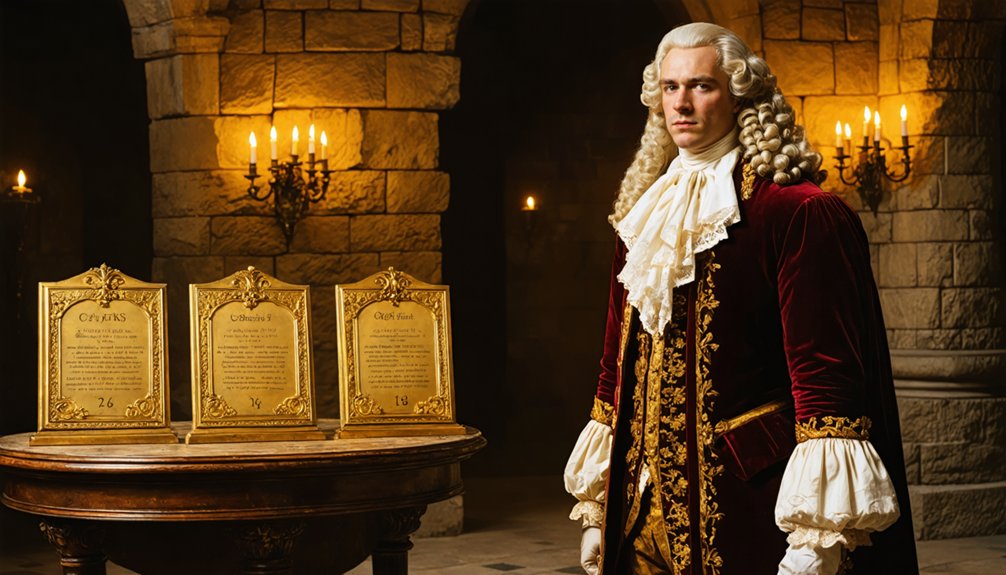
The Baroque nobleman’s silhouette wasn’t accidental—it was constructed deliberately, layer by layer, with each garment serving both a functional and visual purpose. You’ll begin with a fine linen shirt, then add a fitted waistcoat before layering the justaucorps or long outer coat over structured breeches.
Historical costume accuracy demands you respect this sequence, since altering it disrupts the silhouette’s architectural integrity.
Notice how fashion influence on art becomes evident here—painters like Rigaud captured these precise layered forms because they conveyed authority and rank visually.
Your coat should extend well past the hip, your breeches should terminate cleanly below the knee, and your waistcoat should provide visible contrast beneath the outer layer.
Structure defines everything.
Choose Fabrics and Colors That Look the Part
Once you’ve established the silhouette’s structure, fabric selection becomes the mechanism through which rank and wealth are actually communicated. Consult historical fabric sources—period inventories, portraiture, and trade records—to verify that velvet, brocade, silk, and satin dominated noble wardrobes.
Fabric selection communicates rank—velvet, brocade, and silk weren’t decorative choices but legible signals of noble standing.
These materials weren’t decorative afterthoughts; they functioned as social signals readable across a crowded court.
Color symbolism operated with equal precision. Deep jewel tones—burgundy, sapphire, forest green, and black—carried connotations of authority and restraint. Avoid flat, synthetic-looking dyes; instead, prioritize saturated, slightly complex tones that suggest costly pigment sourcing.
Contrasting textures between layers generate visual depth that plain fabrics can’t achieve. Pair a matte wool coat against a lustrous silk waistcoat to replicate the layered richness Baroque portraiture consistently records.
Baroque Finishing Touches: Wigs, Lace, and Buckled Shoes
Accessories in Baroque nobleman’s dress weren’t optional refinements—they were functional markers of rank that completed the ensemble’s social argument. Understanding Baroque accessory significance means recognizing how each element communicated political and social legibility at court.
You’ll need precision in wig styling techniques, selecting curled, voluminous periwigs that framed authority visually.
Complete your look by prioritizing these three finishing elements:
- Periwig — Choose a full, curled wig in white or gray; volume directly signaled nobility’s elevated standing.
- Lace cravat or jabot — Position it precisely at the neckline; fine lace indicated wealth and sartorial discipline.
- Buckled shoes — Select square-toed designs with prominent metallic buckles, anchoring the ensemble’s formal authority convincingly.
Frequently Asked Questions
What Social Rules Governed How Noblemen Dressed at Court?
Strictly structured social standards shaped your wardrobe choices. You’d dress to match your rank, select color symbolism carefully, and choose fashion accessories that signaled station. Courts demanded costly, coordinated attire, enforcing uniformity and discouraging dressing beyond your designated noble standing.
Did Baroque Noblemen Dress Differently for Mourning Occasions?
Yes, you’d adopt mourning attire by replacing rich, vibrant fabrics with muted, dark tones, embracing somber fashion through restrained ornamentation. Noblemen’s wardrobes actively included dedicated mourning suits, reflecting court protocol’s structured, occasion-specific sartorial demands.
Were There Restrictions on Dressing Above One’s Noble Rank?
Wearing a crown you hadn’t earned carried real consequences—yes, restrictions existed. Advice literature warned you against exceeding your station through Royal fashion choices or accessory significance, as dressing above your rank disrupted Baroque social hierarchy visibly.
How Important Was Cleanliness Compared to Decorative Excess?
You’d find that clean, white linen outranked decorative excess in French court culture—it’s where grooming standards held real authority. Luxury fabrics impressed, but pristine presentation signaled disciplined refinement, marking you as authentically noble rather than merely ostentatious.
Did Different Court Events Require Entirely Separate Outfit Ensembles?
Ever wondered how deeply ritual shaped dress? Yes, you’d maintain entirely separate ensembles per occasion, adjusting robe color symbolism for mourning versus celebration, while accessory variations—buckles, jewels, cravats—signaled each event’s distinct courtly register.
References
- https://www.epochs-of-fashion.com/the-epochs/baroque/
- https://www.copenhagenfashionsummit.com/baroque-fashion/
- https://ayperoquecute.com/blogs/fashion/baroque-fashion-a-guide-to-the-most-dramatic-era-of-style
- https://www.belledecouture.com/baroque-fashion-then-and-now/
- http://nationalclothing.org/465-fashion-of-the-high-baroque-era-in-europe-in-the-1600s.html
- https://study.com/learn/lesson/baroque-fashion-history-style-characteristics.html
- https://www.gandiva.eu/baroque-costume-history/
- https://academic.oup.com/edited-volume/28286/chapter/214472824?guestAccessKey=
- https://www.alibaba.com/product-insights/baroque-mens-clothing.html
- https://www.youtube.com/watch?v=R_QbpKVaKl0