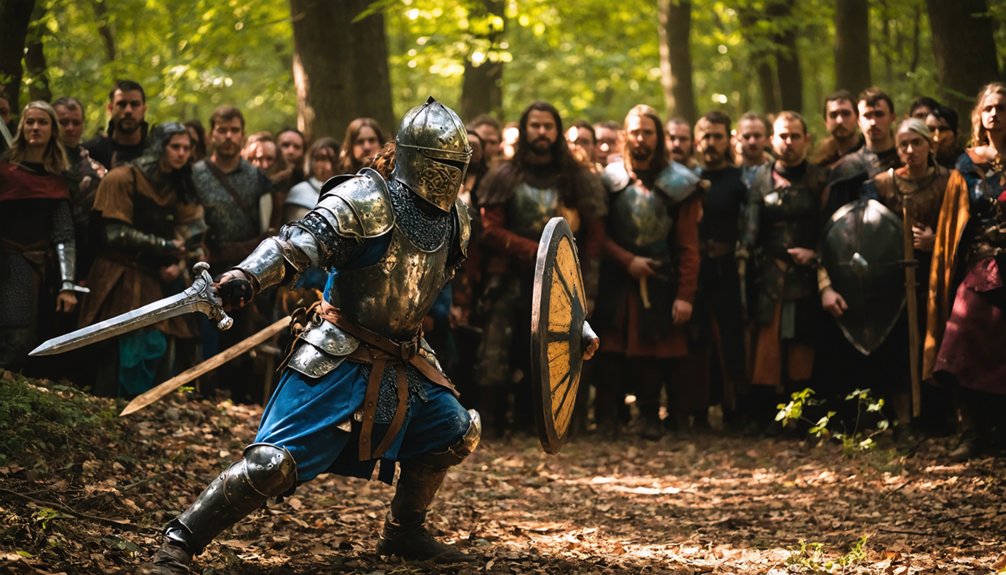
Improv techniques make you a sharper, more dynamic LARPer by training you to think fast, react authentically, and build richer scenes with every player you encounter. You’ll set scenes fast with specific details, use “Yes, And” to keep momentum alive, and practice active listening to sharpen every interaction. Purposeful body language communicates character before you speak, and shifting emotions mid-scene keeps moments feeling real. Explore each technique further to transform how you play.
Key Takeaways
- Anchor scenes immediately with specific details about who, what, where, and why to give scene partners a strong foundation for interaction.
- Accept every offer using “Yes, And” to maintain momentum, deepen backstory, and push collaborative storytelling forward.
- Practice active listening by tracking emotional shifts and adjusting your tone to create authentic tension and meaningful character interactions.
- Use intentional posture, gestures, and facial expressions to communicate character personality and emotional state before speaking a single word.
- Allow emotions to evolve spontaneously mid-scene, reacting genuinely to surprises rather than following pre-planned emotional arcs.
Set the Scene Fast With Specific LARP Opening Details
When you drop into a scene without clear context, other players are left guessing instead of responding, and the momentum dies before it even starts. Strong character introduction means answering who, what, when, where, and why within your first two sentences. Don’t leave your scene partners piecing together fragments.
Treat every scene like it belongs on your character’s highlight reel. Scene pacing tightens immediately when you open with a specific detail — a location, an urgent goal, a defining action. Instead of wandering into vague territory, anchor everyone fast.
If momentum stalls mid-scene, inject a quick reveal: “I just realized that…” That single move resets energy and gives your group fresh material to build on. Specificity isn’t limiting — it’s the engine that drives collaborative play forward.
Use “Yes, And” to Keep LARP Scenes Moving
Blocking an offer kills a scene faster than any mistake you can make in LARP. “Yes, And” fixes that — you accept what another player puts in front of you, then add a detail that pushes the story forward.
If someone reveals a piece of your character backstory mid-scene, don’t contradict it. Build on it. That unexpected detail can reframe your motivation and create richer conflict resolution opportunities neither of you planned.
Practice “Yes, And” through story swapping — one player starts a shared narrative, you continue it, they extend it further. This trains your instinct to collaborate instead of compete.
During worldbuilding, treat every setting idea as an open door. Walk through it. Add something. The scene belongs to everyone at the table, so keep expanding it together.
Use Active Listening to Sharpen Character Interactions
“Yes, And” gets you into the scene — active listening keeps you there. When another character speaks, don’t just wait for your turn. Lock in eye contact, track their emotional tone, and notice what’s shifting beneath the words.
That’s where tone adjustment becomes your sharpest tool. If their voice drops, your character feels it. If urgency spikes, you respond to that pressure — not to what you planned to say next.
Perspective switching takes it further. Ask yourself what *they* need from this interaction, not just what your character wants. That shift produces authentic tension, stronger alliances, and moments that feel genuinely earned.
Paraphrase what you heard when something’s unclear. Clarify fast, stay present, and let their performance shape yours in real time.
Use Body Language to Drive Your LARP Performance
Active listening sharpens what you say — body language shapes everything you *don’t*. In LARP, your posture, movement, and facial expressions communicate character before you speak a single word.
Slouch deliberately and you’re exhausted. Stand tall with a lifted chin and you’re commanding. These physical choices land faster than dialogue.
Gesture enhancement takes this further. Pair your words with intentional movement — a slow, open-handed reach signals trust, while a tight, retracted arm signals fear.
Don’t let your hands hang passively; make them work for your character.
Practice in front of a mirror or with a partner. Build a small vocabulary of signature gestures your character owns.
When your body commits fully, your scene partners respond instinctively, and the entire ensemble performs stronger together.
Shift Emotions Mid-Scene to Keep LARP Moments Alive
Body language anchors your character in space — but emotion keeps them alive across time. Emotional progressions are what transform a flat performance into something that feels genuinely human.
Start your scene in one emotional state — grief, defiance, quiet joy — then let circumstances push you somewhere unexpected.
Don’t plan the shift in advance. Spontaneous reactions are more compelling than choreographed ones. When a fellow player drops a surprising revelation, let it land. Pause. Recalibrate. Then respond from wherever that moment honestly takes your character.
Practice moving between two contrasting emotions during low-stakes scenes so the skill feels natural when tension runs high. The goal isn’t dramatic overacting — it’s authentic evolution.
Characters who evolve emotionally mid-scene pull everyone deeper into the shared story.
Frequently Asked Questions
How Do I Handle Conflict Between Players During a LARP Event?
Ironically, conflict’s your best creative fuel! Use player negotiation before tensions escalate. Prioritize conflict resolution through open dialogue, shared expectations, and “Yes, And” thinking. You’ll transform friction into collaborative breakthroughs that strengthen your group’s trust and storytelling.
What Safety Tools Are Recommended for Sensitive LARP Scenarios?
Use the X-Card, “Lines and Veils,” and “OK Check-In” as your go-to safety equipment! They’re practical, innovative tools that guarantee emotional support stays central, keeping everyone’s creative energy flowing and your collaborative story thriving safely.
How Can Beginners Find Welcoming LARP Communities to Join?
Ready to plunge in? Start by finding local groups through Meetup or Facebook, then explore online community forums like Reddit’s LARP communities. You’ll quickly connect with welcoming players who’ll help you build confidence and jump right in!
What Costumes or Props Best Support Strong Character Immersion?
Choose costumes that boost costume authenticity through layered, era-appropriate details you can move in freely. Carry items with prop versatility—objects serving multiple story purposes. You’ll deepen immersion, spark spontaneous character choices, and invite richer collaborative moments with fellow players!
How Do I Stay in Character When Unexpected Real-World Distractions Occur?
Mindful awareness keeps you grounded when distractions hit! Breathe, refocus on your character’s emotion, and re-enter the scene with purpose. Distraction management means you’re treating interruptions as spontaneous story material, staying adaptable, and keeping collaborative momentum alive.
References
- https://www.bigbencomedy.com/archives/the-five-basic-improv-techniques/
- https://www.hooplaimpro.com/beginners-improv-exercises-part-1.html
- https://www.reddit.com/r/LARP/comments/1gadse5/newbie_trying_to_get_into_larping_seasoned/
- https://www.nordiclarp.org/2025/03/03/improv-larp-how-to-organize-a-larp-with-the-least-amount-of-effort/
- https://starstruckpanda.com/larping-and-improv-acting-techniques/
- https://www.youtube.com/watch?v=VpjYxDrOUrc
- https://www.nordiclarp.org/2018/02/27/group-improvisation-larp-rituals/
- https://d1vzi28wh99zvq.cloudfront.net/pdf_previews/399160-sample.pdf
- https://www.youtube.com/watch?v=cIhp-MAz9ps