For heat styling cosplay wigs, you’ll want fibers rated specifically for high temperatures. Futura withstands up to 340°F, making it your best option for sculpted, complex styles. Kanekalon handles up to 280°F and excels at vivid character builds. Toyokalon HR tolerates 220–260°F, keeping it beginner-friendly. Always verify manufacturer ratings before buying, since standard polyester blends can permanently distort at just 220°F. Stick around to master everything from tool settings to cap construction.
Key Takeaways
- Futura fiber wigs withstand up to 340°F, making them ideal for complex, sculpted cosplay hairstyles requiring aggressive heat styling.
- Kanekalon wigs tolerate up to 280°F, offering excellent color retention and flexibility for detailed character builds.
- Toyokalon HR wigs handle 220–260°F, providing a beginner-friendly option for straightforward cosplay styling needs.
- Lace front construction with ventilated cap panels enhances styling versatility and comfort during extended cosplay wear.
- Always verify manufacturer temperature ratings and use an infrared thermometer to confirm heat tool accuracy before styling.
What Makes a Wig Heat-Resistant
Not all synthetic wigs handle heat the same way, and understanding why comes down to fiber chemistry. Standard synthetic fibers begin distorting around 180°F, melting irreversibly between 220–250°F.
Synthetic wig fibers aren’t created equal — and their heat tolerance is where the chemistry makes or breaks everything.
Heat-resistant fibers like Futura and Kanekalon use modified polymer structures that maintain integrity at much higher thresholds, sometimes reaching 340°F or beyond.
That structural resilience directly impacts color retention and styling versatility. When fibers don’t break down under heat, pigments stay secured in and the wig holds curls, waves, or straightened sections far more reliably.
You’re not just avoiding damage — you’re revealing actual creative control.
Always verify the manufacturer’s stated temperature ceiling before touching any hot tool to the fibers. Without that spec confirmed, you’re guessing, and guessing destroys wigs fast.
Best Fiber Types for Heat-Resistant Cosplay Wigs
When you’re shopping for a heat-resistant cosplay wig, fiber type is the single most decisive factor in how well it’ll hold up to styling tools.
Futura fiber leads the pack with a reported tolerance around 340°F, while Kanekalon and Toyokalon HR offer solid mid-range performance.
Budget modacrylic or polyester blends fall noticeably short under repeated heat exposure.
Matching the right fiber to your styling demands—whether you’re running a flat iron through a sleek villain look or curling an elaborate fantasy style—keeps your wig looking sharp and prevents irreversible damage.
Top Heat-Resistant Fiber Types
Choosing the right fiber type is the single most important decision you’ll make before heat-styling a cosplay wig. Each polymer behaves differently under direct heat, affecting fiber durability, color blending consistency, and long-term shape retention.
Futura fiber leads for high-heat styling, tolerating up to 340°F without distortion—ideal for complex sculpted styles.
Kanekalon delivers reliable mid-to-high heat performance with excellent color blending across vivid cosplay palettes.
Toyokalon HR suits beginners needing moderate heat tolerance for straightening and loose curls.
Modacrylic works for low-heat applications but degrades faster under repeated styling.
Avoid standard polyester blends entirely if hot tools are part of your workflow.
Always verify the manufacturer’s stated temperature ceiling before applying any heat tool—fiber labeling is your most critical purchase checkpoint.
Fiber Heat Tolerance Compared
Compare these four fibers before you buy:
- Kanekalon – tolerates moderate heat well, maintaining color retention and fiber flexibility up to roughly 280°F without significant distortion.
- Futura fiber – performs strongest near 340°F, ideal for aggressive curling or straightening on elaborate cosplay builds.
- Toyokalon HR – sits comfortably in the 220–260°F range, making it beginner-friendly for cautious restyling.
- Modacrylic – handles brief low-heat exposure but degrades faster, limiting repeated styling sessions considerably.
Always verify the manufacturer’s stated ceiling before applying any hot tool.
Choosing The Right Fiber
Picking the right fiber for your cosplay wig directly determines how far you can push heat styling without destroying your build. Futura fiber leads for high-heat work, tolerating around 340°F and holding sculpted shapes exceptionally well.
Kanekalon delivers strong mid-range performance with reliable heat tolerance, making it ideal for detailed character builds requiring repeated restyling.
Toyokalon HR suits beginners needing a forgiving, heat-resistant option without premium costs.
Avoid standard modacrylic and polyester microfiber blends for any serious heat application—they degrade fast.
When synthetic blending is involved, always verify each component’s threshold, since blended fibers inherit the weakest material’s limits.
If you’re planning fiber dyeing, confirm compatibility beforehand, as heat and chemical processes combined can accelerate breakdown across even high-rated fibers.
How to Read Temperature Ratings Before You Buy
Before you buy any heat-resistant wig, you’ll want to locate the manufacturer’s stated temperature ceiling directly on the product listing or packaging — don’t assume “heat-resistant” means the same thing across every brand.
Once you’ve confirmed that number, cross-check it against your actual tool’s output, since flat irons and curling wands often run hotter than their dial markings suggest, making an infrared thermometer a smart investment.
Matching your wig’s rated maximum to your tool’s verified temperature is the single most reliable way to protect your fibers and nail your character’s look without risking irreversible damage.
Locating Manufacturer Temperature Labels
Finding the manufacturer’s temperature label is one of the most critical steps you’ll take before buying a cosplay wig for heat styling. Without it, you’re guessing—and guessing burns fibers permanently.
Check these four locations for temperature data:
- Product listing specs – Look for exact °F or °C ratings, not vague terms like “heat-friendly.”
- Inner cap tag – Cap construction details and fiber ratings are often printed directly on the interior label.
- Packaging insert – Many premium lines include a fold-out card specifying maximum tool temperatures.
- Brand FAQ or support page – Manufacturers often publish color fading warnings alongside precise heat thresholds for each fiber line.
If no stated limit exists, skip the heat tools entirely and protect your investment.
Matching Ratings To Tools
Once you’ve located the manufacturer’s temperature label, matching that rating to your actual styling tools is where buying decisions get precise. Most heat-resistant wigs tolerate 300–370°F, but you should verify your flat iron’s actual plate temperature using an infrared thermometer—dial settings often run hotter than displayed.
Stay at or below the stated maximum to protect fiber integrity during color blending techniques, where repeated heat passes can accelerate degradation. For wigs rated around 220–260°F, limit tool contact to single passes in small sections.
Consistent wig maintenance depends on never exceeding threshold limits, since overheating causes irreversible structural damage. Match Futura fiber wigs to tools capped at 340°F, Kanekalon to mid-range settings, and always downgrade your tool temperature when the wig’s rating is borderline.
Top Heat-Resistant Wigs for Cosplay Styling
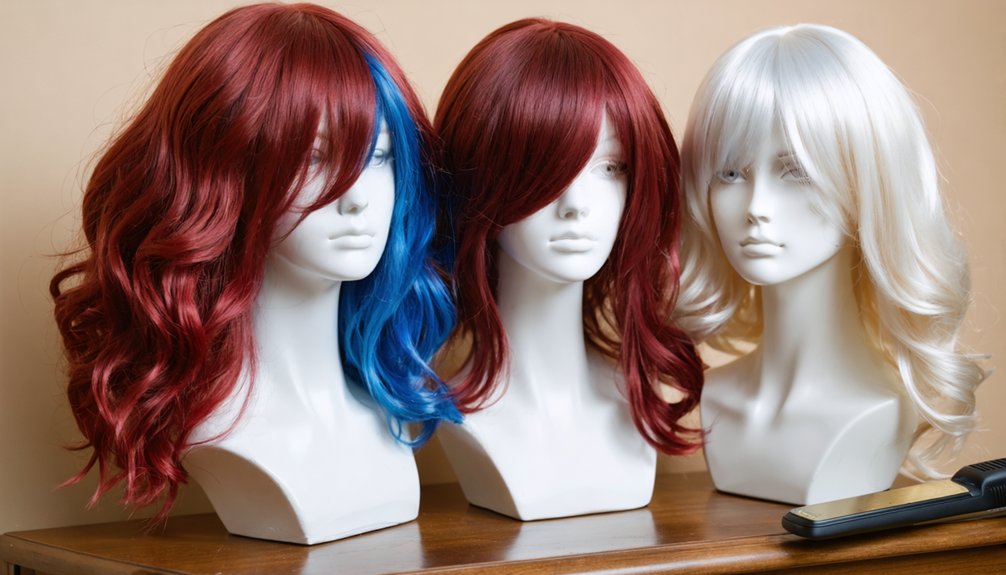
Choosing the right heat-resistant wig can make or break your cosplay styling process, so understanding which fiber types and construction features actually matter is essential. Prioritize verified temperature ratings, fiber quality, and cap construction before committing to color customization or investing in styling accessories.
Nail the foundation first — fiber type, heat ratings, and cap construction matter far more than color or accessories.
- Futura Fiber Wigs — tolerates up to 340°F, ideal for aggressive curling and sleek straightening passes.
- Kanekalon HD Wigs — handles 280°F+, delivering reliable performance across repeated restyling sessions.
- Toyokalon HR Wigs — beginner-friendly at mid-range heat, supporting clean character-accurate shapes.
- Lace Front Heat-Resistant Wigs — combines natural hairline realism with heat-safe fiber construction for high-detail builds.
Always cross-check the manufacturer’s stated temperature ceiling against your tool’s actual plate output before styling.
The Right Heat Tool Settings for Synthetic Wigs
Here’s your precision protocol:
- Verify the manufacturer’s stated maximum before styling
- Set your flat iron at ≤320°F and confirm plate temperature with an infrared thermometer
- Work in small sections, using single passes to maximize fiber durability
- Apply synthetic-safe heat protectant before every pass
Never guess at settings—exceeding the threshold even briefly causes irreversible damage.
Treat every session as a technical operation, not guesswork.
Lace Front and Cap Features That Improve Styling Results
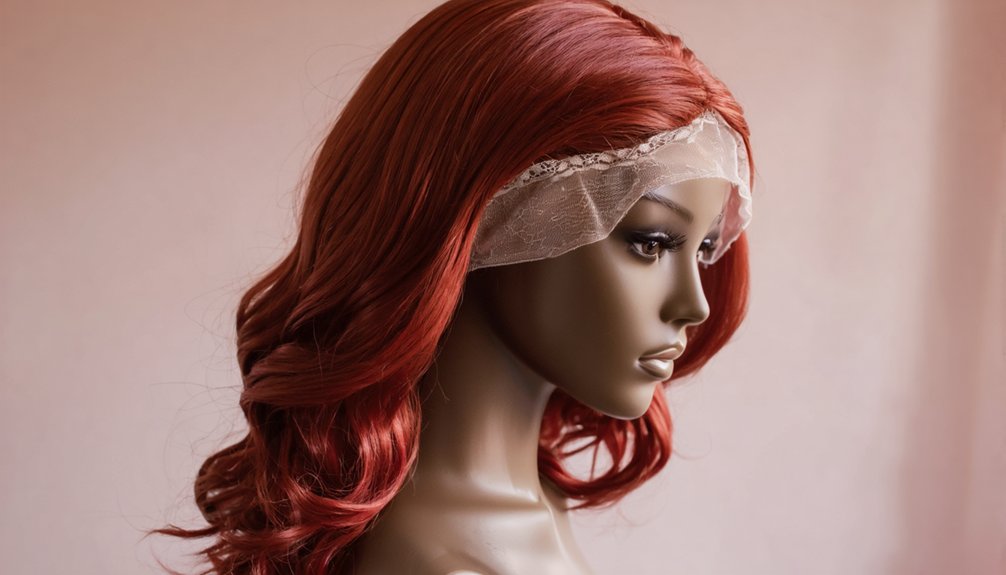
Beyond fiber type and heat settings, the structural features of your wig directly determine how well your styling work translates into a finished, screen-accurate look.
Key cap features that amplify your results:
- Lace front construction creates an invisible hairline edge, letting you style away from the face without exposing an unnatural border.
- Wide lace coverage extends parting flexibility across the crown, so sculpted styles hold their intended geometry.
- Adjustable cap straps lock the wig in place during active shaping, preventing shift while you work with hot tools.
- Ventilated cap panels reduce heat buildup during long convention wear, protecting both fiber integrity and your comfort.
Prioritizing these lace front and cap features guarantees your heat styling investments produce character-accurate, durable results every time.
How to Care for Heat-Resistant Wigs After Styling
Once you’ve finished styling your heat-resistant wig, proper aftercare locks in your work and extends the fiber’s lifespan through repeated convention use.
Start detangling techniques immediately after cooling—work a wide-tooth comb from ends upward to prevent stress fractures in styled sections.
Wash exclusively with synthetic wig shampoo in cold water; hot water accelerates fiber degradation and undermines color preservation by stripping pigment from the polymer coating.
Apply a synthetic-compatible heat protectant before storage, not after washing, to maintain fiber cohesion.
Air-dry completely on a wig stand to preserve volume and sculpted shapes.
Avoid high-heat dryers entirely—they’ll exceed safe thresholds even on lower settings.
Store in a breathable bag away from direct light to further support long-term color preservation and fiber integrity.
Frequently Asked Questions
Can Heat-Resistant Wigs Be Restyled Multiple Times Without Losing Quality?
Yes, you can restyle heat-resistant wigs multiple times while maintaining quality! Their heat longevity and styling versatility shine when you use single-pass techniques, stay within rated temperature limits, and apply synthetic-safe heat protectants consistently.
Are Heat-Resistant Cosplay Wigs Safe for Children to Wear?
Like a shield in battle, child safety comes first! Heat-resistant cosplay wigs can work for kids, but you’ll want to supervise all styling. Prioritize wig durability by avoiding hot tools entirely on children’s wigs.
Do Heat-Resistant Wigs Cost Significantly More Than Standard Synthetic Options?
You’ll notice cost comparison reveals moderate price differences—heat-resistant wigs typically run slightly higher, but you’re investing in superior fiber engineering, extended styling versatility, and innovative thermal tolerance that standard synthetic options simply can’t match!
Can You Dye or Color Heat-Resistant Synthetic Wig Fibers at Home?
You can’t effectively use traditional dyeing techniques on heat-resistant synthetic fibers—they repel standard dyes! For color preservation and vibrant results, you’ll want to explore alcohol-based ink methods or fabric spray dyes specifically formulated for synthetic polymers instead.
How Long Do Heat-Resistant Cosplay Wigs Typically Last With Regular Use?
With proper wig maintenance, you’ll typically get 1–2 years of regular use! Mastering careful styling techniques—single-pass heat application, cold-water washing, and wide-tooth combing—actively extends fiber longevity, keeping your heat-resistant cosplay wig performing beautifully through countless innovative transformations.
References
- https://wellfizz.com/best-costume-wigs/
- https://www.narcosis-the-game.com/best-lace-front-cosplay-wigs/
- https://us.my-best.com/4311
- https://starstruckpanda.com/heat-resistant-wigs-for-cosplay-durability/
- https://tragee.com/Blog/best_cosplay_wigs_for_conventions_2026_-_complete_styling_care_and_buying_guide.html
- https://beautynexuspro.com/product-reviews/how-to-buy-a-cosplay-wig
- https://www.alibaba.com/product-insights/are-anime-convention-cosplay-wigs-travel-friendly-heat-resistance-packing-and-airport-security-tips.html
- https://starstruckpanda.com/how-to-create-long-flowing-wigs-for-fantasy-cosplay/
- https://www.amazon.com/AneShe-Resistant-Cosplay-Women-Black/dp/B01I12R02Y
- https://www.alibaba.com/product-insights/how-to-choose-the-best-synthetic-heat-resistant-wigs-a-complete-guide.html