For authentic Ming dynasty cosplay, you’ll want to prioritize wide sleeves, layered robes, and floor-grazing hems—never Qing-fitted cuts. Choose silk or cloud satin for proper drape, and select motifs like dragons or phoenixes that reflect actual court rank. Color matters too: red signals elite status, yellow marks imperial authority. Every detail, from collar construction to embroidery quality, functions as a codified visual statement. The full ranking system and sourcing strategies reveal considerably more than you’d expect.
Key Takeaways
- Choose wide sleeves, layered robes, and floor-length hems to achieve an authentic Ming silhouette and avoid Qing-era styling influences.
- Flying fish suits on vivid red ground are ideal high-status cosplay options, featuring dragon motifs that signal Ming court rank.
- Select silk, cloud satin, or brocade fabrics for authentic drape; avoid polyester to preserve visual complexity and period accuracy.
- Use color deliberately: red signals elite status, yellow is imperial, while blue and purple represent lower court rankings.
- Source from Hanfu-specific platforms or custom tailors; verify sleeve construction, embroidery quality, and accessories for proper Ming authenticity.
The Silhouette, Motifs, and Colors That Define Ming Court Style
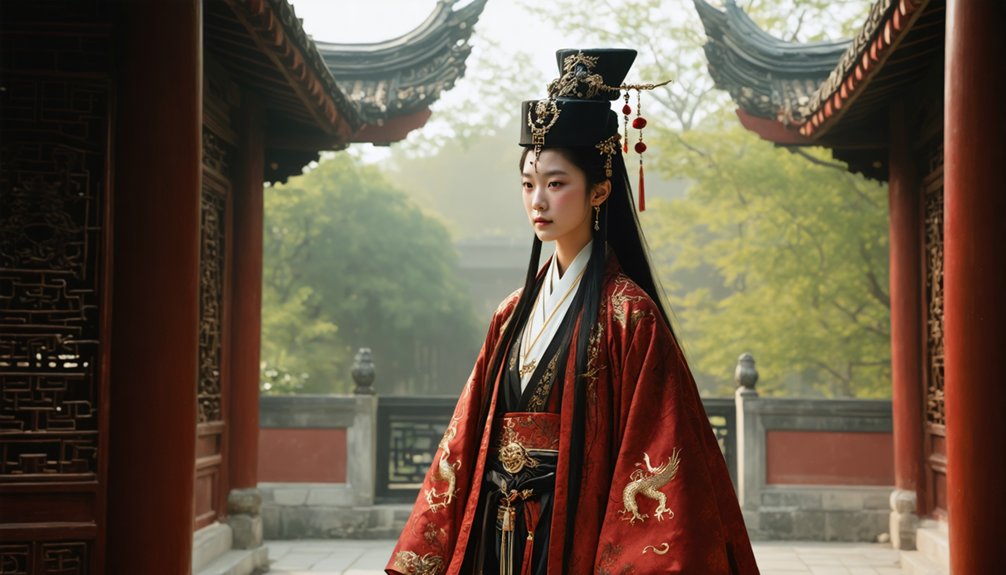
When building a Ming dynasty cosplay, the silhouette is your first and most decisive choice. You’re working within a structured visual language — wide sleeves, layered robes, and formal lines that signal imperial symbolism immediately.
Avoid anything resembling Qing-fitted cuts or cheongsam styling; those break historical integrity entirely.
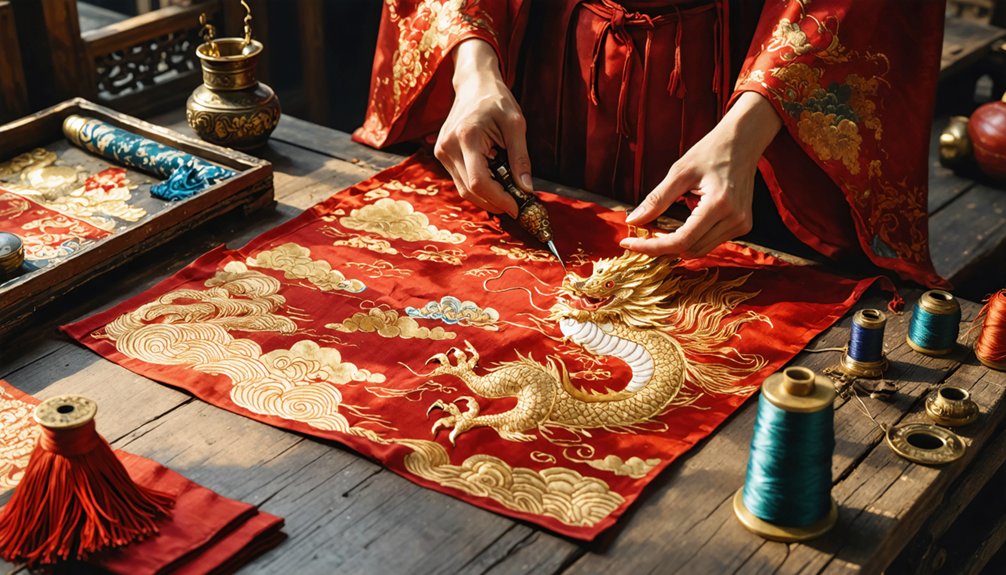
For ceremonial attire, prioritize motifs that carry dynastic weight. Dragons dominate the chest and shoulders, while phoenixes and floral patterns reinforce court hierarchy. These aren’t decorative suggestions — they’re coded signals of rank and occasion.
Color functions the same way. Red anchors elite looks, particularly flying fish garments. Yellow remains imperial-exclusive. Blue and purple carry their own status registers.
You’ll build a more authoritative costume when every visual choice — silhouette, motif, and color — operates as a deliberate, coordinated statement.
High-Status Ming Cosplay: Flying Fish, Python, and Court Ranks Explained
Once you move beyond silhouette and color into the domain of rank insignia, the hierarchy becomes precise and unforgiving. Ming court dress assigned specific garments to specific roles: python clothing ranked first, flying fish second, bullfighting third, and qilin fourth. These weren’t decorative choices — they were granted privileges.
If you’re targeting historical accuracy, the flying fish suit is your strongest high-status option outside imperial dress. Awarded to royal guards, senior eunuchs, and distinguished ministers, it features dragon-derived motifs — head, claws, body, tail — typically on a vivid red ground.
For cosplay, prioritize costume comfort without sacrificing structural integrity. The flying fish suit demands ornate embroidery and strong contrast. Choosing correctly positioned rank insignia signals genuine knowledge of Ming court protocol.
Fabrics for Ming Dynasty Costumes That Look and Move Right
Fabric selection determines whether your Ming costume reads as historically grounded or falls into generic costume territory. Prioritize these four fabric tiers based on your event context:
Fabric selection alone determines whether your Ming costume commands historical authority or dissolves into generic costume territory.
- Silk or cloud satin — delivers authentic drape and visual weight for formal photoshoots
- Brocade with woven motifs — reinforces embroidery techniques without additional labor cost
- Cotton-linen blends or rayon — balances fabric durability with all-day wearability for festivals
- Stiff synthetic organza — suits dramatic C-drama styling when structured silhouettes take priority
Each choice carries trade-offs. Hand-embroidered details elevate any base fabric, signaling craft investment immediately. Polyester undermines even accurate silhouettes, flattening the visual complexity Ming court dress demands.
Match your fabric to your performance context, and you’ll command the room with authority.
Sleeve Width, Skirt Length, and Collar Fit for Ming Cosplay
Getting the fabric right sets the foundation, but fit architecture determines whether your Ming costume holds historical credibility in motion. Three measurements govern authenticity: sleeve shape, skirt length, and collar style.
Ming sleeves require substantial width — narrow cuts signal Qing influence and immediately undermine period accuracy. Your sleeve shape should allow layered garments beneath while maintaining structured drape during movement.
Skirt length demands floor-grazing precision. A hem that breaks above the ankle disrupts the formal silhouette that distinguishes elite Ming styling from casual interpretations.
Collar style must follow mandarin construction — fitted, upright, and clean at the neckline. Avoid any collar that flares outward or sits loosely.
Measure precisely across chest, waist, and full arm length before ordering, since standard sizing rarely accommodates these structural requirements.
Where to Buy Ming Dynasty Costumes Without Getting Burned
Sourcing a Ming dynasty costume without sacrificing quality or accuracy requires knowing which vendors understand historical construction and which ones are selling generic fantasy robes with a dynasty label attached. Prioritize sellers who demonstrate historical accuracy through fabric sourcing, embroidery technique, and silhouette fidelity.
- Verify sleeve construction — wide sleeves signal authentic Ming patterning, not Qing-fitted alternatives.
- Inspect costume accessories — mandarin collars, structured sashes, and traditional shoes should be period-consistent.
- Request detailed measurements — standard sizing undermines proper drape and mobility.
- Examine embroidery quality — hand-stitched motifs using brocade or cloud satin outperform machine-printed substitutes.
Reputable Hanfu-specific platforms and custom tailors familiar with Ming silhouettes consistently outperform mass-market costume retailers.
You’re investing in representation, so demand documentation of materials and construction methods before purchasing.
Frequently Asked Questions
Can Ming Dynasty Costumes Be Worn at Non-Chinese Cultural Events?
Over 60% of cosplay events welcome cross-cultural costumes. You can wear Ming dynasty costumes at non-Chinese cultural events, but you’ll want to prioritize cultural appropriateness and costume authenticity to guarantee respectful, innovative representation.
How Do I Store and Care for Delicate Ming Costume Fabrics?
Store your Ming costume in acid-free tissue within breathable garment bags. For fabric preservation, avoid direct sunlight and humidity. When costume cleaning is necessary, you’ll want to hand-wash silk and brocade gently using pH-neutral solutions only.
Are Ming Cosplay Costumes Appropriate for Children or Younger Wearers?
Yes, you’ll find Ming cosplay costumes suit younger wearers well when you prioritize children-friendly options with durable, breathable fabrics. Always apply careful costume size considerations, ensuring proper sleeve length and skirt mobility for active, innovative young enthusiasts.
What Hairstyles and Headpieces Pair Best With Ming Court Costumes?
Like a crown jewel completing a masterpiece, you’ll elevate your look with upswept buns, phoenix coronets, and hairpins. Prioritize traditional hair accessories and historical hairstyle accuracy to authentically mirror Ming court elegance.
How Do Ming Dynasty Costumes Differ From Japanese or Korean Historical Dress?
Ming imperial attire features wide sleeves, layered robes, and dragon motifs, while Japanese kimono emphasizes wrapped silhouettes and Korean hanbok uses vibrant jeogori-chima lines. You’ll find fabric authenticity and structural philosophy distinctly diverge across each tradition.
References
- https://www.fashionhanfu.com/dynasty-flying-fish-suit/
- https://fr.aliexpress.com/w/wholesale-chinese-ming-dynasty-costume.html
- https://www.ccclux.lu/exhibitions/233-ming-epitome-of-chinese-costume-culture
- https://thegarmentatlas.com/asian-traditions/cdrama-hanfu-styling-guide