For the best pirate cosplay at historical events, you’ll want to ground every choice in late 17th- and early 18th-century maritime reality. Choose natural fabrics like linen and coarse wool in muted, weathered tones. Distress seams and hems with sandpaper or pumice stones. Select brass props, period-accurate tricorns, and jewelry carrying genuine nautical symbolism. Avoid synthetic materials and Hollywood clichés entirely. Every layer you build from authentic references brings you closer to a costume that genuinely earns its place in history.
Key Takeaways
- Base your pirate costume on late 17th to early 18th-century sailor clothing, using historical portraits and artifacts for accurate reference.
- Choose natural fabrics like linen and coarse wool in muted, weathered tones such as tan, rust, and charcoal.
- Distress fabrics using sandpaper, pumice stones, or cheese graters, then apply tea or coffee staining for authentic weathered effects.
- Select period-accurate accessories including felt tricorn hats, leather boots, brass props, and maritime-themed jewelry like compass rose pendants.
- Begin sourcing materials 4–6 months ahead, start assembly 2–3 months prior, and conduct full fittings 2–4 weeks before the event.
What Makes a Pirate Cosplay Historically Accurate?
When building a historically accurate pirate cosplay, you’ll want to anchor your research in the late 17th to early 18th century, the golden age of piracy. Study commoner and sailor clothing from this period rather than relying on pirate mythology perpetuated by Hollywood productions.
Ditch Hollywood myths—authentic pirate cosplay begins with genuine 17th and 18th-century sailor and commoner clothing research.
Examine actual portraits, period artifacts, and historical documents to distinguish fact from fiction. Maritime navigation culture directly shaped sailor dress, prioritizing functional, durable garments over theatrical embellishment.
Seek authentic hat makers specializing in historical attire, and always choose natural fabrics over synthetics that betray a modern machine-print aesthetic.
Muted, weathered tones dominated real seafaring wardrobes. When you prioritize texture, period-accurate silhouettes, and documented garment construction over costume-aisle shortcuts, you’ll achieve a portrayal that commands genuine historical credibility.
Pirate Cosplay Ideas From Deckhands to Captains
Whether you’re assembling a humble deckhand’s kit or commanding the quarterdeck as a seasoned captain, pirate cosplay rewards layered thinking over single-piece shortcuts. Each rank carries distinct visual language rooted in maritime symbolism and functional necessity.
Build your deckhand using a loose shirt, cropped trousers, a knotted headscarf, and a simple sash. Sea shanty influences suggest working-class practicality, so prioritize worn textures over ornamentation.
Elevate to captain status by introducing a waistcoat, long coat, tricorn hat, and a diagonally worn sash. Structural layering communicates authority without theatrical excess.
Both archetypes benefit from distressed natural fabrics in tan, rust, and charcoal. Select each component deliberately, ensuring every accessory reinforces rank, function, and period authenticity rather than generic costume-store familiarity.
Period-Accurate Fabrics and Colors to Use in Pirate Cosplay
Fabric selection anchors period authenticity more decisively than any single accessory or prop. Marine archaeology has confirmed that sailors and pirates working within maritime trade networks wore linen, wool, and rough cotton almost exclusively. Synthetics betray you instantly under event lighting.
Prioritize these three fabric and color principles:
- Choose undyed or naturally dyed linen in off-white, tan, and warm cream for shirts and undergarments.
- Select coarse wool in charcoal, weathered brown, or faded rust for outer layers and waistcoats.
- Distress every piece deliberately using sandpaper or pumice stones to replicate genuine wear patterns documented in period artifacts.
Texture communicates lived experience. Color grounds your silhouette historically. Together, they transform a costume into a credible period statement.
How to Distress Fabric for an Authentic Pirate Cosplay Look
To replicate the worn, salt-crusted appearance of authentic period garments, you’ll need abrasive tools such as sandpaper, pumice stones, or cheese graters applied strategically to stress points like elbows, hems, and collar edges.
You can layer weathering effects by combining mechanical abrasion with tea or coffee staining, producing the uneven, sun-bleached tones characteristic of 17th- and 18th-century maritime wear.
Work gradually and test each technique on fabric scraps first, as irreversible damage to your base garments will compromise the costume’s overall structural integrity.
Distressing Tools And Techniques
Distressing fabric transforms a costume from a modern imitation into something that reads as genuinely weathered and lived-in. A sailor who spent months mastering maritime navigation wouldn’t wear pristine cloth, and your costume shouldn’t either.
To achieve that authentically battered look, you’ll rely on three core techniques:
- Sandpaper abrasion — Rub medium-grit sandpaper along seams, elbows, and hems to replicate genuine wear patterns.
- Pumice stone scrubbing — Work the stone in circular motions to soften fibers and create subtle surface texture.
- Cheese grater dragging — Pull lightly across fabric to introduce irregular fraying that even the saltiest *”old salts”* of pirate slang would recognize as authentic.
Focus distressing on high-friction points: knees, cuffs, and collar edges.
Achieving Weathered Fabric Effects
Once your distressing tools are in hand, you’ll want to simulate the specific wear patterns that actual maritime labor produced. Concentrate abrasion at stress points—collar edges, elbows, and knee lines—where sailors endured relentless rope friction and salt exposure. Apply sandpaper in directional strokes rather than circular motions to replicate genuine fabric degradation.
Channel the spirit behind sea shanties: rhythmic, purposeful work that wore men and materials equally. Apply diluted brown or gray tea staining after mechanical distressing, layering tonal depth that photography rewards under varied lighting.
Adopting authentic pirate slang like “landlubber” reminds you that your costume represents working people, not theatrical fantasy.
Hence, distress thoughtfully—fraying seams selectively, burning small edge holes carefully, and treating your fabric as a document of genuine historical hardship.
Hats, Boots, and Headpieces for a Convincing Pirate Cosplay
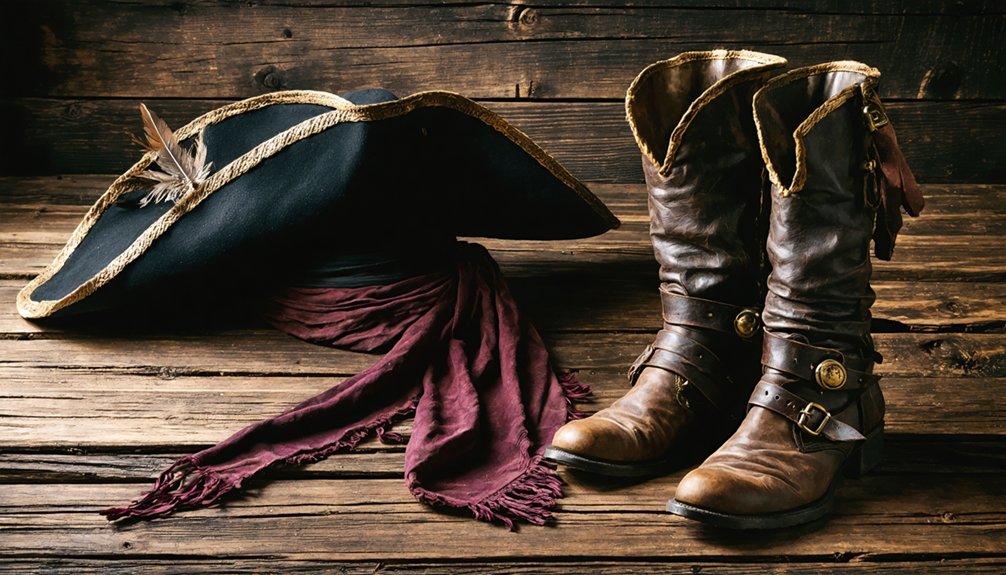
Headwear and footwear anchor the visual credibility of any pirate cosplay, so you’ll want to prioritize both with the same care you’d give the rest of the outfit. Sailors engaged in pirate ship navigation relied on functional, period-accurate gear, and maritime flag symbolism often influenced insignia on hats and accessories.
Headwear and footwear define your pirate cosplay’s authenticity — treat them with the same seriousness as every other element.
- Tricorn hats should come from makers specializing in historical reproduction, using felt or wool rather than synthetic materials.
- Bandanas and headscarves work best in muted, weathered tones that reflect authentic sailor practicality.
- Boots should feature leather or leather-look construction with low heels appropriate for your venue’s flooring.
Seek authentic pieces over costume-shop shortcuts. Texture, material integrity, and period-correct silhouettes distinguish genuinely compelling cosplay from forgettable imitation.
Props, Jewelry, and Accessories That Elevate Any Pirate Cosplay
Your accessories transform a basic costume into a historically grounded portrayal, so prioritize chunky rings, hoop earrings, and rope bracelets that reflect the adornment habits of period seafarers.
Anchor your ensemble with a wide leather belt or a boldly colored sash worn diagonally across the chest, as both served genuine functional and social purposes aboard 17th- and 18th-century vessels.
Complete the effect with iconic props like a weathered compass, a sealed scroll, or a worn leather satchel, each reinforcing your character’s narrative without sacrificing period authenticity.
Chunky Jewelry Choices
Chunky jewelry transforms a basic pirate costume into a character with visible history and weight. Select pieces that reference maritime symbols and carry genuine visual authority.
- Rings: Stack mismatched metals across multiple fingers. Favor skull motifs, anchors, or serpents — imagery rooted in sailor tradition and pirate slang culture.
- Earrings: Large hoops dominated seafaring men’s jewelry historically. Gold or oxidized silver reads authentically under varied lighting conditions.
- Pendants: Choose heavy chains bearing coins, compass roses, or nautical crosses. These maritime symbols communicate a life built through plunder and passage.
Layer these elements deliberately rather than randomly. Each piece should appear earned, not purchased.
Distress metal finishes with fine steel wool to eliminate modern shine and reinforce the weathered, period-accurate aesthetic your costume demands.
Iconic Pirate Props
Props carry a costume beyond clothing into character — and for pirate cosplay, the right accessories signal rank, history, and lived experience at a glance. Select props rooted in maritime function: worn leather satchels, compass replicas, and period-accurate flintlock pistols communicate authentic seafaring purpose.
Carry rolled nautical maps marked with aged ink stains and burned edges to suggest active navigation rather than theatrical decoration. Position miniature treasure chests as display props or belt attachments, reinforcing a plunderer’s identity without overselling the concept.
An eye patch worn slightly off-center reads as battle-worn rather than costume-store standard. Choose brass and copper materials over plastic whenever possible.
Each prop you select should justify its presence through historical logic, earning its place within a deliberately constructed, period-informed character narrative.
Sashes And Belts
Sashes and belts serve dual functions in pirate cosplay — they’re period-accurate garment components and immediate visual signifiers of a character’s role aboard ship. Historically, sailors used sashes as practical waist support during physically demanding maritime labor.
Your belt and sash selection communicates rank, allegiance, and character depth through maritime symbols and period-specific construction.
Prioritize these three elements:
- Fabric sashes in faded crimson, rust, or gold worn diagonally across the chest, referencing authentic sailor tradition
- Leather belts with functional pouches, incorporating period-appropriate buckles rather than modern hardware
- Layered combinations — a sash over a wide leather belt — reinforcing pirate slang terms like “sea rover” through visual storytelling
Distress both pieces using sandpaper for convincing weathered authenticity.
How to Build a Kid-Friendly Pirate Cosplay Outfit
Building a kid-friendly pirate cosplay outfit requires balancing historical authenticity with child safety and comfort. You’ll want to reference late 17th-century commoner clothing while substituting potentially hazardous elements with child-appropriate alternatives.
Start with a loose cream shirt, then layer a simple vest over it. Use elastic waistbands instead of rigid belts, and incorporate soft sashes rather than leather straps with buckles.
A bandana works better than a tricorn hat for younger children who need unrestricted movement.
Enrich the costume’s educational dimension by introducing pirate ship models and nautical knot tying as complementary activities. These additions reinforce period accuracy while engaging children intellectually.
Select natural, breathable fabrics in muted tones—tan, rust, and weathered brown—ensuring the costume photographs authentically without sacrificing wearability throughout extended event participation.
How Far Ahead Should You Plan Your Pirate Cosplay?
Once you’ve settled on a costume design—whether tailored for a child or crafted for yourself—timing becomes your next practical concern. Like maritime navigation, successful cosplay demands forward planning rather than reactive scrambling. Don’t let your deadline “catch ye dead in the water”—a fitting piece of pirate slang for poor preparation.
Like maritime navigation, successful cosplay demands forward planning—don’t let your deadline catch ye dead in the water.
Follow this structured timeline:
- Four to six months prior — Source natural fabrics, historical references, and specialty tricorn hat makers.
- Two to three months prior — Begin distressing textiles, assembling layered components, and acquiring props.
- Two to four weeks prior — Conduct full fitting sessions, test photography under varied lighting, and verify accessory safety.
Each phase builds deliberately upon the last, ensuring your final ensemble reflects meticulous, period-accurate craftsmanship rather than last-minute improvisation.
Frequently Asked Questions
Can Pirate Cosplay Outfits Be Rented Instead of Bought or Made?
Why settle for less? You can absolutely rent pirate cosplay outfits! Enhance rentals with authentic pirate costume accessories and innovative cosplay makeup tips to achieve a meticulous, period-accurate aesthetic that’ll truly distinguish your historically grounded portrayal.
Are There Pirate Cosplay Communities or Groups to Join for Events?
You’ll find vibrant pirate cosplay communities through platforms like Reddit, Facebook Groups, and historical reenactment societies. They’ll refine your knowledge of pirate costume accessories and pirate event etiquette, connecting you with meticulous, period-accurate enthusiasts who innovate costuming standards.
How Do You Handle Weather Conditions While Wearing a Pirate Cosplay?
Like a seasoned mariner reading the tides, you’ll adapt by choosing breathable fabrics for summer heat and weatherproof accessories during rain, ensuring your historically meticulous ensemble remains period-accurate and resilient across unpredictable conditions.
What Historical Events Specifically Welcome or Encourage Pirate Cosplay Attendance?
You’ll find pirate cosplay warmly welcomed at Renaissance fairs, tall ship festivals, and maritime history museums. These venues celebrate pirate lore authentically, encouraging you to don period-accurate attire that meaningfully honors seafaring heritage and maritime history traditions.
Can Pirate Cosplay Be Adapted for Mobility Aids or Physical Limitations?
Like Long John Silver himself, you can craft adaptive costumes that celebrate mobility aids as authentic pirate artifacts — wooden legs, ornate crutches, and wheel-mounted vessels transform limitations into period-accurate, innovative storytelling elements that’ll enhance your historical authenticity.
References
- https://www.morphsuits.com/blog/adult-pirate-costume/
- https://www.reddit.com/r/pirates/comments/17i253t/resourcesadvice_for_making_a_historically/
- https://www.piratesinfo.com/guides-for-pirates/pirate-costume-guide/
- https://www.morphsuits.com/blog/pirate-costumes/
- https://topgurl.com/pirate-costume-ideas/
- https://www.piratesinfo.com/guides-for-pirates/pirate-costume-guide/authentic-pirate-costumes/
- https://sites.google.com/site/realpirates000/home