Crafting your own cosplay weapon starts with solid planning—gather high-res references, scale your templates, and choose EVA foam paired with rigid cores like PVC pipes or wooden dowels. You’ll cut and bevel your foam pieces, then bond them with contact cement before heat-sealing and layering flexible sealers. Finish with metallic acrylics, dry-brushed weathering, and a protective clear coat. Stick around, and you’ll master every step like a seasoned prop builder.
Key Takeaways
- Start with detailed reference photos and scaled templates to plan your weapon’s design before cutting any foam.
- EVA foam paired with rigid cores like wooden dowels ensures lightweight, durable, and structurally sound cosplay weapons.
- Use sharp blades and angled cuts to shape foam accurately, creating realistic beveled edges and dimensional profiles.
- Bond foam layers with contact cement, then seal surfaces with heat and water-based sealers for a paintable finish.
- Apply metallic base coats, dry-brush weathering effects, and finish with flexible clear coat for a polished, realistic look.
Plan Your Cosplay Weapon Design and Gather References
Before cutting a single piece of foam, you’ll need a solid plan and a strong set of reference materials to guide every decision that follows. Pull blueprints, official art, and high-resolution photos of your chosen weapon from multiple angles. These references lock in accurate proportions, detail placement, and silhouette before you commit to any cuts.
Next, print and scale your templates to confirm final dimensions on paper first, eliminating costly foam waste. As you design, balance visual appeal with practical considerations like weight distribution and ergonomic grip comfort for extended wear.
If your build draws from a real-world weapon, prioritize historical accuracy in blade geometry and hardware details. Mark pattern alignment points clearly so every printed template stays consistent throughout the entire assembly process.
Pick the Right Materials for Your Cosplay Weapon
Once your templates are finalized, material selection becomes the decision that shapes every structural and aesthetic outcome that follows. EVA foam remains the dominant choice for cosplay weapons because it balances material durability with manageable weight considerations, letting you craft large props without sacrificing portability or comfort.
Don’t stop at foam alone, though. Pairing it with a rigid core — whether a wooden dowel, threaded rod, or PVC pipe — dramatically reduces blade flex and extends the prop’s lifespan. Running that core from the handle deep into the blade distributes stress more evenly across the structure.
For oversized or display-grade builds, plastic strip reinforcements between foam layers add stiffness where it counts. Every material decision you make here directly influences how your finished weapon performs, looks, and holds up.
Cut and Shape Your Cosplay Weapon Base
With your materials gathered and templates ready, it’s time to transfer those outlines onto foam and start building real structure. Precision here directly impacts your prop’s final realism.
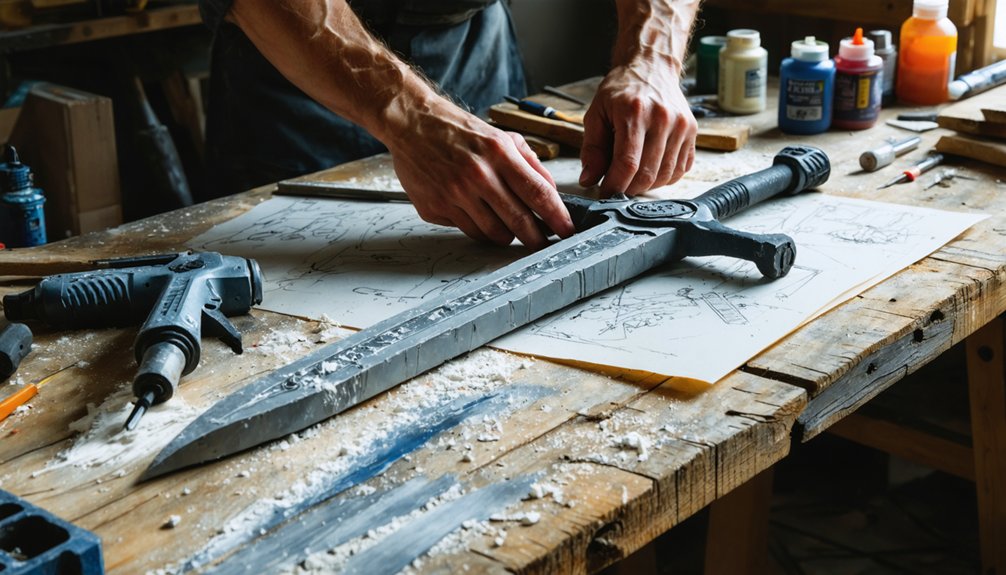
- Trace and cut identical blade pieces using a sharp craft knife or snap blade for clean edges.
- Blade beveling — angle your cuts along the edges to create a dimensional, weapon-like profile rather than flat slabs.
- Core placement — channel-cut a groove running from handle through blade, sized precisely for your dowel or PVC insert.
- Refine contours — using a Dremel tool or sandpaper to round corners and eliminate rough transitions.
Each step builds structural integrity while preserving design accuracy, setting a solid foundation for assembly, sealing, and the finishing stages ahead.
Glue It Together, Then Seal the Surface
Assembling your foam pieces correctly determines whether your prop holds its shape for one convention or ten, so apply contact cement to both bonding surfaces, let it tack up for a minute, then press the layers together firmly around the core.
Mastering these adhesive techniques means you’re eliminating weak joints before they become failures mid-event. Clamp or hand-press seams for at least thirty seconds, working outward to prevent air pockets.
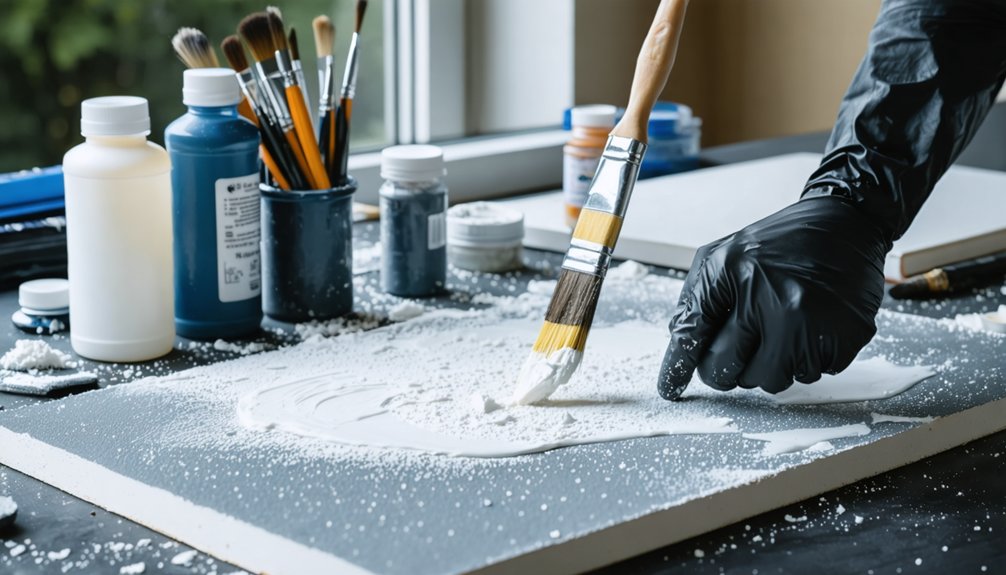
Once bonded, refine rough edges with a Dremel or fine sandpaper before moving into surface sealing. Apply heat sealing first using a heat gun on low, then layer a water-based sealer in two to three thin coats.
Each coat tightens the foam’s texture, creating a paintable surface that’s both flexible and durable under convention conditions.
Paint, Weather, and Detail Your Cosplay Weapon
Your sealed foam surface is now ready for paint, and the sequence you follow here is what separates a flat, unconvincing prop from one that reads as a real weapon from across the convention floor.
- Base coat first — apply metallic acrylic evenly across both blade faces, maintaining blade symmetry throughout.
- Color matching — compare your paint tone against reference images under natural light before committing.
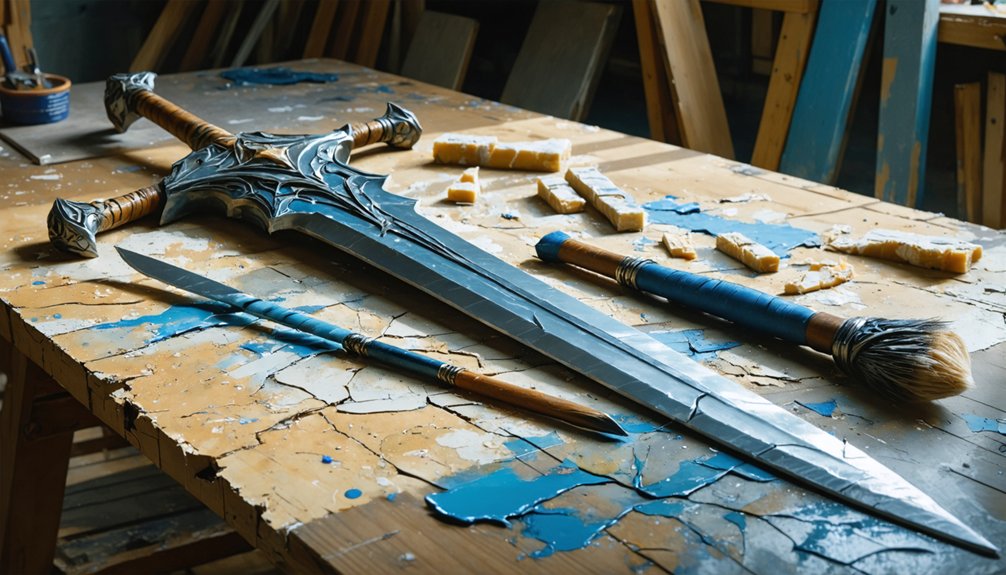
- Weathering layer — dry-brush darker tones into recesses, scratches, and edge lines to simulate wear.
- Detail work — paint guards, pommels, and grip wrapping separately using targeted brushwork.
Finish with a flexible clear coat to lock everything in. It protects the surface and gives your weapon a polished, convention-ready presence without cracking during handling.
Frequently Asked Questions
How Do I Safely Transport a Finished Cosplay Weapon to Conventions?
Your prop’s practically priceless! Wrap it in foam padding, secure it in a hard case, and label it clearly. Prioritizing cosplay safety and prop durability guarantees your weapon arrives convention-ready without damage.
Can Children Safely Participate in Cosplay Weapon Crafting Projects?
Children can safely participate when you select age-appropriate materials like soft EVA foam and guarantee adult supervision during cutting. Prioritizing child safety means you’ll swap sharp tools for safer, kid-friendly alternatives throughout every creative, hands-on crafting stage.
What Conventions Have Specific Prop Weapon Size or Material Restrictions?
Countless conventions enforce cosplay weapon regulations—research each event’s rulebook before you finalize your prop weapon customization. DragonCon, San Diego Comic-Con, and PAX actively restrict blade lengths, rigid materials, and sharp edges, so you’ll need flexible foam builds.
How Long Does a Completed Foam Cosplay Weapon Typically Last?
With proper weapon maintenance, your foam durability can stretch one to three years. You’ll extend its lifespan by resealing surfaces, storing it carefully, and touching up paint after each convention outing.
Are There Legal Considerations When Carrying Cosplay Weapons in Public?
Before you jump the gun, yes, legal considerations exist. When wearing your cosplay costume, you’ll need to research local laws on weapon safety, as rules vary by location, event, and prop material type.
References
- https://www.youtube.com/watch?v=YnFwielXmVQ
- https://www.reddit.com/r/cosplayprops/comments/pqwvpr/whats_the_best_way_to_make_a_prop_sword/
- https://excelblades.com/blogs/diy/cosplay-sword-how-to
- https://starstruckpanda.com/diy-cosplay-weapon-tutorials/
- https://www.youtube.com/watch?v=_VfZEGOti0w
- https://www.instructables.com/How-to-make-prop-weapons-1/
- https://www.youtube.com/watch?v=yU1h_eh4iKE
- https://www.crazecosplay.com/blogs/questions/how-to-make-cosplay-weapons