To master steampunk gothic cosplay, you start with a strong character concept, then build outward through fabric, silhouette, color, and accessories. Choose structured materials like leather, brocade, and velvet, then anchor your palette in dark charcoal, warm brass, and deep burgundy. Every gear, corset, and prop should serve your character’s story, not just decorate it. Get the foundation right, and everything else follows with striking, undeniable precision—and there’s far more to uncover ahead.
Key Takeaways
- Steampunk favors brass, leather, and mechanical details, while gothic embraces velvet, lace, and dark romanticism; never blur these identities.
- Build every costume from a strong character concept, letting profession and personality guide fabric, silhouette, accessories, and makeup choices.
- Limit dominant textures to three, such as leather, velvet, and brocade, to maintain visual cohesion and avoid cluttered layering.
- Anchor your color palette in dark shades, add warm metallics like brass or bronze, then accent sparingly with gothic hues.
- Accessories must carry narrative weight; goggles, mechanical jewelry, and leather journals suggest purpose rather than functioning as decorative afterthoughts.
Steampunk vs. Gothic: How the Difference Shapes Your Costume
Before you sew a single stitch or buckle a single boot, you need to understand what separates steampunk from gothic — because that distinction shapes every decision you’ll make, from fabric to silhouette to color.
Steampunk fuses Victorian elegance with industrial grit. It’s brass gears, worn leather, mechanical gadgets, and a retro-futurist spirit that says adventure over melancholy.
Brass gears meet worn leather — steampunk is Victorian elegance powered by industrial adventure.
Gothic cosplay leans into dark romanticism — velvet, deep purple, intricate lace, and a brooding silhouette built for atmosphere rather than function.
Where steampunk reaches forward with invention, gothic reaches inward with emotion. Your costume must reflect one dominant identity before borrowing from the other.
Mixing both without a clear concept creates visual noise. Define your character first, then let that definition drive every garment, accessory, and color choice you make.
Why Your Character Concept Should Come Before Everything Else
Before you touch a single piece of fabric or sketch out an accessory list, you need to define exactly who your character is, because every costume decision flows from that identity.
Your character concept acts as the creative blueprint, dictating your color palette, silhouette, texture choices, and the emotional tone your costume projects.
When you build outward from a strong, specific concept, your finished look achieves the kind of visual cohesion that separates a memorable costume from a collection of disconnected pieces.
Define Your Character First
Everything else in your steampunk-gothic cosplay—the corset, the goggles, the smoky eye—should answer to one thing: your character. Before you select a single garment, decide who she is. Is she a rogue inventor haunting gaslit streets? A gothic noble who’s retrofitted her mourning gown with industrial details? Her identity dictates every choice.
Victorian silhouettes aren’t just aesthetic—they’re narrative architecture. The way a bustle frames a silhouette or a high collar commands a room tells her story without dialogue.
Industrial details follow the same logic; they should feel earned by her history, not dropped onto fabric randomly.
Define her profession, her world, her obsession. Once her character breathes, the costume stops being a collection of parts and becomes a fully inhabited persona.
Concept Drives Every Choice
When your character concept comes first, every decision that follows has a reason. You’re not randomly grabbing goggles and corsets — you’re building a living, breathing persona with intention.
Ask yourself: does your character embody Victorian elegance, industrial grit, or a collision of both? That answer dictates your fabrics, your silhouette, your color palette, and your props.
Without a concept, your costume becomes a collection of unrelated parts. With one, every buckle, every lace trim, and every gear placement tells part of your character’s story. Your makeup reinforces her mood. Your boots reflect her world. Your accessories reveal her purpose.
Concept is your creative compass. Trust it before you purchase a single piece, and your entire costume will speak with one unified, unmistakable voice.
Consistency Builds Visual Cohesion
Cohesion breaks down when garments contradict each other. A velvet gothic bodice paired with mismatched brass gadgetry creates visual noise, not drama.
But when your concept anchors each choice, those same elements reinforce one another with intention.
Think of your costume as a visual argument. Every texture, silhouette, and accessory should support that argument.
When they do, your character doesn’t just look assembled — it looks *inevitable*.
That’s the difference between a costume and a character.
The Best Fabrics for a Steampunk Gothic Costume
Your fabric choices set the dramatic tone of your entire steampunk gothic build, so anchor your costume in heavy cotton twill, worn leather, or brocade for structure. Then contrast those industrial materials with velvet, silk, or intricate lace for gothic depth.
Layer no more than two or three dominant textures to keep the silhouette cohesive rather than chaotic. When you balance these materials deliberately, the costume reads as a unified character statement instead of a scattered collection of period-inspired scraps.
Core Fabric Choices
Fabric selection is where a steampunk gothic costume either earns its atmosphere or loses it entirely. You’re building a character, not just an outfit, so every textile choice must serve both textile durability and historical authenticity simultaneously.
Reach for heavy cotton twill, worn leather, and brushed wool when constructing your steampunk foundation — these materials endure convention floors and photograph with raw, industrial credibility.
Layer velvet and intricate lace over that framework to pull the gothic darkness forward. Brocade adds Victorian-era weight and visual complexity without overwhelming your silhouette.
Silk catches light dramatically, deepening the romantic, brooding mood gothic cosplay demands.
Limit yourself to two or three dominant textures. More than that fractures your visual story before you’ve even added a single accessory.
Layering Textures Effectively
Selecting the right fabrics only matters if you know how to stack them against each other with intention. Fabric mixing works best when you’re building deliberate texture contrast rather than layering randomly.
Place structured leather against soft velvet to create visual tension. Let lace peek beneath a brocade corset to soften the industrial edge. Brushed wool and worn canvas carry the steampunk weight, while silk underskirts and ruffled lace push the gothic romance upward through the silhouette.
Limit yourself to two or three dominant materials so the eye has a clear path to follow. Every layer should earn its place by adding depth, contrast, or character detail.
Thoughtful stacking transforms individual fabrics into a unified, commanding visual statement.
Balancing Materials Visually
Once you’ve locked in your layering approach, the materials you choose determine whether the costume reads as deliberate artistry or visual chaos. Material harmony demands restraint — cap your dominant textures at three: leather, velvet, and brocade form a powerful steampunk-gothic trinity without overwhelming the eye.
Color coordination reinforces that structure. Anchor your palette in black and deep burgundy, then introduce bronze or antique silver through metallic accents. Those warm tones prevent the costume from collapsing into a flat, shapeless shadow.
Treat each fabric as a visual instrument. Velvet absorbs light dramatically, leather reflects it sharply, and lace filters it softly. Deploying these properties intentionally across your silhouette creates depth, dimension, and a commanding presence that no amount of decorative gears can manufacture alone.
How to Choose Your Steampunk Gothic Color Palette
Your steampunk gothic color palette rests on two distinct mood systems that you’ll need to merge into one coherent visual statement.
Color harmony demands that you anchor every choice around a deliberate core before adding contrast.
Every color decision must trace back to one intentional anchor before contrast earns its place.
Build your palette using these four mood-driven layers:
- Darken the foundation — Start with black or deep charcoal as your structural base.
- Inject industrial warmth — Introduce bronze, brass, or antique copper for mechanical credibility.
- Deepen the romance — Layer in blood-dark red or deep purple for gothic tension.
- Control palette contrast — Use aged silver or pale ivory sparingly to prevent visual flatness.
Avoid splitting your attention across too many hues.
Three dominant tones executed with precision will always outperform five competing colors fighting for dominance.
Essential Garments for a Women’s Steampunk Gothic Costume
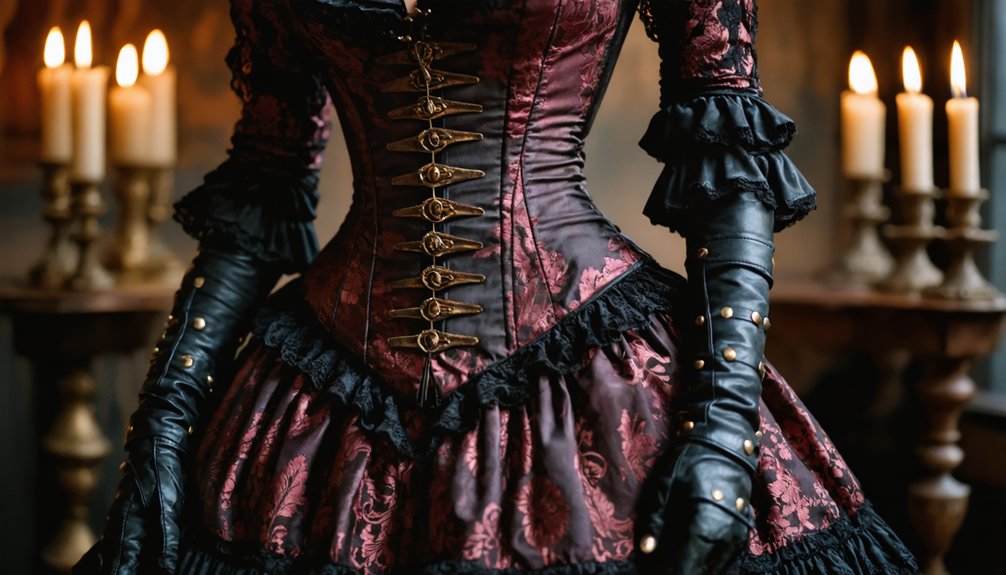
Your costume’s foundation rests on three essential categories: corsets and blouses, skirts or pants, and boots paired with outerwear.
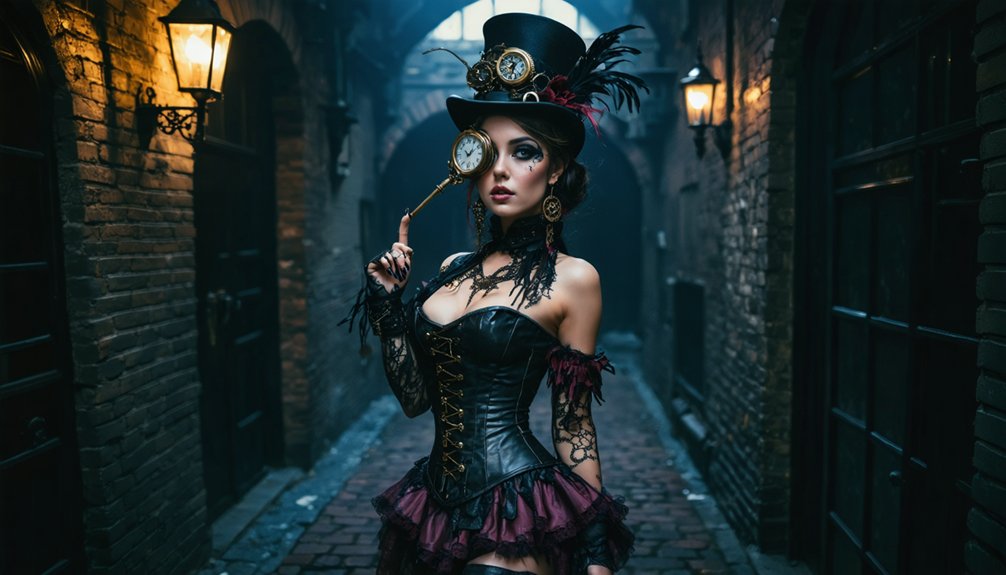
Layer a structured corset over a ruffled, high-collared blouse to immediately establish that Victorian-industrial silhouette.
Then choose between a dramatic bustled skirt or period-inspired pants depending on the character you’re building.
Ground the entire look with heavy lace-up boots and a fitted coat or cape that ties every layer together with gothic authority.
Corsets and Blouses
When building a women’s steampunk gothic costume, the corset and blouse form the non-negotiable foundation that defines your entire silhouette.
Together, they establish Victorian silhouettes with industrial details that command attention instantly.
Choose your base pieces with intention:
- Select a structured corset worn visibly over clothing to create dramatic waist definition and mechanical authority.
- Layer a ruffled blouse underneath featuring high necklines, long lace cuffs, and deep gothic tones.
- Incorporate brocade or velvet fabric to honor gothic romanticism while maintaining period-accurate drama.
- Add brass hardware or buckle details directly onto the corset for unmistakable steampunk character.
These two garments don’t merely dress you — they transform you into a character with history, purpose, and unapologetic power.
Skirts and Pants
Once the corset and blouse establish your upper silhouette, the skirt or pants you choose below determines whether your costume reads as a commanding Victorian adventurer or a brooding gothic heroine.
Bustled or high-low skirts deliver dramatic Victorian silhouettes, their layered volume amplified by dark velvet underskirts or gothic lace. Stack textures deliberately — worn leather panels against deep purple ruffles create immediate visual tension.
If you prefer mobility, bloomers or structured trousers with industrial details like riveted seams, buckled straps, or gear-stamped hardware modernize the look without sacrificing period authenticity. Avoid decorating indiscriminately; every added element should feel mechanically purposeful.
Whether you choose sweeping skirts or tailored pants, commit fully to your character’s world, because consistency between silhouette and story is what elevates a costume into a performance.
Boots and Outerwear
Boots anchor the entire costume to the ground — literally and visually — so choose high lace-up styles in worn leather or weathered canvas that echo the industrial textures already present in your corset and blouse.
Outerwear seals the Gothic elegance and Victorian silhouettes you’ve built layer by layer.
Layer deliberately with these commanding outerwear choices:
- Structured military jackets — fitted, brass-buttoned, and cropped at the waist
- Velvet tailcoats — floor-grazing drama in deep purple or black
- Caped overcoats — wide-shouldered authority with brooding movement
- Leather dusters — weathered, long, and unapologetically fierce
Every outerwear piece should feel earned, not added. Your boots and coat don’t finish the costume — they declare your character’s entire world.
How to Layer Lace, Leather, and Metal Like a Pro
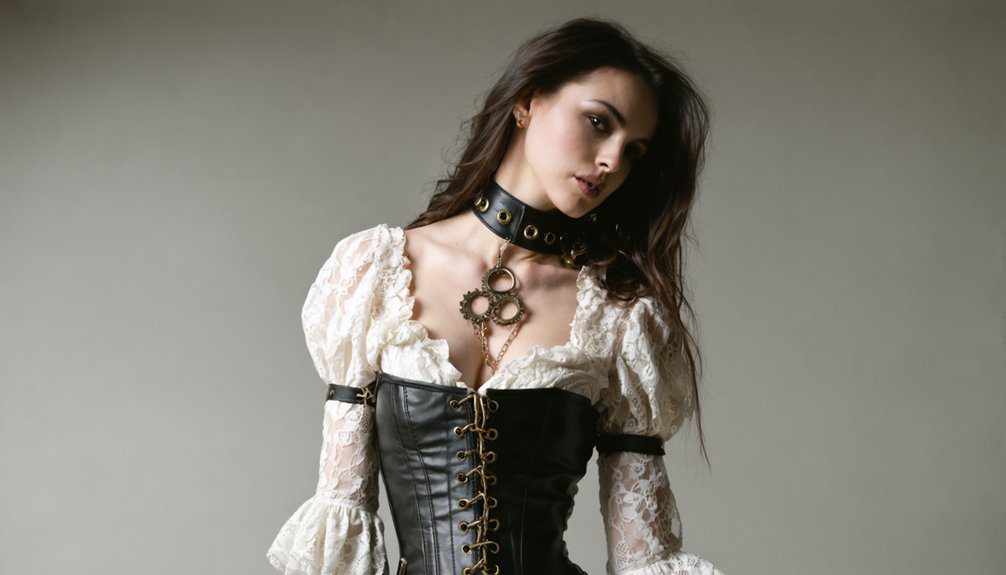
Layering lace, leather, and metal is the defining skill that separates a polished steampunk-gothic costume from a cluttered one. Start with leather as your structural anchor — a fitted corset or jacket establishes the silhouette.
Layer fabrics like lace beneath or over leather edges to introduce softness without losing edge. The contrast between delicate and industrial creates visual tension that feels intentional, not accidental.
Introduce mechanical details — brass buckles, gear embellishments, chain accents — as deliberate punctuation points rather than scattered decoration. Each material should occupy a distinct visual layer: leather grounds, lace softens, metal sharpens.
Limit yourself to two or three dominant textures so nothing competes. When every element serves the character concept, your layering reads as mastery, not chaos.
Steampunk Gothic Accessories That Actually Make Sense
Accessories don’t just finish a steampunk-gothic costume — they define the character wearing it. Every piece you choose should tell a story rooted in purpose, not decoration.
Select accessories that carry narrative weight:
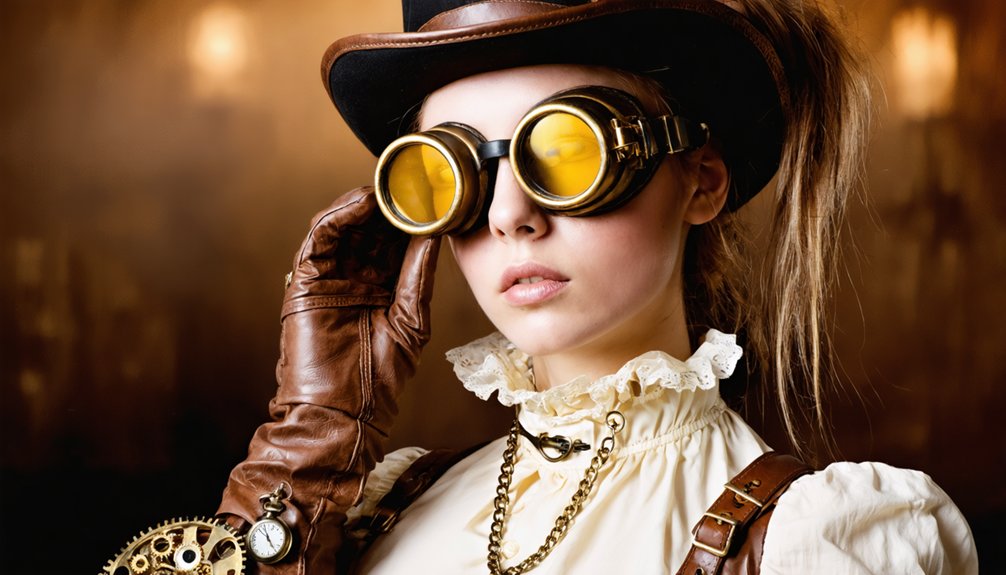
- Goggles with brass frames — worn on your forehead or hat, they signal adventure and mechanical mastery.
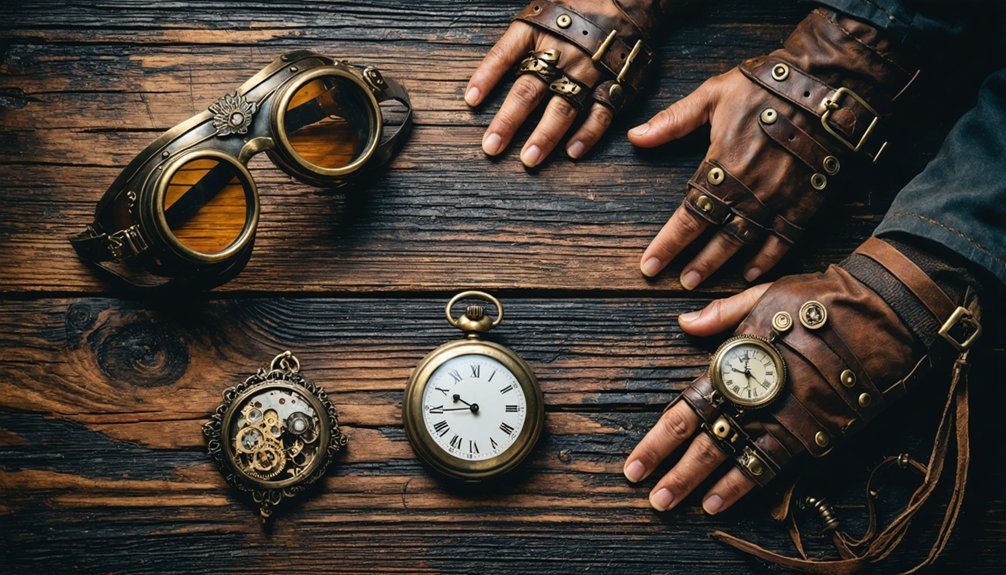
- Mechanical jewelry — gear-embedded rings, clockwork pendants, and articulated bracelets fuse Victorian motifs with industrial edge.
- Utility belts with buckles and chains — they suggest function, carrying miniature compasses, pocket watches, or ornate flasks.
- Chokers and lace gloves — layered together, they bridge gothic romanticism with structured steampunk authority.
You’re not accessorizing randomly — you’re building a world on your body. Every clasp, cog, and chain must earn its place.
Props and Gadgets That Build Real Character
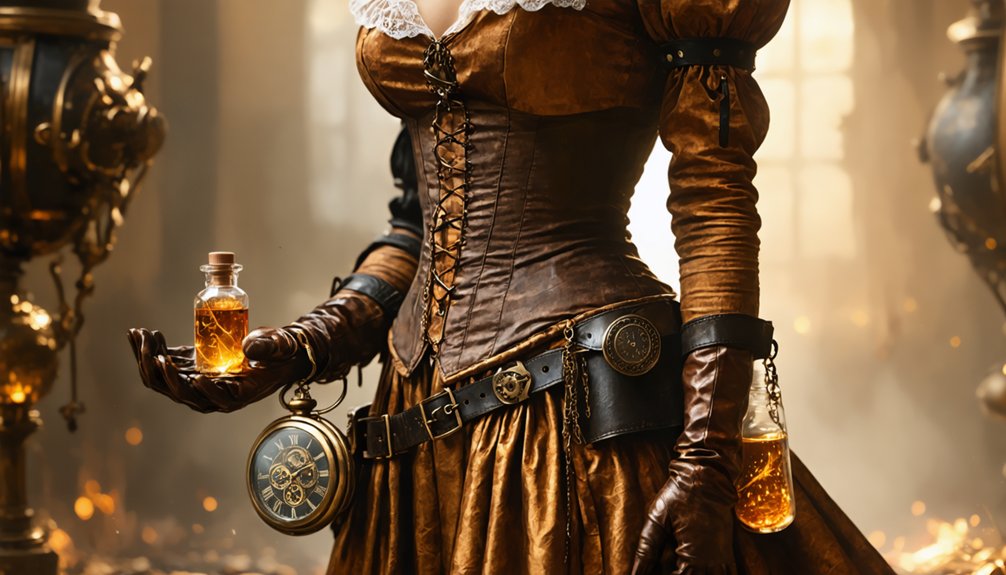
While accessories define your aesthetic, props and gadgets define your role. Choose items that suggest a story — a brass compass implies navigation, a worn leather journal implies scholarship, and a copper-fitted telescope implies exploration. Each prop you carry communicates purpose.
Lean into mechanical automata for maximum theatrical impact. A hand-crafted clockwork creature perched on your shoulder or resting in your palm instantly signals inventor, scientist, or rogue engineer. These pieces transform your costume into a living narrative.
Victorian jewelry bridges the gothic and steampunk divide beautifully. Lockets containing miniature gears, mourning brooches with dark gemstones, or cameo pendants fitted with tiny cogs serve double duty — they’re both ornamental and character-defining.
Every gadget you select should answer one question: what does this reveal about who you are?
Steampunk Gothic Makeup That Completes the Full Look
Your props and gadgets tell the world what you do — your makeup tells them who you are. A steampunk gothic face demands intention, not afterthought.
Your costume shows what you do. Your makeup reveals who you are. Never confuse the two.
Lock your makeup color palette to these four emotional anchors:
- Pale foundation — signals aristocratic detachment and timeless mystery
- Smoky, darkened eyes — commands presence and gothic depth
- Deep red, plum, or burgundy lips — projects dangerous elegance and Victorian drama
- Metallic bronze or silver eyeshadow — bridges your mechanical accessories with your face
Accessory coordination matters here. Your goggles, choker, and brass hardware should mirror the metallic tones you’ve applied. Nothing breaks character faster than a mismatched finish.
When your face and your costume share the same visual language, you stop wearing the costume — you *become* it.
Common Steampunk Gothic Cosplay Mistakes to Avoid
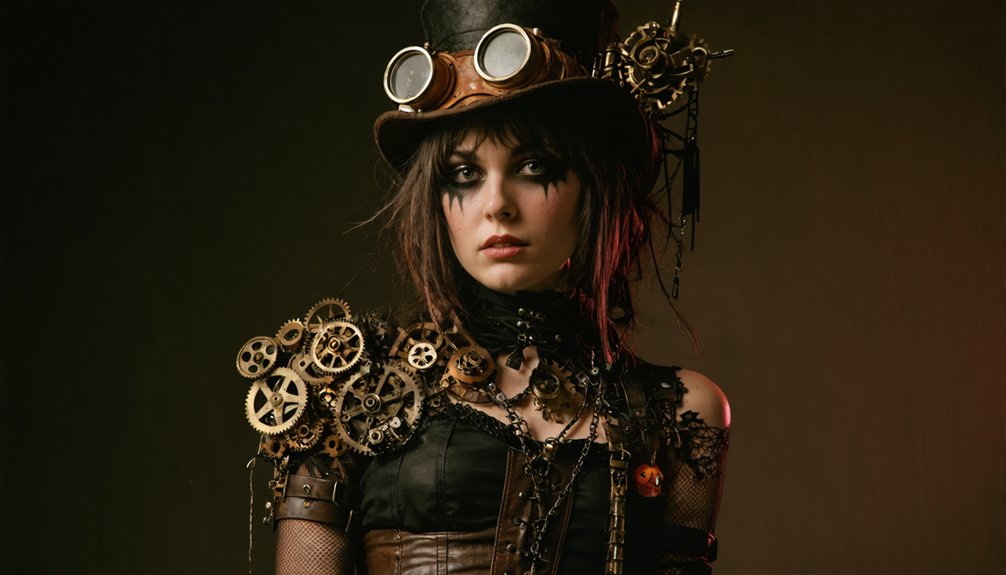
Even the most ambitious costume collapses under the weight of avoidable errors — and steampunk gothic is particularly unforgiving. You’ll undermine your entire look by overloading it with random gears that serve no visual purpose. Accessories must appear functional, not decorative afterthoughts.
Don’t sacrifice your Victorian silhouette for comfort shortcuts. A poorly fitted corset or shapeless skirt destroys the structured drama this aesthetic demands. Similarly, neglecting industrial details — or worse, applying them inconsistently — signals a half-committed concept.
Mixing too many textures beyond three dominant materials creates visual chaos. Polished, brand-new finishes also betray the weathered authenticity steampunk gothic requires.
Finally, treat your palette with discipline. Clashing colors signal indecision. Commit to your concept before purchasing a single garment, and your execution will speak with genuine authority.
Frequently Asked Questions
Where Can I Buy Affordable Steampunk Gothic Costume Pieces Online?
You’ll find affordable steampunk gothic pieces on Etsy, eBay, and Amazon. Hunt for vintage jewelry with brass detailing and leather accessories with buckled hardware — they’ll transform your costume without draining your creative budget dramatically.
How Do I Keep a Corset Comfortable During a Full Convention Day?
Size it right, break it in, and you’ll conquer convention floors with ease. Layer corset padding underneath, choose breathable fabrics for your base garment, and loosen laces slightly throughout the day to maintain comfortable, confident wear.
Can Steampunk Gothic Costumes Work for Outdoor Events in Hot Weather?
Yes, you can absolutely conquer outdoor heat! Choose breathable fabrics like lightweight cotton or linen, swap heavy velvet for lace overlays, and incorporate sun protection through dramatic wide-brimmed hats that reinforce your gothic-steampunk aesthetic beautifully.
How Do I Store and Transport Delicate Costume Accessories Without Damage?
Treat each piece like a fragile clockwork heart — wrap delicate item transport essentials in soft cloth, use rigid cases for costume accessory storage, and cushion gears, goggles, and jewelry individually to prevent scratches, tangles, or breakage during travel.
Are Steampunk Gothic Costumes Appropriate for Themed Weddings or Formal Events?
Yes, you’ll find steampunk-gothic costumes perfectly suited for themed weddings or formal events. Prioritize historical accuracy in your silhouette and guarantee cultural appropriateness by aligning your dramatic, dark-romantic aesthetic with the event’s established vision and tone.
References
- https://my-steampunk-style.com/blogs/steampunk-blog/steampunk-woman
- https://www.youtube.com/watch?v=ZP_bApTo03U
- https://vintagedancer.com/steampunk/steampunk-costume-essentials-women/
- https://starstruckpanda.com/top-fashion-tips-steampunk-gothic-cosplay/
- https://cosplaycurves.com/pages/steampunk-cosplay-guide
- https://steamwroughttimepieces.com/the-ultimate-steampunk-cosplay-guide/