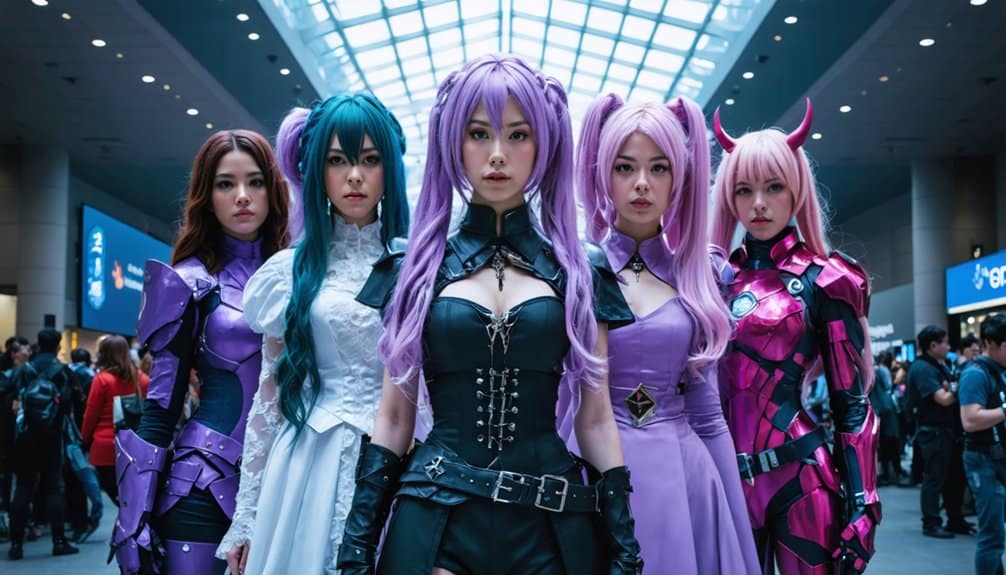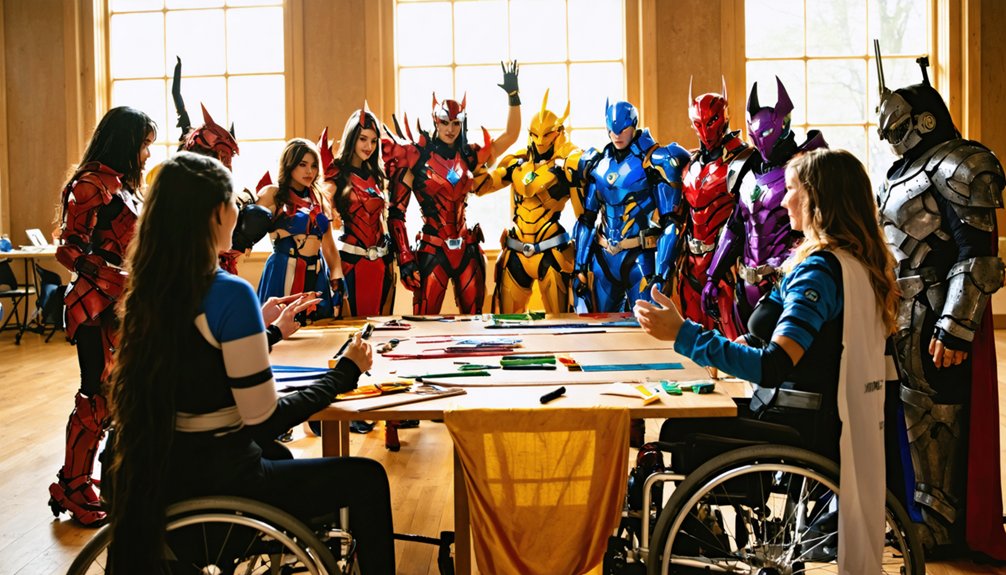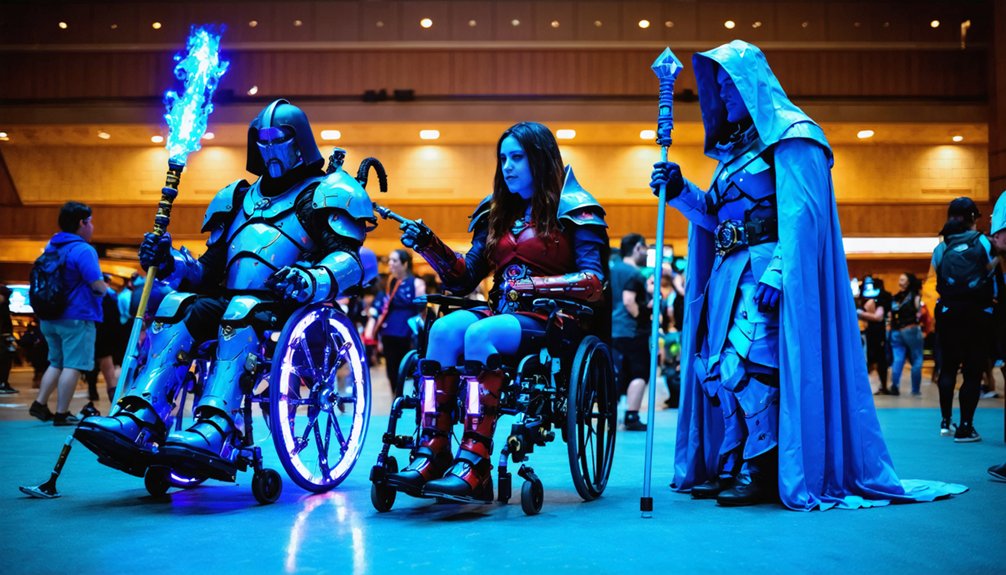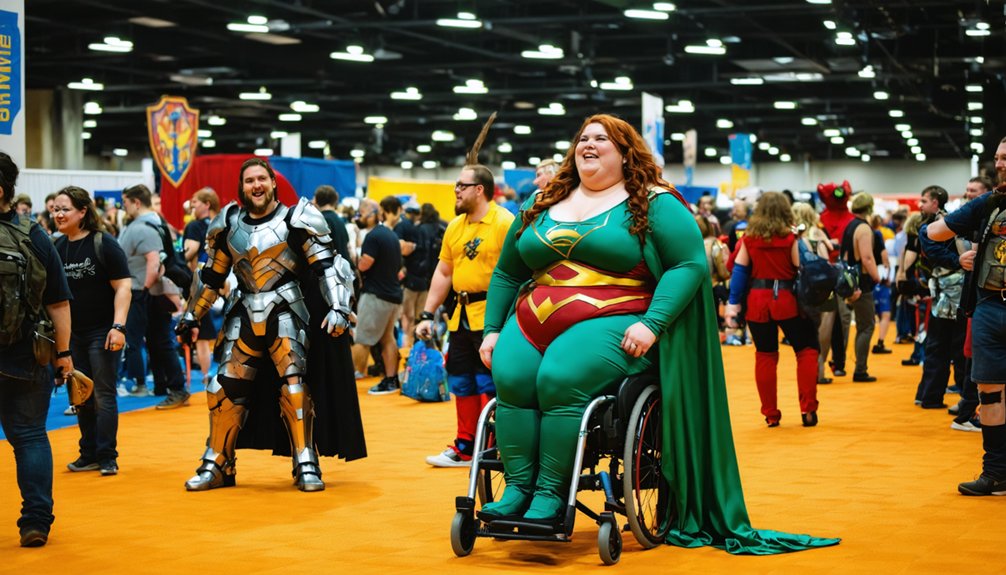
Creating an inclusive cosplay event starts with defining what inclusion means for your specific community. You’ll need clear conduct guidelines that address body shaming, train staff in body-positive language, and design accessible spaces where every attendee feels comfortable. Partner with organizations like “Anyone Can Cosplay” to guarantee authentic representation. Anyone should be able to cosplay any character, regardless of size, ability, or appearance. There’s much more you can do to make that vision real.
Key Takeaways
- Establish clear community guidelines that define body-shaming, outline consequences, and affirm that anyone can cosplay any character regardless of physique.
- Train staff and volunteers to use body-positive language, recognize microaggressions, and follow clear harassment response protocols.
- Design accessible event spaces with wide pathways, rest stations, and signage reinforcing that all body types are welcome.
- Partner with body-positive movements and LGBTQ+ cosplay groups to ensure diverse community voices shape event programming authentically.
- Implement visible reporting stations, anonymous complaint options, and swift consequences for harassment to maintain a safe environment.
Define What Inclusion Means for Your Cosplay Event
Before you can build an inclusive cosplay event, you need to define what inclusion actually means for your specific community. Inclusion isn’t one-size-fits-all—it looks different depending on who’s showing up and what they need.
Start by establishing clear community guidelines that reflect your values. These should address body diversity, race, gender expression, disability, and beyond.
Clear community guidelines aren’t decoration—they’re the foundation that makes every attendee feel genuinely seen and welcomed.
Make your inclusive definitions visible and specific, not vague platitudes.
Ask your community directly: Who feels welcome, and who doesn’t? Their answers shape everything.
Inclusion means recognizing that anyone can cosplay any character, regardless of physique, skin tone, or ability.
When you codify that belief into actionable guidelines, you transform it from an idea into a lived experience every attendee can trust.
Set Clear Rules That Shut Down Body Shaming
Once you’ve defined what inclusion means for your event, it’s time to back those values up with rules that have real teeth. Body positivity isn’t decorative—it’s a foundation requiring active community engagement to sustain.
Post your conduct policies visibly, and train volunteers to enforce inclusive language standards without hesitation.
Make empowerment strategies concrete by outlining exactly what body-shaming looks like and the consequences that follow.
Build support networks by pairing attendees with designated safe-space contacts. Use positive reinforcement to spotlight creative freedom and self-expression, publicly celebrating diverse representation across all body types.
Your acceptance initiatives signal to every cosplayer that their presence matters.
When rules protect participants authentically, you transform your event into a space where everyone arrives as their full, unapologetic selves.
Partner With Body-Positive Communities Before You Plan
Planning your event in isolation is a missed opportunity—tap into body-positive communities early, and you’ll build something far more authentic than you could alone.
Community partnerships with movements like “Anyone Can Cosplay” give you direct access to lived experiences, creative strategies, and passionate advocates who’ve already done the groundwork.
Partnering with movements like “Anyone Can Cosplay” connects you with advocates who’ve already mapped the path forward.
Before you finalize a single venue contract or theme, launch outreach initiatives targeting disability advocates, LGBTQ+ cosplay groups, and body-positive creators across social media.
Invite them into planning conversations, not just promotional announcements. Their insights reshape programming, vendor selections, and messaging in ways that resonate deeply with attendees.
When communities feel ownership over your event’s vision, they champion it loudly.
You’re not just hosting a convention—you’re co-creating a space where every body genuinely belongs.
Design Event Spaces That Welcome Every Body Type
When you’re designing your event space, think beyond basic accessibility and create a layout that genuinely supports every body type.
Consider wide pathways that accommodate mobility aids and rest stations for those who need breaks.
Your signage and messaging should reflect the community’s core belief that anyone can cosplay any character, reinforcing that message visually throughout the venue.
You’ll set the tone for the entire event by making inclusivity visible, not just stated.
Accessible Venue Layout Planning
Designing your event space with accessibility in mind sends a powerful message: every cosplayer belongs here. Think beyond basic compliance — prioritize layouts that genuinely serve diverse bodies and needs.
Incorporate accessible seating throughout your venue, not just in designated corners. Distribute seating options across high-traffic areas so attendees with mobility challenges never feel sidelined.
Wide pathways between displays and booths accommodate wheelchairs, prosthetics, and elaborate costumes equally.
Don’t overlook sensory accommodations. Designate quieter zones away from loud music and crowd noise, giving neurodivergent attendees and those with sensory sensitivities a place to recharge without missing the experience.
When your space physically reflects inclusivity, you’re telling every attendee — regardless of body type, ability, or presentation — that their presence was anticipated, valued, and celebrated before they even walked through the door.
Inclusive Signage And Messaging
Intentional inclusive messaging transforms convention walls into mirrors that reflect every attendee back to themselves. Post signage declaring “Every Body Belongs Here” and “Cosplay Any Character, No Exceptions.”
These aren’t decorations — they’re declarations.
Prioritize visual representation throughout your event space. Feature photography showcasing cosplayers across body types, races, genders, and abilities.
When attendees see themselves celebrated before the first panel begins, you’ve already built belonging.
Avoid language that centers “accuracy” over authenticity. Replace restrictive phrasing with empowering alternatives that reinforce the spirit over the physique.
Your messaging tells your community who’s truly welcome.
Make that answer unmistakably clear: everyone.
Build a Body-Positive Vendor and Creator Lineup
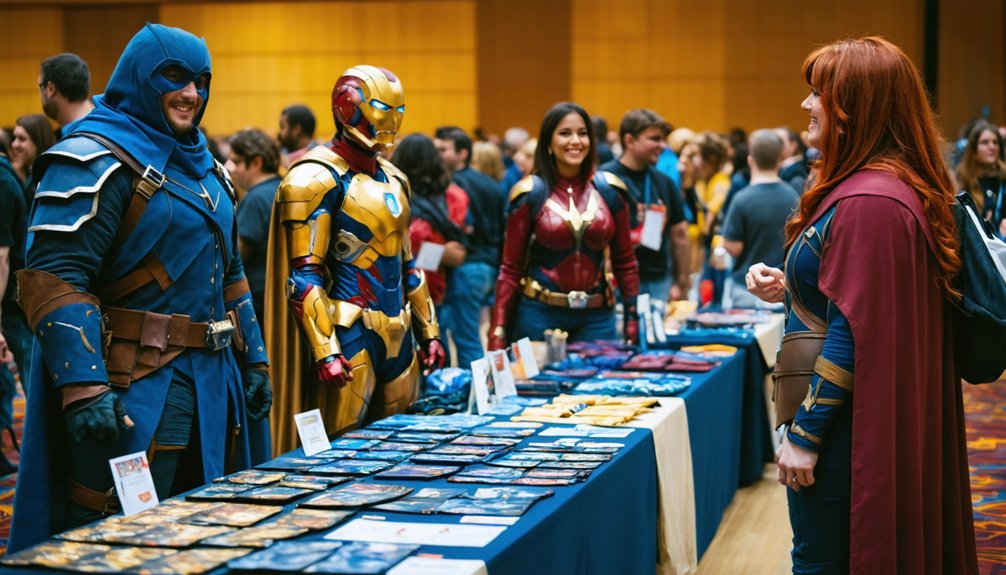
The vendors and creators you feature at your event send a powerful message about who belongs in your cosplay community.
Prioritize vendor collaboration with businesses that design costumes, accessories, and tools for all body types—not just standard sizing.
Seek out independent makers who actively champion representation through their work.
Use creator spotlights to amplify cosplayers of diverse sizes, abilities, races, and gender expressions on stage and across your event’s promotional materials.
These spotlights normalize the “anyone can cosplay” mindset while giving attendees authentic role models they can genuinely connect with.
Vet every vendor partnership intentionally.
If a business reinforces narrow beauty standards, it contradicts your event’s values.
Building an aligned lineup transforms your event floor into living proof that every body truly belongs in cosplay.
Train Staff and Volunteers on Body-Positive Practices
Your staff and volunteers are the frontline ambassadors of your event’s values, so equip them with body-positive language training that replaces judgmental commentary with affirming, neutral responses.
Teach them to recognize microaggressions and redirect harmful conversations before they escalate, ensuring every attendee feels safe and respected.
When harassment occurs, your team should respond swiftly and consistently, following clear protocols that prioritize the targeted person’s well-being over keeping the peace at all costs.
Body-Positive Language Training
Training your staff and volunteers in body-positive language is one of the most powerful steps you can take toward building a truly inclusive cosplay event. When your team uses inclusive terminology consistently, attendees immediately feel welcomed rather than judged.
Teach staff to avoid comments about body size, shape, or appearance entirely — even well-intentioned compliments can unintentionally reinforce harmful standards.
Replace outdated phrases with body positive language that centers character expression over physical attributes. Instead of “you pull off that costume well for your size,” encourage simply “your cosplay is incredible.”
Run workshops before each event, providing real conversation scenarios your team can practice. When staff model respectful communication, attendees follow that tone, creating a ripple effect that transforms your entire event culture into something genuinely empowering.
Handling Harassment Effectively
Even the most welcoming events can attract bad actors, so equipping your staff with clear harassment response protocols is non-negotiable. Train every volunteer to recognize body-shaming comments, unwanted photography, and discriminatory remarks before they escalate.
Your harassment prevention strategy should include designated reporting stations, anonymous complaint options, and swift, consistent consequences for violations. When attendees know your team responds decisively, they’ll feel safer expressing themselves fully.
Community support doesn’t stop at prevention — it extends to follow-up care. After an incident, check in with affected participants and connect them with available resources.
Encourage bystander intervention training so your entire community becomes an active safety net.
When everyone owns responsibility for the space, your event transforms into a genuinely empowering environment where all bodies belong.
Run Panels and Contests That Showcase Every Cosplay Style
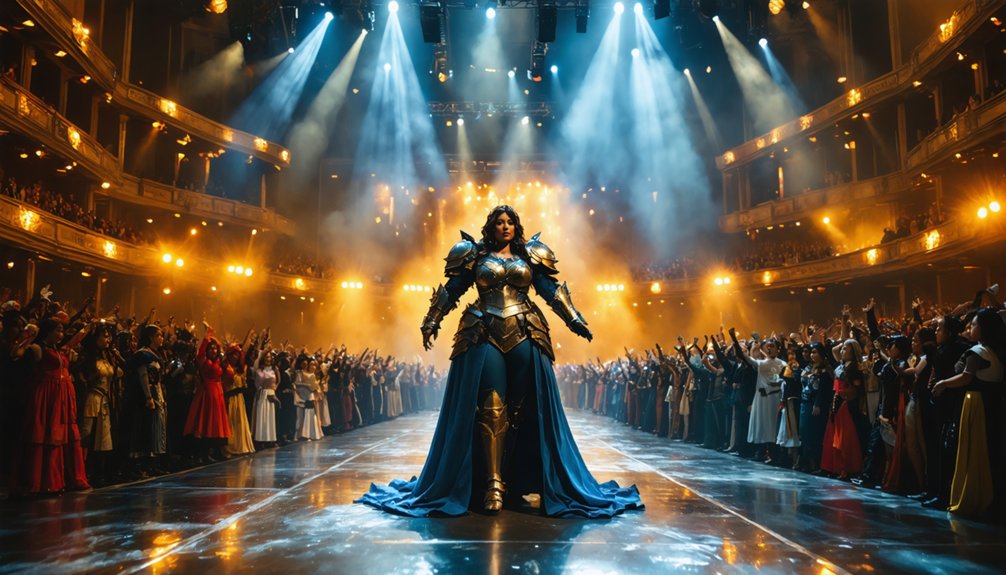
Panels and contests are your most powerful tools for signaling that every cosplay style belongs at your event. Structure them intentionally to champion cosplay diversity and bold creative expression.
Panels and contests aren’t just programming—they’re your loudest statement about whose creativity deserves to be celebrated.
Design your lineup around four celebration-focused categories:
- Best Gender-Swapped Cosplay – Honor reimagined characters that reflect personal identity.
- Most Innovative Interpretation – Reward screen-inaccurate builds that prioritize creativity over accuracy.
- Best Representation – Spotlight cosplayers who redefine characters across races, body types, and abilities.
- Community Spirit Award – Recognize participants who embody their character’s energy, not just their appearance.
Invite panelists who reflect your community’s full spectrum.
When judges and speakers mirror your attendees, you validate everyone’s presence. Your contest structure sends a clear message: showing up authentically is always enough.
Promote Your Cosplay Event on Social Media With Diverse Representation
When you promote your event on social media, make sure your content features cosplayers of different body types, races, genders, and abilities — because representation signals to newcomers that they’re genuinely welcome.
Amplify community members’ posts, share their photos with enthusiastic captions, and tag body-positive cosplay accounts to expand your reach.
You’re not just marketing an event; you’re building a visible, inclusive community that tells every potential attendee, “There’s a place here for you.”
Showcase Diverse Cosplay Participants
Showcasing diverse cosplay participants on social media is one of the most powerful ways to signal that your event truly welcomes everyone.
Through authentic diverse representation and community storytelling, you’re reshaping what cosplay looks like for future generations.
Feature participants who reflect different body types, ethnicities, abilities, and gender expressions by:
- Spotlighting cosplayers who challenge traditional character portrayals
- Sharing behind-the-scenes content that humanizes each participant’s creative journey
- Amplifying underrepresented voices through dedicated social media takeovers
- Creating highlight reels that center community stories over costume perfection
When you intentionally curate inclusive content, you’re telling every potential attendee, “You belong here.”
This approach transforms your event’s digital presence into a living invitation, attracting innovators who value authenticity and community-driven experiences above everything else.
Amplify Inclusive Representation Online
Your social media presence is one of the most direct tools you’ve got for showing the world that your cosplay event celebrates everyone.
Launch online campaigns that spotlight cosplayers of different body types, races, genders, and abilities. Feature real participants, not just polished promotional images, so newcomers see themselves reflected authentically.
Host virtual meetups before your event to build community momentum and lower entry barriers for first-timers who feel uncertain.
Encourage attendees to share their cosplay journeys using a dedicated event hashtag, amplifying diverse voices organically.
Tag body-positive cosplay communities and collaborate with inclusive creators who already champion representation.
When your feed consistently reflects the full spectrum of humanity, you’re sending a clear, powerful message: everyone belongs here, and your event proves it.
Respond to Body Shaming Incidents Quickly and Clearly
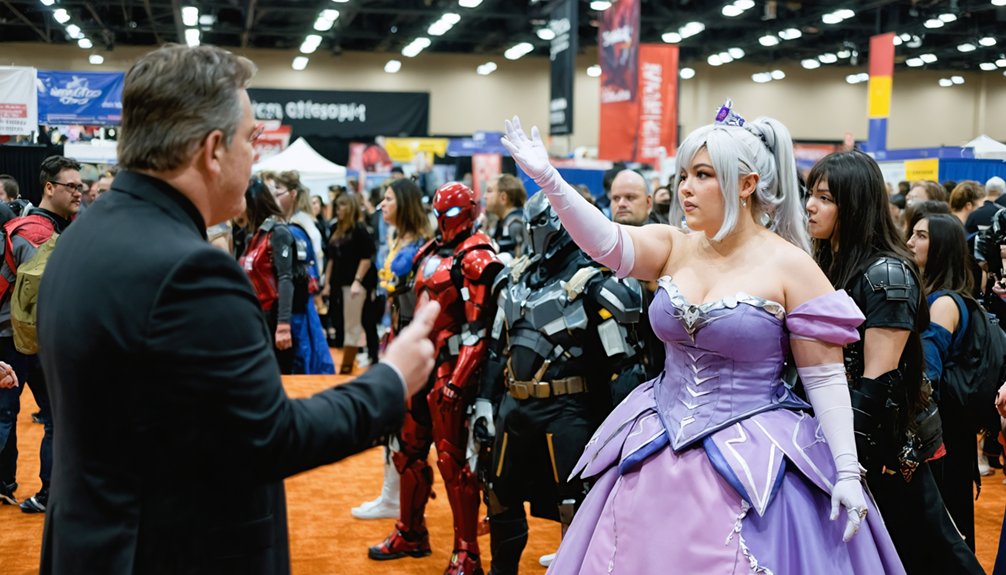
Body shaming incidents can disrupt the inclusive atmosphere you’ve worked hard to build, so address them swiftly and decisively.
Protecting body image and community support starts with clear, consistent action.
Protecting every cosplayer’s dignity demands more than good intentions — it requires clear, consistent, and courageous action.
When incidents arise, follow these steps:
- Acknowledge the incident publicly — Silence signals tolerance; speak up immediately.
- Remove or warn offenders — Enforce your code of conduct without hesitation.
- Support the affected cosplayer — Check in privately, offering genuine reassurance and resources.
- Communicate your response to attendees — Transparency reinforces your community’s values and deters future incidents.
Your quick response tells every cosplayer that your event is a safe space.
When you act decisively, you transform isolated incidents into opportunities to strengthen community bonds and reaffirm that every body belongs here.
Track What’s Working After Each Cosplay Event
After responding to incidents and reinforcing your values, the real question becomes: what’s actually landing with your community? Tracking progress transforms good intentions into measurable impact.
Collect event feedback through post-convention surveys, asking specific questions about inclusion, safety, and representation. Don’t just gather numbers — look for patterns. Which initiatives sparked the most engagement? Where did participants feel unseen?
Participant testimonials are gold. Encourage attendees to share their experiences through written submissions or short video clips. These personal stories reveal what data can’t: emotional resonance, belonging, and transformation.
Review this information before planning your next event. Celebrate what worked, adjust what didn’t, and share your findings transparently with your community.
When people see their voices shaping future events, they’ll keep showing up — and bringing others with them.
Frequently Asked Questions
How Does Cosplay Specifically Improve Mental Health for Disabled Participants?
Boldly bringing belonging, cosplay boosts your mental health through empowerment narratives that celebrate your unique body. You’ll discover adaptive techniques, build community connections, reduce isolation, and express your authentic identity with confidence and creative freedom.
What Psychological Research Exists on Cosplay’s Impact on Body Image Satisfaction?
Research shows cosplay’s both positive and negative effects on your body image satisfaction. You’ll find it fuels a self esteem boost and identity expression, while community support acts as your protective shield against social comparison pressures.
Can Gender-Swapped Cosplay Help Participants Struggling With Personal Identity Exploration?
Yes, gender-swapped cosplay empowers you to explore identity expression freely! You’ll embrace gender fluidity, reimagine beloved characters, and discover your authentic self within a welcoming, innovative community that celebrates every unique version of who you’re becoming.
How Do Financial Costs of Cosplay Affect Body Image Among Low-Income Cosplayers?
Financial barriers can strain your confidence, shake your creativity, and skew your body image. But you’re not alone—accessible materials and a supportive community empower you to cosplay boldly, proving self-expression isn’t defined by your budget.
What Role Does Social Media Play in Reducing Historical Cosplay Body-Shaming?
You’re reshaping cosplay through social media, where online communities champion body positivity daily. Influencer impact amplifies representation matters messaging, and cultural sensitivity dismantles old shaming norms—empowering you to show up boldly, authentically, and unapologetically as any character you love.
References
- https://azluminaria.org/2023/02/02/cosplay-boom-has-grown-a-larger-more-inclusive-community-in-arizona/
- https://authormorgansterling.com/blog/cosplay-for-everyone-celebrating-diverse-identities-and-creative
- https://www.cosplayrealmmagazine.com/blog/2019/3/28/body-positivity-in-cosplay
- https://researchonline.stthomas.edu/esploro/outputs/doctoral/Cosplay-and-the-Impact-on-Body/991015207701103691
- https://researchonline.stthomas.edu/view/pdfCoverPage?instCode=01CLIC_STTHOMAS&filePid=13450340620003691&download=true
- https://www.cosplaycurves.com/pages/body-positive-cosplay