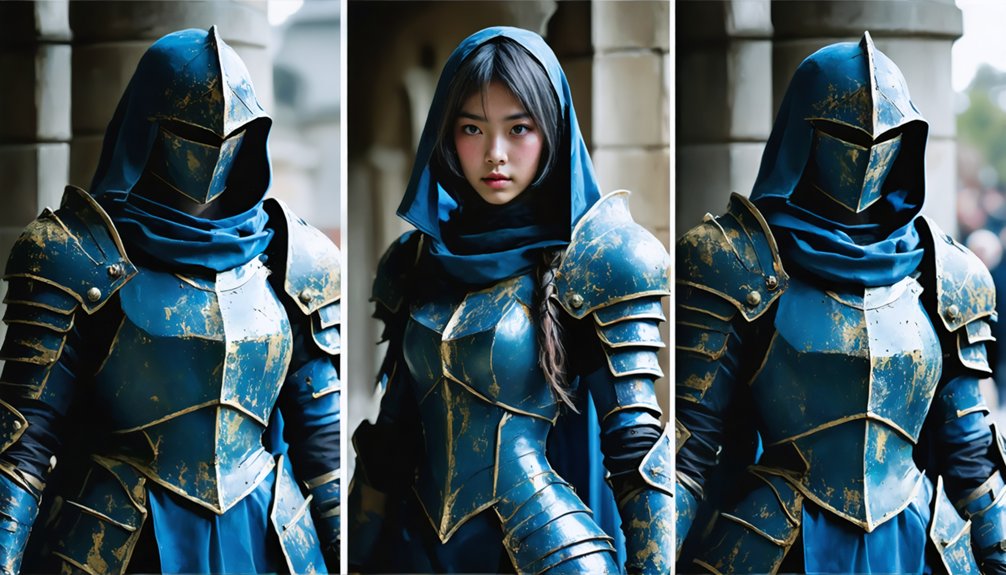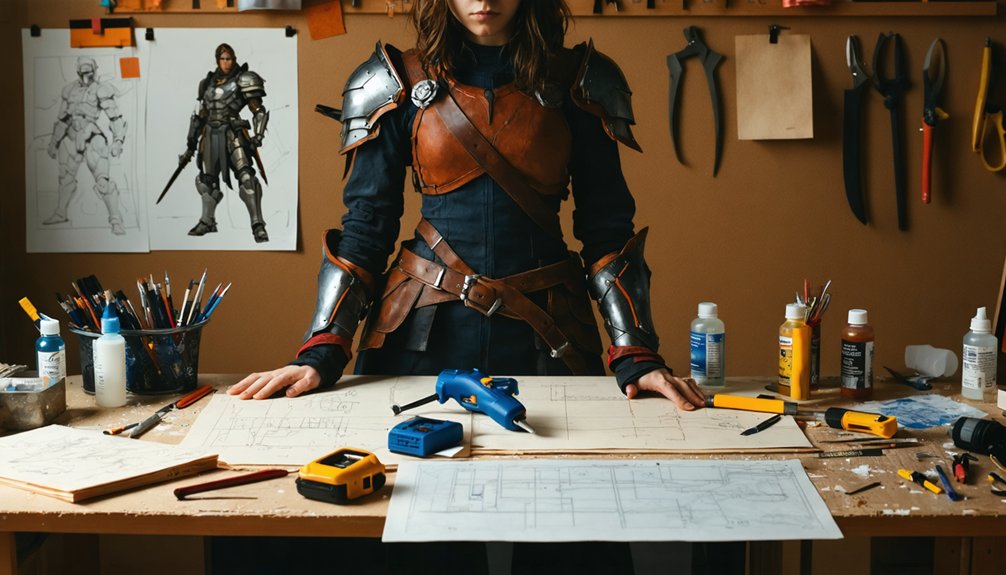
Enhancing your cosplay accuracy starts with choosing a character you’re emotionally connected to, then locking in one specific design version before buying a single material. You’ll want to gather multi-angle references, organize them by component, and extract exact color palettes using digital tools. Prioritize silhouette and structural materials first, then build in a budget buffer for surprises. Join community forums early and rehearse character-specific poses consistently—what follows breaks each of these pointers down with precision.
Key Takeaways
- Lock in one specific character design version before purchasing materials to avoid inconsistency across silhouette, color palette, and accessories.
- Organize reference images into labeled folders by costume component, tagging lighting conditions for accurate color and texture matching.
- Use digital tools to sample exact colors from reference images, cross-referencing multiple sources to account for lighting variations.
- Prioritize silhouette and color accuracy over screen-accurate textures, as these elements most strongly drive character recognition.
- Join cosplay communities early to gain field-tested feedback on construction, materials, and convention-specific prop restrictions.
Pick a Cosplay Character You Genuinely Connect With
Choosing a character you genuinely love makes all the difference between a cosplay that feels alive and one that falls flat. When you select based on emotional resonance rather than visual trends, you’re investing in a portrayal that communicates authenticity.
Dig into the character’s motivational backstory — understand what drives them, what breaks them, and what defines their worldview. That knowledge transfers directly into how you carry yourself, style your costume, and interact with others at conventions.
Don’t chase a character simply because their design looks impressive. Instead, ask yourself whether their story genuinely moves you. That internal connection becomes your creative fuel, guiding every construction decision with purpose.
When your character’s essence aligns with your own values, the cosplay stops being a costume and becomes an extension of you.
Plan Your Cosplay Budget Before Buying Anything
Once you’ve locked in the character that genuinely moves you, the next step grounds that passion in reality — your budget. Budget planning isn’t glamorous, but it’s the architectural framework holding your entire build together.
Start with cost estimation: list every component — fabric, foam, wigs, paint, hardware, and accessories — then research individual pricing before committing.
Before spending a single dollar, itemize every component and research pricing — commit only after you know the full picture.
Prioritize essential structural elements first, leaving decorative details for remaining funds.
Thrift stores and online marketplaces offer surprisingly viable alternatives to retail pricing.
Build in a 15–20% contingency buffer for unexpected expenses, because material mishaps happen.
You’ll also want to avoid impulse purchasing — every unplanned buy erodes your overall vision.
A disciplined, itemized budget transforms creative ambition into a financially sustainable, technically executable cosplay rather than an abandoned, half-finished project collecting dust.
Gather Cosplay Reference Images From Multiple Angles
Once you’ve locked in your character, start pulling official artwork, screenshots, and concept sketches from every available angle — front, back, and three-quarter views — storing them all in a single dedicated folder for quick access during construction.
Cross-reference multiple sources, including fan art and other cosplayers’ photos, to catch design details that a single image might obscure or misrepresent.
Carefully dissect the color palette, texture, and proportional relationships between costume elements so your build stays visually consistent with the source material.
Official Artwork Collection Tips
Before you cut a single piece of fabric or purchase any materials, you need a thorough visual library of your chosen character from every possible angle. Costume durability and material sourcing decisions depend heavily on understanding every design nuance first.
Collect official artwork strategically using these targeted approaches:
- Download high-resolution promotional art directly from official game, anime, or film websites to capture authentic color accuracy.
- Screenshot cinematic sequences frame-by-frame to reveal construction details invisible in static images.
- Source concept sketches from artbooks, which expose structural layering critical for informed material sourcing decisions.
- Catalog turnaround sheets showing front, back, and side profiles simultaneously, ensuring costume durability through properly planned construction.
Organize everything into clearly labeled folders sorted by costume component for streamlined, efficient reference access.
Organizing Your Reference Images
With your reference images collected, organizing them strategically transforms a chaotic folder of screenshots into a functional construction toolkit. Create dedicated subfolders categorized by costume components—headgear, torso, accessories—then populate each with angle-specific shots that reveal fabric textures, structural seams, and layering depth.
Tag images noting lighting techniques used in official artwork, since dramatic studio lighting often distorts true color values, misleading your material selection. Cross-reference multiple lighting conditions to extract accurate hues.
Establish one definitive reference image per component as your construction anchor, preventing decision paralysis mid-build. Pin your organized digital library across devices for instant convention-floor accessibility.
Incorporate fan cosplayer photographs alongside official art—real-world construction solutions embedded within those images offer innovative problem-solving insights that static concept sketches simply can’t replicate.
Analyzing Color And Details
Your organized reference library now becomes a color analysis instrument—use it to dissect your character’s palette with surgical precision rather than eyeballing hues from memory. Color harmony defines authenticity, so treat every shade as data requiring verification.
- Sample exact colors using digital tools like Adobe Color or Coolors to extract precise hex codes from reference screenshots.
- Cross-reference multiple sources to identify consistent tones versus lighting-induced variations that could mislead your material choices.
- Map detail refinement zones—prioritize high-visibility areas like chest pieces, facial markings, and trim edging before tackling secondary elements.
- Document texture relationships between materials, noting whether surfaces appear matte, metallic, or translucent to guide fabric and paint selection accurately.
This systematic approach transforms guesswork into intentional, technically grounded construction decisions.
Pick One Design Version and Stick With It
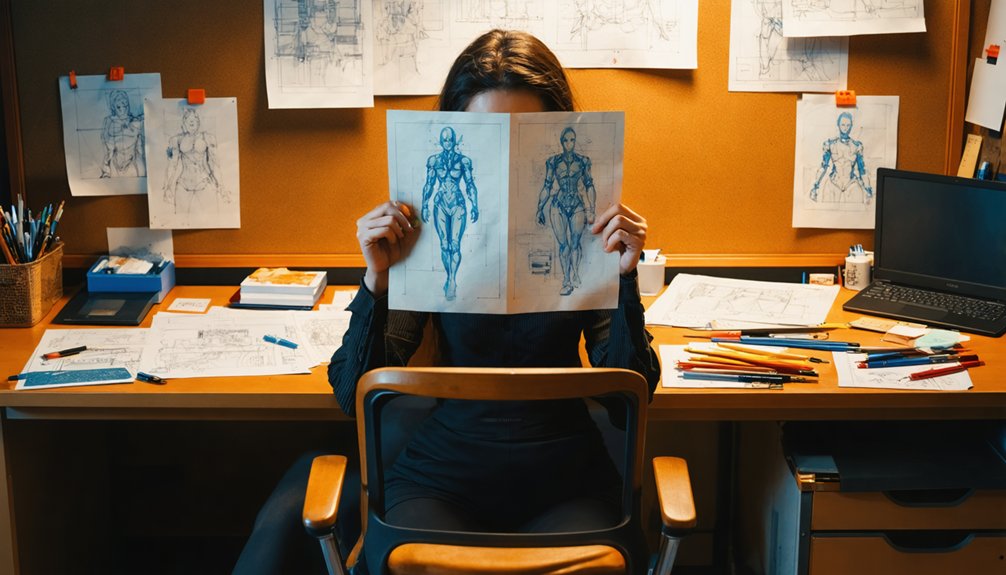
Once you’ve gathered your references, you need to lock in one specific design version of your character — whether it’s a comic run, game iteration, or film adaptation — and treat it as your definitive blueprint.
Mixing design elements across multiple versions creates visual inconsistencies that undermine your costume’s cohesion, leaving it looking like an unintentional hybrid rather than a deliberate portrayal.
Commit to your chosen version completely, cross-referencing every detail — silhouette, color palette, accessories — against that single source to maintain a unified, authentic look.
Choosing Your Reference Version
Many characters have accumulated dozens of design variations across games, anime seasons, manga volumes, and official merchandise — so before you cut a single piece of fabric, lock in one specific version as your definitive reference standard.
Historical accuracy matters here; cultural influences embedded within regional releases often create subtle but significant design discrepancies.
Follow these four strategic steps:
- Identify the source medium — game sprite, animated adaptation, or official art.
- Screenshot multiple angles — front, side, and back views eliminate guesswork.
- Cross-reference color palettes — regional releases occasionally alter hues drastically.
- Document your chosen version — label saved references clearly to avoid mid-build confusion.
Committing to one definitive version prevents contradictory construction decisions and keeps your creative energy focused on execution rather than constant re-evaluation.
Avoiding Design Inconsistencies
Mixing design versions mid-build is one of the fastest ways to sabotage an otherwise solid cosplay — you’ll end up with a collar from the 2018 remaster clashing against sleeves pulled from the original 2009 concept art, and the final costume won’t accurately represent any single iteration of the character.
Lock your reference version before purchasing a single material. Every fabric texture decision — matte versus sheen, woven versus knit — must align with that chosen source.
Cross-version contamination also undermines costume durability; different design eras often imply different construction methods, and forcing incompatible techniques together creates structural weak points.
Create a dedicated reference board featuring exclusively your selected version, then audit every component against it systematically.
Consistency isn’t perfectionism — it’s intentional cohesion that transforms separate pieces into a unified, believable character interpretation.
Committing To One Look
When a character has five distinct design iterations across games, films, and promotional media, committing to one version isn’t a creative limitation — it’s the foundational decision that makes every subsequent choice coherent.
Your emotional connection to a specific iteration deepens character depth and sharpens construction focus.
Follow these four critical steps:
- Identify your primary reference version — select the iteration that resonates most authentically with your vision.
- Lock your color palette — extract exact tones from official artwork of that single version.
- Document version-specific details — note unique silhouettes, accessories, and textures exclusive to your chosen design.
- Reject conflicting references — discard materials from alternate versions that introduce visual contradictions.
Consistency transforms scattered inspiration into a unified, technically precise, and emotionally compelling portrayal.
Find Affordable Cosplay Materials Without Sacrificing Durability
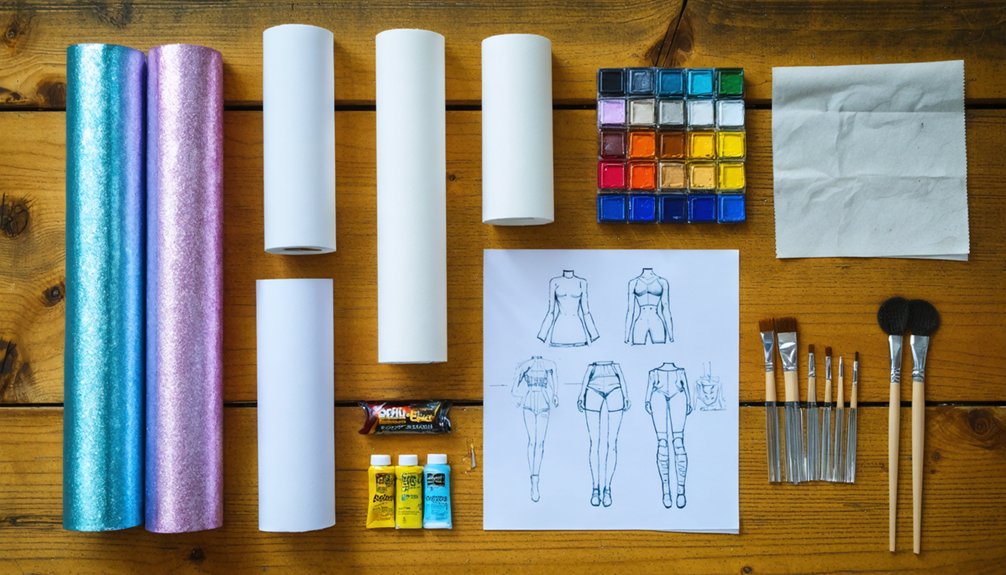
Finding affordable cosplay materials without compromising durability starts with knowing where to look and what to prioritize. Budget planning is your first tactical move — itemize every component before purchasing anything. Allocate funds toward structural materials like interfacing, boning, and base fabrics first, since these directly impact longevity.
Budget planning is your first tactical move — itemize every component before spending a single dollar.
For material sourcing, thrift stores offer surprisingly versatile textiles that you can repurpose creatively. Online marketplaces like AliExpress or fabric.com frequently stock quality materials at markedly reduced prices. Always order fabric slightly larger than your measurements to accommodate adjustments without requiring additional purchases.
Cross-reference multiple sources before committing to any single supplier. Test material durability by checking thread count, stretch resistance, and colorfastness.
Smart sourcing isn’t about spending less — it’s about spending strategically while maximizing structural integrity throughout your build.
Sketch Your Cosplay Costume Before You Cut Any Fabric
Once you’ve locked down your materials, the next step before touching your scissors is putting pencil to paper. Sketching prevents costly structural errors and aligns your fabric patterns with your character’s silhouette before sewing begins.
Use your sketch as a technical blueprint by addressing these critical points:
- Map every seam line to determine which sewing techniques—flat-felled, French, or overlocked—suit each costume section.
- Draft proportional measurements directly onto your sketch to scale fabric patterns accurately against your body dimensions.
- Mark complex construction zones, like armor overlays or layered garments, to sequence your build logically.
- Annotate material placements so different textures and colors occupy their correct regions before cutting begins.
Your sketch transforms abstract character design into executable construction logic, saving both time and fabric.
Prioritize Silhouette and Color Over Screen-Accurate Details

Color matching operates as your second priority. Pull your reference images under natural lighting, compare fabric swatches carefully, and select materials whose tones hold accuracy across different environments.
A costume with a perfect silhouette and precise colors reads instantly as the character, even without flawless screen-accurate textures. Work smarter, not harder — prioritize impact over obsessive replication.
Style Your Wig and Makeup to Match the Character
Wigs and makeup function as the face of your cosplay — quite literally — so treating them as afterthoughts will undermine even the most meticulously constructed costume.
Precision in wig styling and makeup application transforms a good costume into an unforgettable character embodiment.
- Wig styling: Heat-style synthetic fibers deliberately, replicating the character’s exact silhouette using references from multiple angles.
- Secure structure: Use wire, got2b glued spray, and teasing techniques to maintain dramatic shapes throughout convention hours.
- Makeup application: Sculpt facial features strategically — contouring reshapes proportions to mirror your character’s defining characteristics.
- Color consistency: Match wig tones, eyeshadow, and costume palette cohesively, ensuring no single element visually contradicts another.
Commit to these technical details, and your character recognition will improve dramatically.
Join the Cosplay Community Early in the Process
Plugging into the cosplay community early transforms your build process by connecting you with experienced makers who can troubleshoot construction challenges, recommend reliable material suppliers, and critique your reference accuracy before you’ve committed to costly mistakes.
You’ll find active forums, Discord servers, and local cosplay groups where members openly exchange pattern files, prop-making tutorials, and vendor recommendations that compress your learning curve dramatically.
Treat these networks as a living resource library, tapping them consistently rather than waiting until you hit a roadblock mid-construction.
Building Community Connections Early
Joining the cosplay community early transforms your creative process from an isolated struggle into a collaborative adventure. You’ll gain technical insights, emotional resonance with your character’s backstory, and access to collective expertise that accelerates skill development markedly.
Leverage community engagement through these four strategic actions:
- Share reference boards — Post your character backstory research to receive targeted feedback on design accuracy and creative interpretations.
- Join skill-specific forums — Connect with specialists in prop-making, wig styling, and fabric manipulation for precise technical guidance.
- Attend local meetups — Observe construction techniques firsthand and network with experienced cosplayers who share resources openly.
- Collaborate on group cosplays — Build accountability partnerships that maintain momentum and refine your embodiment through collective character analysis.
Early community integration eliminates guesswork and replaces it with innovative, experience-driven precision.
Leveraging Shared Community Resources
Tapping into shared community resources early gives you a competitive edge that no solo research session can replicate. Veteran cosplayers openly share fabrication techniques, material sourcing hacks, and costume maintenance protocols that protect your build’s longevity between conventions. You’ll find Discord servers, Reddit threads, and workshop groups packed with field-tested knowledge you can immediately apply.
Community networks also address convention safety—experienced members flag venue-specific prop restrictions, structural hazards in armor builds, and mobility limitations that could compromise your performance. You’re not just borrowing inspiration; you’re accessing a living database of real-world problem-solving.
Engage actively, ask precise questions, and contribute your own findings. This reciprocal exchange accelerates your technical development far faster than isolated trial-and-error ever could, positioning you for consistently stronger, smarter builds.
Practice Poses and Gestures That Bring the Character to Life
Once you’ve nailed the visual elements of your cosplay, embodying the character through deliberate poses and gestures is what truly separates a costume from a performance. Mastering dynamic posing and expressive gestures transforms your portrayal into an immersive experience.
- Study source material — Analyze fight scenes, promotional art, and cutscenes to identify signature stances unique to your character.
- Practice mirror drills — Rehearse poses repeatedly before mirrors to internalize muscle memory and refine precision.
- Film yourself — Record practice sessions to objectively evaluate dynamic posing angles and correct awkward progressions.
- Incorporate expressive gestures — Map specific hand movements, facial expressions, and body language to key character moments for authentic, context-driven performances.
Consistent rehearsal builds confidence, ensuring your portrayal feels natural rather than mechanical during convention interactions.
Frequently Asked Questions
How Do I Handle Costume Malfunctions During a Convention?
Like a battlefield engineer, you’ll conquer costume malfunctions by packing an emergency repair kit. Use quick fixes—safety pins, fabric tape, and spare thread—to restore your cosplay swiftly, ensuring you’re convention-ready without missing a moment’s creative magic.
Can I Cosplay a Character From a Lesser-Known Franchise?
You can absolutely cosplay a lesser-known franchise! Dive deep into character research, gathering every available reference. When sourcing materials, get creative with alternatives that capture the character’s essence authentically, inspiring innovation while making the costume uniquely yours.
How Do I Manage Discomfort From Wearing a Costume All Day?
Bite the bullet—strategic fabric choices and padding techniques transform endurance. You’ll want breathable, moisture-wicking materials against your skin, while targeted foam padding redistributes pressure points, ensuring you’re convention-ready and comfortable throughout those grueling, exhilarating hours.
Is It Acceptable to Mix Elements From Different Character Versions?
Yes, you can blend elements from different versions! Prioritize character consistency by selecting complementary designs that share visual cohesion. Intentional costume blending lets you craft innovative, personalized interpretations while preserving the character’s recognizable essence across your combined references.
How Do I Protect My Costume During Travel to Events?
Like a prop sword secured in foam-lined cases, you’ll want smart costume storage and travel accessories—use garment bags, bubble wrap delicate pieces, and pack modular components separately to protect your build’s integrity en route.
References
- https://rogersenpai.com/how-can-i-improve-my-cosplay/
- https://wigs101.com/10-tips-cosplay-beginners
- https://www.youtube.com/watch?v=dIrW2aaIGKw
- https://starstruckpanda.com/how-to-match-character-features-for-cosplay-accuracy/
- https://www.youtube.com/watch?v=fm4CxNdBQBY
- https://eyecandys.com/blogs/news/elevate-your-cosplay-with-small-details
- https://starstruckpanda.com/character-accuracy-mistakes-to-avoid-in-cosplay/
- https://geekmom.com/2014/02/10-cosplay-tips/
- https://cosplayadvice.com/cosplay-rules-to-follow/
- https://www.crazecosplay.com/blogs/questions/how-to-improve-your-cosplay