Creating a unique fantasy creature cosplay starts with locking in your core concept early—every material, color, and structural choice builds outward from there. You’ll want to match creature features like wings, tails, and horns to wearable engineering using foam, wire, and synthetic fabrics that photograph beautifully. Layer matte bases with metallic highlights, seal body paint properly, and use signature accessories to communicate character identity instantly. Keep exploring and your full creature vision comes together piece by piece.
Key Takeaways
- Research mythical creature origins to define core visual elements like texture, silhouette, and color before committing to materials or construction.
- Select fabrics like sequined bodysuits, spandex, and organza to achieve dynamic scale, shimmer, and movement across complex costume shapes.
- Build horns, wings, and tails using foam armatures, wire, and polymer clay, securing components with fabric-tac glue for active wear.
- Layer matte fabrics, satin midtones, and metallic highlights to create perceived depth, luminosity, and a cohesive magical color palette.
- Use 1-2 signature accessories like talon gloves or jeweled headpieces to instantly communicate character identity without requiring explanation.
Choose a Fantasy Creature That Fits Your Vision
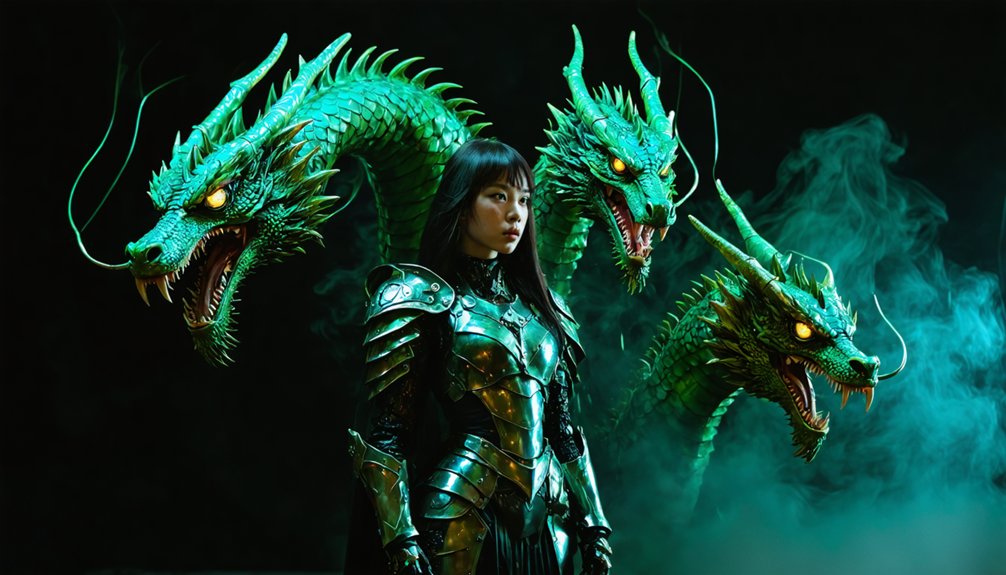
Before diving into materials and construction, you’ll need to anchor your entire design around a single creature concept that genuinely excites you. Research mythical creature origins deeply — Norse, Japanese, Celtic, and Egyptian folklore each offer distinct visual frameworks that’ll sharpen your creative direction.
A tanuki demands earthy tones and round silhouettes, while a sphinx commands gold and architectural geometry.
Consider costume comfort tips early in your selection process. Complex designs featuring wings, tails, or structured horns affect mobility significantly. Choose a creature whose defining features you can engineer without sacrificing wearability across extended convention hours.
Ask yourself which visual elements define your creature’s identity: texture, color, silhouette, or accessory. Locking onto those core characteristics now prevents costly material missteps later and keeps your entire build cohesive.
Fabrics That Work Best for Scales, Fur, and Flowing Fantasy Pieces
Once you’ve locked in your creature concept, fabric selection becomes the single most decisive factor in whether your costume reads as convincing or cobbled together.
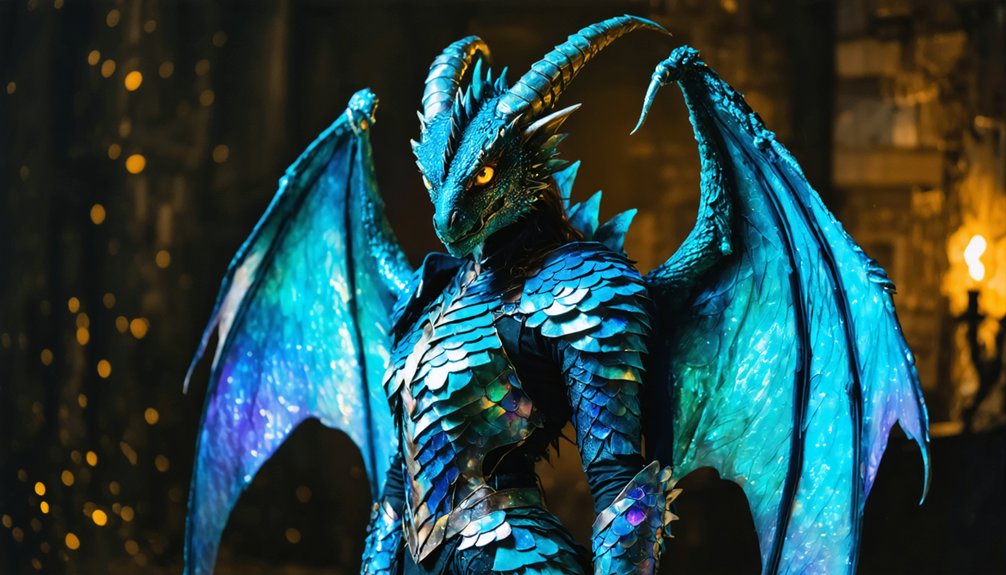
For scales, sequined skirts and scaly bodysuits deliver dimensional texture with strong textile durability under convention lighting and repeated wear. Artificial fur and felt sheets replicate animal anatomy convincingly, while spandex and lamé stretch seamlessly across complex body shapes, adding shimmery depth to supernatural characters.
For flowing fantasy pieces, organza and polyester move dynamically, catching light without losing structure. Prioritize ethical sourcing by selecting synthetic alternatives to animal-derived materials — modern fabrications match or exceed organic counterparts in visual impact.
Layer these strategically: base fabrics establish form, while surface textiles communicate creature identity instantly and precisely.
Build Fantasy Costume Horns, Wings, and Tails From Scratch
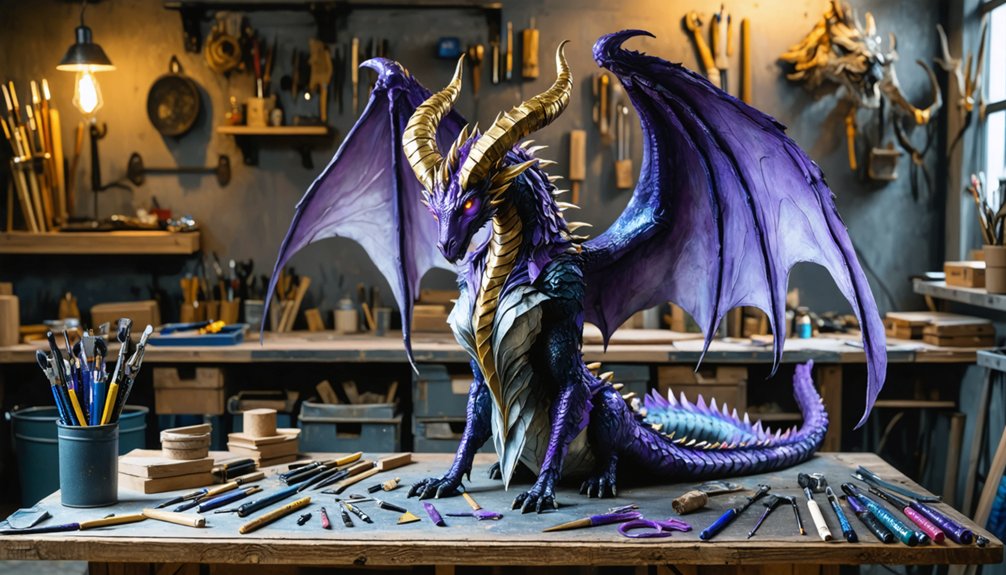
Horns, wings, and tails are the structural anchors of any fantasy creature build, and crafting them from scratch gives you total control over scale, silhouette, and material weight.
Start horns with polymer clay or cast resin over a foam armature, then sand and seal them for sharp definition.
For wings, cut rigid craft foam into layered feather or membrane shapes, wire the edges for poseable structure, and cover them with magical fabric like organza or lamé to capture light dynamically.
Tails benefit from a wire spine wrapped in artificial fur or felt, creating mythical textures that move naturally with your body.
Secure all three elements using fabric-tac glue or burst-activated adhesives, eliminating visible hardware while maintaining structural integrity under active wear conditions.
How to Pick Colors That Actually Look Magical
When building your magical color palette, start with a pastel or deep jewel-toned base—soft lavenders, midnight blues, or iridescent whites—that instantly signals fantasy without overwhelming the eye.
Layer in shimmer through lamé fabrics, sequined panels, or body glitter to create dimension and catch light dynamically as you move.
Finally, punch in tight accent colors—electric gold, neon coral, or vivid teal—at focal points like horn tips, wing edges, or tail ends to inject visual tension and a distinctly supernatural finish.
Choosing Enchanting Base Palettes
Three foundational color decisions shape whether your fantasy creature costume reads as magical or mundane: your base hue, your accent contrast, and your luminosity layer.
Magical color palettes work best when you anchor them in one dominant tone — deep violet, glacial teal, or bone white — then layer opposing accent hues that create visual tension.
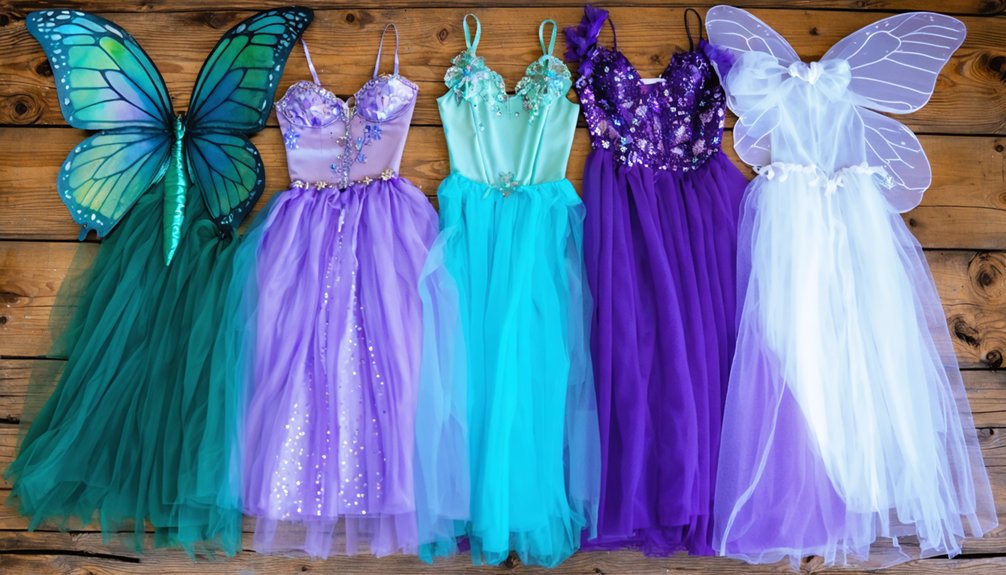
Enchanting fabric choices amplify this effect dramatically; pastel-colored dresses and jumpsuits establish soft fairy aesthetics, while stretchy lamé introduces shimmery, light-reactive surfaces that shift under stage lighting.
Your luminosity layer — achieved through body glitter, sequined panels, or metallic thread — transforms flat color into dimensional magic.
Don’t treat these three decisions as decorative afterthoughts. They’re structural choices that define how your creature registers visually from across a crowded convention floor.
Layering Shimmer And Depth
Shimmer without depth reads as flat sparkle — visually noisy but not magical. To build dimension that references magical creature myths, you’ll layer three distinct finish types: matte base, satin midtone, and metallic highlight.
Start with earthy or jewel-toned matte fabric — this grounds your palette the way fantasy costume history grounds creature designs in natural symbolism. Over that, apply satin-finish panels to catch indirect light.
Finally, place lamé or sequined accents at structural peaks — shoulders, collar edges, hemlines — where direct light strikes. This tri-layer system creates perceived luminosity rather than surface glitter.
Spandex and lamé cut on the bias intensify this effect by shifting reflection with body movement. Your creature won’t just wear shimmer — it’ll generate it.
Accent Colors For Magic
Magical accent colors don’t operate on personal preference — they work through contrast logic. You’re building visual tension, not decoration. Drop a saturated violet against a pale silver base, and your eye reads “otherworldly” instantly. That’s how magical color palettes actually function — they exploit chromatic surprise.
For enchanting accessory accents, pick one dominant hue, then select its split-complementary pair. A gold feathered boa gains power when paired with teal trim or cobalt edge detailing. Neon or pastel neon elements amplify this effect under event lighting, creating luminous depth that flat matching tones can’t achieve.
Avoid monochromatic builds unless you’re layering sheen differences — matte against metallic still generates contrast. Accent placement matters too: concentrate high-chroma color at focal points like necklines, wrists, and crown edges.
Makeup and Body Paint for Fantasy Costume Creature Effects
Makeup and body paint transform an ordinary costume into an immersive fantasy creature experience, so choosing the right products and application techniques matters enormously.
For mythical creatures, layer water-activated body paint over a primer base to intensify color saturation and extend costume durability through long convention hours. Apply earthy tones using stippling sponges to create textured, scaled, or weathered skin effects.
Pale makeup combined with red contact lenses sharpens vampire aesthetics dramatically, while iridescent pigments layered over foundation mimic dragon or mermaid shimmer convincingly.
Seal all painted areas with a setting spray formulated for skin to prevent cracking or transfer. Use fine detailing brushes for precise markings, veining, or creature-specific patterns that elevate your design from generic to genuinely extraordinary.
How to Attach Heavy Wings and Horns So They Stay in Place
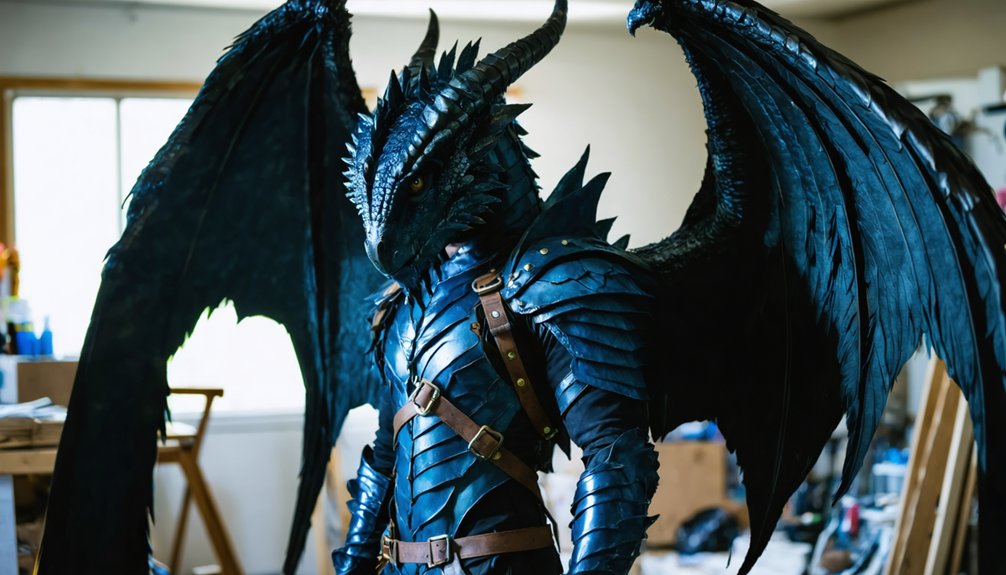
Once your body paint and makeup are set and sealed, the next challenge is keeping your structural pieces—wings, horns, and headpieces—anchored securely through hours of wear. Mythical creature symbolism demands visual precision, so a shifting horn or drooping wing breaks immersion instantly.
For horns, use a rigid headband base reinforced with fabric-tac glue and steam-activated adhesive layered at contact points. Distribute weight evenly across the crown rather than concentrating it at a single attachment.
For heavy wings, anchor them through a structured harness sewn directly into your costume’s back panel. Crossed shoulder straps redistribute load efficiently. These costume durability tips prevent structural failure mid-event.
Always stress-test your attachments before wearing—move aggressively, bend, and twist to identify weak points before they become problems.
The Props That Make People Instantly Know Who You Are
Your prop choices cut through visual noise faster than any costume detail—a unicorn horn headband cast in resin, a tanuki’s rounded belly secured by rope, or a genie’s jeweled headpiece tells your character’s story before you speak a word.
You’re not just accessorizing; you’re deploying a visual shorthand that triggers instant recognition across a crowded convention floor. Mastering this prop-to-character signal system means selecting one or two high-impact signature accessories—a straw hat, a feathered boa, talon gloves—that lock your identity in the viewer’s mind immediately.
Iconic Props Signal Characters
Props do the heavy lifting when it comes to instant character recognition—a unicorn horn headband cast from resin or foam tells the whole story before you even strike a pose. When cosplaying mythical animals, your props function as visual shorthand, collapsing complex character lore into a single recognizable object.
Consider costume symmetry when selecting and positioning props. Talon gloves paired with a jeweled headpiece create balanced visual weight across your silhouette.
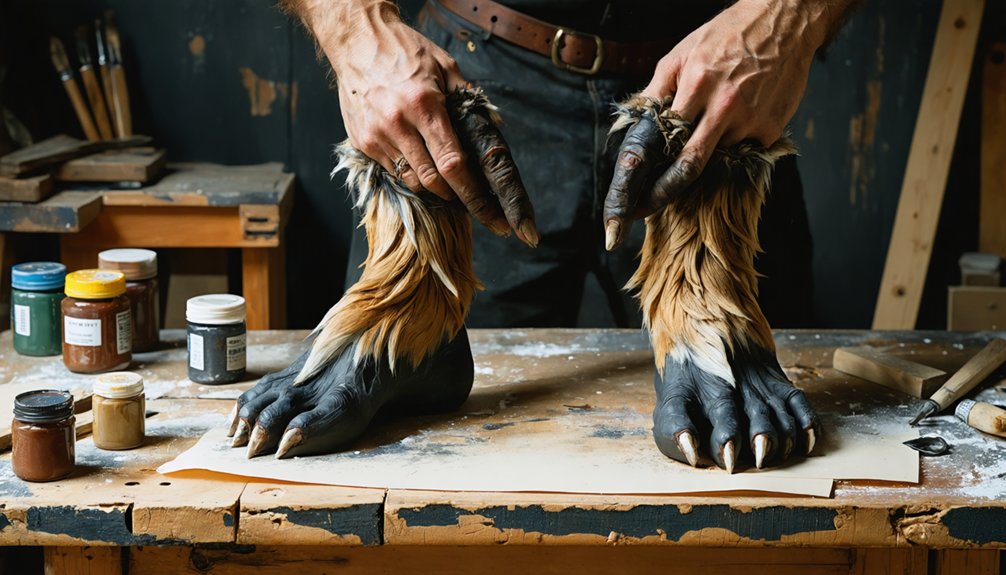
Sequined tails, feathered wings, and scaly bodysuits demand props that mirror their scale and texture.
Straw hats and bottle props signal tanuki folklore instantly. Feathered boas and golden scarves communicate legendary bird creatures without explanation.
You’re fundamentally engineering recognition—each prop chosen deliberately, placed precisely, and constructed with enough detail to eliminate any viewer guesswork.
Signature Accessories Define Identity
Accessories function as your costume’s punctuation—the final marks that complete meaning. Whether you’re pulling from historical costume traditions or crafting a modern reinterpretation, specific accessories instantly telegraph identity to viewers.
Consider these signature elements:
- Talon gloves and jeweled headpieces signal genie royalty immediately
- Unicorn horn headbands cast in resin communicate magical lineage
- Golden scarves with feathered boas establish legendary creature status
- Straw hats paired with bottle props anchor Japanese folklore characters authentically
- Feathered wings combined with floral crowns define fairy identity without explanation
Each accessory you select communicates character history before you speak. Layer textures strategically—sequined elements, cast resin pieces, and jeweled components create visual hierarchy. Your accessories don’t merely decorate; they narrate, transforming fabric and foam into unmistakable, living mythology.
Put Your Costume Together So the Construction Disappears
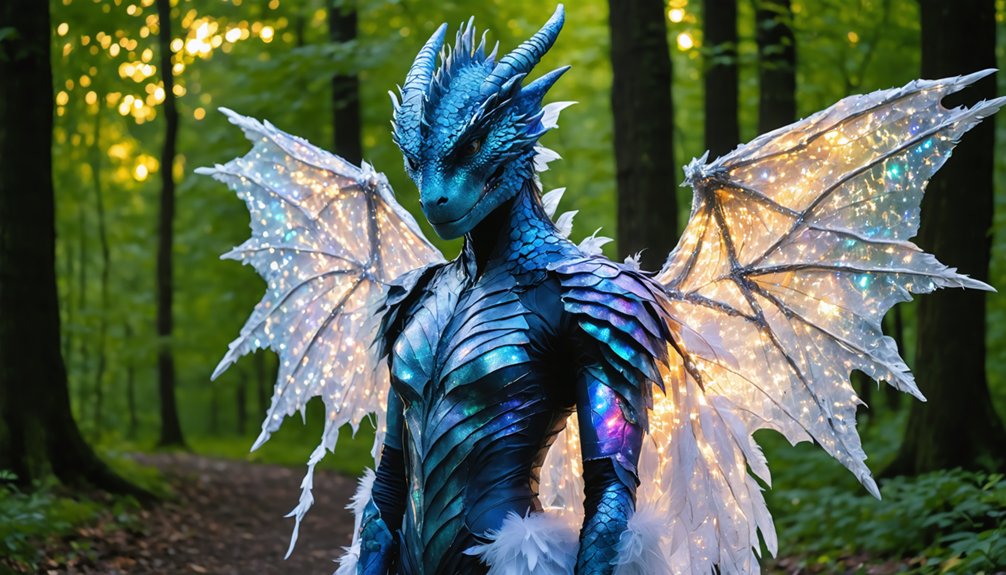
Once you’ve selected your materials, the real craft lies in hiding every seam, glue line, and structural shortcut so your costume reads as a seamless whole. Apply steam-activated adhesives along interior edges, pressing layers flat before they cure.
The real craft lies in hiding every seam until your costume reads as a seamless, living whole.
Use fabric-tac glue to anchor heavy elements like horns or tails, letting the surrounding fabric absorb the joint visually. Layer organza or fleece over structural supports to disguise rigid frameworks beneath soft surfaces.
Fabric durability directly impacts how well hidden construction holds through active wear and costume storage. Reinforce stress points with iron-on interfacing before gluing or stitching, preventing separation during movement.
Align color-matched materials across progressions so the eye reads continuity rather than construction. When every attachment point disappears beneath texture and color, the creature feels genuinely alive.
Glitter, Wigs, and Finishing Details That Elevate Any Fantasy Costume
Hidden construction gives your creature its bones, but finishing details give it its soul. You’re evoking mythical landscapes and enchanted forests, so every final layer must reinforce that world-building precision.
Apply these high-impact finishing techniques:
- Body glitter: Dust exposed skin to suggest bioluminescence or magical radiance
- Neon or pastel wigs: Choose unruly, voluminous styles that generate immediate visual energy
- Pale makeup with red contacts: Instantly transforms neutral faces into nocturnal, otherworldly expressions
- Feathered wings and floral crowns: Layer natural textures for authentic, nature-inspired creature depth
- Wands and handheld props: Extend your character’s visual silhouette beyond the costume itself
Each detail compounds the previous one. You’re not decorating — you’re signaling. Every shimmer, strand, and painted edge communicates exactly which creature walked out of those enchanted forests.
Frequently Asked Questions
How Do I Store My Fantasy Costume Without Damaging Delicate Pieces?
Store delicate pieces in airtight storage containers lined with acid-free tissue. You’ll preserve feathers, resin horns, and glitter elements effectively. Use breathable costume display stands for structured garments, preventing compression damage while showcasing your innovative fantasy creations beautifully.
Can I Wash Fabrics After Applying Fabric-Tac Glue or Adhesives?
You’d think fabric adhesive ruins at first wash, but it doesn’t! Follow these washing tips: hand-wash gently in cold water, avoid wringing, and air-dry flat to preserve your glued costume elements beautifully intact.
What Is the Average Cost of Building a Full Fantasy Costume?
You’ll typically spend $50–$300 on a full fantasy costume, depending on your costume materials and crafting techniques. Prioritize spandex, foam, and felt for budget-friendly builds while achieving visually striking, inventive designs that don’t compromise creative impact.
Are Fantasy Costumes Appropriate for Both Indoor and Outdoor Events?
While durability myths persist, fantasy costumes can thrive at both indoor and outdoor events. You’ll want weather-resistant materials securing your mythical accessories, ensuring costume durability withstands varying conditions—wind, humidity, and lighting all influence your design’s visual impact.
How Long Does a Complete Fantasy Creature Costume Typically Take to Build?
You’ll typically spend 10–40 hours building your complete fantasy creature costume, depending on costume customization complexity. Factor in drying times for adhesives and resin molds, ensuring costume durability through layered construction techniques that fuse fabric, props, and structural elements seamlessly.
References
- https://www.crazylaura.com/diy-mythical-creature-costume/
- https://discover.hubpages.com/style/Crazy-Animal-Costumes
- https://cosplayadvice.com/unique-cosplay-ideas/
- https://abracadabranyc.com/collections/mythical-creatures-costumes
- https://www.mythicalwildlife.com/mythical-creature-halloween-costume
- https://www.instructables.com/Magical-Creature-Costumes/
- https://www.diyscraftsy.com/diy-mythical-creature-costume-ideas/
- https://www.etsy.com/market/mythical_creature_costumes
- https://dazzleinstyle.com/mythical-creatures-dress-to-impress-outfits-ideas/
- https://www.karrieskostumes.ca/costumes/animal/mythical-creatures/