Genderbent cosplay didn’t always exist as you know it today. Early conventions like 1939’s WorldCon demanded strict character accuracy, leaving little room for reinterpretation. Japanese crossplay and dansō culture shifted that rigidity in the 2000s, introducing flexible gender expression into fandom spaces. By the 2010s, Western fans transformed genderbending into personal identity work. Anti-harassment movements then pushed it into mainstream legitimacy. Each trend builds on the last, and there’s much more beneath the surface.
Key Takeaways
- Early cosplay prioritized historical accuracy and strict character representation, with no concept of genderbending present at initial conventions.
- Japanese animation in the 2000s introduced gender-ambiguous characters, enabling crossplay and dansō as flexible, character-devoted practices.
- Western fans in the 2010s shifted genderbending toward personal identity expression, blurring lines between performance and self-reflection.
- Harassment culture and the “Cosplay Is Not Consent” movement amplified genderbent cosplay’s visibility and legitimacy through media coverage.
- Genderbent cosplay is now mainstream, with communities dismantling gatekeeping and commercial media normalizing gender-fluid characters in source material.
How Cosplay Began Before Genderbending Existed
When cosplay first emerged, gender exploration wasn’t part of its DNA. Historical cosplay prioritized accuracy above all else—you wore a character’s costume to replicate, not reimagine. The 1939 WorldCon introduced the first documented costume event, anchoring fandom events firmly in “futuristic” aesthetics rather than identity expression.
By 1970, San Diego Comic-Con saw fans embodying science fiction characters with strict verisimilitude. Costume evolution remained culturally conservative until Japanese influence reshaped Western conventions.
When Nobuyuki Takahashi coined “cosplay” in 1983, combining “costume” and “play,” the definition still centered representation over reinterpretation. Cultural influence from Japan arrived in American anime conventions during the 1990s, yet even then, gender exploration stayed peripheral.
Cosplay’s 1983 coinage centered representation—not reinterpretation. Gender exploration remained peripheral even as Japanese influence spread westward.
You were expected to match your character—not challenge the binary underlying their design.
When Crossplay and Dansō First Made Genderbent Cosplay Possible
The shift happened in the 2000s, when Japanese animation began featuring bodies with deliberately ambivalent gender markers—characters whose sex you couldn’t pin down, whose design invited fluidity rather than fixed categorization.
Crossplay origins emerged from this cultural moment, as fans chose to embody characters across gender lines purely for the joy of it. Dansō performances—where practitioners presented masculine aesthetics through deliberate costuming—became a recognized style within convention communities.
Importantly, early crossplayers distinguished themselves from political activists and trans communities, framing their practice as character devotion rather than identity declaration.
You can trace genderbent cosplay‘s structural foundation directly to these Japanese subcultural innovations—they introduced a framework where gender became a malleable creative variable, not a boundary demanding strict observance.
How Western Fans Turned Genderbending Personal
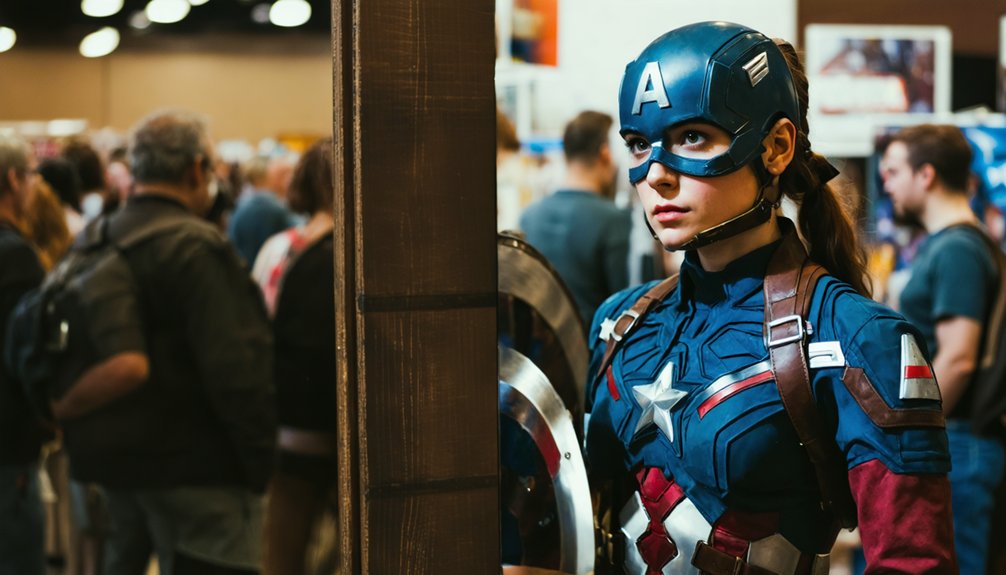
As Japanese crossplay filtered westward, something shifted in how fans engaged with it—what had been framed as character devotion became, for many Western cosplayers, a mechanism for self-exploration.
You can trace this pivot through the 2010s, when non-binary and AFAB cosplayers began using character reinterpretation not as theatrical exercise but as active identity expression. Changing a male character’s gender wasn’t subversion for its own sake—it was alignment, a way of seeing yourself reflected in iconography that previously excluded you.
Convention spaces transformed into low-stakes arenas where gender could be tried on, tested, and claimed. Unlike their Japanese counterparts, who largely separated crossplay from political meaning, Western fans collapsed that distinction entirely, making the personal inseparable from the performative.
How Harassment Culture and Media Attention Pushed Genderbent Cosplay Mainstream
Visibility cuts both ways. When harassment culture inside geek conventions targeted women in costumes, movements like Cosplay Is Not Consent forced media influence to redirect its lens.
Suddenly, you’re watching mainstream outlets cover not just the harassment itself, but the creative resistance surrounding it—genderbent cosplay included. That coverage repositioned genderbending from subcultural curiosity to visible, legitimate practice.
Reporters couldn’t discuss women reclaiming convention spaces without acknowledging how they were reshaping character portrayals entirely. The intersectional pressure created an opening.
What had been dismissed as niche became documented, discussed, and defended publicly. You can trace a direct line between community-driven protest, media amplification, and the normalization of genderbent cosplay in mainstream convention culture.
Conflict, unexpectedly, accelerated acceptance.
Why Genderbent Cosplay Is Now the Norm, Not the Exception
What shifted genderbent cosplay from exception to expectation wasn’t a single cultural moment but an accumulation of structural changes across fandom, media, and identity politics.
You’re now entering conventions where creative reinterpretation isn’t questioned—it’s anticipated. Cultural acceptance didn’t arrive passively; communities actively dismantled gatekeeping norms, replacing rigid character fidelity with identity exploration as a legitimate cosplay framework.
Non-binary, trans, and gender-nonconforming participants reshaped community inclusivity standards, making genderbending structurally embedded rather than tolerated.
Trans and non-binary cosplayers didn’t request inclusion—they restructured the entire framework until genderbending became foundational.
Meanwhile, commercial media responded by producing source material featuring gender-fluid characters, normalizing the practice upstream.
Academic scholarship confirmed what practitioners already knew: genderbending functions as ethnographic self-inscription, not deviation.
Today, you don’t justify a genderbent costume—you build it, wear it, and others recognize the language fluently.
Frequently Asked Questions
What Academic Scholars Have Studied Genderbent Cosplay and What Did They Find?
You’ll find Joel Gn, Lamerichs, Aadahl, and Leng have shaped cosplay evolution scholarship. They’ve revealed gender identity expression as performative, character-driven, and binary-disrupting—not merely political—through analytical, intersectional, ethnographic lenses advancing innovative cultural understanding.
How Did Japanese Animation Specifically Influence Shifting Gender Markers in Cosplay?
You’ll find that 2000s Japanese animation actively introduced “ambivalent” bodies, accelerating gender fluidity through cultural exchange. These shifting markers inspired crossplay communities, letting you embody characters beyond assigned sex, fundamentally transforming cosplay’s intersectional identity landscape.
What Distinguishes Crossplay Motivation From Political Gender Activism According to Researchers?
When you explore crossplay motivations, researchers like Lamerichs confirm you’re driven by character love, not gender activism. You’re embodying fandom passion, distinguishing personal creative expression from structured political identity movements challenging broader societal gender norms.
How Has Transphobia Specifically Manifested Within Cosplay Communities During Gender Expansion?
Imagine you’re a trans cosplayer denied contest entry for “inaccurate” portrayal—that’s transphobia. Despite community acceptance gains in the 2010s, you’ll encounter representation issues through gatekeeping, misgendering, and policing “authentic” character embodiment.
How Does Genderbent Cosplay Reflect Real-World Demands for Diverse Female Character Portrayals?
When you engage in genderbent cosplay, you’re actively driving character representation beyond narrow archetypes. You’re embodying female empowerment by transforming male-dominated narratives, mirroring real-world demands for diverse, intersectional portrayals that challenge conventional gender structures through lived, creative expression.
References
- https://journal.transformativeworks.org/index.php/twc/article/download/1459/2173?inline=1
- https://dash.harvard.edu/bitstream/handle/1/13481274/Gender-Sexuality-and-Cosplay-by-Rachel-Leng1.pdf;sequence=1
- https://www.documentjournal.com/2017/10/once-bulldozed-by-stereotypes-crossplay-is-cosplays-gender-revolution/
- https://tidsskrift.dk/tcp/article/download/147265/190430/323549
- https://www.academia.edu/127995919/Costuming_as_Inquiry_An_Exploration_of_Women_in_Gender_Bending_Cosplay_Through_Practice_and_Material_Culture_Dissertation
- https://www.reddit.com/r/HistoricalCostuming/comments/1j6u4pf/crossdressingdrag_in_historical_costuming_and/
- https://folklife.si.edu/magazine/cosplay-community
- https://journalofchinesesociology.springeropen.com/articles/10.1186/s40711-022-00168-z
- https://scispace.com/pdf/cosplaying-with-gender-freedoms-and-limitations-to-gender-1ouxcyjarv.pdf
- https://www.academia.edu/17307322/Cosplay_Culture_and_Gendermorphia_in_Millennials