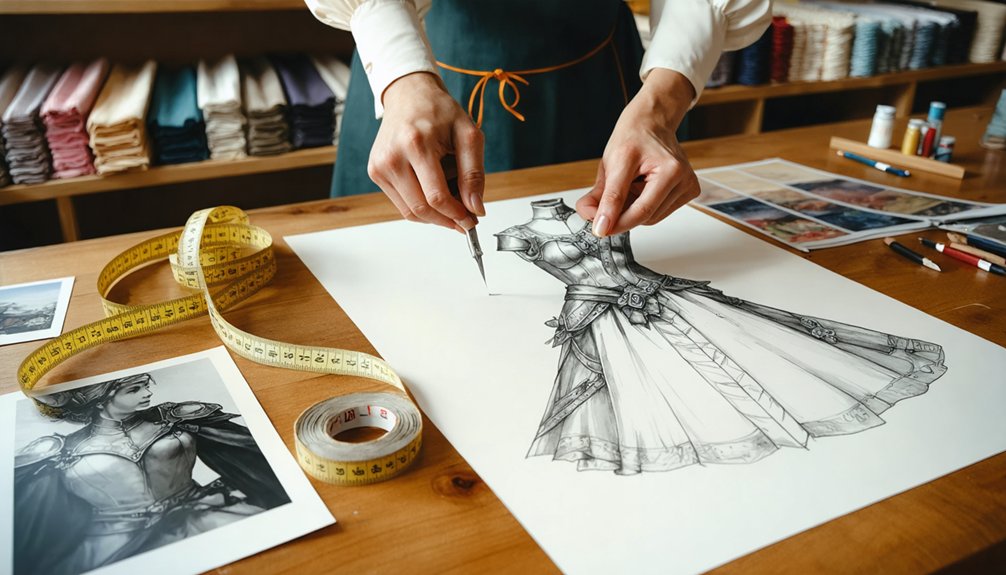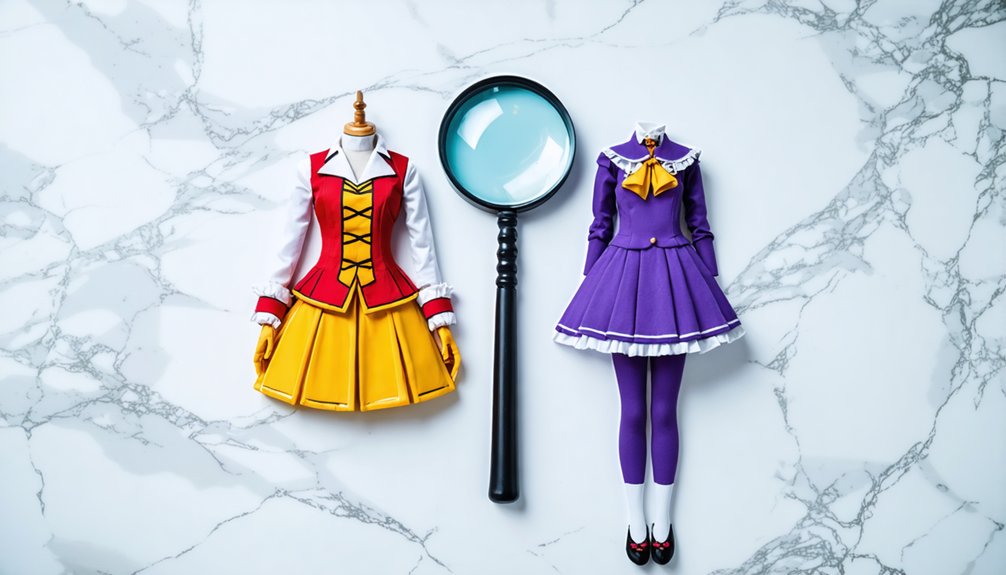
To compare cosplay store quality before buying, cross-reference reviews on Reddit, YouTube, and Trustpilot rather than relying on listing photos. Prioritize feedback that includes close-up images of seams, fabric texture, and print accuracy. Check whether construction details are stitched or merely printed, since printed elements crack and fade faster. Confirm the store communicates clearly about timelines and return policies. Each of these factors reveals far more than a product page ever will.
Key Takeaways
- Cross-reference reviews on Reddit, YouTube, and Trustpilot, prioritizing photo-backed feedback showing fabric texture, seam quality, and print accuracy.
- Prioritize listings with detailed fabric descriptions and close-up images over vague terms like “premium quality.”
- Evaluate whether accessories and details are physically constructed or merely printed, as printed elements fade and crack faster.
- Confirm total costs including shipping, customs, and custom sizing fees, since unusually low prices often indicate inferior materials.
- Test customer service responsiveness by asking specific questions; clear, realistic answers indicate a more trustworthy store.
What Separates a Trustworthy Cosplay Store From a Risk?
When comparing cosplay stores, the clearest dividing line between trustworthy and risky sellers is transparency. Reliable stores disclose cosplay fabric types, construction methods, and what costume accessories are included at each price tier. They publish clear return policies, refund behavior, and sizing instructions without burying the details.
Risky sellers, by contrast, rely on vague phrases like “premium quality,” stock photography, and generic on-site testimonials that lack specifics. You can’t verify what you’re actually getting until it arrives.
Trustworthy stores also maintain a verifiable presence across independent review platforms and cosplay communities, not just their own pages. When a seller consistently earns detailed, photo-backed feedback mentioning fit, materials, and support, that pattern signals accountability.
Absence of that evidence signals risk.
Where to Find Honest Cosplay Store Reviews Beyond the Listing Page
Because on-site reviews are easy to manipulate, you’ll want to cross-reference feedback from platforms where sellers have no editorial control. Independent sources reveal patterns in cosplay fabric choices, review response times, and actual construction quality that listing pages won’t show you.
- Search Reddit communities like r/cosplay for store name mentions and unfiltered buyer experiences.
- Check YouTube unboxing videos to assess real fabric texture and garment construction.
- Use Trustpilot or Google Reviews to identify recurring complaints about delays or poor support.
- Browse cosplay convention forums where buyers discuss vendor reliability and sizing accuracy.
- Review Discord servers dedicated to cosplay, where members share recent purchase photos and response time feedback.
Triangulating across these sources gives you a clearer, more accurate picture than any curated storefront can provide.
How to Read Cosplay Reviews Without Being Misled
When reading cosplay reviews, you’ll want to treat suspiciously generic praise—phrases like “great quality” or “fast shipping” with no supporting detail—as weak signals that tell you almost nothing about the actual product.
Photo evidence carries far more weight than text alone, since real buyer images reveal fabric texture, print accuracy, seam quality, and how the costume holds up outside a studio setting.
Pay close attention to whether reviewers mention sizing accuracy and fit, because those details confirm whether the store’s measurements translate reliably into a finished piece that actually works on a real body.
Spotting Suspicious Praise Patterns
Glowing reviews can mislead you just as easily as bad ones if you don’t know what to look for. Fake reviews and generic praise flood cosplay marketplaces, making pattern recognition a critical skill.
Watch for these red flags:
- Vague language: Phrases like “great quality” or “love it” with zero specifics signal low credibility.
- Clustered timing: Multiple five-star reviews posted within days of each other suggest manipulation.
- No photos: Legitimate buyers typically share images; text-only praise is easier to fabricate.
- Identical phrasing: Repeated sentence structures across reviews indicate coordinated or automated posting.
- Missing fit details: Trustworthy reviewers mention sizing accuracy, shipping time, and construction—not just appearance.
Cross-reference feedback across independent platforms before trusting any store’s on-site rating.
Photo Evidence Versus Text Claims
Photos cut through marketing language in ways that text simply cannot. When you evaluate a cosplay store, prioritize listings where buyers have submitted cosplay photography showing actual fabric drape, seam construction, and print resolution under real lighting. These images reveal fabric authenticity far more reliably than any seller description.
Text reviews can confirm satisfaction but rarely expose construction shortcuts. A buyer writing “great costume” tells you nothing about stitching quality or material weight. A photo showing fraying edges or washed-out prints tells you everything.
Cross-reference buyer photos against the store’s product images. Significant visual discrepancies signal misrepresentation. When photo evidence is absent or suspiciously polished, treat the listing with skepticism regardless of how many positive text reviews appear beneath it.
Sizing And Fit Mentions
Sizing and fit mentions are among the most useful data points in any cosplay review, yet they’re also the easiest to misread. Reviewers who specify their measurements, chosen size, and actual fit outcome give you actionable intelligence. Vague comments like “fits great” tell you nothing useful.
- Prioritize reviews that include body measurements alongside the ordered size.
- Check whether fit complaints correlate with poor customer service responses or ignored corrections.
- Note if fabric durability affects fit over time, such as stretching or shrinking after wear.
- Distinguish between sizing chart errors and individual measurement mistakes.
- Flag stores where fit issues appear repeatedly across different buyers and listings.
Cross-referencing these details helps you predict your own outcome before committing to a purchase.
How to Tell Whether a Cosplay Costume Is Constructed or Just Printed
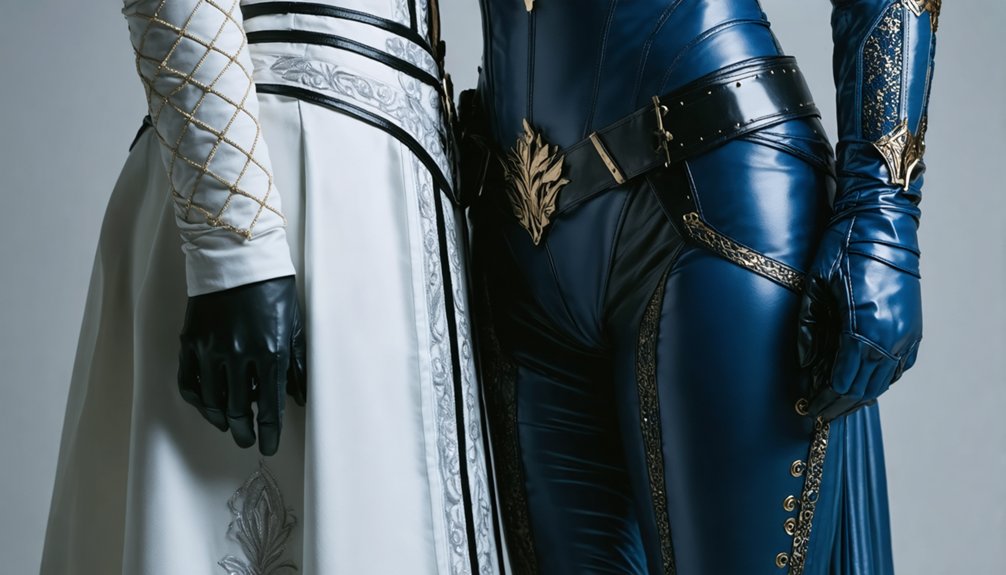
When comparing cosplay costumes, you’ll want to distinguish between printed details and stitched or layered construction, since printing signals lower-cost manufacturing while stitching indicates hands-on craftsmanship.
Check the listing’s close-up images for visible seams, trim edges, and textured layering, because well-constructed costumes show deliberate finishing that printed designs can’t replicate.
If a store only provides wide-angle or stock photos without zoomed-in fabric evidence, treat that as a warning that the construction quality may not hold up to scrutiny.
Printed Versus Stitched Details
One of the fastest ways to gauge costume quality is by identifying whether the details are physically constructed or simply printed onto the fabric. Stitched, layered, or appliquéd elements signal stronger fabric durability and craftsmanship than flat printed substitutes.
- Printed details fade, crack, or peel under repeated wear and washing.
- Stitched trim holds structural shape and resists distortion over time.
- Print consistency matters—uneven gradients or blurry edges indicate low-resolution artwork or cheap printing methods.
- Layered construction adds visual depth that printing can’t replicate.
- Close-up product images reveal whether dimension comes from physical materials or surface graphics.
When reviewing listings, zoom into product photos and look for raised edges, visible seams, and texture variation. If everything looks flat and uniform, you’re likely looking at a print-heavy, lower-tier costume.
Seam And Trim Indicators
Seams and trim reveal more about construction quality than almost any other visible feature. When you examine a listing closely, look for photos that show how fabric patterns align at seams rather than cut across them. Misaligned patterns at joins signal rushed production and low-grade pattern-matching.
Check whether trim is stitched separately or printed directly onto the base fabric, since applied trim holds structure and resists wear far better. Evaluate accessory details the same way: stitched borders, layered appliqués, and bound edges indicate deliberate construction, while flat printed equivalents fade and fray faster.
If a store doesn’t provide close-up seam photography, treat that absence as a warning. Reliable sellers show their construction because strong seams and clean trim are competitive advantages worth displaying.
Close-Up Image Signals
Close-up images are where seam and trim evidence actually lives, and knowing what to look for separates a constructed costume from a printed one quickly. When you evaluate listings, zoom into product photos and assess what’s actually visible versus staged.
- Fabric patterns should align across seams, not shift or mismatch at joins.
- Stitching lines should appear clean, consistent, and appropriately tensioned.
- Trim should show physical dimension, not flat ink simulation.
- Accessory details like buttons, clasps, and badges should appear as separate components, not surface prints.
- Lining edges and hem finishes reveal whether construction effort extends beyond the exterior.
Stock photos hide these signals. Listings with buyer-submitted close-ups give you real construction evidence. Prioritize those images over polished studio shots every time.
What Fabric Listings Actually Reveal About Cosplay Costume Quality
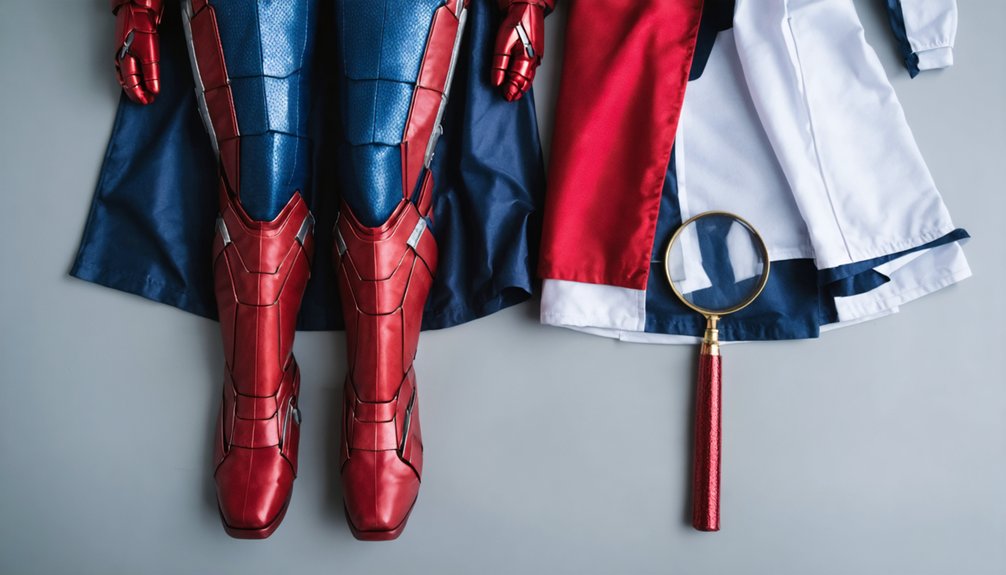
When a store lists fabric details like fiber type, lining, and finish, you’re looking at a meaningful quality signal—vague phrases like “premium quality” or “high-grade material” tell you nothing actionable.
Specific listings enable real material comparison between stores and price points, letting you evaluate fabric durability before committing.
Detailed material listings make cross-store comparison possible, giving you real durability insights before spending a dollar.
Printed details typically indicate lower-cost construction, while stitched or layered elements suggest higher investment in craftsmanship.
If a store provides close-up images alongside material specs, that combination carries more weight than text descriptions alone.
Watch for listings that name the fabric but omit lining or finish details—incomplete disclosures often predict incomplete construction.
Stores confident in their materials give you enough specifics to verify claims independently, which separates transparent sellers from those masking shortcuts behind marketing language.
How Cosplay Sizing Options Show Whether a Store Takes Fit Seriously
Custom sizing availability tells you more about a store’s commitment to fit than any marketing copy will. Stores that offer tailored measurements alongside cosplay fabric choices and costume color accuracy signal serious production standards.
- Check whether custom sizing costs extra and how considerably it raises total price.
- Confirm the store provides a detailed measurement guide, not just a generic size chart.
- Look for buyer reviews mentioning fit consistency when custom dimensions were submitted.
- Verify whether the store flags common fit issues for specific costume silhouettes.
- Avoid stores where custom sizing is listed but unsupported by finished-piece examples.
If a store only offers S-XL with vague size charts, it’s optimizing for volume, not precision. Your fit depends on how seriously a store structures its sizing infrastructure before you order.
Red Flags That Mean You Should Skip This Cosplay Store
Certain patterns across listings, reviews, and store policies reliably predict a poor purchase experience, and recognizing them early saves you money and time.
Stock photos with no buyer-submitted images signal weak transparency.
Reviews that cluster around vague praise without mentioning fit, fabric, or shipping reveal manufactured customer loyalty rather than genuine satisfaction.
Absent or buried return policies indicate a store that prioritizes acquisition over accountability.
Inconsistent store branding, mismatched product photography styles, and shifting item descriptions suggest a reseller masking poor sourcing.
Pricing that sits unusually low across an entire catalog rarely reflects quality construction.
When support channels are unresponsive before purchase, assume they’ll be worse after.
Each of these signals individually warrants caution; multiple signals appearing together means you should walk away entirely.
Does the Price Reflect What the Cosplay Costume Actually Includes?
Knowing which stores to avoid gets you halfway to a smart purchase; the other half is understanding whether a listing’s price actually reflects what arrives at your door. Pricing transparency and material authenticity separate credible stores from misleading ones.
- Compare total cost: base price plus accessories, shipping, and custom sizing fees.
- Extremely low prices typically signal print-heavy construction and weaker fabric grades.
- Tiered systems like R, SR, and SSR signal honest quality segmentation.
- Vague terms like “premium quality” without fiber or lining details indicate weak material authenticity.
- Mid-to-upper pricing usually includes better construction, more accessories, and closer tolerances.
If a store can’t clearly explain what its price covers, that gap in pricing transparency tells you exactly what kind of purchase experience to expect.
What the Total Cost of a Cosplay Order Looks Like After Shipping
Once you move past the sticker price, the real cost of a cosplay order often looks considerably different. Shipping fees, especially for international orders, can add $20–$60 depending on weight and carrier.
The sticker price is just the beginning — international shipping alone can quietly add $20–$60 to your total.
If the cosplay material requires careful handling or includes rigid accessories, dimensional weight pricing may apply, pushing costs higher.
You’ll also want to review store policies on customs duties, since many overseas sellers don’t cover import taxes. Those fees land on you at delivery.
Custom sizing sometimes carries an additional charge that isn’t visible until checkout.
Add production time to your calculation too. Rush processing, when available, often costs extra.
Comparing total landed cost, not just the listing price, gives you a more accurate picture of what you’re actually paying.
Can This Cosplay Store Deliver Before Your Convention Date?
Before you place an order, you need to separate production time from shipping time, since made-to-order costumes often require several weeks of manufacturing before they even ship.
Contact the store directly and confirm whether they can meet your specific convention date, because posted estimates don’t account for your order’s position in their queue.
If your event falls during peak convention season, build in extra buffer time, since delays cluster heavily around those periods and stores rarely flag the slowdown upfront.
Production Time Matters
When you’re ordering a made-to-order costume, production time and shipping time are two separate clocks running consecutively, not simultaneously. Material durability and customer communication both influence whether your order arrives convention-ready or disappointingly late.
- Confirm production time before purchasing, not after
- Add shipping duration on top of production estimates, never assume overlap
- Ask directly whether the store can meet your deadline
- Prioritize stores with responsive customer communication and transparent timelines
- Factor in convention-season delays, which compress already tight schedules
International orders carry additional customs delays that most buyers underestimate. If a store can’t clearly answer how long production takes for your specific item, that silence signals poor process transparency, and that’s a risk you shouldn’t accept under deadline pressure.
Ask Before Ordering
How clearly a store answers a direct delivery question tells you more about its reliability than any marketing copy. Before placing an order, contact customer service and ask whether your costume can arrive by a specific date. Don’t assume production and shipping timelines are combined — they’re often separate, and delays compound quickly near convention season.
Ask directly about the costume material if you’re ordering a higher-tier version, since production time often increases with more complex construction. A store that responds quickly, gives specific dates, and acknowledges realistic risks is far more trustworthy than one offering vague reassurances.
If customer service deflects or provides generic replies, treat that as a warning signal and factor it into your final decision.
Convention Season Delays
Convention season compresses every timeline that normally gives a cosplay order room to breathe. Production queues lengthen, cosplay fabric suppliers face higher demand, and costume accessories often ship separately, adding unpredictability. You need to calculate production time plus shipping time, not just the delivery estimate shown at checkout.
- Confirm the store’s current lead time directly before ordering
- Ask whether costume accessories ship with the main piece or separately
- Identify whether cosplay fabric sourcing delays affect production schedules
- Prioritize stores with transparent queue updates and responsive support
- Build a minimum two-week buffer before your actual convention date
Stores that can’t answer deadline questions clearly aren’t worth the risk. Treat unresponsive communication during peak season as a disqualifying signal, not a minor inconvenience.
Frequently Asked Questions
Can I Trust Cosplay Stores That Only Sell on Social Media Platforms?
You can’t fully trust social media-only sellers without verifying their store reputation across independent platforms. Assess costume authenticity by demanding photo reviews, clear policies, and consistent buyer feedback before you commit to any purchase.
How Do Cosplay Store Quality Standards Differ Between Countries of Manufacture?
Surprisingly, “premium” doesn’t mean the same thing everywhere. You’ll find material durability and craftsmanship consistency vary sharply by region, so always examine fabric specs, construction photos, and verified buyer reviews rather than trusting origin alone.
Is Buying a Used or Secondhand Cosplay Costume Ever a Reliable Option?
Yes, it’s reliable if you verify costume durability through close-up photos and confirm material authenticity before purchasing. Prioritize listings with detailed condition disclosures, clear photos, and seller history across trusted cosplay resale communities.
How Do Group Cosplay Orders Affect Pricing, Quality, or Production Priority?
Bulk ordering saves money, but it risks rushed production. When you negotiate group discounts, confirm each piece meets individual sizing standards, since stores often deprioritize quality control when fulfilling large, simultaneous orders under deadline pressure.
What Payment Methods Offer the Best Buyer Protection for Cosplay Purchases?
Use PayPal or a major credit card—they’ll give you the strongest payment security and enforce refund policies if orders fail. You’ll dispute charges effectively, protecting your investment when sellers don’t deliver as promised.
References
- https://www.reddit.com/r/CosplayHelp/comments/17k1li2/what_are_the_trusted_sites_to_buy_cosplay_costumes/
- https://www.reddit.com/r/CosplayHelp/comments/1ow70mg/what_are_the_trusted_sites_to_buy_cosplay_costumes/
- https://www.facebook.com/groups/cosplayph/posts/10159308524177681/
- https://www.sarahhowellfx.com/blog-2-1/blog-post-title-one-a8cbr-68hl3-atf6y
- https://www.youtube.com/watch?v=Gp9LnRvgK6s
- https://www.topconsumerreviews.com/best-cosplay-stores/detailed-reviews.php
- https://thetestedhub.com/guides/best-cosplay-shops/
- https://www.facebook.com/groups/68924042904/posts/10164468761167905/
- https://www.thepopverse.com/cosplay-store-costumes-online-stores-best