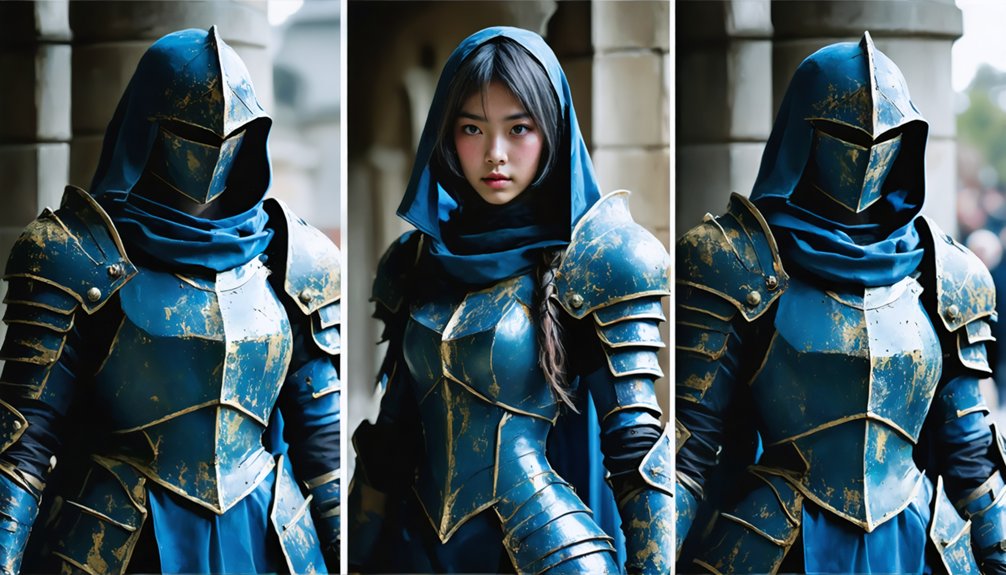
To portray non-human characters convincingly, you’ll need to build from the inside out. Start with purpose — what truth does this character exist to reveal? Then let biology drive behavior, cognition, and choice. Don’t describe your character’s alienness; show it through action, instinct, and the way other characters react. Keep their mental framework genuinely foreign, not just human logic in a mask. The deeper principles ahead will transform how you approach every non-human mind you create.
Key Takeaways
- Ground your non-human character in a clear purpose that reveals something specific, guiding every biological, behavioral, and cognitive trait organically.
- Let biology actively drive behavior—movement, instincts, and decisions should reflect anatomical realities, not decorative physical features.
- Reveal alien traits through action and interaction rather than upfront description, showing foreignness naturally within scenes.
- Build a cognitive framework that processes experiences differently from humans, ensuring decisions reflect a consistently alien logic.
- Avoid visual clichés and human-default thinking; genuine strangeness, rooted in purpose, creates deeper character connection.
Why Most Non-Human Characters Fall Flat
When writers imagine non-human characters, they often dress a human mind in alien skin and call it done. You get pointed ears, unusual pigmentation, and a vague accent — design clichés layered over fundamentally human psychology. The creature thinks like you, grieves like you, and wants what you want. That’s not world-building. That’s costuming.
Species stereotypes compound the problem. The warrior race charges without strategy. The hive mind surrenders all individuality. These shortcuts collapse entire civilizations into a single repeated note.
Real non-human characters demand that you build cognition, biology, and culture from the ground up. When a species’ physiology shapes how it thinks, moves, and communicates, something genuinely alien emerges — not a reflection of humanity, but a window into something fascinatingly beyond it.
Start With Purpose, Not Species Details
Before you sketch a single scale or decide how many hearts your creature has, ask what this character is *for*.
Every meaningful non-human exists to illuminate something: a cultural blind spot, a thematic tension, a perspective humans can’t credibly hold.
Without that anchor, you’ll default to *visual clichés* — glowing eyes, exotic pigmentation, anatomical flourishes that signal “alien” without saying anything.
You’ll stack *species stereotypes* borrowed from decades of familiar templates, producing a character that feels assembled rather than imagined.
Purpose changes everything. When you know what the character must reveal, the right traits emerge naturally.
Biology, behavior, and cognition align around a central function.
The character stops being a human wearing a costume and starts being something genuinely, usefully strange.
Let Your Non-Human Character’s Biology Drive Their Behavior
Once you’ve locked in your character’s purpose, their body becomes your next creative engine. Don’t treat biology as costume. Let it reshape everything — movement, habit, instinct, and choice.
Biology isn’t decoration. Let it drive every movement, every instinct, every choice your character makes.
A creature with compound eyes doesn’t scan a room the way a human does. Their sensory perception rewires how they read threat, beauty, and trust. Build scenes around that difference and watch your world deepen.
Anatomical constraints are equally generative. A being with rigid exoskeletal plating can’t slouch in grief or curl inward with fear. So how do they signal defeat? You’ll invent something truer and stranger than anything borrowed from human body language.
Every physical limitation or advantage should push your character toward a solution only *they* could reach. That specificity is what makes them unforgettable.
Reveal Non-Human Traits Through Action, Not Description
Biology gives you the raw material — now craft how you reveal it. Skip the encyclopedia entry. Instead, let your reader discover your character through motion, choice, and friction with the world around them.
Show species-specific gestures mid-conversation rather than cataloguing them upfront. Let environmental adaptations surface organically — your character instinctively angling toward heat, calibrating movement through low-gravity corridors, or reading air currents before entering a room. These moments build the species without pausing the story.
Other characters’ reactions sharpen the effect. A flinch, a misread signal, a moment of awe — these responses tell your reader something foreign is present without you stating it directly.
Revelation through action transforms biology into behavior, behavior into identity, and identity into a character your audience genuinely inhabits.
Give Your Non-Human Character a Mind That Rejects Human Logic
Maybe they process betrayal as a resource miscalculation rather than a wound. Maybe risk feels like texture, not fear. Build those distinctions into every decision they make — in conflict, in choice, in silence.
Keep the mental framework consistent across scenes. The moment your alien starts grieving, celebrating, or scheming exactly like a human, you’ve collapsed the architecture. Protect the cognitive distance.
That gap isn’t a barrier to connection — it’s the source of genuine fascination.
Frequently Asked Questions
How Do I Write Convincing Non-Human Dialogue Without Sounding Forced or Awkward?
Root alien speech patterns in species biology and culture first. Let robotic communication mirror machine logic, not human rhythm. You’ll craft voices that feel genuinely otherworldly when behavior, need, and cognition consistently drive every word your character speaks.
Can a Non-Human Character Realistically Carry a Romance Subplot?
Yes, absolutely. Like ancient alchemy, you transform non-human expressions into emotional gold. Ground creature symbolism in genuine vulnerability, let biology shape intimacy, and you’ll build romance that resonates deeper than any purely human connection ever could.
How Do I Build a Non-Human Culture Without Overwhelming the Main Plot?
You’ll weave alien symbolism and cultural rituals into character behavior, not exposition. Let gestures, instincts, and reactions reveal your world organically. Trust small details to carry meaning—your culture breathes through action, never overwhelming what drives the story forward.
Should Non-Human Characters Follow the Same Arc Structure as Human Ones?
You don’t have to. Let alien biology reshape the arc entirely. Build creature motivations around instinct, survival cycles, or collective transformation—then let those forces drive change instead of mirroring familiar human emotional journeys.
How Do I Handle Pronouns and Gender for Species Without Human Equivalents?
Over 70 languages use gender-neutral language naturally. For your species, invent pronouns that reflect species-specific communication—sounds, roles, or states. Don’t force human gender onto alien biology; build your own visionary linguistic system instead.
References
- https://writingexcuses.com/writing-excuses-8-33-making-non-human-characters-relatable/
- https://www.reddit.com/r/writers/comments/1c8g1n9/for_those_with_a_nonhuman_main_character_how_do/
- https://penstricken.com/2017/05/14/writing-non-human-characters-part-1/
- https://www.nycastings.com/embodying-the-non-human-character/
- https://yakovmerkin.com/2013/01/21/writing-non-human-characters/
- https://www.kayjahtaylor.com/post/tips-on-writing-non-human-characters
- https://www.youtube.com/watch?v=_1zC0-tGR60
- https://www.reddit.com/r/worldbuilding/comments/1k97ac3/subtle_ways_to_make_nonhuman_characters_look/
- https://www.reddit.com/r/writing/comments/1umtb2y/describing_nonhuman_characters/
- http://www.untetheredrealms.com/2016/11/writing-effective-non-human-characters.html