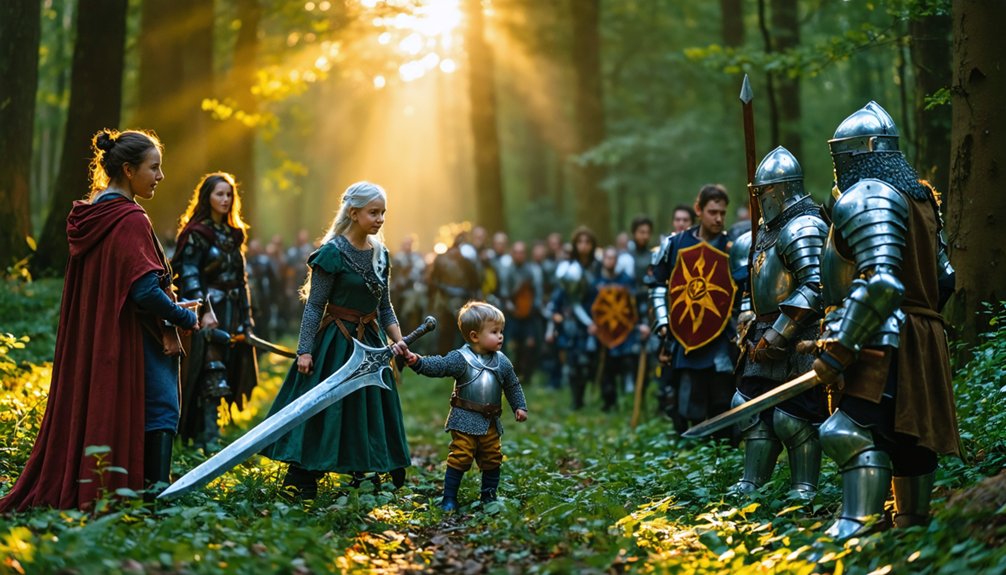
You can create truly inclusive LARP experiences by focusing on accessibility, safety, and diverse representation. Start by offering adjustable physical challenges, clear calibration tools for comfort boundaries, and characters that break stereotypes. You’ll strengthen your community when players of all ages and abilities can negotiate conflicts, develop empathy through perspective-taking, and build real communication skills together. Whether you’re organizing your first event or refining an established game, you’ll discover practical strategies that transform fantasy settings into welcoming spaces where everyone’s story matters.
Key Takeaways
- Create adaptable storylines and flexible rules that accommodate varying physical abilities, experience levels, and mobility needs for all participants.
- Design characters with diverse backgrounds and motivations, allowing players to explore different perspectives regardless of age or identity.
- Establish clear safety protocols and communication systems, including non-verbal cues, to ensure comfortable participation for everyone involved.
- Offer multiple engagement options beyond combat, such as diplomacy, crafting, and puzzle-solving, to suit different interests and capabilities.
- Foster a welcoming community culture that actively reduces judgment and encourages collaborative storytelling across generational and experiential differences.
Understanding the Power of Perspective-Taking Through Role-Play
When you step into a character’s shoes during a LARP, you’re doing more than playing a game—you’re actively building your capacity for empathy. This narrative imagination allows you to predict behaviors, understand motivations, and respond authentically from your character’s unique viewpoint.
Through perspective exploration, you’ll witness others modeling different worldviews at your table, creating powerful moments of cognitive dissonance that challenge your assumptions. You’re not just role-playing—you’re developing real-world skills in non-verbal communication and self-awareness.
Research shows this immersive approach increases emotional insights and creativity while making diverse perspectives tangible and relevant. Every choice you make from your character’s perspective strengthens your ability to relate to others, fostering both personal growth and meaningful community connections.
Building Real-World Skills in a Fantasy Setting
When you step into character at a LARP event, you’re not just escaping reality—you’re building skills that translate directly to everyday life. Through negotiating with other characters, you’ll strengthen your communication abilities while developing genuine empathy by experiencing situations from perspectives different than your own.
The unscripted challenges you face during gameplay sharpen your critical thinking skills, teaching you to make sound decisions when the pressure’s on.
Communication Through Character Interaction
Live action role-playing offers a unique space where you’ll practice real communication skills while traversing fantastical scenarios. When developing collaborative storylines with fellow players, you’re simultaneously strengthening emotional intelligence through active listening and creative problem-solving.
Each character interaction becomes a practical exercise in negotiation, whether you’re mediating conflicts between rival factions or proposing competitions as alternatives to combat. You’ll find that role-playing confident characters naturally enhances your real-world speaking abilities. The pressure of advancing stories through dialogue translates directly to improved public speaking skills.
Empathy Develops Practical Understanding
Beyond learning to communicate effectively through character dialogue, LARP offers you something equally valuable: the ability to genuinely understand perspectives vastly different from your own.
When you embody a marginalized character, you’re not just pretending—you’re experiencing identity transformation that builds genuine empathy. Research shows LARP participants develop empathetic leadership insights through multiple empathy types: cognitive, emotional, and situational understanding working simultaneously.
Practical empathy skills you’ll develop:
- Empathy driven design principles that help you value others’ perceptual worlds in collaborative projects
- Reduced judgmentalism toward yourself and others, increasing acceptance across differences
- Prosocial behaviors that extend beyond the game into real-world interactions
These aren’t abstract concepts. They’re measurable improvements in tolerance, curiosity, and cooperation—soft skills that transform how you navigate diverse environments and lead innovative teams.
Critical Thinking Under Pressure
The orc warband is charging your position, and you’ve got thirty seconds to rally your scattered allies and devise a defensible strategy. This is where LARPing transforms into genuine decision making under strain. You’ll rapidly assess terrain advantages, evaluate your team’s capabilities, and prioritize actions—skills that transfer directly to workplace emergencies and real-world crises.
Through repeated high-stakes scenarios, you’re analytical skills strengthening with each encounter. Mock diplomatic negotiations teach you to weigh competing priorities while managing emotional responses. Medical emergency simulations develop instinctive prioritization when every second counts. You’ll learn to separate reliable information from assumptions, identify logical solutions despite pressure, and communicate decisions clearly to diverse stakeholders. These immersive experiences build the critical thinking muscles you’ll need throughout your career and personal life.
Making Your LARP Event Physically and Cognitively Accessible
Creating an accessible LARP means thinking beyond just the story—you’ll need to contemplate how every participant can fully engage with your event. Start by choosing venues with proper mobility access, then guarantee your game materials and instructions reach everyone through multiple formats.
You should also build flexibility into your character creation system so participants can customize roles that work with their abilities rather than against them.
Venue Selection and Mobility
When you’re scouting locations for your LARP event, accessibility isn’t just a checklist—it’s about ensuring every player can fully participate in the adventure. Prioritize venues offering modular venue flexibility with step-free entrances at least 81 cm wide, smooth pathways minimum 36 inches across, and accessible transportation options within 50 meters of entry points.
Essential venue features to evaluate:
- Parking and pathways: Designated 4.8m x 3.6m accessible spaces (one per 25 regular spots) with level surfaces leading directly to entrances via obstruction-free routes
- Mobility circulation: Aisles 3-6 feet wide accommodating wheelchairs and scooters, integrated seating areas with unobstructed sightlines, and multi-level access via lifts
- Safety infrastructure: Accessible restrooms (150×220 cm), emergency evacuation plans with refuge areas, and ramps maintaining 1:12 maximum gradient
Clear Communication and Materials
Five fundamental systems can transform your LARP from confusing chaos into an accessible adventure where everyone understands the rules, boundaries, and safety protocols.
Color-coded consent bands worn on upper arms signal physical comfort levels—red, yellow, green—visible over garb throughout your event. Point-and-click combat maintains 10-foot melee or 15-foot ranged distances, eliminating contact entirely. Non-combat zones around flames use verbal-only interactions like “I knock you unconscious.”
Your inclusive advertising should communicate these accommodations upfront, inviting broader participation before registration opens. Staff training priorities must emphasize immediate response to lighter swing requests and transparent weapon policies.
Reflective-taped sashes maintain visibility during night scenes. Ongoing community input refines physical and cognitive access, creating story opportunities rather than limitations. This proactive approach reduces disabled players’ assessment burden while preserving your core vision.
Flexible Character Creation Options
Character creation becomes truly inclusive when you design roles that authentically represent disabled experiences rather than treating disability as narrative absence or mechanical penalty. You’ll empower players through character customization options that celebrate diverse abilities, from wheelchair-using warriors to sensory-sensitive spellcasters. Build your system around players’ actual capabilities, ensuring individualized experience design that frames mobility differences as character traits, not flaws.
Essential inclusive character creation practices:
- Design disabled characters from the outset as integral to your world-building, not afterthoughts
- Root out problematic language during development that frames disabilities as weaknesses or penalties
- Balance character options so disabled and abled portrayals carry equal narrative weight
You’ll create richer storytelling when characters authentically reflect real experiences with chronic pain, mobility differences, and sensory processing needs—portrayed with appropriate sensitivity by players who share those experiences.
Essential Safety Measures and Calibration Tools
Safety in LARP isn’t just about foam weapons and protective gear—it’s an all-encompassing framework that keeps everyone physically and emotionally secure while maintaining immersive play.
You’ll need clear calibration tools like “off-game” phrases for adjusting intensity mid-scene. Practice these early in low-stakes moments—they’re suggestions (“raise intensity”) or orders (“tap out,” “stop”). Compulsory safety briefings establish behavioral standards, while pre-game workshops let you rehearse mechanics and boundaries before consequences matter.
Managing risk levels means designing smartly: shifting locations, adding breaks, or removing triggering content. Yet protective gear won’t shield against addressing emotional harms—that requires trust through transparent sign-up information and shared understanding.
Monitor your physical needs throughout, pack accommodations, and remember verbal-only interactions remain valid options when you’re exhausted or injured.
Designing Worlds That Welcome Everyone
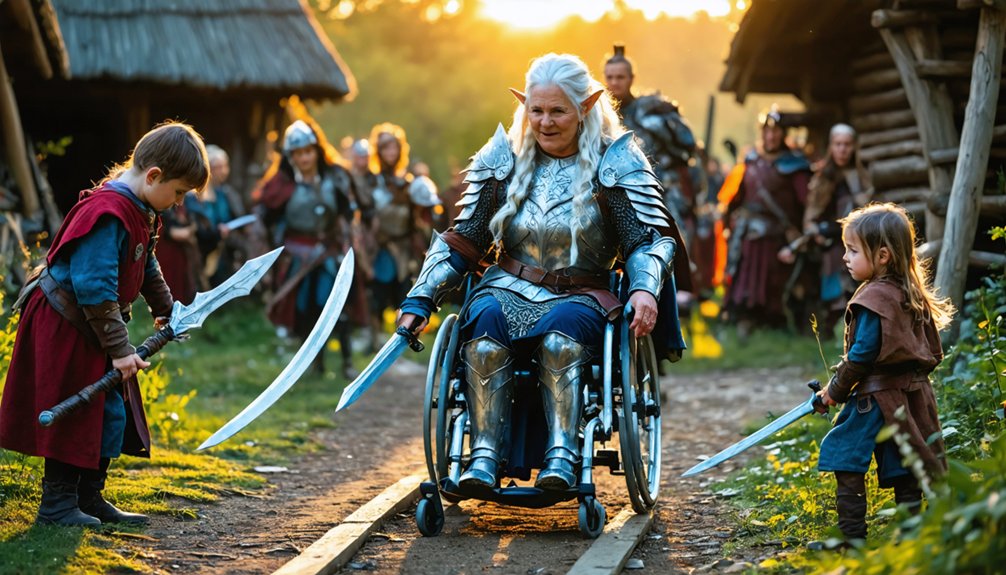
When you’re building a LARP world from scratch, inclusivity isn’t an afterthought—it’s the foundation that determines who gets to play. Your world-building should weave diverse narrative perspectives into every story element, from character ancestries to magical systems. Create inclusive character backstories that reflect varied cultures, abilities, and identities, making these aspects drive meaningful interactions rather than superficial decoration.
Inclusivity determines who gets to play—weave diverse perspectives into every story element, from character ancestries to magical systems.
Design choices that expand your player base:
- Flexible mechanics that accommodate different mobility levels and sensory needs
- Multiple pathways for character progression beyond physical combat
- Cultural consultation with marginalized communities during development
Draw from resources like the GDI Playbook to guarantee authentic representation. Remember: equitable design means everyone gets an equivalent experience, not an identical one. Your structural choices—from all-gender bathrooms to quiet rooms—signal who belongs in your world.
Physical and Mental Wellness Through Immersive Play
Beyond the foam swords and character sheets, LARP delivers measurable benefits to your mind and body that extend far past game day. You’ll experience reduced anxiety and depression through meaningful social connections, while physical engagement supports cognitive function and emotional regulation. Studies show 62% of participants report increased confidence and stress reduction, with 72% noting improved fitness levels.
LARP excels at identity exploration, allowing you to safely experiment with different aspects of yourself through character embodiment. The immersive environment facilitates emotional processing of real-world challenges in controlled settings, helping you develop better coping strategies. You’ll sharpen problem-solving abilities, strengthen communication skills, and build lasting friendships. Whether processing grief or building self-esteem, LARP creates transformative experiences that enhance your overall well-being through active participation.
Creating Characters That Break Stereotypes
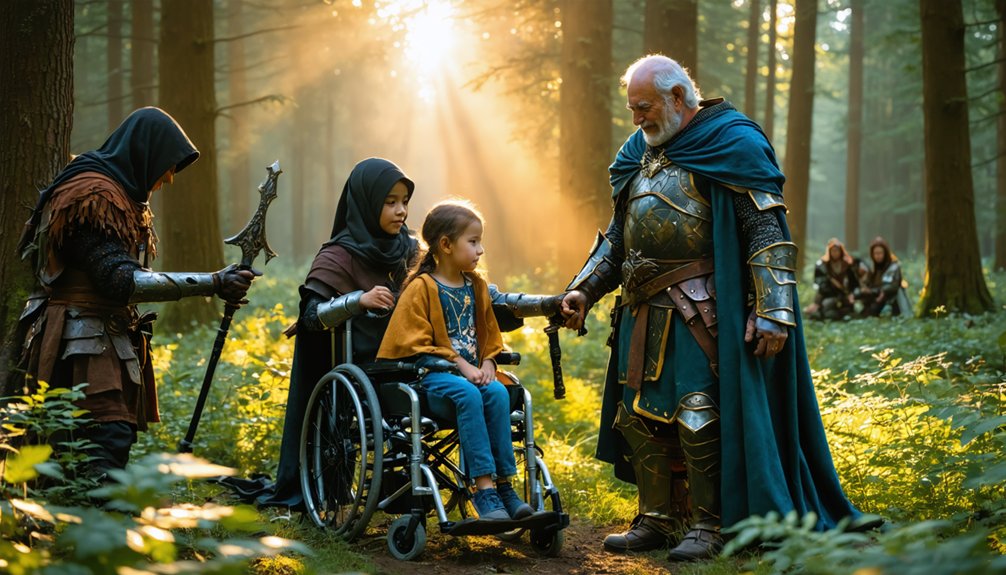
Character creation in LARP carries immense power to either reinforce harmful assumptions or actively dismantle them. When designing characters, you’ll want to embrace multifaceted representation that goes beyond surface-level traits.
Avoid defaulting to stereotypical assumptions—a character named “Bill” doesn’t automatically need to be a straight white male. Instead, use intentional archetypes that provide depth while encouraging players to choose their own ethnic backgrounds and identities.
Break stereotypes by:
- Treating cultural groups as collections of individuals, not monolithic blocs (research the 566 distinct tribal governments rather than using “Native American”)
- Providing detailed backstories that prevent characters of color from becoming props for white narratives
- Creating multi-racial identities that simultaneously embrace French, Japanese, and West African traits
Give players tools to embody authentic, non-oppressive voices that challenge outdated norms.
Practical Steps for Organizing an Inclusive Event
Creating truly inclusive LARP events requires intentional planning that centers accessibility from the very beginning, not as an afterthought. Start by conducting surveys to identify specific barriers participants face, then establish an accessibility committee that includes people with disabilities.
Select wheelchair-accessible venues with clear wayfinding and multiple restroom options. Your website should feature location photos and straightforward navigation.
Train volunteers on diverse needs and recruit from disability advocacy groups for authentic community collaboration. Offer multiple communication channels—email, texts, and visual aids with audio descriptions. Through inclusive marketing that highlights your accessibility features, you’ll reach broader audiences.
Collect feedback through post-event surveys and debriefs, using insights to refine future events. Remember: accessibility benefits everyone, not just those who request accommodations.
Frequently Asked Questions
What Budget Should Organizers Allocate for Accessibility Accommodations and Equipment?
Allocate 10-15% of your total budget for accessibility, covering venue modifications, assistive technology, and providing mobility aids. Don’t forget accommodating dietary needs. You’ll find this investment strengthens your community while creating innovative, welcoming experiences for everyone.
How Do We Handle Players Who Resist Inclusive Policies or Safety Tools?
Address resistance through gradual communication about why safety tools matter. Gather participant feedback to refine policies. If players continue resisting inclusive practices, they’re not right for your community. Prioritize those who embrace your values and protect marginalized members.
Can Young Children Participate Safely in LARPS With Adult Themes or Content?
No, young children shouldn’t attend adult-themed LARPs—it’s like bringing toddlers to horror films! You’ll want age-appropriate content that respects developmental concerns. Choose family-friendly events instead, where everyone’s safety and experience matter equally.
What Insurance or Liability Coverage Is Recommended for Inclusive LARP Events?
You’ll want all-encompassing event insurance covering general liability ($1M minimum) and accident medical protection. Smart risk management includes adding venues as additional insureds at no cost, plus optional equipment coverage to protect your community’s investment in inclusive experiences.
How Long Does Preparation Typically Take for a Fully Accessible LARP Event?
You’ll need 3-6 months minimum—like planning a medieval tournament with smartphones. Start recruiting volunteers early, coordinating transportation for accessibility needs, securing permits, and building your world. Rush it, and you’re risking participants’ safety and enjoyment.