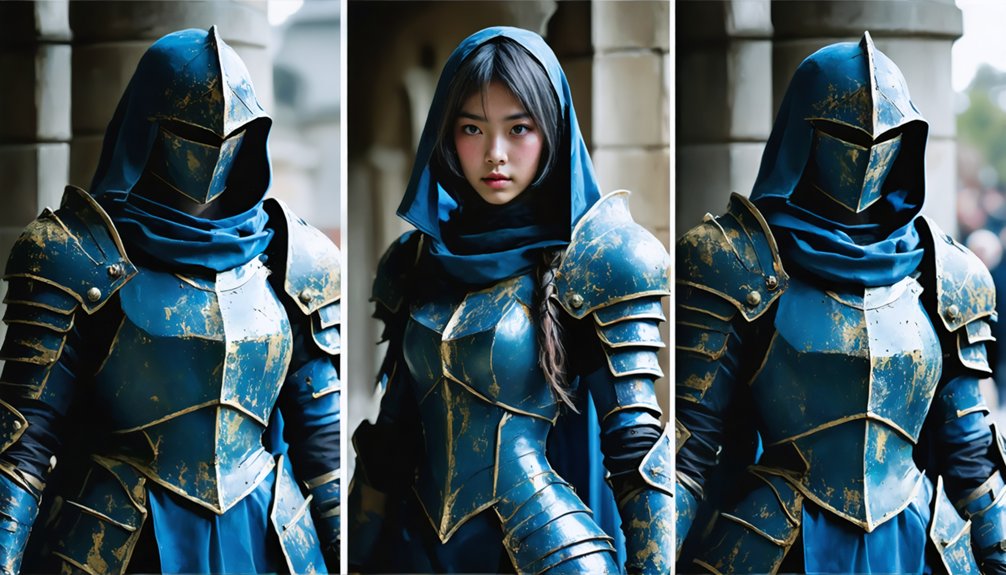
Your cosplay character’s backstory isn’t decoration—it’s the structural foundation that transforms a costume into a living narrative system. You anchor every design choice, from fabric texture to prop selection, to a defining core event that shapes identity and drives motivation. Your character’s fears, relationships, and setting connections create psychological depth that makes portrayal authentically resonant. Explore the analytical framework ahead, and you’ll discover how each backstory layer systematically open richer, more compelling character storytelling.
Key Takeaways
- A single defining backstory event shapes costume material, color, and accessory choices, transforming cosplay into a visual narrative.
- Motivation anchors every design element, ensuring fabric, texture, and symbols externalize the character’s core psychological drive.
- Props reveal fears and backstory beyond aesthetics, functioning as narrative evidence with deep emotional and symbolic significance.
- Relationship dynamics with allies, mentors, and rivals expose character vulnerabilities, directly influencing costume evolution and storytelling depth.
- Tracking growth through costume wear, color shifts, and insignia updates transforms static archetypes into dynamic narrative participants.
Craft the Core Event That Anchors Your Entire Cosplay Backstory

Every compelling cosplay character rests on a single, defining moment that shapes who they’re before the audience ever sees them. You must identify this core event with analytical precision, treating it as the structural foundation from which motivation, fear, and conflict naturally emerge.
Consider how dream symbolism can inform this pivotal moment — perhaps your character’s transformation began within a vision that fractured their worldview. That rupture then justifies every costume materials choice you make, from weathered leather suggesting survival to pristine silk indicating idealism preserved despite trauma.
Your core event shouldn’t merely explain your character; it should create productive narrative tension that drives visible evolution. Interrogate the event’s psychological residue, then let those findings dictate behavioral patterns, relationship dynamics, and ultimately, the cosplay’s authentic, layered presentation.
Build the Motivation That Drives Every Costume Choice
Your character’s motivation functions as the invisible architecture beneath every costume choice, dictating fabric selection, color palette, and accessory placement with narrative precision.
When you anchor each design decision to a clearly defined goal — whether vengeance, redemption, or belonging — your cosplay transcends aesthetics and becomes a coherent argument about who this character fundamentally is.
Aligning your costume components with that core motivation guarantees that even minor details, such as a frayed hem or a deliberately tarnished buckle, communicate purpose rather than accident.
Defining Core Character Motivation
When building a character for cosplay, core motivation functions as the architectural spine of every creative decision you make—from fabric selection to prop symbolism. Motivation isn’t merely backstory decoration—it’s the analytical framework that transforms costume symbolism into purposeful expression.
Ask yourself what your character fundamentally wants, then trace how that desire manifests visually across every design element you select.
Consider emotional resilience as a motivational foundation: a character who survived systemic loss might wear muted tones beneath vibrant armor, signaling guarded vulnerability beneath strength. That psychological layering communicates narrative without dialogue. You’re essentially encoding biography into textiles, silhouettes, and accessories.
When motivation remains clearly defined, your creative choices become deliberate rather than arbitrary—each element earning its place within a coherent, analytically rigorous character system.
Aligning Goals With Costumes
Aligning a character’s goals with costume design transforms garment selection from aesthetic preference into deliberate narrative architecture. When you anchor every fabric choice, silhouette, and accessory to your character’s core motivation, you’re constructing visible story logic rather than surface-level aesthetics.
Costume symbolism operates as a communicative framework — a warrior’s frayed hemline signals endurance, while a diplomat’s structured collar conveys calculated authority. You’re fundamentally externalizing internal psychology through material choices.
Emotional resilience, specifically, should manifest in tangible design decisions. Battle-worn textures, reinforced stitching, or deliberately muted color palettes can articulate a character’s psychological endurance without spoken exposition.
Examine what your character wants, what obstructs them, and how those tensions translate into wearable form. Each costume element becomes an analytical statement, converting biographical conflict into immediate, readable visual language.
How Your Character’s Fear Creates a More Compelling Story Arc
Your character’s fear isn’t a flaw to conceal — it’s the engine that propels the most meaningful story arcs forward.
When you identify what your character dreads most and engineer circumstances that force direct confrontation, you transform a static costume into a narrative of psychological tension.
That inevitable reckoning with fear is precisely where your character’s growth becomes visible, measurable, and compelling to every observer in the cosplay space.
Fear Drives Character Arcs
Fear is the engine of compelling character arcs, and identifying what your character dreads most transforms a flat portrayal into a dynamic, emotionally resonant narrative. Your character’s fear creates narrative tension that costume symbolism and dream symbolism can visually reinforce, deepening audience engagement.
Structure your fear-driven arc around these elements:
- Core fear: Define one specific, visceral dread
- Avoidance behavior: Show how fear shapes daily decisions
- Forced confrontation: Engineer moments that eliminate escape
- Symbolic costuming: Embed fear’s imagery into accessories or color
- Dream symbolism: Incorporate motifs representing subconscious conflict into design details
When you weaponize fear intentionally, your character’s journey gains irreversible momentum. Each confrontation reshapes their worldview, making evolution feel earned rather than arbitrary, and elevating your portrayal beyond surface-level costume accuracy.
Facing The Inevitable
When a character can no longer outrun what terrifies them most, the story begins in earnest. That confrontation isn’t accidental — it’s the structural payoff of deliberate backstory integration. You’ve already embedded the fear into your character’s history; now you must engineer the moment it resurfaces with full force.
This is where emotional resilience becomes measurable. Your audience doesn’t simply observe your character suffer — they witness transformation under pressure. Every gesture, prop choice, and costume detail you’ve carefully constructed now carries narrative weight.
Don’t resolve the fear cleanly. Let your character struggle authentically, revealing cracks before demonstrating growth. That tension distinguishes a compelling portrayal from a surface-level performance.
When you design confrontation into your arc, you convert cosplay into genuine character study — precise, innovative, and psychologically resonant.
Fear Shapes Story Growth
A character’s most paralyzing fear isn’t a narrative obstacle to overcome — it’s the engine that drives structural story growth. When you architect inner conflicts around fear, you’re constructing emotional resilience through sustained pressure rather than resolution.
Fear-driven arcs produce richer cosplay narratives because they:
- Force behavioral contradictions that reveal authentic personality layers
- Create measurable transformation benchmarks across story progression
- Generate tension through avoidance patterns before confrontation occurs
- Establish psychological stakes that exceed external plot conflicts
- Produce earned vulnerability that resonates with collaborative storytelling partners
Your character’s fear shouldn’t disappear — it should evolve. Each encounter reshapes how they negotiate that fear, building emotional resilience incrementally. Inner conflicts sustained across multiple story beats distinguish dimensionalized characters from superficial portrayals, ultimately deepening both your performance and your audience’s engagement.
Connect Your Cosplay Backstory to the Campaign Setting
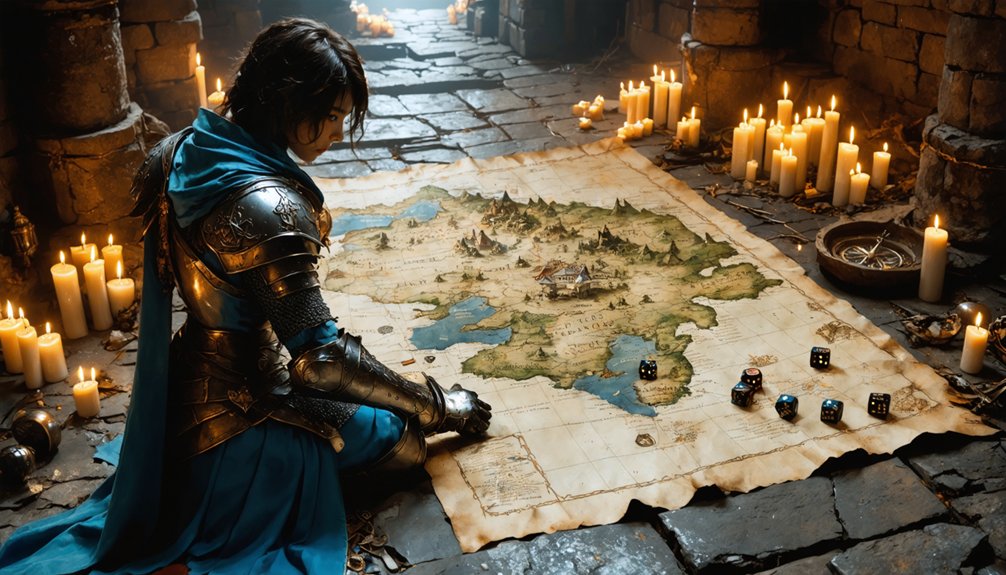
Grounding your cosplay backstory in the campaign setting transforms a character from an isolated concept into a living participant within a broader narrative ecosystem. You’ll want to research the world’s factions, historical conflicts, and cultural influences that directly shape your character’s identity, values, and emotional resilience.
Consider how regional environments affect appearance, dialect, and behavioral tendencies. Analyze which political or ideological forces your character aligns with or opposes, then reflect those affiliations through costume design and prop selection.
Establish your character’s trajectory — where they originated, what circumstances repositioned them, and where their arc is heading. This contextual integration produces a portrayal that resonates authentically within collaborative cosplay narratives, signaling to fellow participants that your character occupies a purposeful, interconnected role rather than functioning as a decorative standalone figure.
How Rivals, Mentors, and Allies Strengthen Your Character Story
Your character’s relationships form the structural backbone of any compelling cosplay narrative, defining how others perceive your character and how your character perceives themselves.
Allies validate your character’s core values, mentors challenge their blind spots, and rivals expose their deepest insecurities — each relationship category serving a distinct narrative function.
Rivals, in particular, accelerate character growth by forcing your character to confront unresolved contradictions between who they’re and who they aspire to become.
Defining Key Character Relationships
Whether you’re designing a lone wanderer or a faction-embedded operative, the relationships your character holds define the emotional and narrative architecture of your cosplay story. Sibling rivalry or romantic tension can generate compelling internal conflict, layering your portrayal with psychological authenticity.
Structure your relational dynamics using these core categories:
- Mentors who shaped your character’s ideology or technical skill
- Rivals whose opposition exposes your character’s deepest insecurities
- Allies who reflect complementary values or contrasting methods
- Antagonists who actively obstruct your character’s primary goal
- Peripheral figures whose brief influence left permanent psychological marks
Each relationship functions as a narrative lever. When you define these connections precisely, you transform a costume into a living story system, grounding every gesture, prop choice, and interaction in relational consequence.
Rivals Fuel Character Growth
Rivals, mentors, and allies aren’t decorative relationships—they’re structural mechanisms that expose what your character can’t resolve alone.
A rival doesn’t simply oppose your character; they mirror unresolved contradictions, forcing emotional vulnerability into the open where growth becomes inevitable. That friction clarifies motivation more precisely than any solo backstory element can.
Mentors transmit cultural influence, embedding your character within a lineage of knowledge, tradition, or ideology that shapes behavioral defaults.
Allies, meanwhile, reveal blind spots your character refuses to examine independently.
Map each relationship’s function analytically: What does this person expose? What do they demand? How does their presence restructure your character’s priorities?
When these connections operate with intentional precision, your character’s evolution feels earned rather than imposed—dynamic rather than decorative.
The Tics, Gestures, and Habits That Make Your Cosplay Character Recognizable
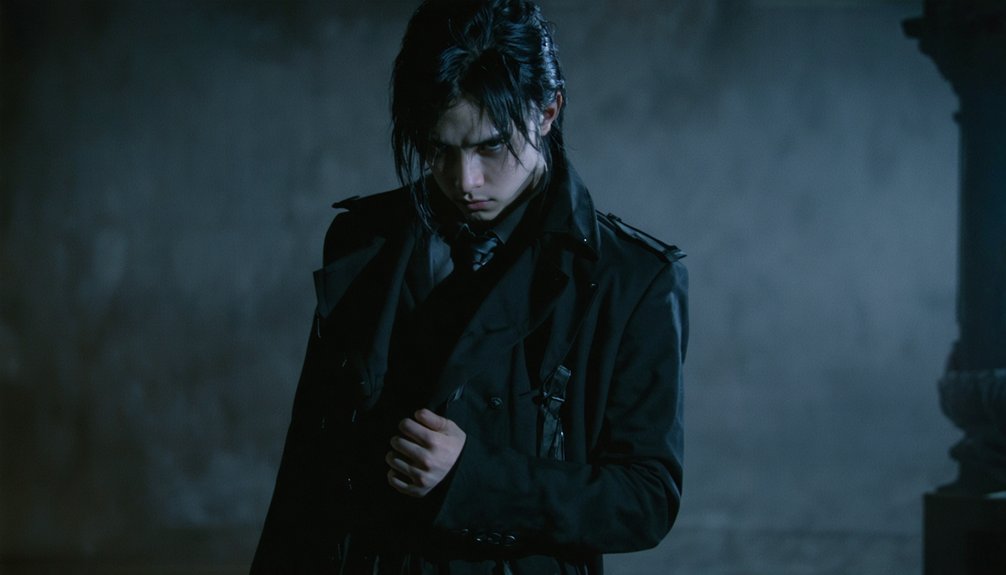
When crafting a cosplay portrayal, the physical mannerisms you select—tics, gestures, and habitual behaviors—function as the character’s behavioral signature, distinguishing your interpretation from a generic costume.
These physical mannerisms and emotional expressions operate as nonverbal communication, encoding personality into movement.
Consider systematically implementing:
- Repetitive micro-gestures: finger-tapping or shoulder-rolling that signals anxiety or confidence
- Postural defaults: how your character stands when idle versus threatened
- Object interaction rituals: handling props with reverence, aggression, or indifference
- Facial emotional expressions: subtle asymmetrical reactions that suggest internal conflict
- Verbal cadence markers: sighing, pausing, or clipping words mid-sentence
Each behavioral layer compounds authenticity. You’re not simply wearing a costume—you’re embodying a neurological and psychological architecture.
Deliberate practice transforms these details from affectation into instinct, elevating your portrayal’s analytical depth and creative innovation.
Choose Props With Symbolic Meaning, Not Just Looks
Beyond the behavioral architecture you’ve built through gesture and habit, the physical objects your character carries extend that psychological depth into tangible, narrative-laden form. Every prop you select should interrogate your character’s history, not merely their aesthetic.
A shattered compass signals lost direction; a sealed letter implies unresolved consequence. These symbolic motifs transform accessories from decorative elements into narrative evidence.
Costume authenticity demands that each object earns its placement through story logic. Ask yourself what the prop reveals about your character’s fears, losses, or driving motivations. Audiences versed in cosplay culture recognize the difference between a carried object and a meaningful one.
When your props carry weight beyond visual appeal, they communicate backstory instantaneously, collapsing exposition into a single, carefully chosen artifact that deepens your portrayal’s intellectual and emotional resonance.
How Setting and Faction Shape Your Cosplay Character’s Appearance

The world your character inhabits doesn’t just frame their story — it actively constructs their silhouette. Cultural influences embedded within factions, regions, and political structures dictate textile choices, color hierarchies, and insignia placement. Costume accuracy demands you interrogate these systemic details deliberately.
Consider how setting shapes appearance through:
Setting doesn’t merely backdrop your character — it sculpts them, stitch by deliberate stitch.
- Climate zones — arid environments demand lightweight, sun-worn fabrics
- Faction allegiance — guild or military colors signal loyalty immediately
- Social class — worn edges versus pristine tailoring communicate economic standing
- Cultural influences — regional motifs define textile patterns and ornamentation
- Conflict history — battle damage or reinforced armor reflects lived experience
You’re not assembling an outfit; you’re encoding a civilization’s logic onto a body. Every seam should answer *why*, not merely *what*.
Leave Your Cosplay Character’s Story Open for Future Arcs
A character whose story arrives fully resolved offers no invitation — to you, to collaborators, or to the evolving narrative of the cosplay community you inhabit. Deliberate incompleteness isn’t weakness; it’s structural intelligence. Leave particular wounds unhealed, alliances unconfirmed, and motivations partially obscured. These open threads become narrative entry points for future arcs, convention interactions, and collaborative storytelling.
Emotional resilience develops organically when your character still carries unresolved tension — each event you encounter tests and reshapes their psychology rather than confirming a static identity. Similarly, costume symbolism gains depth when accessories or design elements hold meanings not yet fully revealed, allowing incremental disclosure across appearances.
You’re constructing a living document, not a closed file. Let your character’s story breathe, contradict itself occasionally, and grow alongside your own creative evolution.
How to Evolve Your Cosplay Character as the Campaign Progresses
Character evolution isn’t incidental — it’s the structural engine that transforms a cosplay persona from a fixed archetype into a dynamic narrative participant.
As your campaign progresses, you must systematically incorporate experiential change into your portrayal.
Track evolution through these deliberate mechanisms:
- Shift color symbolism in your palette to signal internal transformation
- Revise costume authenticity by introducing wear, repairs, or faction insignia
- Recalibrate vocal delivery and mannerisms reflecting acquired trauma or wisdom
- Update motivational frameworks when objectives are achieved or shattered
- Integrate relationship developments visibly through symbolic accessories or removed props
Each campaign event becomes empirical data reshaping your character’s behavioral architecture.
You’re not simply wearing a costume — you’re documenting a living record of cause-and-effect characterization.
Treat every narrative shift as a deliberate design opportunity, ensuring your evolution remains analytically intentional rather than aesthetically arbitrary.
Frequently Asked Questions
How Many Backstory Facts Should You List for Character Distinctiveness?
You should list 100 facts about your character’s personality and life. This analytical depth distinguishes your portrayal, informing innovative costume design choices and makeup techniques that authentically reflect each distinctive trait you’ve carefully developed.
Can Backstory Elements Be Shared Collaboratively Between Multiple Cosplayers?
Yes, you can share backstory elements collaboratively between multiple cosplayers through collaborative storytelling, where you’ll weave interconnected histories, rivalries, and alliances. This fan interpretation framework lets you collectively deepen narrative authenticity, fostering innovative, dynamically layered character relationships.
How Do Fabric Choices Reflect a Character’s Social or Economic Status?
Worn linen contrasts sharply with embroidered silk—you embed fabric symbolism deliberately, letting socioeconomic cues communicate your character’s status instantly. You’re aligning textile authenticity with backstory, transforming every thread into an analytical, visually compelling narrative statement.
Should a Cosplay Character’s Backstory Change Between Different Convention Events?
You should evolve your character’s backstory between conventions, letting experiences reshape their narrative arc. Prioritize costume durability to sustain continuity, and update accessory significance as your character’s motivations deepen, ensuring each event innovatively advances their growth.
How Do You Balance Originality With Staying True to Source Material?
You’ll honor the source material’s core traits while infusing creative reinterpretations shaped by cultural influences. Analyze the character’s foundational elements analytically, then innovate deliberately within those boundaries, ensuring your unique perspective authentically enhances rather than contradicts the original narrative.
References
- https://www.facebook.com/groups/1058113398594001/posts/1346998636372141/
- https://www.kristenkoster.com/building-character/
- https://www.youtube.com/watch?v=zPoUW-A8-i0
- https://www.youtube.com/watch?v=Bx_LM6KKUeU
- https://starstruckpanda.com/crafting-character-details-for-cosplay-authenticity/
- https://fansview.com/writing-simple-backstories-for-original-designs-inspired-by-anime/
- https://www.numberanalytics.com/blog/costume-design-backstory-guide
- https://laurettabeier.stck.me/post/916120/How-to-Cosplay-1-Character-Selection-and-In-depth-Research