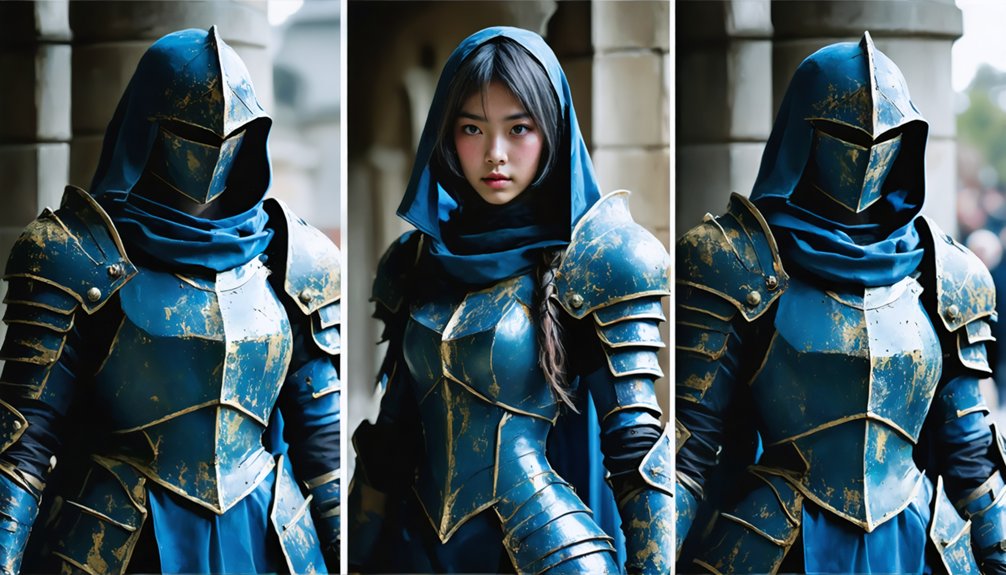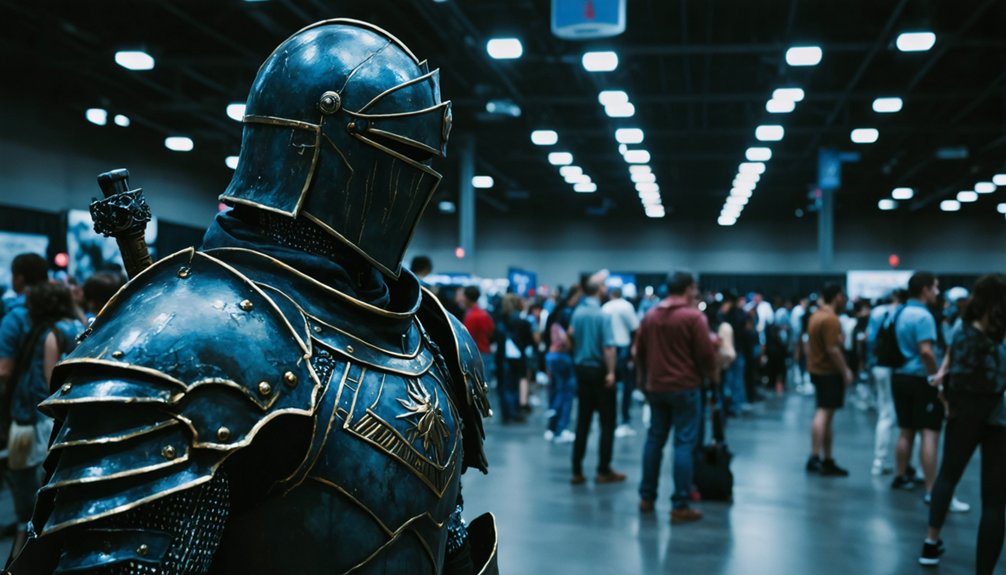
Character backstory is essential because it transforms your cosplay from surface-level replication into intentional storytelling. It dictates your fabric choices, color palette, symbolic details, and even how you carry yourself in character. Without it, you’re guessing—and those guesses produce mismatched aesthetics, cultural inaccuracies, and hollow portrayals. When you internalize a character’s history, motivations, and psychological depth, every design decision gains narrative justification. The sections ahead break down exactly how backstory shapes each layer of authentic cosplay execution.
Key Takeaways
- Character backstory guides fabric, color, and texture choices, ensuring every costume element reflects the character’s lived experience and social context.
- Internalized backstory enables cosplayers to embody characters authentically, influencing posture, voice, and reactions beyond surface-level imitation.
- Symbols, motifs, and accessories gain meaningful narrative purpose rather than functioning as purely decorative elements.
- Without backstory, costume details become guesswork, resulting in cultural misrepresentation, mismatched elements, and hollow portrayals.
- Strategic wear, distressing, and condition of costumes communicate a character’s history, endurance, and narrative experiences accurately.
What Character Backstory Actually Means for Cosplayers
When you approach cosplay as a scholarly craft rather than simple imitation, character backstory becomes the foundational document that drives every design decision you’ll make. It’s the historical record that explains why a character wears specific materials, carries particular weapons, or displays mythical symbolism embedded within their costume’s architecture.
Backstory isn’t simply narrative flavor — it’s the analytical framework that decodes character evolution across their timeline, revealing how past experiences physically manifest in their appearance. You’re examining motivations, cultural heritage, psychological traits, and environmental conditions simultaneously.
This layered analysis transforms your understanding from surface-level observation into precision-driven interpretation. Every fabric choice, accessory selection, and color decision connects directly back to documented character history, ensuring your portrayal reflects authentic, research-supported accuracy rather than aesthetic assumption.
How Backstory Shapes Every Fabric and Texture Choice
When you research a character’s backstory, you uncover the historical and environmental conditions that directly dictate which fabrics belong in your build. A peasant character’s narrative demands rough, undyed linens, while a royal’s history justifies heavy brocades and metallic sheens — each choice anchored in documented context, not aesthetic preference.
You match texture to source material by treating the backstory as a technical specification sheet, not inspiration.
Fabric Reflects Character History
A character’s backstory doesn’t just inform what they wear — it dictates the very materials from which their costume is constructed. When you analyze a character’s history, you reveal the logic behind every textile decision.
A warrior shaped by desert warfare demands roughened, sun-bleached linen; a royal diplomat requires silk with deliberate luminosity. This is fabric symbolism operating at its most precise — each material communicates socioeconomic status, cultural origin, and lived experience simultaneously.
Texture storytelling deepens this further. Distressed fabrics signal hardship; pristine brocade signals privilege. You’re not selecting materials arbitrarily — you’re reconstructing a tactile biography.
Cross-referencing source material against historical textile traditions ensures your choices carry authenticity. Every thread you select should trace directly back to documented narrative events, grounding your costume in analytical precision rather than aesthetic guesswork.
Texture Matches Source Material
Selecting the right fabric weight, weave, and finish demands more than visual approximation — it requires reading the source material as forensic evidence. You’re analyzing stills, concept art, and canonical descriptions to decode exactly how light interacts with the character’s clothing.
A warrior’s battle-worn armor shouldn’t shimmer like satin; a royal’s ceremonial robe shouldn’t drape like canvas. Backstory clarifies these distinctions precisely. When you understand that a character endured decades of combat, you prioritize material durability over aesthetic polish, choosing reinforced textiles that replicate authentic wear.
Fabric patterns embedded in cultural or narrative history further demand accurate reproduction — geometric motifs, herringbone structures, or organic weaves each carry meaning. Backstory transforms texture selection from guesswork into disciplined, evidence-based craft that produces genuinely compelling, forensically accurate cosplay.
Let Backstory Drive Your Color Palette Decisions
When you analyze your character’s backstory, you’ll find that color choices carry emotional and narrative weight that directly informs your palette decisions.
You must also match foundation shades and costume hues to the character’s specific skin tone, since inaccurate representation undermines authenticity.
Additionally, you should research the cultural significance embedded in the character’s background, as certain colors carry tradition-specific meanings that demand respectful, precise application.
Colors Reflect Emotional Narrative
Colors carry emotional weight that your character’s backstory has already defined, making palette decisions a matter of narrative analysis rather than aesthetic preference.
Color psychology reveals that each hue communicates specific emotional resonance tied directly to your character’s history, trauma, or triumph.
Analyze your character’s narrative arc to extract meaningful color data:
- Red signals aggression, passion, or sacrifice rooted in conflict-driven backstories
- Blue conveys loyalty, melancholy, or intellectual detachment defined by isolation experiences
- Black embodies loss, rebellion, or authority shaped by formative trauma
- Gold represents earned status, divine connection, or cultural heritage
- Muted tones reflect suppressed identity or survival-mode psychology
You’re not selecting colors arbitrarily—you’re translating documented narrative experiences into visual language that communicates authentically before you speak a single word.
Skin Tone Matching Matters
Beyond palette selection, your character’s backstory also anchors one of the most technically demanding aspects of makeup application: matching foundation and skin tone to the character’s defined physical appearance.
Backstory analysis reveals ethnicity, climate exposure, and lifestyle factors that directly determine undertones and surface complexion. A warrior character hardened by desert environments demands a sun-weathered, deeper foundation application that aligns with their narrative history.
This precision extends beyond makeup—it informs costume layering decisions and fabric texture selections that must visually harmonize with your skin tone representation. Mismatched foundation fractures the cohesive illusion you’ve constructed through every other design choice.
You must treat skin tone matching as a narrative obligation, not merely an aesthetic preference, ensuring your physical transformation authentically honors the character’s documented background.
Cultural Color Significance
Cultural color significance embedded in a character’s backstory transforms your palette from decorative choice into narrative statement. When you analyze traditional attire within the character’s cultural framework, each hue carries deliberate meaning that elevates authenticity.
Research cultural symbolism to decode:
- Red — signifies power, sacrifice, or celebration depending on regional traditions
- White — connotes mourning in several Eastern cultures, contradicting Western associations
- Gold — reflects divine status or ancestral wealth embedded in heritage narratives
- Black — communicates rebellion, grief, or sophistication based on backstory context
- Green — represents fertility, nature, or spiritual alignment across distinct cultural histories
You’re not selecting colors arbitrarily; you’re translating the character’s lived cultural identity into visual language.
Backstory analysis guarantees every shade you apply carries the precise weight the character’s narrative demands.
Symbols and Details Only the Backstory Can Explain
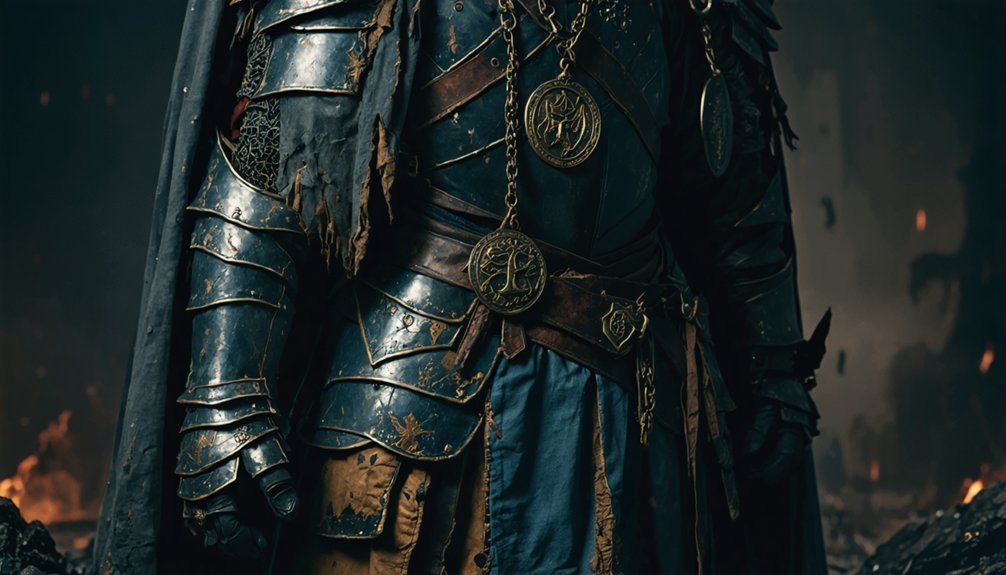
When you examine a character’s backstory closely, you’ll find that certain symbols and details can’t be explained by visual reference alone—they require narrative context to exist with purpose.
Symbolic motifs embedded within a costume—a sigil, a recurring geometric pattern, a worn emblem—carry meaning only the backstory validates. Without that narrative foundation, you’re replicating aesthetics while abandoning intent.
Accessory storytelling operates on the same principle. A character’s blade, pendant, or inscription doesn’t simply complete an outfit; it documents relationships, conflicts, and transformations the character has endured.
You must interrogate what each detail represents within the established narrative before committing it to your design. This analytical approach separates surface-level replication from purposeful, story-driven cosplay that communicates the character’s full dimensional identity to an informed audience.
Using Wear and Tear to Show the Character’s History
Symbolic details anchor meaning, but they only tell part of the story—the condition of a costume communicates what the symbols alone cannot. Wear and tear transforms fabric symbolism into lived historical context, showing audiences what a character has endured rather than simply who they are.
Apply strategic distressing by analyzing key backstory events:
- Fray edges at points of repeated physical conflict
- Fade color where environmental exposure is documented
- Add staining that reflects terrain or occupation history
- Reinforce stress points where armor or tools were consistently worn
- Layer grime selectively to indicate socioeconomic decline or battle frequency
Each deliberate mark you create signals narrative intelligence. You’re not damaging a costume—you’re encoding history into fabric, producing a portrayal that resonates with analytical fans who recognize precision storytelling.
How Backstory Protects Cultural and Ethnic Accuracy
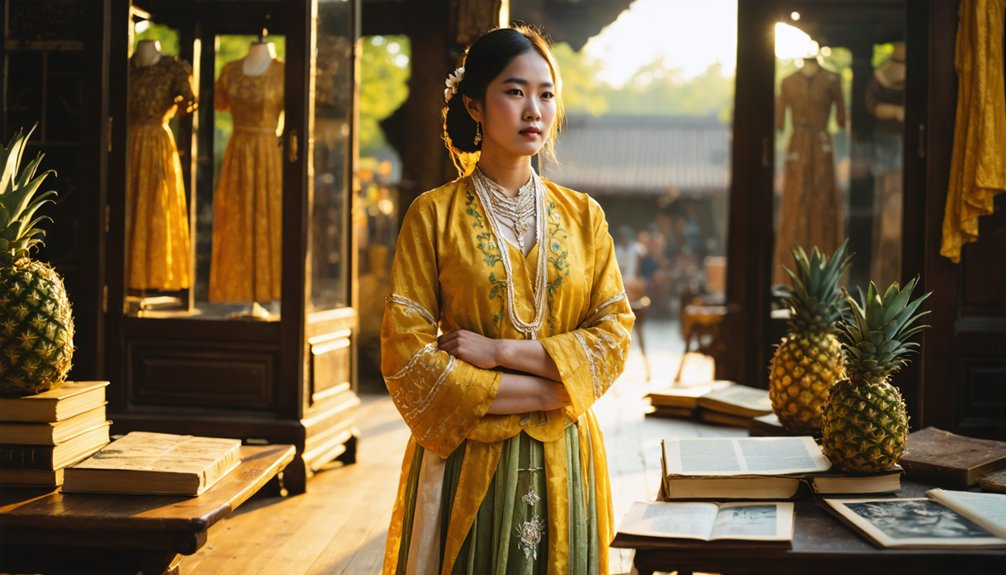
When you research a character’s cultural backstory thoroughly, you protect yourself from reproducing harmful stereotypes that flatten complex ethnic identities into caricature.
The backstory’s historical and cultural details—traditional attire, ceremonial symbols, and community-specific customs—give you a precise framework for honoring ethnic traditions rather than approximating them.
You further strengthen your accuracy by engaging directly with members of the character’s community, using their insights to verify that your interpretation aligns with the cultural values the backstory establishes.
Preventing Cultural Misrepresentation
Cultural misrepresentation in cosplay often stems from surface-level engagement with a character’s appearance, divorced from the deeper context that gives those aesthetics meaning. Backstory research transforms costume symbolism into culturally authentic expression by grounding every design choice in documented heritage and tradition.
Backstory prevents misrepresentation by helping you:
- Identify which cultural symbols carry sacred or historical significance
- Distinguish decorative elements from those with ceremonial weight
- Avoid reducing complex traditions to visual stereotypes
- Recognize ethnic attire patterns that require respectful replication
- Engage meaningfully with community members who contextualize cultural authenticity
When you internalize a character’s cultural origins rather than mimicking aesthetics, your portrayal shifts from appropriation to appreciation. Backstory gives you the analytical framework to make informed, responsible, and ultimately more accurate cosplay decisions.
Honoring Ethnic Traditions Accurately
Ethnic traditions embedded in a character’s backstory aren’t decorative footnotes—they’re structural blueprints that define how every element of your costume should be researched, constructed, and worn. When you analyze a character’s cultural heritage thoroughly, you’ll uncover the precise origins of traditional attire, identifying which garments carry ceremonial weight versus functional purpose.
Cultural symbolism embedded within patterns, colors, and accessories communicates specific community values that casual observation misses entirely. You must engage directly with source material from the character’s originating culture, cross-referencing historical documentation against the narrative’s established context.
This analytical approach prevents reductive interpretations that collapse rich traditions into surface-level aesthetics. Every construction decision you make should demonstrate intentional understanding, transforming your cosplay from visual imitation into a disciplined, informed representation that genuinely honors the character’s ethnic foundation.
Why Skipping the Backstory Costs You Authenticity
Skipping a character’s backstory strips your cosplay of the contextual logic that makes every design decision defensible. Without it, you’re guessing at costume symbolism rather than deriving it from narrative evidence, which undermines character authenticity fundamentally.
Neglecting backstory produces these critical failures:
- Mismatched fabrics that contradict the character’s environment and social status
- Absent or incorrect accessories disconnected from the character’s established skills and motivations
- Inaccurate color choices stripped of emotional and narrative significance
- Generic mannerisms that fail to reflect personality traits defined within the character’s history
- Cultural misrepresentation resulting from unresearched traditions and symbolic conventions
Each omission compounds into a portrayal that rings hollow to knowledgeable fans. You’re not just wearing a costume—you’re constructing an argument for who this character is.
How Backstory Makes Your Performance Feel Real
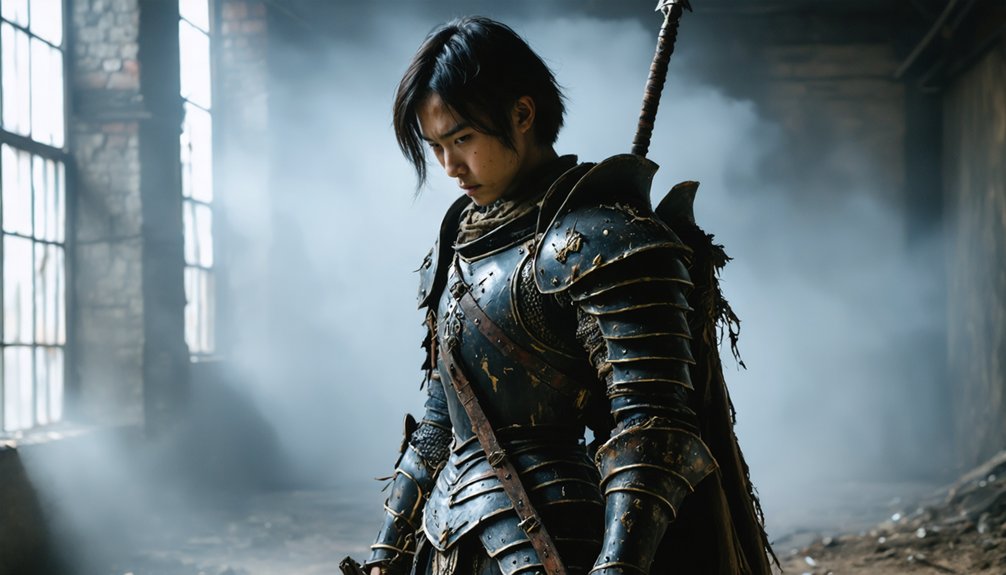
When you internalize a character’s backstory, your performance transforms from imitation into embodiment. Motivational context drives every physical choice you make—your posture shifts, your vocal cadence adjusts, and your reactions become instinctive rather than rehearsed.
You’re no longer performing surface-level traits; you’re expressing the accumulated experiences that shaped the character’s psychology.
Emotional depth emerges when you understand precisely why your character responds to situations the way they do. Backstory analysis reveals the fears, triumphs, and relationships that define behavioral patterns, enabling you to navigate fan interactions with genuine authenticity.
When someone references a pivotal narrative moment, you respond from internalized knowledge rather than scripted memory.
This analytical approach to character study produces a portrayal that resonates powerfully because it’s grounded in narrative truth rather than aesthetic approximation.
How Backstory Grounds Original Cosplay Designs
Original cosplay designs lacking a narrative foundation produce costumes that feel visually arbitrary, no matter how technically impressive the construction. Your character’s backstory transforms aesthetic choices into intentional statements, grounding every detail within a coherent creative logic.
Without a backstory, even the most technically flawless original cosplay remains visually arbitrary and emotionally unconvincing.
Backstory anchors original designs through:
- Historical accuracy: Timeline placement dictates silhouette, fabric weight, and construction methods
- Cultural symbolism: Heritage-specific motifs give accessories and textiles layered meaning
- Motivational artifacts: Character goals justify weapons, tools, or signature items you incorporate
- Environmental influence: The character’s world shapes wear patterns, color palettes, and material choices
- Relational visual coding: Key relationships manifest through deliberate design details
When you build from backstory outward, your original design achieves narrative coherence that resonates analytically and emotionally with discerning audiences who recognize intentional innovation over surface-level aesthetics.
How Deep Should Your Backstory Research Actually Go?
The depth of your backstory research should scale directly with how much narrative weight each costume element carries. If a prop or accessory embodies character motivation, you must trace its origin, function, and emotional significance within the narrative.
Surface-level research produces generic results; analytical depth produces costume symbolism that communicates authentically.
Prioritize primary sources—original scripts, creator interviews, and canonical lore—over fan interpretations. Cross-reference multiple sources to verify accuracy before committing to design decisions.
When cultural or historical elements appear, deepen your research proportionally, consulting subject-matter experts when necessary.
You don’t need exhaustive knowledge of every peripheral detail, but every visible design choice demands justification rooted in verified narrative evidence.
Research depth should always match the symbolic complexity of what you’re constructing.
Frequently Asked Questions
Can Backstory Research Improve How Judges Score Your Cosplay Competition Entry?
Over 70% of judges prioritize narrative consistency in scoring. When you research backstory, you’ll strengthen character motivation, demonstrating analytical depth that elevates your entry’s authenticity, compelling judges to recognize your innovative, detail-oriented cosplay craftsmanship.
Does Understanding Backstory Help When Collaborating With Other Cosplayers in Group Builds?
Understanding backstory absolutely strengthens group builds, as you’ll align character motivation across all members, ensuring costume consistency that reflects shared narrative logic, cultural nuance, and symbolic detail—transforming collaborative cosplay into a cohesive, analytically grounded, and innovatively unified visual experience.
How Does Backstory Knowledge Affect Budget Planning for Complex Cosplay Projects?
Backstory knowledge sharpens your budget planning by identifying which costuming details carry the most narrative consistency. You’ll prioritize spending on symbolically critical elements, allocating resources strategically toward materials that authentically reflect the character’s history, culture, and visual storytelling demands.
Can Backstory Research Prevent Accidental Copyright or Intellectual Property Violations?
Backstory research enhances your copyright awareness by revealing ownership boundaries around characters. When you analyze intellectual property origins, you’ll identify protected elements, enabling innovative design choices that respect legal frameworks while authentically honoring the character’s narrative foundations.
Does Backstory Depth Influence How Photographers Direct Cosplayers During Professional Shoots?
Yes, backstory depth absolutely influences photographers’ direction. When you internalize your character’s emotional depth and motivations, photographers craft shots that amplify visual accuracy, guiding your poses, expressions, and interactions to authentically reflect the character’s narrative history.
References
- https://starstruckpanda.com/cosplay-character-accuracy-and-cultural-representation/
- https://starstruckpanda.com/achieving-character-accuracy-in-cosplay/
- https://www.numberanalytics.com/blog/costume-design-backstory-guide
- https://cosplay.com/archive/thread/kr6gp4/rules-for-creating-and-cosplaying-ocs
- https://fancymasks.com/how-to-research-your-cosplay/
- https://laurettabeier.stck.me/post/916120/How-to-Cosplay-1-Character-Selection-and-In-depth-Research
- https://www.tremblyemporium.co.uk/post/how-to-incorporate-backstory-into-your-costume-and-accessories
- https://fansview.com/writing-simple-backstories-for-original-designs-inspired-by-anime/
- https://www.numberanalytics.com/blog/costume-in-costume-design