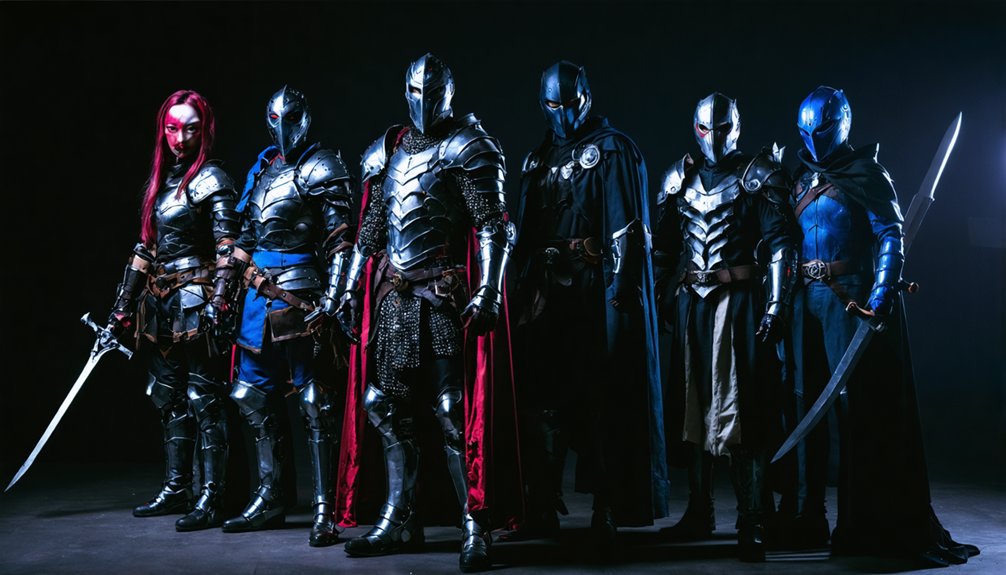
When you cosplay a villain, you’re uncovering a psychological blueprint built from trauma, betrayal, and fractured identity. Characters like Magneto, Loki, and the Joker don’t simply embody evil — they carry origin wounds that shaped their worldview. Their costumes become visual confessions of suffering transformed into power. You’re not just wearing a character; you’re performing a psychological history. Stick around, and you’ll discover exactly how deep that history goes.
Key Takeaways
- Villain origin stories anchor cosplay identity through core motivations like revenge, idealism, or isolation, giving costumes deeper psychological meaning.
- Trauma arcs create contradictions and blind spots that cosplayers can express through intentional costume details and movement choices.
- Iconic villains like Magneto, Loki, and Joker carry origin narratives that inform every visual and performative cosplay decision.
- Visual costume elements must reflect the character’s psychological journey, translating backstory into silhouette, color, and symbolic detail.
- Embodying villain origins deepens character empathy without endorsing their actions, allowing authentic exploration of complex, morally ambiguous narratives.
Why Readers Root for Villains With Tragic Origin Stories
When a villain’s descent into darkness stems from genuine trauma, readers naturally shift from judgment to empathy. You recognize that tragic empathy isn’t accidental—it’s structurally engineered through origin narratives that mirror real psychological wounds.
Magneto’s Holocaust survival, Loki’s identity crisis, and Joker’s systemic neglect all anchor moral complexity in lived suffering.
Magneto’s scars, Loki’s fractured identity, and Joker’s neglect transform villainy into a mirror of human suffering.
These frameworks work because you’re wired to contextualize behavior through causation. When a character’s cruelty traces back to abuse, isolation, or betrayal, villain redemption becomes not just possible but emotionally necessary for the audience.
Cosplay amplifies this connection. By embodying these backstories physically, you’re actively processing their psychological architecture.
That embodiment transforms passive consumption into analytical engagement, making tragic origin stories culturally resonant innovations in character-driven storytelling.
How Trauma and Power Shape Villain Cosplay Characters
Trauma and power form the twin axes around which the most compelling villain cosplay characters rotate. When you’re building your portrayal, you’ll find that trauma impact and power dynamics aren’t decorative — they’re structural.
Historically, the most resonant antagonists emerge from specific wounds that calcify into world-altering ideologies.
Consider these core shaping elements:
- Psychological trauma catalyzes transformation, converting vulnerability into dangerous motivation.
- Physical abuse or injury generates callousness, hardening your character’s emotional architecture.
- Technological or financial power amplifies trauma’s reach, converting personal grievance into systemic threat.
- Rigorous training converts suffering into disciplined, purposeful antagonism.
You’re not just wearing a costume — you’re embodying a causality chain.
Map your villain’s trauma origins precisely, then layer corresponding power expressions to construct an authentically complex, analytically grounded portrayal.
Iconic Villain Archetypes Worth Bringing to Life Through Cosplay
Once you’ve mapped the structural logic of trauma and power onto your character, the next step is selecting an archetype whose internal mechanics reward that kind of analytical investment. Each iconic villain offers distinct entry points for archetype exploration and villainous complexity.
The Joker’s narrative contradictions generate audience empathy through chaos rooted in psychological depth.
Loki’s character transformation hinges on mischief masking genuine longing, making his costume aesthetics — green, gold, Asgardian detail — symbolically loaded.
Ursula commands through villainous charisma, her silhouette alone communicating dominance.
Magneto’s ideological clarity creates moral ambiguity that resonates historically.
Catwoman’s physicality demands precise movement choices.
You’re not simply recreating appearance; you’re reverse-engineering motivation.
Select archetypes whose contradictions you can perform credibly, because psychological depth without behavioral specificity collapses into costume rather than character.
Build Your Villain Cosplay Origin Story Before You Costume
Before you stitch a single seam, anchor your villain’s identity in a core motivation — revenge, idealism, or isolation — because the most enduring antagonists in narrative history, from Magneto to Loki, operate from a clear internal logic rather than arbitrary malice.
Once you’ve defined that motivation, map a trauma arc that complicates it, introducing the contradictions and blind spots that make your character feel psychologically credible rather than cartoonish.
From there, you can build a villain identity that layers aesthetic choices — costume details, color symbolism, posture — directly onto that narrative foundation, ensuring every visual element you wear tells the story you’ve already constructed.
Define Your Core Motivation
Motivation is the skeleton that holds any compelling villain together, and the best cosplayers know this long before they pick up a needle or a paint brush. Your villain’s core motivation shapes every creative expression, from costume details to character posture.
Historically, iconic antagonists resonate because their psychological impact stems from identifiable human drives.
Define your backstory development around one anchoring force:
- Revenge: A wound unhealed fuels narrative depth and audience engagement across generations.
- Idealism corrupted: Thematic exploration of noble intentions twisted creates profound identity reflection.
- Loneliness: Emotional resonance peaks when isolation drives destructive transformation.
- Supremacy: Character complexity emerges when power-seeking masks deeper insecurity.
You’re not just wearing a costume—you’re embodying a psychologically coherent worldview that demands intentional, analytically grounded construction.
Map Your Trauma Arc
Trauma is the engine that drives the most enduring villain narratives in literary and cinematic history, and mapping your character’s specific wound before constructing a single costume element will anchor every creative decision that follows.
Effective trauma mapping demands identifying whether your villain’s pain stems from betrayal, systemic abuse, or ideological disillusionment. Each source produces distinct villain psychology and informs costume symbolism differently—Magneto’s Holocaust survival reshapes his power dynamics through metal-forged armor, not coincidentally.
Your character development strengthens when trauma creates genuine narrative complexity rather than convenient backstory filler. Emotional depth emerges when you acknowledge your villain’s potential redemption arcs, making audience connection inevitable.
Thematic exploration thrives when costume choices visually echo psychological wounds, transforming fabric and color into psychological autobiography that audiences instinctively decode.
Build Your Villain Identity
Every iconic villain identity begins not with a costume, but with a core motivation that anchors every aesthetic choice you’ll make afterward.
Historical influences from archetypes like Loki’s mischief or Magneto’s ideological conviction reveal that character complexity drives emotional resonance more than surface aesthetics.
Psychological exploration of your villain’s trauma arc transforms costume creativity from decoration into narrative depth.
Build your identity by layering these foundational elements:
- Core motivation: revenge, loneliness, or radical idealism anchors villainous inspirations authentically
- Contradictions: competing desires create psychological tension and performance techniques that captivate
- Empowering darkness: embrace your villain’s distorted self-heroism as their genuine worldview
- Aesthetic choices: align color, texture, and silhouette directly to backstory specifics
Your costume then becomes a psychological document, not merely a disguise.
Poses, Expressions, and Details That Make Villain Cosplay Convincing
Bringing a villain to life through cosplay demands more than an accurate costume—it requires a mastery of physicality and nuance that communicates the character’s core nature at a glance.
You’ll refine villainous aesthetics by studying character nuances—Loki’s sly smirk, Catwoman’s feline grace, Ursula’s commanding presence. Incorporate dramatic poses that telegraph dominance or cunning, and deploy expressive gestures that signal psychological immersion to observers.
Attend to costume details meticulously; green-gold hues anchor thematic symbolism to Asgardian mythology, while intricate textures reinforce narrative depth.
Every stitch and shade carries meaning—let deliberate color choices and rich textures deepen your character’s symbolic story.
Your performance techniques shape interaction dynamics—a well-timed pause or predatory stillness communicates more than dialogue.
Historical villain archetypes reveal that chaos, mischief, and calculated menace each carry distinct physical vocabularies. Master these distinctions, and your portrayal transcends imitation, becoming authentic character embodiment.
Does Villain Cosplay Actually Change Your Behavior?
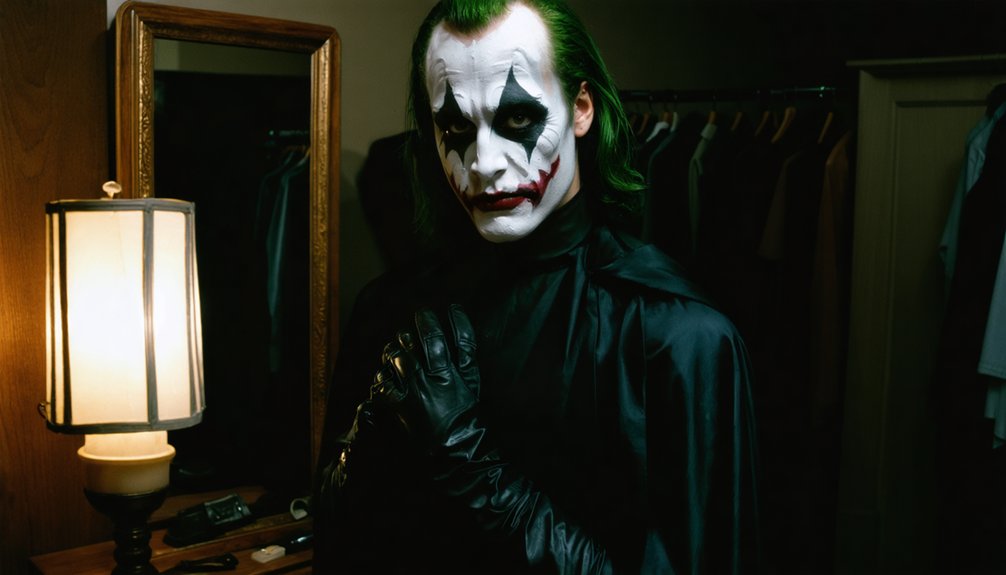
When you slip into a villain costume, you might expect your behavior to shift alongside your appearance, but research suggests otherwise — antisocial behaviors show no statistically significant increase, and your moral judgment remains consistent whether you’re dressed as Magneto or a benevolent hero.
You’re actually more likely to misidentify the moral orientation of the character you’re portraying than to internalize their darker traits.
What does change is subtler: your personal identity scores don’t fluctuate dramatically, but you’ll notice a psychological negotiation between self and character that cosplayers have historically described as a temporary, performative identity shift rather than a genuine transformation.
Behavioral Changes in Cosplay
Although slipping into a villain’s costume might feel transformative, research suggests the behavioral shift isn’t as dramatic as you’d expect.
Costume psychology reveals that villain nuances don’t greatly rewire your moral compass or prosocial tendencies compared to hero comparisons.
Key findings challenge assumptions about character immersion:
- Antisocial behaviors showed no statistically noteworthy increase among villain costume wearers.
- Moral judgment remained consistent regardless of hero or villain dress.
- Dual identities didn’t fluctuate personal identity scores measurably.
- Audience perceptions shifted more than actual wearer behavior, particularly around moral misidentification.
What does change is how others read you.
Correlational data confirms villain costumes increase the likelihood of moral misidentification—not within you, but projected outward, making the external narrative more compelling than internal behavioral transformation.
Moral Judgment Stays Consistent
Donning a villain’s cape doesn’t rewire your ethical framework, and the data backs this up. Research confirms that moral alignment stays consistent whether you’re embodying Loki’s cunning or Magneto’s ideological fury. Your ethical compass doesn’t drift simply because you’ve adopted a character defined by ethical ambiguity.
What does shift, however, is villain perception — you’re more likely to misidentify a character’s moral orientation when wearing their costume. That’s a nuanced distinction worth noting.
Character empathy deepens through cosplay, allowing you to intellectually inhabit darker motivations without personally endorsing them. Historically, method actors have demonstrated this same psychological boundary.
You’re not becoming the villain — you’re analyzing one. That cognitive separation is precisely what makes villain cosplay a powerful tool for narrative exploration rather than behavioral transformation.
Identity Shifts While Cosplaying
The question of behavioral transformation through cosplay has real psychological stakes. When you engage in character immersion as a villain, research shows your moral judgment stays intact—but your identity exploration can still shift subtly.
Consider what actually changes:
- Confidence levels may rise when embodying powerful archetypes like Ursula or Magneto.
- Social perception shifts as others respond differently to your villainous aesthetic.
- Emotional access deepens when you channel a character’s core trauma or motivation.
- Misidentification risk increases—you’re more likely to blur the character’s moral orientation with your own.
You’re not becoming the villain; you’re borrowing their psychological architecture temporarily. That distinction matters.
Character immersion creates a controlled space for identity exploration without permanently restructuring your behavioral baseline or ethical framework.
Why Everyone Is Dressing as the Villain Now
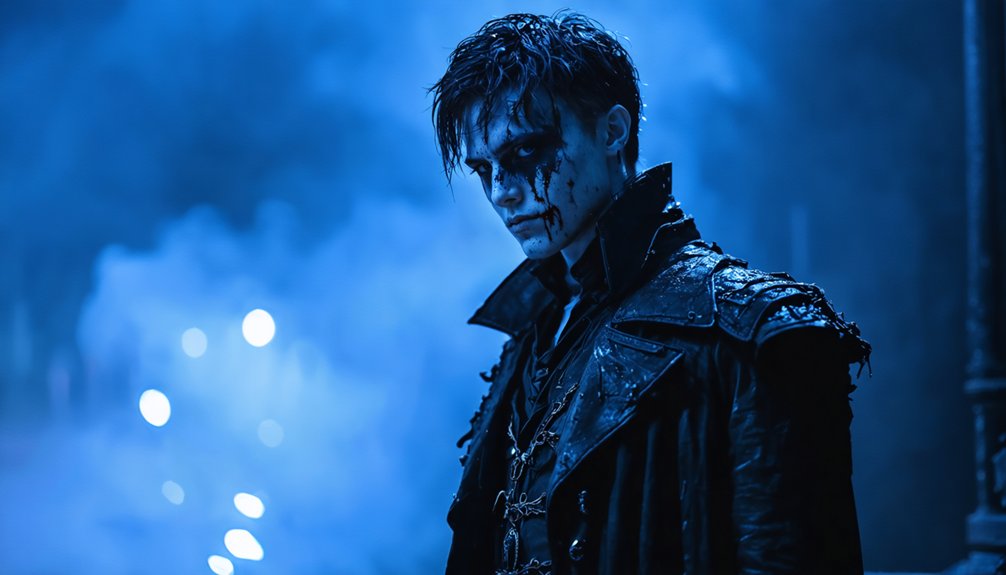
Villain cosplay has surged in popularity, fundamentally challenging the long-held cultural expectation that cosplayers aspire to heroic ideals.
You’re witnessing a cultural pivot where villainous appeal dominates convention floors, driven by character depth that heroes often lack. Dark aesthetics offer richer costume design opportunities, letting you explore narrative complexity through fabric, color, and silhouette.
Research confirms that dressing as a villain doesn’t alter your moral judgement or personal identity — it liberates your creative expression instead.
This villain empowerment trend reflects genuine societal reflection; audiences increasingly identify with morally ambiguous figures traversing trauma, systemic failure, and ideological conflict. The emotional resonance of antagonists like Loki or Magneto isn’t accidental — their origin stories mirror real human contradictions, making them infinitely more compelling to embody than straightforward heroic archetypes.
Frequently Asked Questions
What Legal Considerations Should Cosplayers Keep in Mind at Public Events?
You’ll want to navigate trademark issues carefully, as character likeness protections have historically restricted commercial use. Avoid selling costumes or prints without licensing, ensuring you’re respecting intellectual property boundaries while creatively innovating within public event spaces.
How Do Villain Cosplay Communities Form and Connect Online or at Conventions?
You’ll find villain cosplay communities thriving through community engagement on online platforms like Reddit and Discord, while conventions historically serve as gathering points where you connect, share origin stories, and collectively redefine antagonistic character representation innovatively.
What Budgeting Tips Help Beginners Create Affordable yet Convincing Villain Costumes?
Like a phoenix rising, you’ll craft menace on a budget: prioritize thrift shopping for fabric choices, apply DIY techniques for prop making, guarantee character accuracy through research, and master makeup tips to transform affordably yet convincingly.
Are There Age-Appropriate Villain Cosplay Options Suitable for Younger Participants?
You’ll find plenty of age-appropriate characters offering family-friendly options, like Loki’s mischievous charm or Ursula’s confident allure. These historically beloved archetypes let younger participants embody complexity safely, innovating their cosplay experience without compromising developmental appropriateness.
How Do Copyright Laws Affect Creating and Selling Villain Cosplay Costumes Commercially?
Over 80% of iconic villain designs are trademarked. When you’re selling villain costumes commercially, you’ll face trademark infringement risks unless you prioritize design originality, transforming protected elements into innovative, legally distinct interpretations that honor characters while avoiding intellectual property violations.
References
- https://digitalcommons.odu.edu/cgi/viewcontent.cgi?article=1110&context=english_etds
- https://www.theseus.fi/bitstream/handle/10024/340718/Ngo_Quynh.pdf?sequence=2&isAllowed=y
- https://shareok.org/items/1f47b0f3-0431-4641-8279-aaf9f0ce0a17
- https://files.eric.ed.gov/fulltext/EJ1333520.pdf
- https://starstruckpanda.com/villain-origin-story-cosplay-interpretations/
- https://istss.org/media-matters-can-we-talk-about-how-villains-are-made-trauma-and-origin-stories-in-popular-media-josianne-lamothe-msw-phd/
- https://www.vivianasimos.com/incidental-mythology/cosplay-dressing-identity
- http://www.studyofanime.com/p/fig-7.html
- https://gizmodo.com/10-villain-origins-that-actually-make-sense-1742183593
- https://marlynnofmany.tumblr.com/tagged/villain origin stories