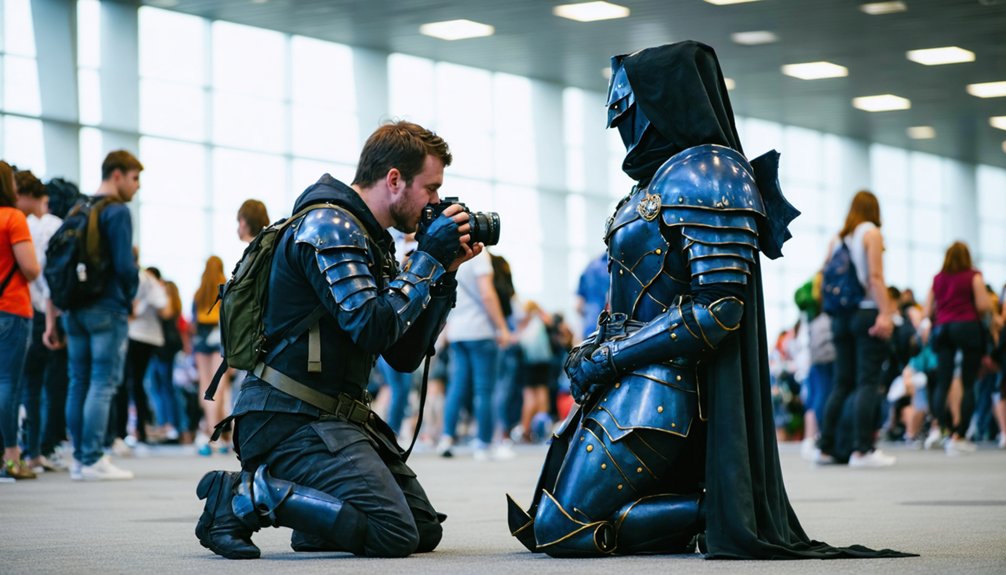
The cosplay community runs on respect, consent, and kindness. You should always ask before touching, hugging, or photographing someone — their costume isn’t an open invitation. Credit photographers and cosplayers online, handle props only with permission, and keep your hygiene in check during long convention days. Every body type, skill level, and character choice belongs here, so encourage others instead of critiquing them. Stick around, because there’s a lot more to unpack about traversing conventions like a true community member.
Key Takeaways
- Always ask permission before photographing or touching a cosplayer, as their costume does not imply consent to either.
- Respect all craftsmanship levels equally, avoiding public critique of costumes whether handmade or last-minute.
- Cosplay is inclusive of all body types, skill levels, and experience, with no physical standard required.
- Maintain good hygiene and respectful behavior, as poor conduct negatively impacts everyone’s convention experience.
- Encourage and support fellow cosplayers, fostering a creative, welcoming community built on shared passion.
Cosplay Etiquette Every Convention-Goer Should Follow
Whether you’re a first-time attendee or a seasoned cosplayer, understanding basic convention etiquette makes the experience better for everyone. Respect personal boundaries by always asking before touching someone’s costume or taking a photo. Cosplay isn’t consent — what someone wears never obligates them to interact with you.
Prioritize costume maintenance by handling your props carefully and keeping large or spiked pieces controlled in crowded halls. Damaged costumes affect everyone’s experience, including yours.
During panel participation, stay attentive and avoid disrupting others who are engaged, eating, or focused on speakers. Don’t interrupt cosplayers mid-conversation just to grab content.
Above all, treat every cosplayer as a person, not a spectacle. Simple awareness and courtesy keep conventions welcoming, safe, and genuinely enjoyable for the entire community.
Always Ask Before You Touch, Hug, or Photograph
One of the most important rules in cosplay culture is simple: always ask first. Touching boundaries aren’t suggestions — they’re expectations every convention-goer must respect. Someone’s costume might look durable, but it’s often handmade and fragile. Grabbing a prop, adjusting a costume piece, or initiating a hug without permission crosses a clear line.
Photography consent works the same way. You should always approach a cosplayer directly, make your request, and accept their answer without pushback. If they’re eating, mid-conversation, or moving through a crowd, wait or move on.
Cosplayers aren’t performers obligated to engage with you. They’re community members sharing a hobby they care about deeply. When you ask first, you’re not just following a rule — you’re showing genuine respect.
Cosplay Photo Etiquette Every Fan Should Know
Getting a great photo with a cosplayer is a highlight of any convention — but there’s a right way to do it. Always ask permission before raising your camera. If they say no, accept it without pushback.
When they agree, be mindful of your approach. Avoid grabbing costume pieces to adjust the shot — even well-intentioned contact can compromise costume durability, especially on handmade builds. Let the cosplayer position themselves naturally.
If you’re experimenting with lighting techniques, coordinate beforehand rather than springing flash settings on someone mid-pose. Surprises disrupt the experience for everyone.
After shooting, give proper credit when posting online. Tag the cosplayer if they request it. Don’t chase or corner someone for content — a respectful ask always produces better results than pressure ever will.
Respect the Costume Like You’d Respect Someone’s Home
Photo etiquette and costume respect share the same foundation — other people’s boundaries. When you attend a convention, treat every costume like you’d treat someone’s home: you don’t touch without permission, and you don’t criticize the décor.
Cosplay ethics demand that you keep your hands off props, armor, and accessories unless the cosplayer explicitly invites contact. Many pieces are handmade, fragile,, and irreplaceable. Even a brief, careless grab can cause real damage.
Hands off props and accessories — many are handmade, fragile, and irreplaceable. Contact requires explicit permission, always.
Costume maintenance is a serious investment of time, money, and skill. Recognizing that effort means you also skip the unsolicited critique about accuracy or missing details. Beginners and veterans alike deserve that respect.
Ask before touching. Accept a “no” gracefully. That’s not just good manners — it’s the standard the community holds you to.
How to Report Cosplay Harassment at Conventions
If you witness or experience harassment—whether it’s unwanted touching, unauthorized photography, or aggressive crowding—you should recognize that it’s reportable and act on it.
Locate convention staff, security desks, or volunteer helpers wearing staff badges, as most events have dedicated personnel trained to handle exactly these situations.
Before or after reporting, document what happened by noting the time, location, description of the person involved, and any witnesses who can support your account.
Recognizing Reportable Behavior
Knowing what qualifies as reportable behavior is your first line of defense in keeping convention spaces safe.
If someone uses inappropriate language targeting a cosplayer’s appearance, identity, or character choice, that’s reportable.
Unauthorized access to someone’s costume, props, or personal space without consent also crosses a clear line.
Watch for patterns like repeated unwanted contact, persistent photo-taking after refusals, or someone cornering a cosplayer to force interaction.
Glomping, grabbing, or blocking movement are all behaviors worth flagging.
Harassment doesn’t always look dramatic — subtle intimidation counts too.
Trust your instincts. If something feels wrong, it probably is.
Document what you witnessed if possible, then locate event staff or a designated safety team immediately.
Acting quickly protects both the target and the broader community.
Finding Convention Staff
Once you’ve identified reportable behavior, finding convention staff quickly is your next priority. Most conventions station volunteers and staff throughout the venue, typically wearing distinct badges, lanyards, or shirts that reflect cosplay event coordination roles. Learn these identifiers before the event starts.
If you can’t locate staff immediately, head to the information desk, registration area, or any clearly marked security checkpoint. Many modern conventions also provide dedicated apps or text-based reporting systems, letting you flag incidents without confronting anyone directly.
Understand that volunteer responsibilities include responding to harassment reports, so don’t hesitate to approach them. Be specific: describe the person, location, and behavior clearly. Your report helps protect not just yourself but the entire community. Acting fast makes a real difference.
Documenting The Incident
Before you approach staff, documenting the incident strengthens your report considerably. If you’ve experienced consent violations or photo mishaps, record the details immediately while they’re fresh. Note the time, location, and a clear description of what happened.
If you captured anything on your phone or witnessed others doing the same, preserve that evidence carefully.
Describe the offender’s costume or appearance as specifically as possible — distinctive colors, accessories, or character choices help staff identify someone quickly in a crowded venue.
If bystanders witnessed the incident, ask whether they’d be willing to corroborate your account.
Avoid editing or deleting anything before speaking with event security. Raw, unaltered documentation carries far more credibility.
Your thorough report doesn’t just protect you — it helps create a safer environment for every cosplayer attending the event.
Why Hygiene and Behavior Affect Everyone Around You

Conventions pack thousands of people into shared halls, panel rooms, and photo areas for hours at a stretch, so your hygiene and behavior don’t just affect you—they shape the experience for everyone nearby. Costumes trap heat, crowds amplify odors, and long days without food or water make irritability worse.
Prioritizing personal hygiene—deodorant, clean layers, and regular hydration—keeps you comfortable and considerate. Your social behavior carries equal weight. Drinking excessively, acting disruptively, or breaking character in harmful ways creates friction that ripples through the entire event.
Staying in character doesn’t excuse rudeness, and no costume justifies unsafe or inconsiderate conduct. When you manage both your hygiene and your behavior intentionally, you contribute to a convention environment where every attendee can focus on enjoying the experience.
Body Type, Skill Level, and Character Choice Don’t Define Your Welcome
You don’t need a perfect body or a flawless build to belong at a convention—cosplay welcomes every shape, size, and experience level.
Whether you’re debuting your first foam-and-hot-glue creation or your twentieth screen-accurate suit, the community’s standard is respect, not competition.
When you see a beginner struggling with a simple costume, treat them the same way you’d want to be treated on your first day out.
Every Body Type Belongs
Cosplay doesn’t come with a height requirement, a dress size, or a skill test. You bring a character to life simply by choosing to embody them — that’s the whole point.
The community’s etiquette is clear: appearance-based shaming has no place here. Inclusive fashion and body positivity aren’t just trending concepts; they’re foundational values that keep cosplay accessible and evolving.
Don’t mock someone’s proportions, and don’t suggest a character “suits” certain body types more than others. You respect every cosplayer the same way you’d want someone to respect you — without condition.
When you uphold that standard, you strengthen the entire community. Every body that shows up in costume belongs there, and your attitude toward others directly shapes whether that remains true.
Respect All Skill Levels
Whether someone spent six months building a screen-accurate suit of armor or hot-glued a last-minute outfit together the night before, they deserve the same respect on the convention floor.
Costume craftsmanship and makeup techniques exist on a wide spectrum, and every level of that spectrum has a place in the community.
Don’t critique a beginner’s uneven seams or call out imperfect makeup techniques in front of others. You’re not elevating the community by tearing someone down — you’re driving people away from a hobby that thrives on creativity and growth.
Treat every cosplayer as a peer, regardless of experience. The person rocking a store-bought costume today might be the one wowing everyone with their craftsmanship next year. Respect that journey.
Frequently Asked Questions
Can You Cosplay a Character From a Fandom You Just Discovered?
You can absolutely cosplay a character from a newly discovered fandom! Fandom authenticity isn’t about tenure—it’s about passion. Embrace costume originality, respect the community’s etiquette, and you’ll fit right in as a welcome, innovative participant.
Is It Rude to Wear the Same Costume as Another Attendee?
Over 40% of cosplayers report duplicate costumes at events. It’s not rude! You respect boundaries naturally when you embrace it—doubles often share experiences, bond over designs, and create memorable, collaborative moments that strengthen the community.
Should You Warn Others Before Wearing a Costume With Flashing Lights?
Yes, you should always warn others before debuting a costume with flashing lights. Following proper flashing lights etiquette is essential for costume safety, as strobing effects can trigger photosensitive conditions, making disclosure a respectful, community-forward responsibility.
Are There Rules About Reselling Costumes You Wore at Conventions?
Want to maximize your costume’s value? No strict rules govern reselling, but costume reuse etiquette suggests you disclose wear history honestly. Transparency about costume authenticity builds community trust and guarantees buyers confidently invest in your pre-loved creation.
Can You Wear a Costume to a Convention You Did Not Make Yourself?
You can absolutely wear a store-bought or commissioned costume — costume authenticity isn’t required. What matters is that you’re respectful, maintain cultural sensitivity, and embrace the community’s inclusive spirit wholeheartedly.
References
- https://www.trueswords.com/ten-rules-of-cosplay-etiquette.html
- https://www.azcentral.com/story/entertainment/life/2024/05/21/how-to-take-pics-with-cosplayers/73515452007/
- https://payandplay.asia/News/31006/10-unwritten-rules-in-cosplay-word-what-do-you-think
- https://www.thegamer.com/cosplayers-guidelines-allowed/
- https://www.nerdcaliber.com/cosplayers-guide-to-etiquette/
- https://rogersenpai.com/cosplay-rules/