A standout cosplay walk-on combines craftsmanship with deliberate performance. You need to map a clear stage path, use three distinct poses to cover every angle, and move with controlled pacing that gives judges time to evaluate your work. Character-specific gestures beat generic stances every time. You’ll also want to sync your movement to music and rehearse until it’s muscle memory. Keep exploring to master every element that separates forgettable walk-ons from winning ones.
Key Takeaways
- Map three distinct stage stops for full-angle coverage, walking deliberately between each to highlight costume details without clustering poses together.
- Use three unique poses—frontal, profile, rear reveal—held 2–3 seconds each, prioritizing character-specific gestures over generic stances.
- Synchronize poses with musical rhythmic cues and tempo shifts to create automatic, confident, and mechanically precise execution.
- Dedicate specific stage moments to showcase props, wings, and mechanical features by activating them during static poses for clear visibility.
- Rehearse the full sequence repeatedly to build muscle memory, test costume durability, and identify blind spots in your stage path.
What Do Judges Actually Look for in a Walk-On?
Judges at cosplay walk-ons evaluate several distinct categories simultaneously, so understanding what they’re actually tracking gives you a direct advantage. They’re appraising accuracy, craftsmanship, and presentation as separate but interconnected elements rather than a single overall impression.
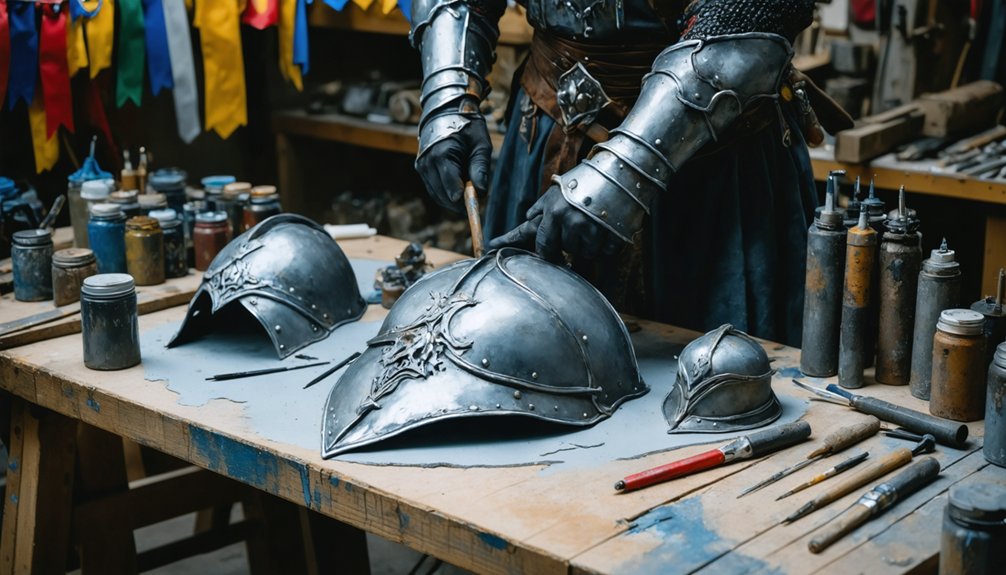
Craftsmanship judges examine construction quality, material choices, and finish under direct lighting design conditions that expose flaws invisible in photos.
Craftsmanship judges see everything — seams, raw edges, and uneven finishes that studio lighting and camera filters easily hide.
Accuracy judges cross-reference your costume, hair, makeup, and props against the source character.
Presentation judges watch how your costume performs under movement and stage pressure.
Audience engagement signals also register indirectly, because judges notice when a crowd responds to your stage presence. A confident, character-specific walk-on reinforces the craftsmanship impression.
Difficulty matters less than clean execution, so prioritize polish and precision over complexity you can’t fully control on stage.
How to Plan a Walk-On Stage Path That Shows Everything
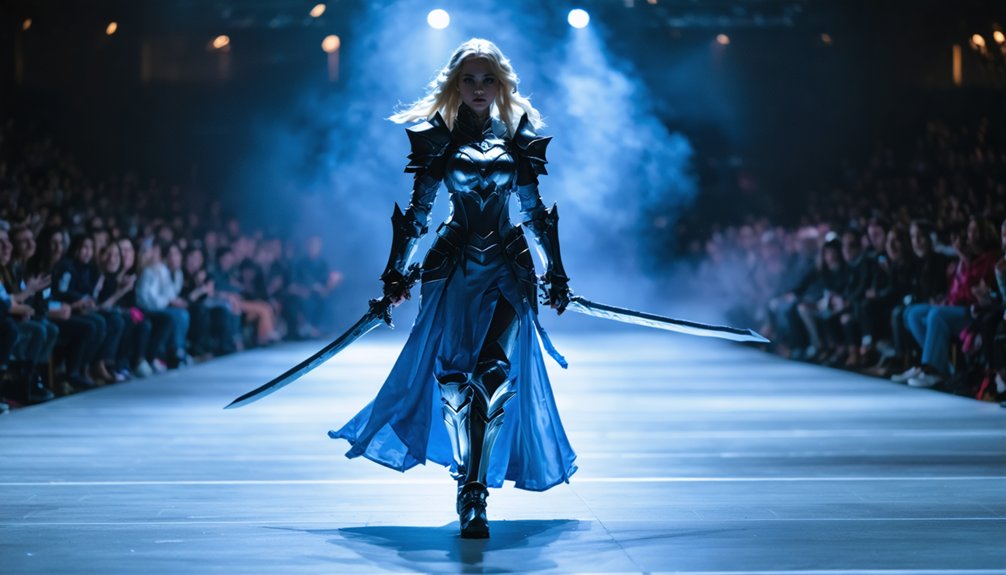
Because your stage time runs roughly 30–45 seconds, every step needs to serve a purpose—either revealing the costume from a new angle or landing a pose that lets judges register detail.
Map three distinct stop points across the stage: front-center, a 45-degree turn near one wing, and a rear pivot that exposes your back construction and fabric textures under direct lighting. Don’t cluster your stops—spread them to force full-angle coverage naturally.
If your build includes lighting effects, position your final pose at front-center where illumination hits strongest and judges sit closest.
Walk deliberately between stops, using a pace that reads as controlled rather than hesitant. Each movement is display time, not dead time, so treat every step as part of your visibility strategy.
How to Build a Three-Pose Structure for Your Walk-On
Three distinct poses, spaced across your stop points, give judges structured opportunities to read your silhouette, register construction detail, and connect your presentation to the source character.
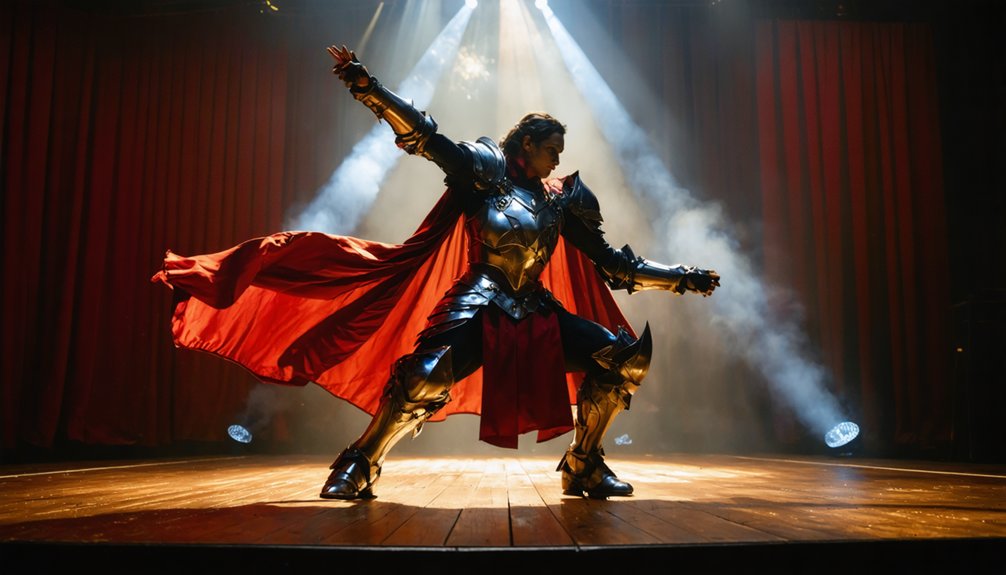
Each pose should serve a different visual function: one for full frontal display, one for profile or dynamic action, one for a rear reveal of back construction and costume durability under stage conditions.
Avoid repeating the same stance across all three stops. Distinct shapes create visual rhythm and signal intentional planning.
Stage lighting amplifies silhouette contrast, so choose poses that use strong lines rather than collapsed or hunched positions that flatten your build.
Hold each pose for at least two to three seconds. Rushed shifts waste the structured stops you’ve already planned and reduce the judging window for evaluating craftsmanship detail.
Why Character-Specific Movement Beats Generic Posing
Stage lighting amplifies silhouette over detail, meaning your body shape and movement become primary visual data before fine construction work even registers.
Stage lighting prioritizes silhouette — your shape and movement communicate the character long before construction details do.
Character-specific stances exploit that by front-loading recognizability exactly when it matters most.
Costume durability also factors into your movement choices. If your build can’t sustain a deep stance or extended arm position, you’ll default to safer, blander posing.
Design your costume to support the movements your character demands, then rehearse those movements until execution looks deliberate rather than cautious.
Highlight Wings, Props, and Moving Parts Before Judges Miss Them
Wings, props, and mechanical features all share one practical problem: they’re easy for judges to miss if you don’t stage them deliberately. Build intentional moments into your walk-on specifically for these elements.
Open wings fully at a designated stage mark, not mid-walk where the movement gets lost. Activate lighting effects while holding a static pose so judges can register both the technical execution and the visual impact without competing distractions.
Present props at chest height and angle them outward for audience engagement across the full room, not just toward the judging table. Moving parts require the same treatment — trigger them during a pause, not during a changeover.
If a feature exists, it needs a dedicated moment. Passive display rarely captures what deliberate staging guarantees.
How to Frame Your Walk-On as a Mini Story
Your walk-on hits harder when you treat it as a compressed narrative rather than a simple stage cross.
Define your character’s emotional state at entry, then let your movement build toward a clear climax.
Use pace shifts, weight changes, and directional choices to create tension that pulls the audience forward.
Finish with a held pose that resolves the arc and burns a specific image into the judges’ memory before you exit.
Define Your Character Arc
Even a 30-second walk-on can function as a compressed narrative if you treat it as a scene rather than a crossing.
Costume durability matters here because physical character expression requires committed movement, not cautious shuffling.
Audience engagement sharpens when viewers sense progression rather than a static display.
Structure your arc around three beats:
- Establish — Enter with a defining gesture or stance that immediately signals who your character is emotionally.
- Escalate — Shift energy mid-stage through a reaction, threat, or shift that advances the implied story.
- Resolve — Close with a final pose that delivers a clear emotional punctuation mark.
Each beat should occupy a distinct stage position, creating spatial progression that reinforces the narrative and gives judges multiple read points.
Build Tension Through Movement
Movement isn’t decoration—it’s the mechanism that converts a costume display into a performance. Dynamic staging means your body communicates escalating intensity across the stage, not uniform energy from entrance to exit.
Structure your walk-on as a three-beat arc: establish, escalate, resolve. Enter with controlled restraint, then build pressure through deliberate pacing shifts, weight transfers, and directional changes that signal something’s about to happen.
Your facial expressions function as punctuation—they cue the audience when tension peaks and when it breaks. A blank face collapses the arc regardless of how strong your movement is.
Each pose should feel like a consequence of the last, not an isolated snapshot. Treat stillness as loaded, not passive. Held tension reads further back in the room than abrupt transitions ever will.
Land A Memorable Finish
The finish line of your walk-on functions as the frame that the audience and judges carry out of the room—so treating it as an afterthought collapses everything built before it. Your final pose must lock in the character’s identity, letting your color coordination and fabric selection do visible work under stage lighting.
Execute a strong finish using this structure:
- Hold your final pose for at least three seconds—long enough for judges to register silhouette and detail.
- Orient your body to maximize costume visibility, ensuring color coordination reads cleanly from the judging panel’s angle.
- Exit deliberately, maintaining character energy rather than breaking frame early.
A controlled finish signals that your performance was intentional, not accidental—and judges reward that distinction.
How Music and Pacing Shape Your Walk-On Performance
Music and pacing function as structural tools in your walk-on, not just atmospheric extras. When you apply music synchronization correctly, your poses hit on rhythmic cues, your movement locks to tempo shifts, and your stage presence gains mechanical precision. That alignment makes your performance feel intentional rather than improvised.
Pacing techniques operate on a similar logic. You control how quickly you cross the stage, when you pause, and how long each pose holds. Rushing compresses your display window and reduces judging clarity. Moving too slowly kills momentum and loses the audience.
Treat your walk-on like choreography with constraints. Map your stage path against your audio track, identify two or three anchor moments, then rehearse until your timing is automatic rather than reactive.
Rehearsing Your Walk-On So Nothing Goes Wrong on Stage
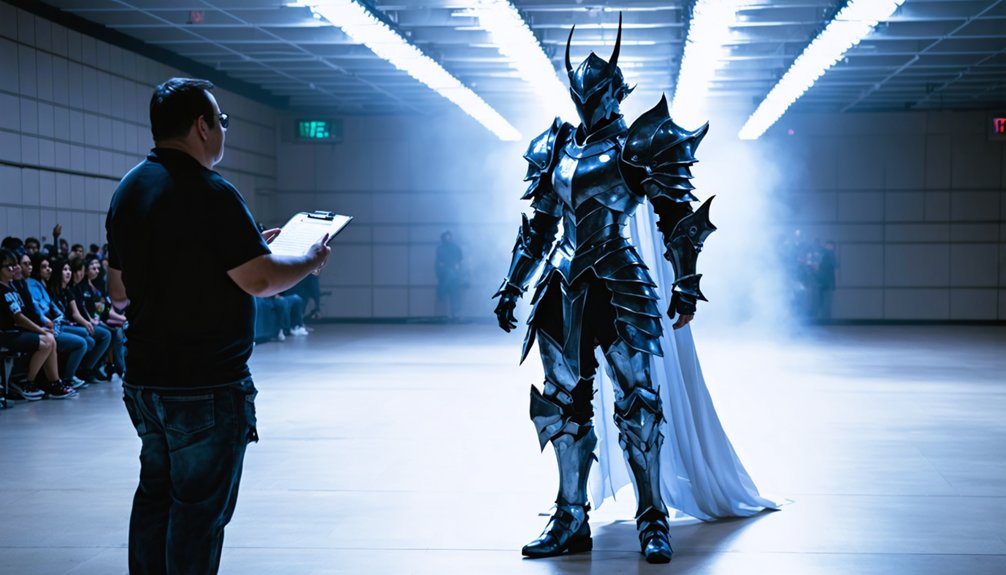
Choreography only holds if your body already knows the pattern before you hit the stage. Rehearsal converts planned movement into muscle memory, eliminating hesitation that judges read as weakness.
Run your full sequence repeatedly, treating each session as a live performance:
- Test costume durability under movement conditions — stress-test seams, attachments, and props during practice, not during judging.
- Lock your facial expressions to each pose transition, since judges scan your face as much as your construction.
- Record yourself from multiple angles to identify blind spots in your stage path and silhouette presentation.
Rehearsal also exposes timing problems before they cost you. If your walk-on feels rushed or cramped during practice, restructure it then. Discipline in preparation directly translates to controlled, confident execution on stage.
Walk-On Mistakes That Cost Cosplayers Points
Even a well-built costume loses ground when the walk-on execution breaks down in predictable, avoidable ways. Rushing across the stage denies judges the time needed to assess craftsmanship and costume durability under movement.
Even a flawless build fails when walk-on execution collapses under rushed, careless stage movement.
Clustering poses in one spot wastes stage real estate and limits full-angle visibility. Generic stances disconnect you from the character and reduce scoring potential on accuracy.
Ignoring stage lighting is a structural error—if you don’t position yourself within well-lit zones, key details disappear entirely.
Hiding special features through poor pose sequencing eliminates your strongest selling points. Moving with hesitation signals low confidence and weakens the overall impression.
Each mistake compounds the others, turning a competitive build into a forgettable pass. Identifying these patterns before the contest gives you a measurable scoring advantage.
Frequently Asked Questions
How Long Should a Cosplay Contest Walk-On Typically Last?
Like a gladiator entering the Colosseum, you’ve got 30–45 seconds. Own every moment—performance timing determines your impact, and costume durability guarantees you’ll shine confidently throughout your entire walk-on without hesitation.
Can Beginner Cosplayers Compete Against Experienced Builders in Walk-Ons?
Yes, you can compete—cosplay confidence and clean costume safety execution often outweigh complexity. Judges reward polished, accurate builds over ambitious ones with visible flaws, so you’ll maximize scores by emphasizing craftsmanship precision over scale.
Should You Make Eye Contact With Judges During Your Walk-On?
Yes, make brief eye contact during judge interaction moments—it’s a powerful confidence display. You’ll signal character ownership, reinforce stage presence, and sharpen the judges’ focus on your build without breaking your performance flow.
Does Costume Weight or Mobility Affect How You Should Plan Movement?
Like a knight donning full plate, costume durability and mobility considerations directly shape your movement plan. You’ll adapt heavier builds with slower, deliberate pacing, while lighter costumes let you execute dynamic, character-specific poses confidently across the stage.
How Early Should You Arrive Backstage Before Your Walk-On Begins?
Arrive at least 30–45 minutes early. Strong backstage etiquette demands you’re never rushed. Apply timing strategies by using that window to rehearse poses, confirm stage order, and address any last-minute costume issues confidently.
References
- https://www.reddit.com/r/cosplayers/comments/1eh8e0h/what_are_you_supposed_to_do_in_a_cosplay_contest/
- https://www.reddit.com/r/CosplayHelp/comments/1et94ft/first_cosplay_on_the_fence_about_entering_contest/
- https://www.comicpalooza.com/activities/tracks/cosplay/cosplay-contest/cosplay-contest-rules/
- https://vicious-cosplay.tumblr.com/post/126356683507
- https://www.youtube.com/watch?v=oPSz7XKSUuY
- https://www.reddit.com/r/CosplayHelp/comments/1ea8dfx/what_should_i_do_for_the_stage_performance_at_a/
- https://cosplay.com/archive/thread/j2kqky/walk-on-masquerade-tips-for-a-noob
- https://www.youtube.com/watch?v=X6-rkVaDOts